
Choosing the right notebook depends on how you write, where you study, and how you organize your notes. The Kokuyo Campus lineup offers three distinct structural designs—Standard, Ring, and Slim—each tailored to different writing environments. If you need a high-capacity, durable book for long-term archiving, the Standard variant is the traditional choice. For those who write on cramped desks or prefer to fold their notebook completely in half, the Ring variant provides physical flexibility. Meanwhile, the Slim variant serves as a lightweight, highly portable option designed to reduce bag weight during daily commutes.
Core Differences in Binding and Format
The primary distinction among these three notebooks lies in their binding mechanisms, which dictate how the pages lie, turn, and hold together over time. The Standard variant utilizes a traditional tape-bound or glue-bound spine. This classic construction keeps all pages permanently secured in a fixed sequence, offering a clean, book-like aesthetic that stacks neatly on shelves.
In contrast, the Ring variant features a mechanical binding system with individual rings running along the spine. This design allows the cover and pages to rotate a full 360 degrees, significantly reducing the physical footprint of the notebook when open. It changes how you interact with the page, as there is no spine tension resisting your hand.
Products mentioned in this guide
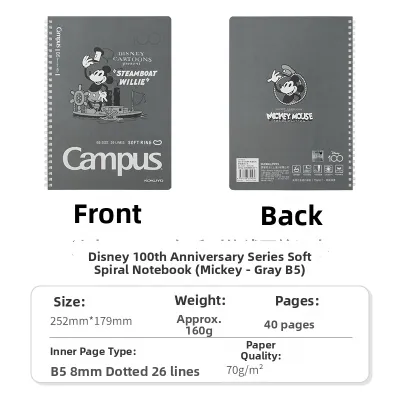
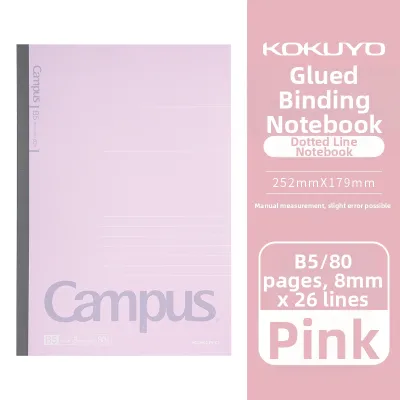
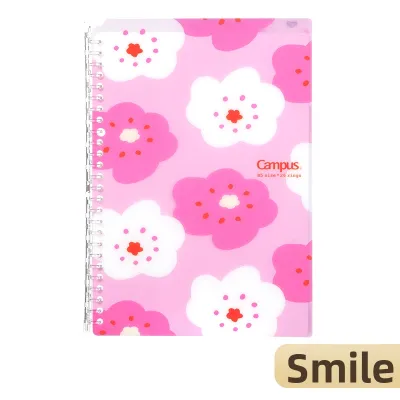
Prices are valid at publication and may change. Please refer to the product page for the latest price.
The Slim variant focuses on minimizing physical bulk and overall weight. It typically features a thinner spine and a reduced page count compared to its classic counterparts. This streamlined profile makes it easier to slide into tight bag compartments alongside other school or office essentials.
Kokuyo Campus Standard: Designed for Traditional Note-Taking
The Kokuyo Campus Standard notebook is engineered for heavy-duty writing and long-term academic or professional archiving. Its spine durability relies on a reinforced adhesive or tape binding designed to withstand frequent opening and closing throughout a busy school year. This structural stability ensures that pages remain firmly attached even after months of sliding the notebook in and out of a backpack.

However, traditional binding comes with specific physical trade-offs. Because the pages are glued or sewn into a fixed spine, the notebook cannot fold completely flat back-to-back. You must dedicate a full two-page spread of desk space when writing, which can be challenging on small lecture hall desks or crowded coffee shop tables. Additionally, because the binding is permanent, you cannot easily rearrange, remove, or insert pages without tearing them out and compromising the spine’s integrity.
Before purchasing a Standard notebook, it is highly recommended to check the product label to verify its specifications. Look closely at the total page capacity, which typically ranges from 30 to 100 sheets depending on the specific model. Examine the cover material to ensure it offers the stiffness you prefer, and verify the ruling type—such as dotted ruled, medium ruled, or ultra-fine ruled—to match your handwriting size and spacing preferences.
Kokuyo Campus Ring: Designed for Flexibility and Flat Writing
For writers who prioritize physical adaptability, the Kokuyo Campus Ring notebook offers significant ergonomic advantages. The standout feature of this design is its 360-degree fold-back capability. You can fold the left side of the notebook completely behind the right side, allowing you to write comfortably while holding the book in one hand or resting it on a tiny desk surface. This flat-laying performance is particularly beneficial for left-handed writers, who can adjust the angle of the page to avoid resting their wrists directly on the binding.
Organizational flexibility is another key aspect of certain ring-bound models. Some variants are compatible with proprietary loose-leaf refills or standard hole-punched paper, allowing you to open the rings and rearrange your notes as your study topics evolve. When considering this option, always verify the exact hole spacing and ring count on the packaging, as proprietary systems may not align with standard office hole punches.
The primary trade-off of the Ring variant is its physical profile. The mechanical rings add noticeable thickness and can sometimes snag on other items inside a bag. In humid tropical climates, plastic rings offer excellent resistance to deformation, whereas metal rings require careful handling to avoid bending. Before buying, check the closed thickness of the notebook to ensure it fits comfortably within your preferred organizer or backpack sleeve.
Kokuyo Campus Slim: Designed for Portability and Quick Capture
When daily commuting and bag weight are your primary concerns, the Kokuyo Campus Slim notebook presents a highly efficient solution. Carrying multiple full-sized notebooks for different subjects can quickly become heavy and cumbersome. The Slim variant addresses this by offering a lighter profile that allows you to carry separate notebooks for individual projects or classes without overloading your bag.
This portability does come with limitations in total page capacity and long-term archival use. With fewer pages per book, a Slim notebook will fill up much faster than a Standard or Ring model, making it less suitable for exhaustive, year-long lecture notes. It is best utilized for quick task lists, meeting minutes, or single-topic study guides that do not require hundreds of pages of documentation.
To ensure the notebook performs well with your preferred writing instruments, check the specific paper weight listed on the packaging. Thinner notebooks sometimes utilize lighter paper to maintain their slim profile, which can affect how ink behaves. Verifying the paper specifications helps ensure that your gel pens or highlighters will not bleed through to the opposite side of the page.
Side-by-Side Decision Checklist
To help you choose the right model for your daily routine, use this structured comparison matrix to evaluate how each variant aligns with your writing habits and physical workspace.
| Feature | Standard Variant | Ring Variant | Slim Variant |
|---|---|---|---|
| Binding Type | Tape or Glue Bound | Plastic or Metal Rings | Minimalist Tape/Staple |
| Lay-Flat Capability | Semi-flat (requires creasing) | 360-degree fold-back | Fully flat (thin profile) |
| Portability | Moderate bulk | Higher bulk due to rings | Extremely high (lightweight) |
| Page Rearrangement | No (fixed pages) | Yes (on select openable models) | No (fixed pages) |
| Typical Page Count | High (30 to 100 sheets) | Moderate (30 to 50 sheets) | Low (15 to 30 sheets) |
Use the following conditional decision framework to narrow down your choice:
- Choose the Ring variant if you frequently write on small desks, need to fold your notebook in half, or want the option to rearrange your pages.
- Choose the Slim variant if you carry multiple subjects daily, prioritize a lightweight bag, and only need to capture quick notes or short-term projects.
- Choose the Standard variant if you require maximum page capacity for a single subject, prefer a traditional book-like spine for shelf archiving, and do not mind a fixed page order.
- Look elsewhere if you require heavy, mixed-media art paper or specialized waterproof sheets, as these standard academic notebooks are optimized primarily for everyday pen-and-paper writing.
When purchasing your notebook, always perform a quick physical check. Verify that the dimensions match your existing folders or tablet sleeves, and inspect the binding edges for any manufacturing defects before leaving the store.
How to Verify Paper and Pen Compatibility Before Buying
Because writing performance depends heavily on the interaction between your specific pen ink and the paper fibers, verifying compatibility before committing to a full notebook is essential. Start by reading the packaging labels carefully. Look for indicators of paper weight, often measured in grams per square meter (gsm), as well as details on ruling types and margin guides. Higher gsm ratings generally indicate thicker paper that offers better resistance to ink penetration.
If you are shopping at a physical stationery store that provides sample sheets, conduct a simple bleed-through and feathering test. Write a few lines using your daily-use gel pens, ballpoints, or fountain pens. Observe the back of the sheet to check for ghosting (where the writing is visible through the paper) or actual bleed-through (where ink saturates the fibers and marks the next page). Also, look closely at the edges of your written lines to ensure the ink does not feather or spread outward.
For those choosing the Ring variant with plans to integrate loose-leaf paper, pay close attention to the ring diameter and hole spacing. Standardize your measurements by checking if the notebook uses a 26-hole (B5), 30-hole (A4), or 20-hole (A5) configuration. Verifying these specifications beforehand prevents the frustration of purchasing refill paper that does not align with your notebook’s ring spacing.
Frequently Asked Questions (FAQ)
Can I use fountain pens or gel pens without ink bleeding through?
Whether ink bleeds through depends on the specific paper weight of your notebook and the wetness of your pen’s nib. While many Kokuyo Campus papers are designed to handle standard gel pens smoothly, very wet fountain pens or broad-tipped markers may cause ghosting on lighter paper weights. To prevent ruining important notes, always perform a small test on the very last page of the notebook first, and look for packaging labels that explicitly indicate fountain-pen-friendly paper specifications.
Are the rings on the Campus Ring notebook easily bent or damaged in a backpack?
The durability of the rings depends largely on the material used in their construction, with plastic rings generally offering more flexibility than soft metal rings under pressure. In a packed bag, heavy textbooks or laptops can exert pressure that may deform metal rings or crack rigid plastic. To protect your notebook during transit, consider placing it in a dedicated protective sleeve or positioning it in the center of your backpack where it is shielded from external impacts.
Do the Slim and Standard variants use the exact same paper quality?
Paper formulations and weights can vary across different sub-models, ruling styles, and manufacturing batches. A Slim notebook designed for quick, casual notes may utilize a slightly different paper weight than a Standard notebook intended for formal academic archiving. To ensure consistent writing performance, compare the paper specifications, weight ratings, and country of origin printed on the back cover labels of both notebooks before purchasing.

Community discussion
Share your experience or ask a question. Comments are reviewed before publication.