
Choosing the right notebook is more than just a matter of aesthetic preference; it directly shapes how you capture, organize, and review your thoughts. When comparing the classic Kokuyo Campus series with the modular Ring Fit notebooks, the decision ultimately hinges on your need for structural permanence versus organizational flexibility. The core distinction lies in their binding systems: the Campus line utilizes a traditional, fixed spine that keeps your pages securely in one place, while the Ring Fit line features a flexible, openable ring mechanism that allows you to add, remove, and rearrange pages at will. To find your ideal match, you must evaluate how each format aligns with your daily portability requirements, your desire for layout customization, and the physical comfort of your writing experience.
Understanding the Core Differences: Fixed vs. Flexible Binding
To establish a baseline for your decision, it is essential to understand the structural mechanics that define these two notebook lines. The traditional Kokuyo Campus notebook relies on a fixed binding method, typically utilizing high-quality glue or thread sewing reinforced with a durable spine tape. This construction ensures that the pages remain permanently attached in a set sequence. Because the spine is flat and integrated, the notebook maintains a consistent, low-profile shape that behaves predictably when stacked or slid into a bag.
In contrast, the Kokuyo Ring Fit notebook utilizes a flexible ring binding system, often referred to as a smart ring mechanism. This design features a spine made of individual plastic or metal rings that can be popped open and locked shut using a simple latch or slide control. This mechanism allows you to treat the notebook as a hybrid between a standard notebook and a binder, giving you the freedom to insert new sheets, discard old drafts, or reorganize your notes as your projects evolve.
Products mentioned in this guide

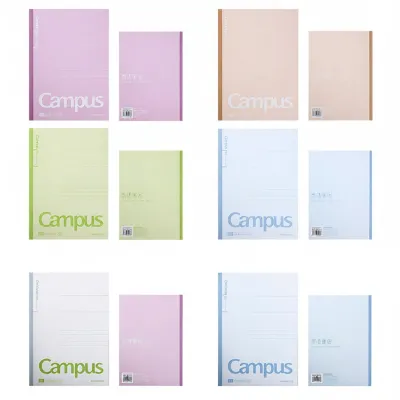
Prices are valid at publication and may change. Please refer to the product page for the latest price.
These structural differences directly impact the physical lifespan and integrity of each notebook, especially when subjected to daily wear. In warm, humid tropical climates like the Philippines, glue-bound notebooks can occasionally experience adhesive softening over several years of storage, though high-quality bindings resist this exceptionally well. On the other hand, while the plastic rings of a Ring Fit notebook are completely immune to rust or moisture damage, they can become brittle if exposed to prolonged direct sunlight or subjected to heavy crushing forces inside a tightly packed backpack.
Key Comparison Dimensions for Your Decision
To determine which system will serve you best throughout a semester of classes or a year of project planning, it is helpful to analyze how their physical designs translate into daily usability. Several practical dimensions—including physical bulk, paper versatility, and ergonomic comfort—reveal the distinct trade-offs of each binding style.

Portability and Thickness Limits
If you are constantly on the move, commuting through crowded transit systems or walking between university lecture halls, portability is likely a top priority. Traditional Campus notebooks offer a slim, uniform profile that slides effortlessly into tight backpack sleeves, tote bags, or document folders. Because the page count is fixed—typically ranging from 30 to 40 sheets—the notebook occupies a predictable, minimal amount of space regardless of how much you write.
Ring Fit notebooks, conversely, carry a variable thickness that is dictated primarily by the diameter of the ring mechanism. Even if you only keep five sheets of paper inside, the spine of the notebook will always remain as thick as the rings themselves. This physical bulk can make the notebook feel more substantial in your hand and may require more dedicated space in your bag, particularly if you choose a model with a larger ring capacity or a thicker, rigid cover.
To avoid structural damage, you must pay close attention to the maximum sheet capacity limits specified by the manufacturer. Overstuffing a Ring Fit notebook beyond its recommended capacity puts excessive strain on the ring joints, which can cause the mechanism to pop open unexpectedly or prevent the notebook from closing flat. When pages are packed too tightly, they are also much more likely to tear at the punched holes when you attempt to turn them.
Paper Options and Customization
For writers who demand specific layouts for different tasks, the level of customization offered by your notebook is a critical factor. Traditional Campus notebooks lock you into a single, pre-selected paper type from the moment of purchase. If you buy a dotted-rule notebook, every single page in that book will feature the exact same pattern, meaning you cannot easily transition to blank pages for sketching or grid pages for mathematical plotting within the same volume.
Ring Fit notebooks excel in modular versatility, allowing you to build a highly personalized organizational system. You can mix and match various paper styles within a single cover, placing lined sheets for lecture notes directly alongside grid sheets for diagrams and blank sheets for creative brainstorming. Furthermore, you can easily integrate functional accessories such as colored tab dividers, plastic index pockets, and sticky-note holders to keep your materials organized.
This customization does, however, require you to actively manage your inventory of refills. While a traditional Campus notebook is a self-contained tool ready for immediate use, a Ring Fit notebook requires you to verify the availability of compatible loose-leaf paper. If you run out of pages mid-project, you must source refills that match the exact dimensions and hole configurations of your specific binder cover.
Writing Experience and Layout Stability
The physical act of writing is heavily influenced by how flat a notebook lies on your desk. Traditional Campus notebooks are engineered with flat-lay technology, meaning the spine is designed to open wide and lie completely flat across a desk surface. This provides a smooth, uninterrupted writing plane from the left margin to the right margin, making it highly comfortable for left-handed writers and those who prefer to write continuous lines across two-page spreads.
Ring Fit notebooks present a different ergonomic experience because the physical rings can act as an obstruction for your writing hand. When you are writing near the inner margins, your hand or wrist may bump against the raised rings, which can disrupt your writing flow. To mitigate this, most Ring Fit models are designed to fold back a full 360 degrees, allowing you to fold the left cover completely behind the right cover to save valuable desk space on small coffee shop tables or cramped lecture hall desks.
Regardless of the binding you choose, the quality of your writing experience is ultimately tied to the paper itself. You should check the paper weight, typically measured in grams per square meter (GSM), which is clearly printed on the product label. Because ink performance depends on the specific combination of paper and pen, it is always wise to perform a quick trial with your preferred gel pens, rollerballs, or fountain pens in an inconspicuous corner of the page to observe drying speed, feathering, and bleed-resistance before starting a major project.
Matching the Notebook to Your Note-Taking Style
To simplify your decision, you can align your choice with your specific daily habits, study routines, or professional workflows using a straightforward decision framework.
Choose a traditional Campus notebook if:
- You prefer a lightweight, grab-and-go writing tool that adds minimal weight to your daily carry.
- Your work is sequential and chronological, such as daily journaling, meeting minutes, or single-subject lecture tracking where pages do not need to be reorganized.
- You write extensively on both sides of the page and want to avoid any physical interference from raised rings or plastic spines.
- You prefer a self-contained, low-maintenance notebook that does not require purchasing separate refills or managing loose sheets.
Choose a Ring Fit notebook if:
- You manage multiple subjects, projects, or clients simultaneously and want to consolidate all your notes into a single, organized volume.
- You frequently need to reorganize your notes, insert handouts, or discard rough drafts without ruining the structural integrity of the notebook.
- You want to archive completed chapters or old lecture notes at home while keeping only the active, current pages in your daily carry.
- You enjoy customizing your layout with a mix of ruled, grid, and blank paper alongside functional dividers and pockets.
Neither option may fit your needs if you require a fully digital workflow that automatically syncs your handwritten notes to cloud storage, or if your daily tasks take place in rugged, outdoor environments where paper is highly susceptible to water damage. In those specialized scenarios, you should explore digital tablets or heavy-duty, waterproof field books instead.
How to Verify Compatibility and Specifications Before Buying
Before making a purchase at a local stationery shop or an online marketplace, you must carefully verify the physical specifications of the notebooks and refills to avoid compatibility issues. Stationery dimensions often follow specific international standards that may differ from standard office paper sizes. The most common sizes for these notebooks are A5 (approximately 148 x 210 mm) and B5 (approximately 176 x 250 mm), with B5 being exceptionally popular for academic note-taking; ensure you check the product label to confirm you are buying matching sizes.
For Ring Fit notebooks, verifying hole-punch compatibility is absolutely critical. Unlike standard binders that use two or three large rings, these flexible notebooks utilize a multi-ring system with very specific hole counts and spacing. A standard B5 Ring Fit notebook typically requires loose-leaf paper with 26 holes, while an A5 model requires 20 holes, both utilizing a standard 9.5mm hole pitch. Always check the exact hole count and spacing specifications printed on the refill packaging to ensure they will align perfectly with your notebook’s ring mechanism.
Finally, take a moment to inspect the manufacturer’s specifications regarding cover materials and ring diameters. If you live in a humid environment or carry your notebook in a bag alongside a cold water bottle, look for covers made from durable polypropylene (PP) which resists moisture and wipes clean easily. Checking the ring diameter specification will also give you a clear indication of the notebook’s maximum sheet capacity, helping you plan how many refills you can realistically carry at one time.
Frequently Asked Questions (FAQ)
Can I use standard hole-punched paper in a Kokuyo Ring Fit notebook?
Standard office paper that is pre-punched with two, three, or four holes is not compatible with the multi-ring system of a Kokuyo Ring Fit notebook. These notebooks require specialized loose-leaf paper that matches the exact hole count and spacing of the ring mechanism, such as 26 holes for B5 sizes or 20 holes for A5 sizes. If you want to use custom paper, standard printer paper, or printed handouts in your Ring Fit notebook, you will need to purchase a specialized multi-hole puncher designed specifically for these stationery standards to ensure the holes align correctly with the rings.
How do I prevent the rings from bending or breaking?
To maintain the structural integrity of your Ring Fit notebook, always adhere to the manufacturer’s recommended maximum sheet capacity to prevent putting excessive outward pressure on the rings. When adding or removing pages, always open and close the mechanism using the official instructions—typically by pressing the designated tabs at the top and bottom of the spine or gently sliding the locking bar, rather than pulling directly on the individual rings. Additionally, when packing your bag, store the notebook in a dedicated compartment away from heavy textbooks or laptops that could crush or bend the spine mechanism.

Community discussion
Share your experience or ask a question. Comments are reviewed before publication.