
Choosing between Kokuyo dot-lined notebooks and alternative dot-grid options depends on whether you prioritize structured, ultra-smooth writing guides or thicker, heavy-ink-compatible paper. While stationery enthusiasts often associate the term Kokuyo dotliner with the brand’s popular double-sided adhesive tape runners, the name also represents their highly sought-after dot-lined paper technology. Comparing Kokuyo dot-lined notebooks with standard dot-grid alternatives requires looking at how these unique page layouts, paper weights, and binding systems perform under daily use.
For students, professionals, and journal writers in the Philippines, finding the right paper is crucial. The local tropical climate brings high humidity, which can cause lower-quality paper to absorb moisture and make ink feather or bleed. Understanding the physical specifications of your notebook—from the binding mechanism to the exact spacing of the dots—ensures your pens glide smoothly without ruining the reverse side of the page.
Core Features of Kokuyo Dot-Grid Notebooks
Kokuyo’s dot-lined notebooks are famous for their hybrid ruling system. Unlike standard dot-grid paper, which features a clean matrix of dots across the entire page, Kokuyo’s signature layout consists of solid horizontal lines with subtle dots spaced evenly along each line. This design provides the structured guidance of ruled paper while allowing you to align vertical columns, draw diagrams, and create clean margins using the dots as anchor points.
Products mentioned in this guide
Prices are valid at publication and may change. Please refer to the product page for the latest price.
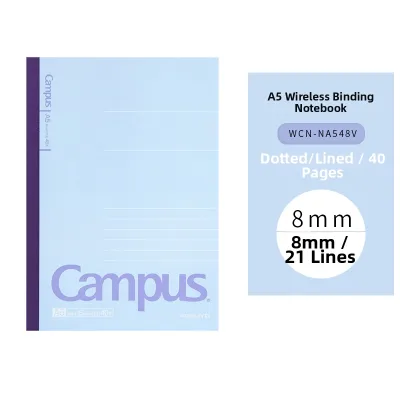
Standard Kokuyo packaging typically indicates the dot spacing and margin rules clearly on the cover or insert. The most common formats are the “A ruling,” which features a 7 mm line spacing, and the “B ruling,” which offers a narrower 6 mm spacing. Both options include dots spaced at matching intervals along the horizontal lines, giving you a highly organized framework for handwriting and technical drawing.
These notebooks are available in several distinct binding systems to suit different working styles. You can choose traditional glued-spine notebooks that lay relatively flat, wire-bound spiral formats for easy flipping, or the proprietary Smart Ring refillable systems. The Smart Ring system functions like a ultra-slim binder, allowing you to open the plastic rings to add, remove, or rearrange pages as needed.
When shopping, it is helpful to check the product label for specific paper lines. Kokuyo offers different paper textures, such as “Sarasara” (which translates to smooth) and “Shikiru” (which means firm or structured). Sarasara paper is designed for effortless writing with gel pens, allowing the tip to glide with minimal resistance, while Shikiru paper provides a bit more tactile feedback for pencil and ballpoint users.
Key Dimensions for Comparing Dot-Grid Notebooks
Evaluating any dot-grid notebook against Kokuyo’s offerings requires looking beyond brand popularity. The stationery market is filled with diverse options, and the best choice depends on how a notebook’s physical properties align with your daily writing tools and environment.

To make an informed decision, you must compare specific model specifications rather than relying solely on brand reputation. Factors such as paper density, dot visibility, binding flexibility, and cover durability vary significantly across different manufacturers and product lines.
Paper Weight and Ink Compatibility
Paper weight is measured in grams per square meter (GSM) and serves as a primary indicator of paper thickness and density. Standard Kokuyo Campus notebooks typically use paper ranging from 70 GSM to 75 GSM, which is optimized for lightweight portability and smooth writing. Alternative dot-grid notebooks, especially those designed for bullet journaling, often feature heavier paper weights ranging from 100 GSM to 160 GSM.
Before purchasing, you can visually and physically inspect paper opacity to anticipate how it will handle your pens. Hold a single sheet up to a light source; paper with visible fiber clumps or high transparency is more likely to suffer from ghosting, where the writing on one side is visible on the other. Thicker, more opaque paper generally provides a safer barrier against heavy ink saturation.
Matching your paper thickness to your daily writing instruments is essential for a clean notebook. If you primarily use fine-tip gel pens, ballpoints, or light highlighters, Kokuyo’s standard paper offers an exceptionally smooth experience. However, if you prefer wet fountain pens, broad felt-tip markers, or watercolor washes, you will likely need to look for alternative brands that offer higher GSM paper to prevent ink from bleeding through to the next page.
Dot Spacing and Layout Design
Standard dot-grid notebooks typically feature a 5 mm grid spacing, which is highly popular for bullet journaling and compact handwriting. Kokuyo’s hybrid dot-lined paper, with its 6 mm or 7 mm spacing, provides more vertical breathing room, making it highly suitable for standard cursive writing and structured academic notes.
Layout elements also differ between brands. Many standard dot-grid notebooks offer completely clean pages with dots extending to the very edges of the sheet. In contrast, Kokuyo notebooks often include dedicated header margins at the top of each page for dates and titles, along with vertical margin guides on the left and right sides to help you keep your notes aligned.
Dot visibility is another subjective factor to consider. Some alternative brands print their dots in dark grey or black, which can feel distracting if you prefer a clean look. Kokuyo’s dots are designed to be faint and unobtrusive, serving as a subtle guide that virtually disappears when you look at the page as a whole. Testing a single page under your typical study or work lighting can help you determine which style feels most comfortable for your eyes.
Binding Types and Refillability
How a notebook is bound dictates how easily it fits into your daily workflow. Traditional sewn or thread-bound notebooks, common among alternative bullet journal brands, allow the book to lie completely flat on your desk. This is highly beneficial for writing across two-page spreads without fighting a raised center spine.
Kokuyo’s Smart Ring system offers a different approach by combining the slim profile of a notebook with the flexibility of a binder. You can easily open the rings to insert custom templates, move pages between sections, or discard mistakes. Traditional disc-bound systems from other brands offer similar flexibility but often require a specialized punch tool to prepare custom pages.
Cover materials play a major role in protecting your work during daily transport. In humid tropical climates, paperboard covers can absorb moisture from the air, leading to warped edges and soft corners. Opting for notebooks with polypropylene (PP) or thick plastic covers, which are common in Kokuyo’s Smart Ring and spiral lines, provides excellent protection against humidity and accidental spills inside your bag.
Matching Notebook Features to Your Use Case
Your ideal notebook depends heavily on your daily tasks and writing environment. A lightweight, glued-spine Kokuyo notebook is highly practical for students who need to carry multiple subjects to class. These notebooks are thin, stack easily, and do not add unnecessary weight to your backpack, making them excellent for rapid lecture notes and daily homework assignments.
If you are managing long-term projects, personal journals, or multi-subject archives, a refillable system like the Kokuyo Smart Ring is highly advantageous. You can organize your notes with plastic dividers, add fresh paper when a section runs full, and archive completed chapters in a larger binder at home. This prevents you from having to carry around old notes you no longer need to reference daily.
For creative planners, artists, and those who enjoy elaborate bullet journal spreads, alternative brands with thick, heavy-duty paper are often a better fit. If your planning style involves heavy sketching, blending water-based markers, or using wet inks, the standard paper in lightweight notebooks will likely buckle or bleed. Choosing a dedicated 120 GSM or 160 GSM dot-grid notebook ensures your creative layouts remain clean and crisp on both sides of the page.
How to Verify Paper Performance Before Buying in Bulk
Because paper performance can vary based on manufacturing batches, ink formulas, and local humidity levels, it is wise to verify the quality before committing to a bulk purchase. Buying a single notebook or a small refill pack allows you to conduct a hands-on assessment without risking a significant financial investment.
Once you have the paper, perform a simple at-home ink test on the very last page of the notebook. Draw a small grid and write a few words using each of your favorite pens, markers, and highlighters. Note how long the ink takes to dry; highly smooth paper can sometimes extend drying times, which is an important consideration for left-handed writers who want to avoid smudging.
After writing, turn the page over to inspect the reverse side. Look closely for ghosting (where you can see the shadow of the writing) and bleed-through (where the ink has physically penetrated the paper fibers). If the ink feathers—meaning the edges of your letters look fuzzy or spread out—the paper may have absorbed ambient moisture, or it may not be compatible with that specific ink formula.
Finally, check the return and exchange policies of your local stationery stores or online marketplaces. Since paper products are sensitive to moisture and physical handling, many retailers have strict rules regarding opened packaging. Knowing these policies beforehand ensures you can make your purchase with confidence.
Decision Framework: Which Notebook Should You Choose?
To help you decide on your next stationery purchase, consider this conditional guide based on your writing habits and preferences:
- Choose Kokuyo if…
- You prefer a structured, hybrid layout that combines horizontal lines with dots for neat handwriting.
- You use fine-tip gel pens, ballpoints, or mechanical pencils and appreciate ultra-smooth paper.
- You want a slim, lightweight, and refillable binding system like the Smart Ring to organize multiple subjects without carrying bulk.
- Choose Alternatives if…
- You want a pure dot-grid layout without any horizontal lines to give you complete creative freedom.
- You write with wet fountain pens, heavy markers, or art media that require thick, high-GSM paper to prevent bleeding.
- You prefer a classic, thread-bound hardcover notebook that lies perfectly flat on your desk.
- Verify first if…
- You live in a highly humid area, as you will need to store your notebooks carefully to prevent the paper from absorbing moisture and affecting ink performance.
- You have highly specific archival needs, in which case you should check the manufacturer's specifications for acid-free paper certification.
Frequently Asked Questions (FAQ)
Are Kokuyo dot-grid notebooks suitable for fountain pens?
Suitability for fountain pens depends largely on the specific Kokuyo paper line, your pen’s nib size, and the wetness of your ink. Kokuyo’s Sarasara paper is highly smooth and handles fine or extra-fine fountain pen nibs exceptionally well with minimal feathering. However, if you use broad nibs, flex nibs, or very wet inks, you may experience slight ghosting on standard 70 GSM to 75 GSM sheets. It is always best to check the packaging for fountain-pen-friendly indicators or test a single page with your specific pen-and-ink combination. If you observe significant bleed-through during your test, switching to a notebook with thicker, higher-GSM paper will provide better results.
How do I calculate the true value of a refillable notebook system?
To find the true value of a refillable system, start by calculating the cost per page in ₱. Divide the price of a standard refill pack by the total number of sheets included in the pack. Next, factor in the initial upfront cost of the reusable cover and binding mechanism, which is a one-time investment. Compare this combined long-term cost against the recurring price of buying disposable, glued-spine notebooks over the same period. For users who write extensively across multiple semesters or projects, a refillable system often proves to be more economical over time, while also reducing cover waste.

Community discussion
Share your experience or ask a question. Comments are reviewed before publication.