
Finding a Kuromi pencil that actually writes well for daily school use requires looking past the adorable purple-and-black aesthetic to examine the core stationery specifications. While character-themed stationery is highly popular for adding personality to a school desk, a pencil’s primary job is to deliver clear, legible lines without causing hand fatigue during long lectures or exams. The ideal choice depends entirely on your daily academic tasks, such as solving complex math equations, shading diagrams, or color-coding lecture notes.
To make a practical decision, you must compare how different pencil types—mechanical, wooden, and multi-function—perform under real classroom conditions. Mechanical pencils excel at maintaining a consistent line width for precise calculations, while wooden pencils offer a classic, durable feel that is highly forgiving for sketching and early writing practice. Multi-function options combine graphite and colored inks into a single barrel, streamlining your pencil case. By evaluating lead quality, grip ergonomics, and barrel durability, you can select a Kuromi pencil that serves as a reliable academic tool rather than just a decorative accessory.
Kuromi Pencil Types: Mechanical, Wooden, and Multi-Function
Kuromi-themed mechanical pencils are highly favored by older students who require precision and consistency in their work. These pencils utilize thin, replaceable graphite leads—typically 0.5mm or 0.7mm—that feed through a metal or plastic sleeve at the tip. Because the lead does not wear down to a thick point, mechanical pencils are excellent for writing small characters in tight notebook grids, solving multi-step math formulas, or drawing detailed diagrams. They eliminate the need to carry a manual sharpener, keeping your desk clean and saving valuable time during timed quizzes.
Products mentioned in this guide
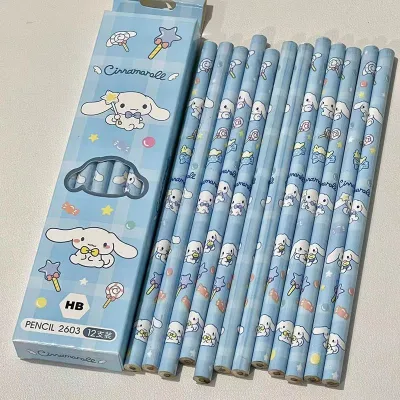
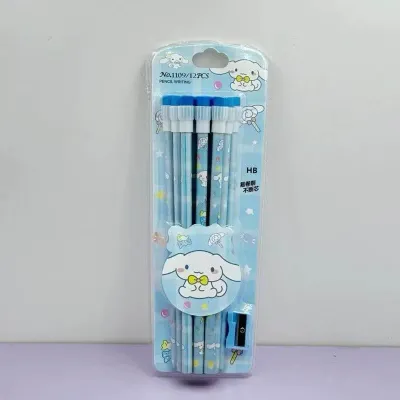
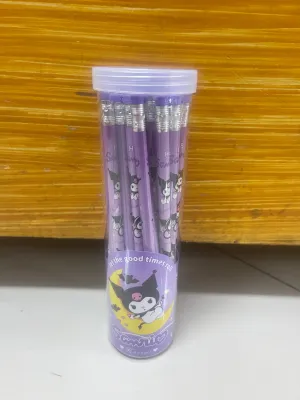
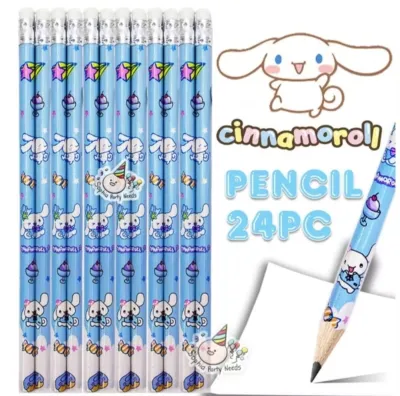
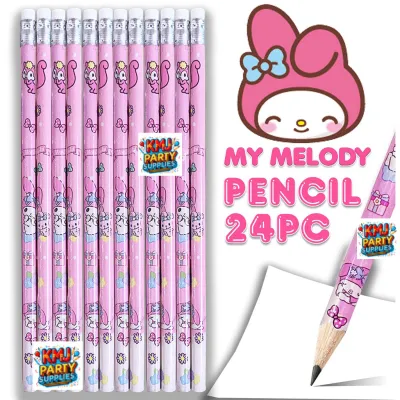
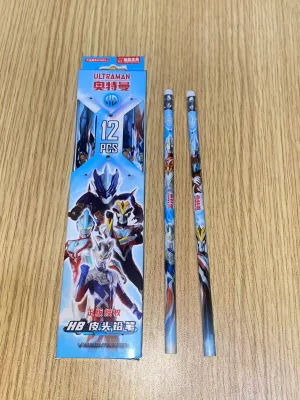
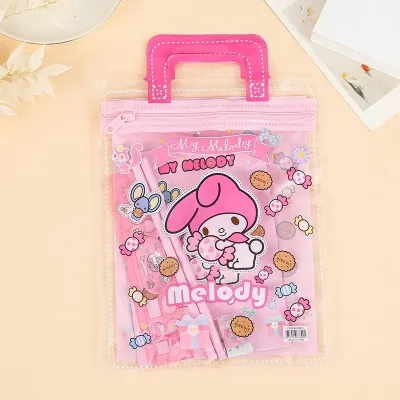
Prices are valid at publication and may change. Please refer to the product page for the latest price.
Wooden Kuromi pencils offer a traditional writing experience that remains a staple in many classrooms. Made from encased wood surrounding a solid graphite core, these pencils are highly durable and less prone to internal mechanism failures if dropped on hard classroom floors. The natural wood provides a tactile, slightly flexible feel that absorbs writing pressure, making them ideal for younger students who are still refining their grip strength. Additionally, wooden pencils allow for expressive shading and line-weight variation, which is highly useful for art classes, mind-mapping, or sketching layout designs.
Multi-function Kuromi writing instruments combine multiple tools into a single, slightly wider barrel. These versatile options often feature a mechanical pencil component alongside two or three colored ballpoint or gel ink pens, such as black, blue, and red. By sliding down different selectors, you can instantly switch from writing a math equation in pencil to correcting a classmate’s paper in red ink. This multi-tool design is highly efficient for organized note-taking and color-coding key concepts, reducing the clutter in your pencil case and ensuring you always have the right tool at hand.
Writing Performance and Lead Quality: What to Check Before Buying
When evaluating a Kuromi pencil’s writing performance, the quality and specifications of the graphite lead are the most critical factors to consider. Many character-themed pencils come pre-loaded with standard HB lead, which offers a balanced medium darkness and hardness. However, if you tend to write with heavy hand pressure, a thin 0.5mm HB lead may snap frequently, causing frustration during fast-paced lectures. For heavy-handed writers, opting for a thicker 0.7mm lead or switching to a stronger 2B lead grade can provide a smoother, darker line with less breakage. In warm, humid tropical climates, softer leads like 2B can sometimes smudge more easily on standard notebook paper, so it is important to balance darkness with smudge resistance.

Line consistency is another essential aspect of daily school writing. During a quick paper test, pay close attention to how the pencil glides across standard school paper, such as intermediate pads or composition notebooks. A high-quality pencil should write smoothly without skipping, scratching the paper fibers, or requiring excessive downward force. If you feel a gritty, scraping sensation, the graphite core may contain impurities or the mechanical sleeve may be poorly aligned. Consistent, friction-free writing helps maintain a steady writing speed and prevents your hand from tiring out during long essay-writing sessions.
The quality of the attached eraser is often overlooked but highly impactful for daily schoolwork. Many novelty pencils feature small, decorative erasers that look appealing but tend to smudge the graphite or tear thin notebook paper when used. Before relying on a built-in eraser for an exam, test it on a scrap piece of paper to verify if it lifts the pencil marks cleanly without leaving dark streaks. If the built-in eraser is stiff or crumbles easily, it is highly recommended to carry a separate, high-quality plastic eraser in your pencil case to keep your homework and exam sheets looking neat and professional.
Grip Comfort and Ergonomics for Long School Days
Writing for several hours a day can quickly lead to hand fatigue and finger cramping if your pencil lacks proper ergonomic support. When selecting a Kuromi pencil, closely examine the grip section where your fingers rest. Many standard plastic mechanical pencils feature a smooth, hard barrel that can become slippery, especially when hands get warm and sweaty in non-airconditioned classrooms. To prevent your fingers from sliding down toward the tip, look for models that feature a textured, ribbed, or rubberized grip. A soft silicone or elastomer grip cushions your fingers, reduces the gripping force required to hold the pencil, and significantly improves comfort during long writing sessions.
The weight and balance of the pencil also play a major role in writing endurance. A well-balanced pencil should feel comfortable in your hand, with the center of gravity positioned closer to the writing tip rather than the top of the barrel. Top-heavy pencils, often caused by large, heavy decorative toppers or charms attached to the eraser cap, can pull the pencil backward as you write. This imbalance forces your hand muscles to work harder to keep the tip on the paper, leading to rapid fatigue. For daily note-taking, lightweight models or those with a low center of gravity are generally much more comfortable than those with bulky, top-heavy decorations.
Barrel thickness is another personal preference that directly affects comfort. Standard wooden pencils and slim mechanical pencils are highly portable but can cause hand cramping for students with larger hands or those who use a tight, high-pressure grip. Conversely, wider-barrel pencils, such as multi-function models, distribute the gripping pressure over a larger surface area, which can relieve tension in your hand muscles. Testing different barrel diameters allows you to find the size that matches your natural hand size and grip style, ensuring a pain-free writing experience throughout the school day.
Which Kuromi Pencil Should You Choose for Your Classes?
To choose the right Kuromi pencil for your school routine, it is helpful to match the pencil’s specific strengths with your daily subjects and study habits.
You should choose a mechanical pencil if your daily schedule is filled with math, physics, or chemistry classes. The thin, precise lead ensures that numbers, exponents, and chemical structures remain perfectly legible, even when written in small spaces. It is also the best option for students who prefer a clean, modern writing experience and want to avoid the mess of pencil shavings in their bags.
You should choose a wooden pencil if you are a younger student developing your handwriting, or if you frequently take art and design classes. The sturdy wooden construction is highly forgiving of uneven writing pressure, and the ability to shade at different angles is essential for creative projects. Wooden pencils are also highly reliable, as they have no internal mechanical parts that can jam or break during a busy school day.
You should choose a multi-function writing tool if you are an active note-taker who relies on color-coding to organize information. Being able to switch instantly between a pencil for drafting diagrams and colored inks for highlighting key terms or writing headings saves time and keeps your desk organized. This is an excellent choice for history, biology, or literature classes where quick, structured note-taking is required.
Before making your final purchase, always verify the availability of consumables. A beautiful mechanical or multi-function pencil is only useful if you can easily find replacement leads, eraser refills, or ink cartridges. Check your local stationery stores or preferred online marketplaces to ensure that standard lead sizes (like 0.5mm or 0.7mm) and compatible ink refills are readily available and affordable, ensuring your Kuromi pencil remains a functional tool for the entire school year.
Frequently Asked Questions (FAQ)
Will a Kuromi Mechanical Pencil Survive a School Bag?
A Kuromi mechanical pencil can easily survive the daily commute in a school bag if you take a few simple precautions. When shopping, check the thickness and quality of the plastic or metal barrel; flimsy novelty plastics are more prone to cracking under the weight of heavy textbooks. It is highly beneficial to choose a model with a retractable lead pipe, which pulls the delicate metal tip inside the barrel when not in use to prevent it from bending or snapping. To ensure maximum protection, store your mechanical pencils in a dedicated, padded pencil case or pouch rather than letting them roll loose at the bottom of your backpack.
Do Kuromi Mechanical Pencils Take Standard Replacement Leads?
Yes, almost all Kuromi mechanical pencils are designed to use standard, widely available replacement leads. To find the correct size, check the pencil barrel or the original packaging for the designated lead diameter, which is most commonly 0.5mm or 0.7mm. You do not need to purchase brand-specific refills; any standard graphite lead from reputable stationery brands will fit perfectly. For daily school use, stocking up on standard HB or 2B lead refills ensures that you will always have a reliable supply of smooth-writing graphite ready for your classes.

Community discussion
Share your experience or ask a question. Comments are reviewed before publication.