
Choosing the right drawing medium for your child depends on their age, where they will use it, and whether you want to preserve their artwork. LCD writing tablets offer a highly portable, mess-free digital canvas that is perfect for travel and quick sketches. Magnetic doodle boards provide a durable, battery-free, and highly tactile experience that is ideal for toddlers. Traditional paper sketch pads remain the gold standard for developing fine motor skills, exploring colors, and keeping a permanent record of your child’s creative journey.
To find the perfect fit, parents must balance the physical characteristics of each medium against practical household needs. In tropical climates where humidity can affect paper, or during long car rides in heavy traffic, the choice of drawing board can significantly impact both your child’s engagement and your daily cleanup routine.
How Each Drawing Format Works and Feels
LCD writing tablets utilize a liquid crystal display that responds directly to physical pressure. When your child presses the plastic stylus against the screen, the liquid crystals align to reflect ambient light, revealing a bright, monochrome line. Because these screens do not use a backlight, they mimic the appearance of ink on paper without emitting glare. Erasing is instantaneous; a small electrical pulse from an internal coin-cell battery resets the crystals at the press of a single button, clearing the screen completely.
Products mentioned in this guide
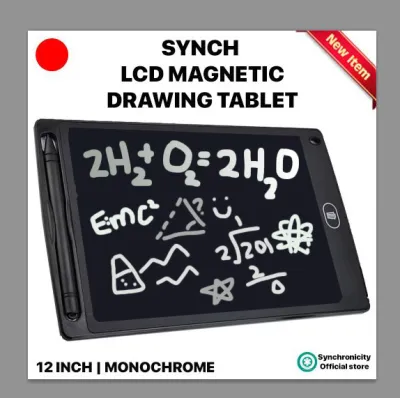
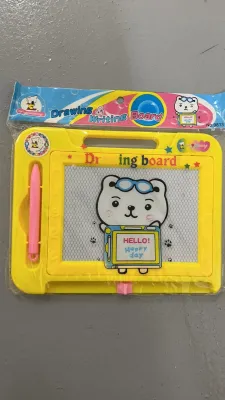
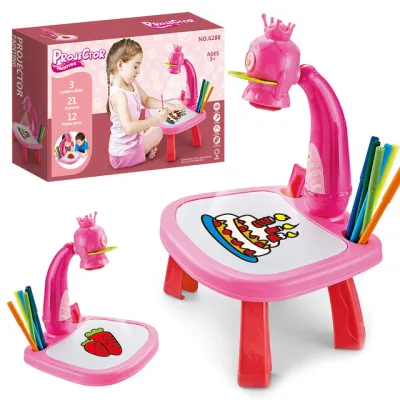
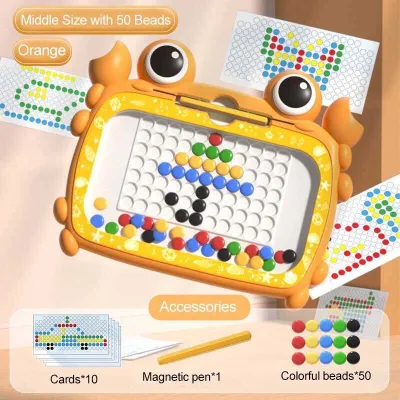
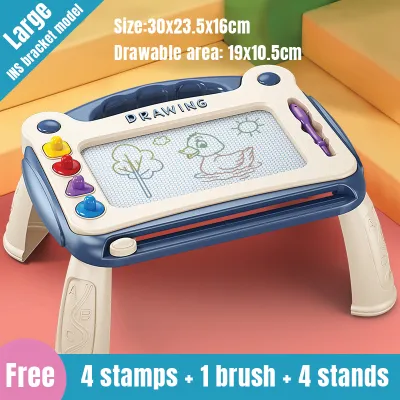
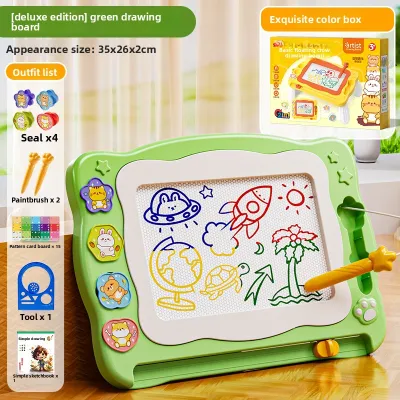
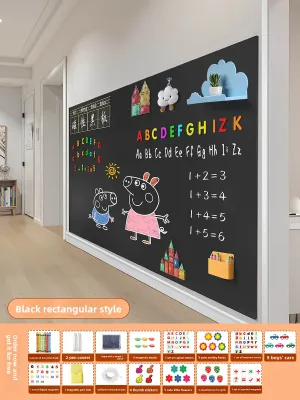
Prices are valid at publication and may change. Please refer to the product page for the latest price.
Magnetic doodle boards operate on a purely mechanical system. The screen contains a thick, white liquid chamber filled with tiny magnetic particles. When the magnetic-tipped stylus moves across the surface, it draws these dark particles to the top layer to create lines. To clear the canvas, a sliding bar equipped with a magnet sweeps across the back of the screen, pulling the particles back down. This format offers a highly tactile feel, characterized by a slight physical resistance and a satisfying clicking sound as the slider moves.
Paper sketch pads offer the classic, irreplaceable tactile experience of physical drawing. The feel is determined by the “tooth” or texture of the paper fibers, which shears off pigment from crayons, colored pencils, or graphite. Unlike temporary digital or magnetic screens, every stroke on paper is permanent unless physically removed with an eraser. This permanence allows children to experience the physical feedback of different drawing tools, from the soft glide of a wax crayon to the sharp scratch of a pencil.
Comparing Core Features for Everyday Use
Portability and weight are critical factors for families on the go. LCD writing tablets are exceptionally thin and lightweight, often weighing less than a small paperback book, making them easy to slip into a diaper bag or car seat pocket. Magnetic boards are bulkier due to their thick plastic frames and sliding eraser mechanisms, but they are highly self-contained. Paper sketch pads are moderately portable, but carrying the necessary drawing tools like crayons or markers adds bulk and the risk of losing items under car seats.

The mess factor is a major consideration for parents looking to minimize cleanup. LCD tablets and magnetic boards are completely mess-free, producing no shavings, ink stains, or paper scraps. This makes them ideal for use in the car, at restaurants, or on the sofa. Paper sketch pads carry a much higher mess potential; crayons can melt in warm environments, markers can stain skin and furniture, and pencil shavings require constant sweeping.
When it comes to saving and sharing artwork, paper sketch pads are the clear winner. You can easily tear out a page to display on the refrigerator, frame it, or store it in a keepsake portfolio. LCD tablets generally do not have saving capabilities, though many feature a lock switch to prevent accidental erasure. Magnetic boards are also temporary, and a sudden bump or drop can sometimes cause the magnetic particles to shift, fading the drawing.
| Feature | LCD Writing Tablet | Magnetic Doodle Board | Paper Sketch Pad |
|---|---|---|---|
| Power Source | Coin-cell battery (for erasing) | None (fully passive) | None (fully passive) |
| Mess Level | Zero mess | Zero mess | High (shavings, ink, paper scraps) |
| Portability | Excellent (ultra-thin and light) | Moderate (bulky plastic frame) | Moderate (requires separate tools) |
| Erasability | Instant, one-button clear | Manual sliding eraser bar | Requires physical rubber eraser |
| Permanence | Temporary (no save function) | Temporary (can fade if bumped) | Permanent (easy to save and display) |
| Tactile Feedback | Smooth, low-friction plastic | Moderate resistance, mechanical | High texture and variable friction |
Matching the Board to Your Child's Developmental Stage
For toddlers and early scribblers aged one to three, magnetic doodle boards are highly recommended. Children at this stage are still developing their gross motor skills and tend to grasp writing tools with a full fist. The chunky, durable styluses included with magnetic boards are easy for small hands to hold, and the sliding eraser bar provides a simple cause-and-effect action. These boards are also built to withstand drops, steps, and rough handling without breaking.
Preschoolers aged three to five are beginning to develop fine motor control, practicing basic shapes, letters, and numbers. LCD writing tablets are excellent for this developmental stage. The pressure-sensitive screen allows children to practice varying their line thickness, which helps prepare them for writing with real pencils. The instant-erase button allows for rapid trial and error, reducing the frustration that can occur when young children make mistakes on paper.
Older children aged six and up who show a keen interest in art require the versatility of paper sketch pads. At this stage, young artists need to experiment with color blending, shading, and different artistic mediums. Neither LCD nor magnetic boards can replicate the complex physical interactions of dry or wet media on textured paper. Using physical paper allows older kids to build a portfolio, fostering a sense of pride and tracking their artistic progress over time.
Evaluating Durability, Power, and Long-Term Value
Power dependence is a key differentiator when evaluating long-term convenience. LCD writing tablets rely on a small coin-cell battery to power the screen-clearing function. While these batteries can last for tens of thousands of erase cycles because the screen consumes no power while drawing, they will eventually need to be replaced. Magnetic boards and paper sketch pads are completely passive, meaning they are always ready for use without any battery maintenance.
Physical durability varies significantly across the three formats. In warm, humid environments, paper sketch pads can absorb moisture, causing the pages to warp or tear easily if stored in non-air-conditioned spaces. LCD screens are susceptible to scratching if sharp objects are used instead of the designated plastic stylus, and heavy impacts can permanently damage the liquid crystal layer. Magnetic boards are highly resilient, though over years of heavy use, the internal liquid can dry out or the sliding mechanism can jam.
When considering ongoing costs, the initial purchase price must be weighed against recurring expenses. A basic magnetic board or LCD tablet can be purchased for a modest initial price, typically ranging from ₱150 to ₱600. Once purchased, a magnetic board has zero ongoing costs, and an LCD tablet only requires occasional battery replacements. In contrast, paper sketch pads are consumable; you must continuously purchase new pads, crayons, colored pencils, and markers, which can accumulate a significant cost over time.
Final Decision Framework: Which Doodle Board Fits Your Family?
To make the best choice for your household, consider your primary environment and your child’s drawing habits. Choose an LCD writing tablet if your family travels frequently, needs a lightweight tool for car rides, or wants a quick, mess-free way to practice spelling and math. Choose a magnetic doodle board if you have a toddler who needs a rugged, battery-free toy that can survive rough play while encouraging basic motor skills. Choose a paper sketch pad if your child is passionate about color, wants to learn real drawing techniques, and enjoys displaying their finished work.
Before making a purchase, always verify the safety features of the specific model. Ensure that the stylus is securely tethered to the board or has a dedicated storage slot so it does not get lost. For LCD tablets, check that the battery compartment is securely screwed shut to prevent young children from accessing the coin-cell battery. For magnetic boards, inspect the plastic casing to ensure there are no cracks that could leak the internal magnetic fluid or expose small magnetic parts.
Frequently Asked Questions (FAQ)
Are LCD writing tablets safe for young children's eyes?
Yes, LCD writing tablets are safe for children’s eyes because they use reflective technology rather than emissive backlighting. Unlike smartphones or tablets, they do not emit blue light or flicker, relying instead on ambient light to make the drawings visible. However, you should check the manufacturer’s specifications for glare-resistant coatings and ensure your child uses the tablet in a well-lit room to avoid eye strain from squinting in dim environments.
Can I use regular magnets on a magnetic doodle board?
Using regular household magnets on a magnetic doodle board is not recommended. Strong external magnets can permanently disrupt the internal alignment of the magnetic particles, leaving dead zones on the screen. Additionally, loose household magnets pose a severe choking and ingestion hazard for young children; always inspect the board’s casing for cracks and stick to the safety-tested stylus and stamps included with the toy.
What paper weight is best for a child's sketch pad?
The ideal paper weight depends on the drawing tools your child prefers. For dry media like crayons, colored pencils, and graphite, a standard sketch paper weight of 74 gsm to 100 gsm is sufficient and cost-effective. If your child uses wet media like markers, gel pens, or light watercolors, look for drawing paper or mixed-media paper with a weight of 120 gsm to 190 gsm to prevent bleed-through and paper warping. Always check the pad’s packaging for specific media compatibility and bleed resistance.

Community discussion
Share your experience or ask a question. Comments are reviewed before publication.