
Keeping an accurate record of financial obligations is essential for maintaining trust and financial clarity, whether you are running a neighborhood sari-sari store, managing a small home-based business, or keeping track of personal loans among friends and family. Finding the right notebook para sa utang is not just about grabbing the nearest piece of paper; it requires a system that matches your specific tracking habits, transaction volume, and mobility needs. The ideal format depends on whether you require a permanent, unalterable ledger for formal records, a simple chronological log for quick entries, or a highly flexible system that can expand as your list of accounts grows.
When selecting a recording method, you must first evaluate how often you will make entries and how much physical space each transaction requires. A high-volume system with daily transactions demands structured columns to prevent calculation errors, while occasional entries might only need a basic ruled page. Additionally, you must decide if your records must remain strictly chronological and tamper-evident, or if you need the ability to reorganize pages, group transactions by individual debtor, and remove settled accounts to keep your records clean and manageable.
Format Comparison: Ledger, Composition, and Loose-Leaf
Choosing between a ledger book, a composition notebook, and a loose-leaf binder involves weighing structural rigidity against organizational flexibility. Each format handles page additions, corrections, and layout updates differently, directly impacting how easily you can navigate your financial records over time. While some formats lock you into a fixed page sequence, others allow you to adapt your layout as your tracking needs evolve.
Products mentioned in this guide
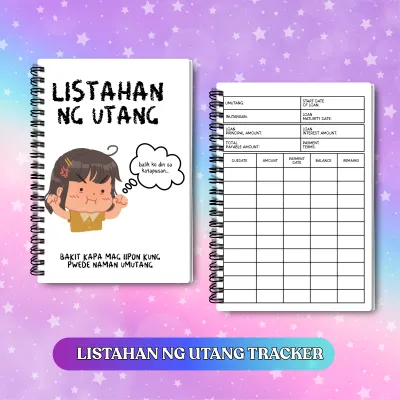


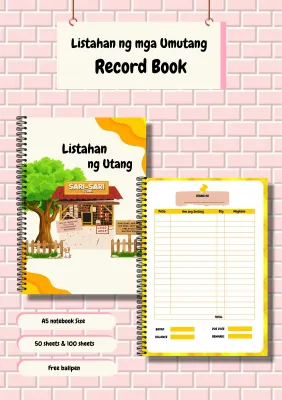
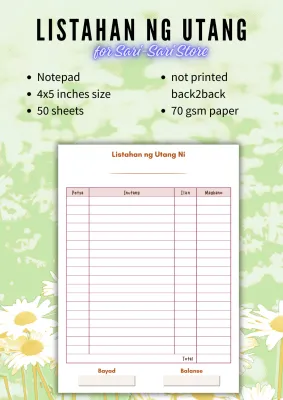
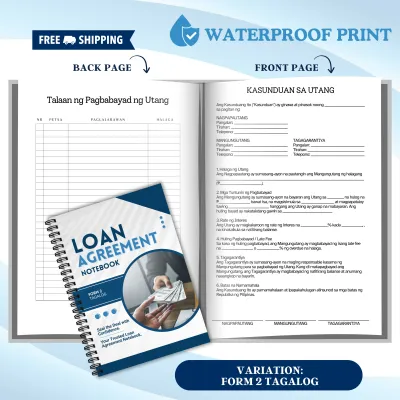
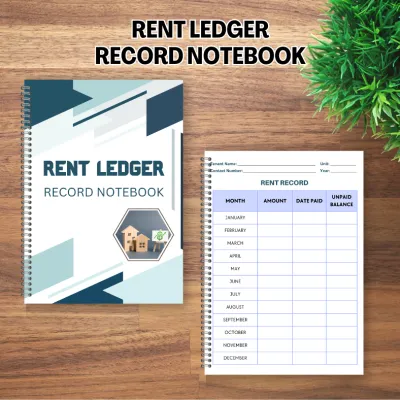
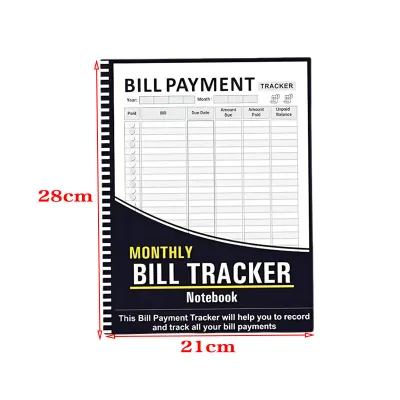
Prices are valid at publication and may change. Please refer to the product page for the latest price.
| Format | Layout Type | Binding Style | Update Flexibility | Best Suited For |
|---|---|---|---|---|
| Ledger Book | Pre-printed accounting columns | Hardbound or stitched | Low (fixed pages and layout) | High-volume structured tracking |
| Composition Notebook | Standard ruled lines | Sewn spine | Low (permanent page order) | Simple chronological logging |
| Loose-Leaf Binder | Customizable (ruled, grid, or blank) | Ring mechanism | High (add, remove, or move pages) | Managing multiple individual accounts |
Ledger Books (Accounting Formats)
Ledger books feature pre-printed columns specifically designed for financial accounting, typically organizing entries into date, description, debit, credit, and running balance sections. This structured layout is highly beneficial for minimizing calculation errors, as it prompts you to enter every transaction in a standardized, mathematical format. By separating money lent from payments received in dedicated columns, you can calculate outstanding balances quickly without sorting through cluttered text.
However, ledger books offer very little flexibility if your tracking style changes. The fixed column widths may not accommodate long notes or detailed descriptions of items purchased on credit. Furthermore, because the pages are permanently bound, you cannot insert extra sheets if a specific debtor’s record runs out of space, forcing you to jump to a different section of the book and split their history across non-consecutive pages.
Composition Notebooks
Composition notebooks are a traditional, highly reliable option for basic financial logging due to their sturdy, permanently bound sewn spines. This secure binding ensures that pages cannot be easily torn out or lost, providing a reliable, tamper-evident record of transactions that protects the integrity of your financial data. Their durable covers withstand daily wear and tear, making them a practical choice for busy environments where the book is frequently opened and closed.
The primary drawback of a composition notebook is its lack of specialized formatting, requiring you to draw your own columns manually if you want a structured layout. Additionally, the fixed page count means the notebook will eventually be filled, requiring you to transition to a new book. Some users also find that composition notebooks do not lay completely flat when open, which can make writing near the inner margins uncomfortable during long recording sessions.
Loose-Leaf Binders
Loose-leaf binders offer unmatched flexibility for managing multiple debtors because they allow you to add, remove, and rearrange pages at will. By using index tab dividers, you can dedicate specific sections to individual borrowers, keeping their entire transaction history in one continuous place regardless of when they borrow or pay. This modular design means you can easily expand the notebook by inserting fresh filler paper whenever a section becomes full, without disturbing the rest of your records.
This high level of flexibility does come with trade-offs in terms of bulk and page security. Binders are generally thicker and heavier than bound notebooks, making them less convenient to carry around in a small bag or store in a tight drawer. The paper holes can also tear over time with frequent turning, risking loose pages falling out, and the metal ring mechanisms can misalign or rust if exposed to high humidity.
Key Decision Factors for Your Debt Notebook
To select the most practical format for your daily routine, you must evaluate several physical and functional attributes of the stationery. The page layout and ruling style directly dictate your data entry speed and organization. While pre-printed ledger columns save time for formal bookkeeping, simple ruled or grid paper allows you to customize your own shorthand systems, draw custom tables, or write detailed descriptions of transactions.

Paper quality is another critical factor, especially when using ink pens that may bleed through or feather on low-grade paper. In tropical climates where humidity can soften paper fibers and slow down ink drying times, choosing paper with a higher density is essential for maintaining clean, legible records. Opting for paper that resists bleed-through ensures you can write on both sides of every page without obscuring previous entries.
Finally, consider the physical size and portability of the notebook in relation to where you will use it. If you need to record transactions on the go, a compact, pocket-sized notebook is highly convenient and easy to keep close at hand. Conversely, if your tracking is done primarily at a fixed desk or counter, a larger standard size provides ample writing space, reducing the frequency of page turns and allowing for more detailed financial entries.
How to Choose the Right Format for Your Situation
Selecting the right format requires matching your specific business or personal lending scenario to the strengths of each notebook type. If your priority is structured, high-volume tracking with built-in running balances at a fixed location, a dedicated Ledger Book is the most efficient choice. The pre-ruled columns streamline mathematical calculations and provide a professional, organized record that is easy to audit at the end of the month.
If you prefer a simple, secure, and highly portable log for low-volume, straightforward entries, a Composition Notebook is your best option. Its permanently bound pages ensure that your records remain intact and chronological, making it an excellent, low-maintenance tool for occasional personal loans or small-scale tracking where security and simplicity are paramount.
For those who manage multiple debtors simultaneously and need to expand, categorize, or reorganize records over time, a Loose-Leaf Binder provides the necessary modularity. You can easily allocate separate sheets for each person, insert new pages as needed, and archive completed records to keep the active binder light and organized.
Before making a final purchase, always verify that the paper weight and binding durability align with your preferred writing instruments and daily handling habits. Testing a pen on a back page or checking the manufacturer’s specifications for paper density can prevent frustrating ink smears and ensure your financial records remain legible for years to come.
Best Practices for Maintaining Your Debt Record
Maintaining an organized and legible debt record requires consistency in how you document every transaction. Establish a standardized entry format that includes the date, the debtor’s name, the exact amount in pesos (₱), the payment status, and any necessary explanatory notes. Consistently applying this format across all entries makes it easy to review outstanding balances quickly and prevents misunderstandings when settling accounts.
When corrections are necessary, handle them transparently to maintain the credibility of your financial records. Avoid using heavy correction tape or scribbling out mistakes until they are illegible, as this can raise questions about the accuracy or honesty of the record. Instead, draw a single, clean line through the incorrect entry, write the correct figure clearly next to it, and initial the change to show that the correction was made openly.
Protect your physical records from environmental damage by storing your notebook in a dry, cool place away from direct sunlight and moisture, which can degrade paper and fade ink over time. Because physical books can be lost, damaged, or destroyed, establish a regular routine for backing up your critical balances. Taking a quick, clear digital photograph of your active pages with a smartphone once a week ensures you always have a secure secondary record of what is owed.
Frequently Asked Questions (FAQ)
Can I use a standard spiral notebook instead of these three formats?
While a standard spiral notebook is widely available and inexpensive, it is generally less suitable for long-term financial records. The wire spiral binding can easily snag on bags or clothing, and the pages are often perforated, making them highly susceptible to accidental tearing and loss. Over time, frequent handling can cause the paper to pull away from the spiral coil, risking the loss of critical transaction histories. For secure financial tracking, bound or ringed formats offer much better durability and page retention.
What paper weight is best to prevent ink bleed-through in debt records?
To ensure clean, legible logging on both sides of a page, look for notebooks with a paper weight of at least 80 GSM (grams per square meter), though 100 GSM or higher is ideal if you prefer using gel pens or fountain pens. Checking the manufacturer’s specifications on the notebook label or product description will help you identify the paper density before buying. It is also wise to perform a quick trial on an inconspicuous back page with your preferred pen to observe how the paper handles the ink under local humidity conditions.

Community discussion
Share your experience or ask a question. Comments are reviewed before publication.