
Choosing the right physical format for a GCash book record is a critical decision for anyone managing digital transactions, whether for personal budgeting or running a local business. The ideal choice between a ledger book, a composition notebook, and a loose-leaf binder depends on your daily transaction volume, your need for layout customization, and the level of security required for your financial audits. For small business owners, such as those operating sari-sari stores or community loading stations, a structured ledger book offers a permanent, tamper-evident record that ensures financial integrity. Casual users tracking personal expenses often prefer the simplicity and affordability of a composition notebook, while high-volume merchants benefit from the modularity and receipt-storage capabilities of a loose-leaf binder.
In the Philippines, digital wallets have revolutionized how people send money, pay bills, and conduct daily commerce. However, relying solely on a mobile application to track these transactions can expose you to operational risks, such as system downtimes, network connectivity issues, or accidental data loss. A physical backup ensures that you always have immediate access to your financial history, allowing you to reconcile cash balances at the end of each day without relying on an active internet connection.
To build an effective tracking system, you must evaluate how each notebook format handles the specific demands of digital transaction logging. This includes assessing the ease of writing down long reference numbers, the durability of the binding under frequent daily use, and the flexibility to adapt the layout as your tracking needs change. By understanding the unique strengths and limitations of each option, you can establish a reliable bookkeeping routine that protects your financial records and simplifies your daily operations.
Products mentioned in this guide
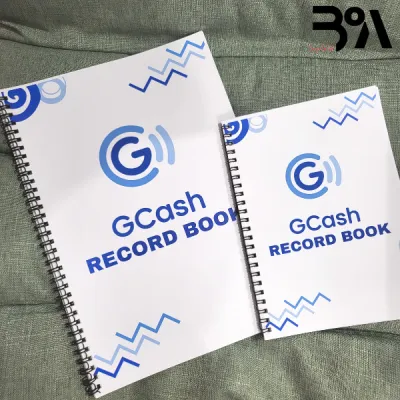
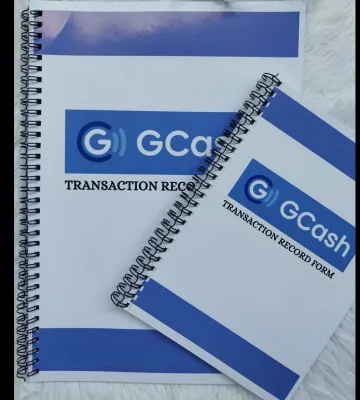
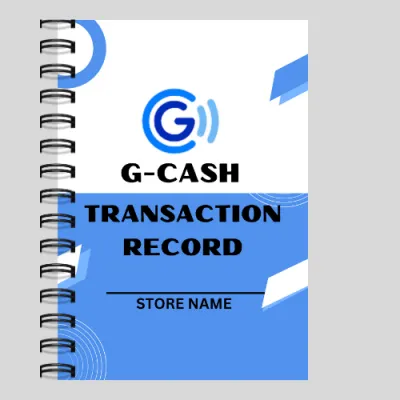
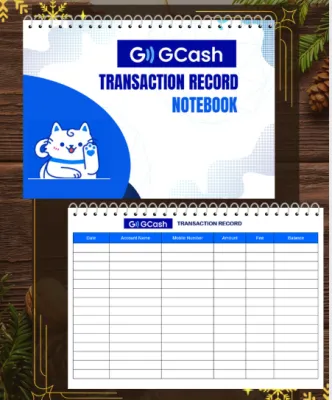
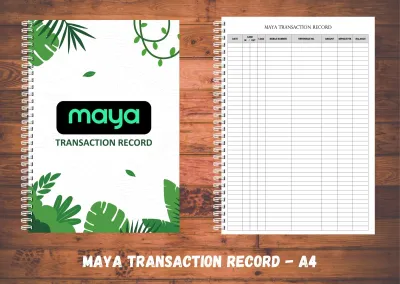
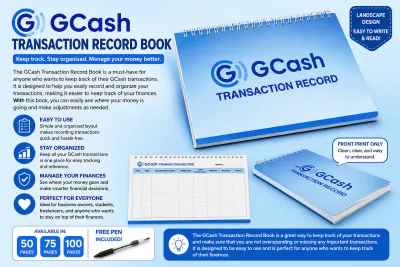
Prices are valid at publication and may change. Please refer to the product page for the latest price.
Core Comparison Metrics for GCash Transaction Logs
When evaluating paper formats for a GCash book record, the first metric to consider is the page layout and column structure. A standard digital transaction log requires several essential data points: the date and time of the transaction, the transaction type (such as Cash-In, Cash-Out, or Express Send), the customer’s mobile number, the unique 13-digit reference number, the transaction amount, any service fees charged, and the resulting running balance. The notebook you choose must accommodate these columns comfortably without forcing you to write in microscopic print, which can lead to transcription errors.
Binding durability and page security represent the second critical metric, especially in tropical climates where high humidity can weaken paper fibers and adhesives over time. For business owners, page security is also a matter of financial control; a notebook with easily removable pages poses a risk of unauthorized alterations or missing records. A secure, permanent binding ensures that every transaction remains part of a continuous, chronological audit trail that cannot be easily manipulated or lost.
Finally, the system must offer a practical balance of flexibility and error-correction capability. Manual bookkeeping is inherently prone to human error, such as transposing digits in a reference number or entering an incorrect amount. Your chosen format should allow you to correct these mistakes cleanly without ruining the legibility of the surrounding entries. Additionally, the ability to organize records by month or to attach physical evidence, such as printed thermal receipts from cash-in terminals, can significantly streamline your monthly reconciliation process.
Ledger Books for Structured and Permanent Tracking
Ledger books are specifically designed for accounting purposes, making them an excellent choice for structured and permanent financial tracking. These books typically feature pre-printed columns that naturally organize your entries into debits, credits, and balances, eliminating the need to manually draw lines with a ruler. This standardized layout promotes consistency in data entry, making it easy for anyone—whether the business owner or an assistant—to step in and maintain the records accurately.

The primary advantage of a ledger book is its permanent, tamper-evident construction. The pages are sewn together in signatures and bound securely, meaning that any attempt to tear out a page will visibly damage the spine and alert you to potential record tampering. This level of security is invaluable for small businesses where multiple employees handle cash-in and cash-out transactions, as it preserves a reliable, sequential audit trail that is essential for tax compliance and internal audits.
However, this rigidity also presents certain limitations. Ledger books have a fixed page count and a pre-determined column layout that cannot be easily customized to fit unique digital wallet details, such as a dedicated space for the 13-digit GCash reference number. You will need to adapt the existing generic columns, such as using the “Description” column to write down customer details and reference codes. Additionally, once a ledger book is completely filled, you must transition to a new volume, which can make cross-referencing historical transactions across multiple years somewhat cumbersome.
Composition Notebooks for Simple and Portable Logging
For casual users and micro-sellers, the standard composition notebook offers a highly accessible and portable solution for tracking digital transactions. These notebooks are widely available in local stationery shops across the Philippines and are highly affordable, making them an excellent low-cost entry point for basic bookkeeping. Their compact size and lightweight design make them easy to store in a desk drawer, keep on a small counter, or carry in a bag for on-the-go tracking.
Because composition notebooks feature simple ruled lines without pre-printed columns, they provide complete freedom to design your own layout. You can use a pen and a ruler to customize the column widths to match your exact tracking requirements, allocating more space for long reference numbers and customer names while keeping the amount and balance columns compact. This flexibility allows you to adapt the notebook for personal budgeting, household expense tracking, or managing a small side business with low transaction volumes.
The main drawback of a composition notebook is its permanent sewn binding combined with typically lower-grade paper. If you make a significant error or need to reorganize your logs, you cannot remove or insert pages without weakening the entire notebook structure. Furthermore, the paper used in standard composition notebooks is often thin, which can lead to ink bleed-through and feathering if you use gel pens or liquid ink rollers. This requires careful selection of writing instruments to ensure that your records remain legible on both sides of the page.
Loose-Leaf Binders for Flexible and Expandable Systems
Loose-leaf binders offer a highly flexible and modular approach to maintaining a GCash book record. By using a multi-ring binder, you can insert, remove, and rearrange pages as your transaction volume changes, allowing you to organize your records by month, quarter, or specific transaction types using tab dividers. This adaptability makes loose-leaf systems highly scalable, as you can simply add more paper refills when a section is full rather than starting an entirely new notebook.
One of the most significant advantages of a loose-leaf system is the ability to integrate physical receipts and documents directly into your ledger. You can insert plastic pocket sleeves or sheet protectors to store printed thermal receipts from cash-in machines, printed screenshots of high-value transactions, or monthly transaction statements printed from your email. This creates a comprehensive financial archive where the written log and the physical proof of transaction are stored together in one organized location, greatly simplifying the process of resolving customer disputes or preparing tax filings.
Despite these benefits, loose-leaf binders have notable trade-offs, including increased bulk and higher initial setup costs. Binders take up significantly more space on a countertop or in a drawer compared to bound notebooks, which may not be ideal for crowded retail environments. There is also a risk that individual pages can tear at the ring holes over time with frequent turning, potentially leading to misplaced records. To mitigate this, you must invest in high-quality paper refills with reinforced holes or use hole-reinforcer stickers to ensure the long-term durability of your logs.
How to Choose the Right Format for Your Needs
Selecting the best format for your GCash book record depends on matching the notebook’s structural characteristics to your specific operational workflow. If your primary goal is to maintain a secure, tamper-resistant audit trail for a commercial retail store or a busy loading station, a pre-formatted ledger book is the most suitable option. The permanent binding and structured columns enforce disciplined bookkeeping and protect your business against unauthorized record alterations.
If you are managing a personal budget, tracking casual peer-to-peer transfers, or running a micro-enterprise with minimal daily transactions, a composition notebook provides a practical, low-cost solution. Its portability and customizable ruled pages allow you to set up a simple tracking system without a significant financial investment. This format is ideal for those who value simplicity and do not require advanced organization or receipt storage.
For high-volume merchants, online sellers, and businesses that require detailed monthly reconciliation, a loose-leaf binder system is the superior choice. The ability to reorganize pages, add custom dividers, and insert plastic sleeves for physical receipts provides an unmatched level of organization. This system grows with your business, allowing you to maintain a clean, comprehensive financial archive over multiple years.
Regardless of the format you choose, it is essential to verify the paper quality and pen compatibility before starting your log. Look for notebooks or paper refills with a weight of 80 gsm or higher to prevent ink from bleeding through to the opposite side of the page. Perform a quick test on a back page with your preferred pen to check for drying speed and feathering; in the humid climate of the Philippines, paper naturally absorbs moisture, which can cause low-quality paper to bleed more easily. Choosing a high-quality paper ensures that your transaction records remain sharp, clear, and legible for years to come.
Frequently Asked Questions (FAQ)
Do I need to keep physical notebooks if the app provides digital transaction history?
Yes, maintaining a physical GCash book record is highly recommended even though the mobile application provides a digital transaction history. Physical logs serve as an invaluable offline backup during network outages, system maintenance, or power failures when you cannot access the app to verify a transaction. Additionally, manual bookkeeping allows you to record critical context that the app does not capture, such as the customer’s name, signature, and physical ID details, which are essential for resolving disputes and protecting your business from fraud. For local business permit compliance and daily cash drawer reconciliation, a physical ledger provides an immediate, tangible audit trail that simplifies verification for local authorities and internal audits.
What pen ink is best for preventing smudges in financial notebooks?
For financial logging, pigment-based gel pens or high-quality ballpoint pens are the best choices to prevent smudging and ensure long-term readability. Pigment-based inks dry quickly and offer excellent water resistance, which is crucial in humid tropical environments where moisture from hands or accidental liquid spills can cause standard dye-based inks to run and become illegible. Traditional ballpoint pens are also highly reliable because their oil-based ink is naturally water-resistant and rarely bleeds through even thin notebook paper. Always perform a quick smudge test on a corner of your notebook page to verify that the ink dries fast enough to keep your transaction numbers sharp and clear.

Community discussion
Share your experience or ask a question. Comments are reviewed before publication.