
The ideal notebook format for logging mobile wallet transactions depends entirely on your tracking volume and the complexity of your financial activities. There is no single universal winner; columnar books excel at high-volume daily logs, ledger formats support strict double-entry accounting, and grid notebooks offer maximum flexibility for custom trackers. Use the conditional framework below to match the layout to your specific recording habits.
In the Philippines, where mobile wallets serve as a primary hub for daily transactions, utility payments, and small business operations, maintaining a physical backup log is a practical way to safeguard your financial records. Whether you run a neighborhood sari-sari store offering cash-in services, manage a growing online shop, or simply want to track your personal monthly expenses, a dedicated paper log provides an offline, tamper-proof audit trail. Choosing the right layout ensures that your records remain organized, legible, and easy to reconcile at the end of every day.
Decoding Ledger, Columnar, and Grid Layouts
Understanding the physical structure of these three classic stationery formats is the first step in selecting the right tool for your tracking needs. Each layout is designed with a specific organizational logic that dictates how your eyes scan the page and how your hand records data.
Products mentioned in this guide
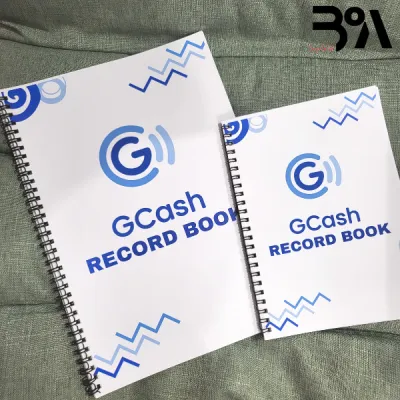
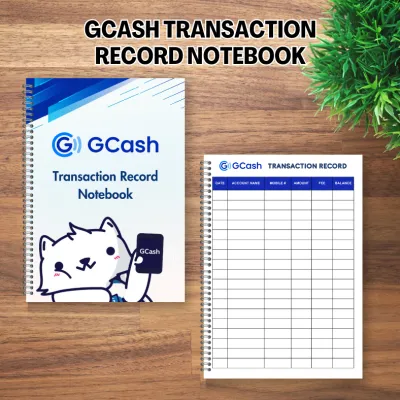
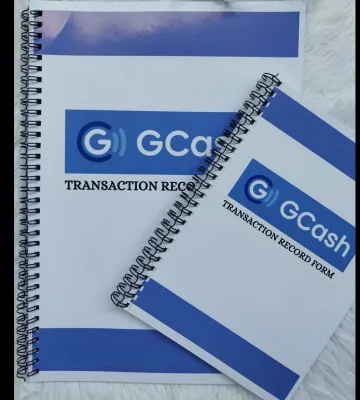

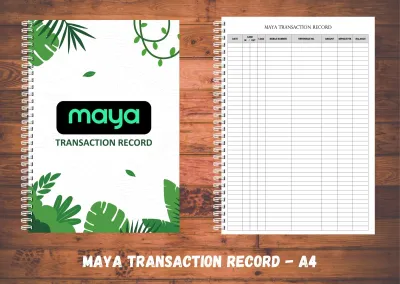
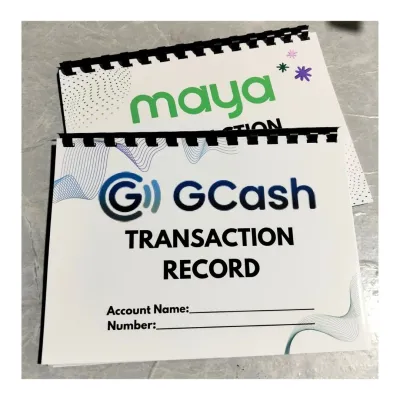

Prices are valid at publication and may change. Please refer to the product page for the latest price.
Ledger format: A traditional ledger notebook features pre-printed columns specifically designed for double-entry bookkeeping. Typically, a page is divided into sections for the date, transaction description, posting reference, debit (inflows), credit (outflows), and a running balance. This structure forces a strict mathematical discipline. Every time you receive a GCash transfer or send a payment, you immediately calculate the new total in the far-right column. This layout is highly structured and leaves little room for creative customization, making it ideal for formal financial tracking.
Columnar format: Columnar books consist of a wide description column on the left side of the page, followed by multiple narrow vertical columns stretching to the right margin. These notebooks are categorized by the number of columns they offer, such as 2-column, 3-column, 4-column, or even up to 12-column layouts. Unlike a ledger, a columnar book features a single, blank header row at the top of the vertical columns. This design allows you to define your own categories across a single horizontal line, making it exceptionally efficient for sorting diverse data points without flipping pages.
Grid (graph) format: Grid notebooks feature a continuous pattern of small, uniform squares across the entire page, typically measuring 5mm or 3.5mm. There are no pre-printed margins, headers, or vertical division lines. This blank canvas offers maximum flexibility. You can use the grid lines to draw custom tables, design visual progress bars, or write in any direction. For users who find pre-printed accounting lines too restrictive, the grid format allows you to design a personalized tracking system that can change from month to month.
Matching Layouts to Your GCash Transaction Types
GCash transactions present unique logging challenges that differ from traditional cash-in-hand exchanges. A typical digital transaction involves a long reference number, precise timestamps, service fees, and various transaction categories like bank transfers, bills payments, or peer-to-peer sending.

Managing long digital reference numbers is one of the most common pain points when keeping a physical log. GCash reference IDs are typically 13 digits long. In a narrow, pre-printed column, writing these numbers clearly can be incredibly difficult, leading to cramped handwriting that is hard to read during an audit. Columnar books with wider column options or grid notebooks where you can allocate a specific number of grid squares horizontally are excellent for accommodating these long numerical strings without crowding the page.
If you operate a business that offers GCash cash-in and cash-out services, your transaction types are highly repetitive but require multiple data points. For every cash-in, you must record the customer’s mobile number, the amount sent, the service fee charged (for example, ₱15 for bank transfers or a 2% cash-out fee), and the reference number. A columnar book is perfectly suited for this high-volume workflow. You can assign a dedicated column to each of these variables, allowing you to log dozens of transactions per page and quickly calculate daily totals by summing up individual columns.
For personal budgeting, your GCash activity is likely more diverse but lower in volume. You might use the app to pay your electricity bill, send money to a family member, buy load, or deposit money into GSave. A ledger format works beautifully here because it focuses on the running balance. You can easily see how each transaction impacts your overall digital funds. Alternatively, if you want to track your spending categories visually, a grid notebook allows you to sketch custom monthly expense charts alongside your transaction log.
| Feature / Scenario | Ledger Notebook | Columnar Book | Grid Notebook |
|---|---|---|---|
| Primary Focus | Running balance reconciliation | Multi-variable categorization | Custom layouts and tracking |
| Reference Number Space | Moderate (fixed columns) | Wide (customizable column widths) | Highly flexible (draw your own) |
| Fee & Cashback Tracking | Requires separate line entries | Dedicated vertical columns | Custom sidebar or color-coded boxes |
| Best For | Personal budgeting & fund audits | Sari-sari stores & loading businesses | Creative planners & custom budgets |
| Layout Rigidity | High (pre-printed structure) | Medium (fixed columns, custom headers) | Low (completely blank grid) |
Paper and Binding Specs to Check Before Buying
The physical quality of your notebook directly impacts how comfortable it is to use daily and how well your records survive over time. Because a transaction log is opened and written in frequently, you must verify several key stationery specifications before making a purchase.
Paper weight and bleed-through resistance are critical, especially in the humid tropical climate of the Philippines. High humidity can soften paper fibers, making cheap or thin paper highly absorbent. If you use gel pens, fine liners, or highlighters to color-code your transactions, thin paper (such as standard 50 GSM or 60 GSM school notebook paper) will suffer from feathering and bleed-through. This makes the reverse side of the page unusable and ruins your records. To prevent this, look for notebooks with a paper weight of at least 80 GSM, though 100 GSM or higher is ideal for ensuring a clean, bleed-free writing surface on both sides of the sheet.
The binding of the notebook determines how easily you can write across the entire width of the page. When using columnar or ledger formats, you frequently need to write close to the center margin. A notebook with a stiff, glued binding that resists staying open will force you to fight the pages while writing, leading to messy logs. Look for lay-flat bindings, thread-sewn bindings, or spiral-bound notebooks. Thread-sewn and lay-flat designs allow the book to open completely flat on your desk, providing an unobstructed surface from the far-left margin to the far-right edge. Spiral bindings are also highly practical, though the central coil can sometimes interfere with your hand placement depending on whether you are left- or right-handed.
Page size is another essential factor to consider. For detailed transaction logging, standard pocket-sized notebooks are generally too small to accommodate dates, descriptions, 13-digit reference numbers, and monetary amounts on a single line. A4 size (210 x 297 mm) or B5 size (176 x 250 mm) notebooks offer the ideal balance, providing generous horizontal space for multiple columns while remaining portable enough to store in a drawer or carry in a bag.
How to Choose the Right Format for Your Logs
To finalize your decision, evaluate your daily transaction volume and your primary tracking goal. Matching your specific operational needs to the correct notebook layout will save you time and prevent administrative headaches down the road.
Choose a Columnar Book if you run a commercial cash-in/cash-out service, a loading station, or a small retail business. The ability to assign custom headers to multiple vertical columns allows you to log repetitive customer data rapidly. This structure makes daily reconciliation straightforward, as you can quickly sum up your service fees, cash inflows, and cash outflows at the end of business hours.
Choose a Ledger Notebook if your primary goal is strict financial accountability and maintaining an accurate running balance. This format is ideal for managing a dedicated business fund or a strict personal budget where every single centavo must be accounted for. The pre-printed debit, credit, and balance columns eliminate the need to draw your own lines, providing a professional, ready-to-use accounting structure.
Choose a Grid Notebook if you prefer a highly customized approach to your personal finances. If your transaction types vary wildly from month to month, or if you enjoy creating visual trackers, expense pie charts, and savings goal diagrams, the grid layout offers the creative freedom you need. It is the perfect hybrid for those who want to combine a transaction log with a personal journal or budget planner.
Before purchasing your notebook in bulk, always perform a simple ink test on the very last page. Write down a sample transaction line using your favorite pen to observe how the ink behaves on the paper. Check for drying speed, feathering, and whether the ink bleeds through to the other side. This quick verification step ensures that your chosen combination of pen and paper will deliver clean, legible records for months to come.
Frequently Asked Questions (FAQ)
Is a standard lined notebook sufficient for tracking mobile wallet transactions?
While a standard lined (ruled) notebook can be used, it lacks the vertical structure required for efficient financial tracking. You will have to manually draw vertical lines with a ruler to separate dates, descriptions, reference numbers, and amounts. This process is time-consuming and often results in uneven columns. Specialized formats like columnar or ledger books save you preparation time and provide a much cleaner, more professional layout that reduces the risk of alignment errors when recording numbers.
How do I fit long digital reference numbers into narrow columns?
If you are using a notebook with narrow pre-printed columns, fitting a 13-digit GCash reference number can be challenging. One practical strategy is to record only the last 4 to 6 digits of the reference number in your physical log, as these are usually sufficient to locate the transaction within your app’s digital history. Alternatively, you can write the reference number diagonally or split it across two lines within the description column to keep your numerical columns clean and dedicated solely to monetary values.

Community discussion
Share your experience or ask a question. Comments are reviewed before publication.