
Choosing the right document storage tool depends on how often you move your papers, the total volume of your files, and the environmental conditions of your workspace. If you frequently transport thick stacks of legal-sized documents through humid commutes or need to bundle miscellaneous items like receipts and booklets together, a long expandable envelope is the ideal choice. Conversely, if your primary goal is to establish an orderly, easily searchable archive inside a desk drawer or filing cabinet, traditional folders and file organizers are far more efficient.
Understanding when to deploy each tool prevents common office frustrations, such as crumpled edges, lost receipts, or disorganized piles that take hours to sort. In tropical climates where humidity and dust can quickly degrade paper quality, selecting the correct protective barrier is also a matter of preservation. By matching your filing habits to the physical strengths of these stationery staples, you can build a workflow that keeps your important documents secure, clean, and accessible.
Understanding the Structural Differences: Expandable Envelopes vs. Regular Folders
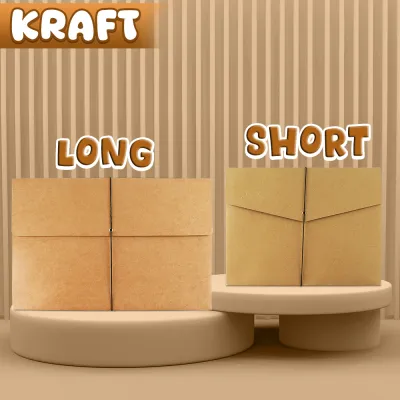
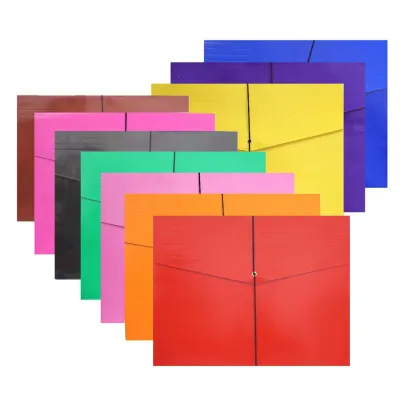
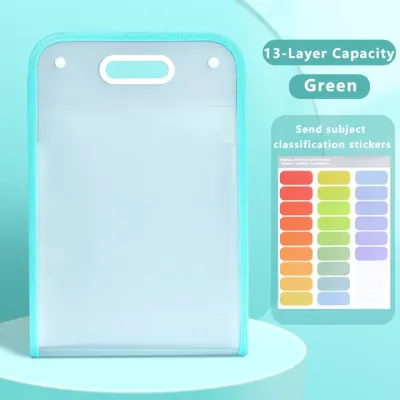
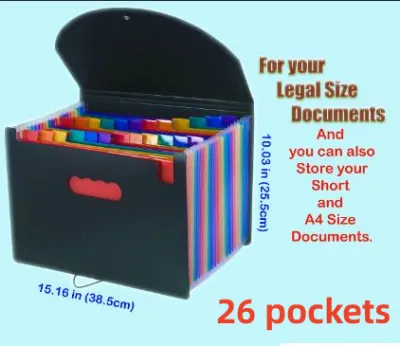
To make an informed choice, it is essential to look at how these two storage options are built. A long expandable envelope is defined by its flexible, accordion-style gussets on the sides and bottom. These gussets allow the envelope to expand or contract based on the volume of paper inside, often accommodating stacks that are several inches thick. Most expandable envelopes also feature a protective top flap secured by an elastic band, a button-and-string tie, or a plastic snap closure. This enclosed design ensures that contents remain sealed off from external elements, making them highly resilient against dust, light moisture, and physical wear during transit.
Products mentioned in this guide
![Expanding Envelope With Garter Expandable Envelope With Garter Long (10 x 15 INCHES) Kraft Brown Blue Yellow Hot Pink Green Red Document Envelope File Envelope (10) Pcs Per Pack [Future Industries]](https://img.lazcdn.com/g/p/27209053bf22d510c0902ca972773846.jpg_400x400q80.jpg_.webp)
Prices are valid at publication and may change. Please refer to the product page for the latest price.
In contrast, regular folders—such as manila folders, sliding bar folders, or standard clear sleeves—are designed with a flat or minimally creased spine. They are built for low-capacity storage, typically holding only a few dozen sheets before they begin to bulge and lose their shape. Regular folders are usually open on one or more sides, allowing you to slide papers in and out quickly without manipulating a clasp or flap. While this open structure makes document retrieval incredibly fast, it offers very little protection if the folder is tipped upside down or carried outside an office environment.
Material composition also plays a major role in how these tools perform. Regular folders are commonly made from lightweight paperboard or thin plastic, which can easily bend or warp under humid conditions. Expandable envelopes, on the other hand, are frequently constructed from heavy-duty kraft paper, reinforced fiberboard, or thick polypropylene. Polypropylene versions are particularly useful in tropical regions, as they act as a barrier against moisture, preventing pages from absorbing damp air and becoming wavy or moldy over time.
When to Choose a Long Expandable Envelope for Your Documents
A long expandable envelope shines when you are dealing with high-volume, multi-sized, or highly mobile document collections. In the Philippines, the term “long” paper typically refers to the standard 8.5 by 13-inch bond paper, which is slightly shorter than the US legal size of 8.5 by 14 inches but significantly longer than A4 or letter paper. A long expandable envelope is specifically sized to house these longer sheets comfortably without bending the corners. If your daily tasks involve handling land titles, legal contracts, notarized agreements, or school records printed on long bond paper, this envelope provides the necessary physical clearance to keep those documents pristine.

Portability is another major reason to choose an expandable envelope. If you are a student commuting to university, a real estate agent traveling to meet clients, or a remote worker splitting time between home and a local coffee shop, your documents must survive transit. Placing loose folders in a backpack or tote bag often results in papers slipping out, getting bent by other items, or getting wet during sudden rain showers. The secure closure of an expandable envelope keeps everything self-contained and upright, acting as a protective shield inside your bag.
Furthermore, these envelopes are excellent for temporary, project-based grouping. When you are gathering diverse materials for a single goal—such as compiling tax documents, organizing receipts for a business trip, or collecting reference brochures for a home renovation—you do not need a permanent filing system. You need a single, portable container that can hold papers of various shapes, sizes, and thicknesses. Because the gussets expand to fit the contents, you can toss in small notebooks, business cards, and thick printouts together without worrying about overloading the container.
When Regular Folders and File Organizers Are the Better Option
While expandable envelopes excel at bulk storage and mobility, they are not the best tool for every scenario. If your primary objective is long-term archiving and rapid retrieval, traditional folders and file organizers are vastly superior. In a stationary office setup, you want to be able to find a specific sheet of paper in seconds. Regular folders, especially when paired with hanging file frames or desk organizers, allow you to flip through tabs quickly. You can label each folder tab clearly, arrange them alphabetically or chronologically, and pull out a single folder without disturbing the rest of the filing system.
Drawer and cabinet compatibility is another area where regular folders dominate. Standard office furniture, such as lateral filing cabinets and mobile pedestal drawers, is designed specifically to hold hanging folders and slim manila folders. Trying to stuff several thick, fully expanded envelopes into a standard filing drawer quickly exhausts the available space and makes it difficult to slide the drawer open or closed. Regular folders keep your files compact and vertical, maximizing the storage capacity of your office furniture.
Additionally, regular folders are ideal for strict, granular categorization. If you need to separate your documents into highly specific categories—such as individual utility bills, monthly bank statements, or separate client profiles—using a bulky expandable envelope for each category is impractical and expensive. Instead, placing a few sheets of paper into individual, color-coded manila folders allows you to maintain a clean, organized system where every document has a precise, dedicated home.
How to Decide Which Storage Solution Fits Your Workflow
To determine which option is right for your current needs, start by assessing your document volume and how often you need to access or move your files. If you are dealing with a static set of documents that will live permanently on a shelf or in a drawer, regular folders are the logical choice. They are cost-effective, easy to label, and allow for quick, single-sheet retrieval. However, if you are actively gathering documents, carrying them to different locations, or dealing with thick, multi-page reports that must stay together, invest in a long expandable envelope.
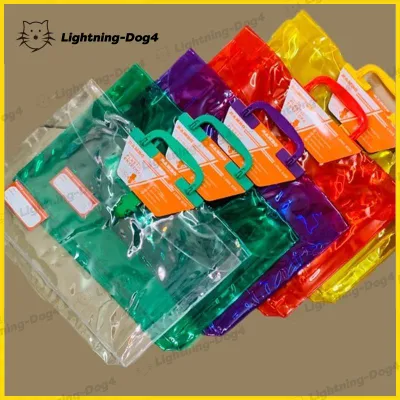
You should also evaluate your physical storage environment. If your workspace is prone to dust, or if you live in an area with high seasonal humidity, storing loose papers in open folders can lead to yellowing, dust accumulation, and moisture damage. In such environments, a sealed plastic expandable envelope offers a level of environmental protection that standard paper folders simply cannot match. It keeps the air out and prevents pests or accidental spills from ruining important records.
Ultimately, the most efficient office workflows often combine both methods. You can use a long expandable envelope as your “active” or “transit” file, keeping all your current project documents, receipts, and notes secure while you are on the move. Once a project is completed or a transaction is finalized, you can sort those documents, discard what is no longer needed, and transfer the permanent records into slim, labeled folders inside a stationary filing cabinet. This hybrid approach gives you the best of both worlds: maximum protection and mobility during the active phase, and neat, space-saving organization for long-term storage.
Frequently Asked Questions (FAQ)
Can I use a long expandable envelope for long-term archiving?
While you can use a long expandable envelope for archiving, it is generally not recommended for permanent, multi-year storage of highly sensitive documents. Because papers are packed tightly together in bulk, they can stick to one another over time, especially in humid conditions. Additionally, standard expandable envelopes are rarely made from acid-free materials, meaning the paperboard or plastic can degrade and cause yellowing or ink transfer over decades. For true archival storage, it is better to use acid-free manila folders placed flat in archival boxes or hung in a climate-controlled filing cabinet.
How do I prevent papers from getting crumpled inside an expandable envelope?
To keep your documents flat and uncreased, avoid placing loose, single sheets directly into a fully expanded envelope, as they can slide down and buckle at the bottom. Instead, group your papers into slim manila folders or plastic clear sleeves first, then place those folders inside the expandable envelope. This adds structural rigidity to the sheets. Additionally, ensure the envelope is packed snugly but not overstuffed; if the gussets are stretched to their absolute limit, the pressure can bend the edges of the documents closest to the sides.

Community discussion
Share your experience or ask a question. Comments are reviewed before publication.