
A long size expandable envelope is designed to hold documents that exceed standard letter or A4 dimensions, most notably “long bond paper” (8.5 x 13 inches) and legal-size documents (8.5 x 14 inches). These envelopes provide the extra length and width needed to keep longer sheets flat, unbent, and organized. Because they feature expandable sides, or gussets, they can accommodate thick stacks of paper, multi-page contracts, tax records, and school portfolios that would burst a standard flat envelope.
Choosing the right filing supply requires understanding how your specific documents interact with the envelope’s physical limits. In tropical climates like the Philippines, high humidity can cause paper to absorb moisture, making sheets slightly thicker, heavier, and more prone to curling at the edges. Storing these documents in an envelope with insufficient clearance can lead to crumpled corners or torn edges. By matching your document dimensions and volume to the correct envelope specifications, you can protect your important papers from physical wear and environmental exposure.
Standard Document Sizes vs. Long Envelope Dimensions
When shopping for filing supplies, the term “long size” can be surprisingly ambiguous. In the Philippines, “long bond paper” traditionally refers to the folio size, which measures 8.5 by 13 inches (216 by 330 mm). This is distinct from the standard US Legal size, which measures 8.5 by 14 inches (216 by 356 mm). Many imported expandable envelopes are manufactured to fit US Legal documents, meaning they will easily accommodate local long bond paper with an extra inch of clearance.
Products mentioned in this guide
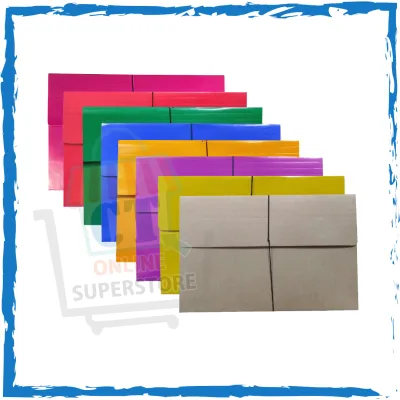
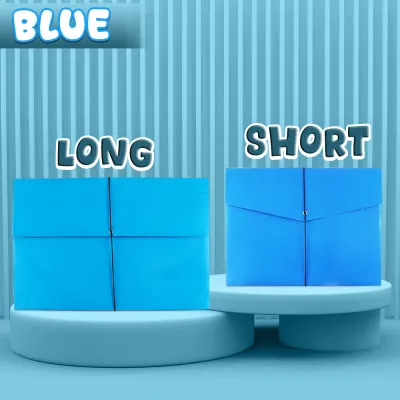
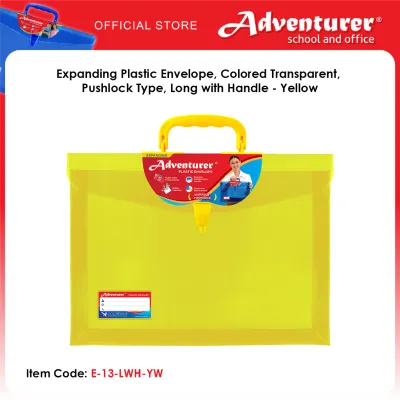
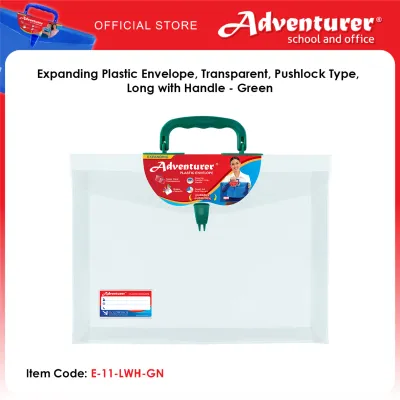
Prices are valid at publication and may change. Please refer to the product page for the latest price.
However, you must also consider standard international sizes like A4 (8.27 by 11.69 inches) and US Letter (8.5 by 11 inches). While these shorter sheets easily slide into a long expandable envelope, they may shift around inside if carried vertically. If you are organizing a mix of sizes, the long envelope acts as a versatile catch-all, but you should verify that shorter documents do not slip beneath larger dividers where they might be overlooked.
The critical distinction to make before purchasing is the difference between external envelope dimensions and internal usable space. An envelope labeled as “long size” might have external measurements of 9.5 by 14.5 inches, but the internal usable area is restricted by seams, heat-sealed borders, and divider attachments. If your documents are housed in plastic sheet protectors, their outer dimensions will exceed standard paper sizes, requiring an envelope with generous internal clearance.
Always check the product label or online specification sheet for the exact internal dimensions rather than relying solely on generic terms like “long” or “legal.” Manufacturers often design these envelopes with a slight margin to allow easy insertion, but budget options may cut these margins close. Comparing your largest document’s physical measurements against the envelope’s internal specifications prevents the frustration of a tight, damaging fit.
Evaluating Thickness and Expandable Capacity
The defining feature of an expandable envelope is its gusset, which is the pleated side material that unfolds to create depth. A standard flat envelope has zero depth and can only hold a few loose sheets before the paper begins to bend or the seams split. In contrast, expandable models typically offer a gusset width ranging from 1 to 3 inches, allowing them to hold anywhere from 100 to over 500 sheets of standard paper.

To evaluate the capacity you need, assess the bulk of your document collection. A single certificate or a thin land title requires very little depth, but a multi-page legal contract, a thick corporate ledger, or a year’s worth of utility bills will quickly demand a 2-inch or 3-inch expansion. If you choose an accordion-style envelope with built-in internal dividers, remember that each divider partition consumes a small amount of internal space, slightly reducing the total sheet capacity.
Overstuffing an expandable envelope is a common cause of document damage and product failure. When an envelope is packed past its intended capacity, the gussets pull inward, compressing the edges of the paper and causing them to crimp or tear. Furthermore, excessive tension puts strain on the bottom seams and side welds, which can split open over time, especially when exposed to high heat and humidity.
You can identify physical limits by observing the closure mechanism when the envelope is full. If the flap must be pulled tightly to reach the button, elastic band, or hook-and-loop fastener, the envelope is overstuffed. A properly filled envelope should allow the flap to fold naturally over the top without distorting the shape of the front panel or putting visible stress on the closure.
Step-by-Step Fit Verification Before Buying
To ensure your documents fit securely without any risk of damage, follow a simple measurement and verification process before making your purchase. First, gather the entire stack of documents you plan to store in a single envelope. Align the edges neatly and use a standard ruler to measure the overall thickness of the stack at its deepest point, as well as the exact length and width of the sheets.
Next, add a necessary clearance margin to your measurements. For a smooth user experience, you should allow at least 0.5 inches of extra space along both the length and width of the internal envelope dimensions. This clearance ensures that you can slide the document stack in and out without scraping the edges against the seams, which is particularly important for preserving delicate papers.
Once you have your target internal dimensions, verify the closure mechanism’s compatibility with your storage style. If you plan to carry the envelope in a backpack or briefcase, a secure elastic band or a dual-button tie closure is ideal because it keeps the flap firmly shut even when compressed. For shelf storage, a simple snap button or hook-and-loop tab may suffice, provided the flap has enough length to cover the fully expanded gusset.
Finally, consider the material of the envelope in relation to your storage environment. Heavy-duty polypropylene plastic offers excellent water resistance and durability, protecting papers from accidental spills or humid air, but it lacks the flexibility of heavy paperboard. If you choose a plastic model, ensure the welded seams are thick and reinforced, as rigid plastic is less forgiving of overstuffing than flexible paper gussets.
Common Sizing Mistakes to Avoid
One of the most frequent errors is confusing standard “long” mailing envelopes with “long” document filing envelopes. A standard #10 mailing envelope is often colloquially referred to as a “long envelope” in office settings, but it is designed only for tri-folded letter paper and measures approximately 4.12 by 9.5 inches. Attempting to purchase an expandable version of this mailing envelope will result in a product far too small for flat, unfolded long bond paper.
Another common oversight is ignoring the extra space required by protective accessories. If you keep your certificates or legal agreements inside individual plastic sheet protectors, clear sleeves, or laminated covers, these outer layers add significant width and length to the document. A standard long expandable envelope may not accommodate these oversized plastic edges, forcing you to bend the plastic or purchase an extra-wide utility folder.
Lastly, do not assume that all products labeled “legal size” are identical. Because manufacturing standards vary globally, some brands use “legal” to mean US Legal (14 inches long), while others use it to describe the shorter folio size (13 inches long). If you have true US Legal documents and purchase an envelope designed strictly for 13-inch long bond paper, the top edge of your documents will protrude, preventing the flap from closing securely and leaving your papers exposed to dust and moisture.
Frequently Asked Questions (FAQ)
Can a long size expandable envelope hold A4 documents?
Yes, a long size expandable envelope can easily hold A4 documents because A4 paper (8.27 by 11.69 inches) is shorter and narrower than both long bond paper and US Legal paper. When inserting A4 sheets, you can place them in a landscape or portrait orientation depending on the envelope’s opening style. However, because A4 paper is shorter, loose sheets may slide around inside a long envelope, so it is best to secure them with a paperclip or keep them inside a dedicated sub-folder to prevent shifting.
Will an expandable envelope prevent certificates from bending?
An expandable envelope provides basic protection against dust, light spills, and minor handling wear, but standard plastic or paperboard models are not completely rigid. If the envelope is placed inside a soft bag or packed tightly against heavy items, it can still flex, which may cause delicate certificates to bend or crease. To prevent bending, you should insert a thick piece of chipboard or rigid cardboard backing alongside your certificates, or opt for a heavy-duty, hard-shelled expanding file case.

Community discussion
Share your experience or ask a question. Comments are reviewed before publication.