
Choosing the right notebook is a fundamental decision that shapes how you capture ideas, organize tasks, and retain information. Whether you are a student managing multiple subjects or a professional tracking daily project milestones, your choice of stationery directly impacts your daily productivity. The decision between a loose-leaf system and a traditional bound notebook depends on your organizational style, writing environment, and how you prefer to archive your notes.
Loose-leaf systems offer unmatched flexibility, allowing you to rearrange pages, insert dividers, and consolidate multiple subjects into a single binder, making them ideal for students and project managers who need to adapt their archives constantly. Conversely, bound notebooks provide a structured, chronological record with superior durability and a seamless writing surface, making them the preferred choice for journaling, official logs, and professionals who value portability and a distraction-free workflow.
Core Structural Differences and Paper Compatibility
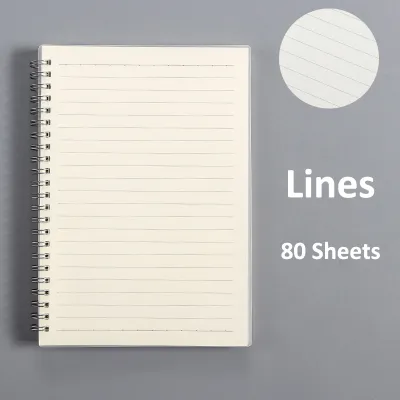
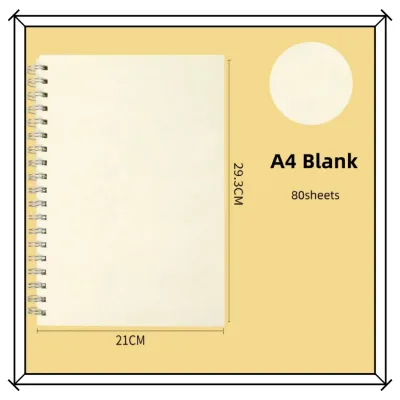
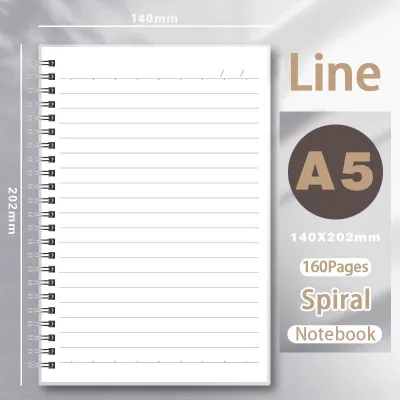
To choose the right tool, you must first understand the physical construction of these two systems. Bound notebooks rely on permanent binding methods such as stitching, gluing, or spiral wire. Stitched and glued bindings (often called casebound or thread-bound) offer a clean, professional aesthetic and allow the book to lay relatively flat, though you must often press down on the spine to write comfortably near the center margin. Spiral and wire-o bindings allow the notebook to fold back on itself completely, saving desk space, but they do not permit you to remove or insert pages without tearing the paper.
Products mentioned in this guide
![[A5 Size] Stationery 25K Moleskin Rubber Diary Strap Notebook w/ String Lock](https://img.lazcdn.com/g/p/08767f5921c9c9d01e69076fe785e988.jpg_400x400q80.jpg_.webp)
Prices are valid at publication and may change. Please refer to the product page for the latest price.
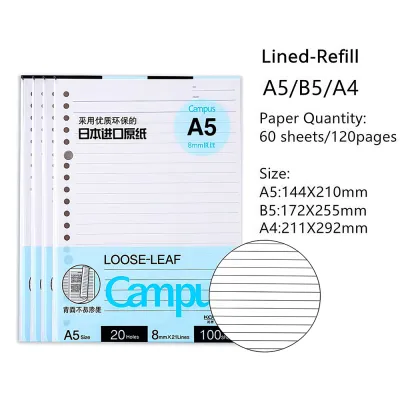
Loose-leaf systems, on the other hand, utilize a ring mechanism—ranging from traditional three-ring metal binders to modern multi-ring plastic slide binders—that allows pages to be added, removed, or rearranged at will. When selecting a loose-leaf binder, pay close attention to the hole-punch standard. Common international paper sizes like A4 and B5 often use 30-hole or 26-hole configurations, respectively, which are highly popular in local stationery shops. Standard letter-size paper typically uses a three-hole system. Mixing these standards can lead to misaligned pages that tear easily or fail to fit inside your binder shell.
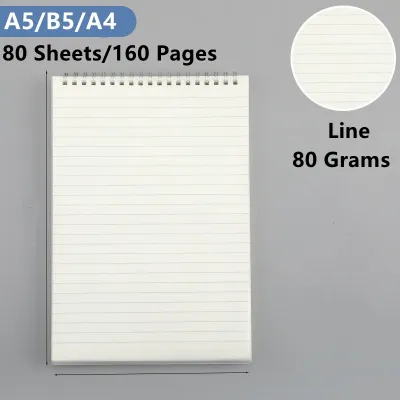
Paper weight, measured in grams per square meter (GSM), is another critical factor to check on product labels before purchasing. Standard notebook paper often ranges from 60 to 80 GSM, which is suitable for ballpoint pens but may suffer from ink feathering or bleed-through when using gel pens or fountain pens. If you prefer wet inks, look for paper weights of 100 GSM or higher. Additionally, consider the ruling format—such as lined, grid, dotted, or blank—and verify that your chosen binder system has readily available refills in your preferred layout.
Organization and Flexibility for Different Workflows
The way you process information should dictate your notebook’s organizational structure. Loose-leaf binders excel in dynamic environments where information does not arrive in a neat, chronological order. For instance, a college student attending lectures for four different courses can carry a single binder with color-coded dividers, filing notes under the correct subject as the day progresses. If a professor hands out a physical syllabus or worksheet, you can simply punch holes in it and insert it directly next to your lecture notes, keeping all relevant materials in one cohesive sequence.

However, this high level of flexibility requires active maintenance. Without regular sorting, a loose-leaf binder can quickly become a disorganized stack of loose papers. Bound notebooks eliminate this administrative chore by enforcing a strict chronological flow. Every entry remains exactly where you wrote it, preventing accidental page loss or misplacement. This permanent structure is highly beneficial for professionals who need an indisputable record of meeting minutes, laboratory experiments, or daily task lists.
The physical writing experience also differs significantly between the two formats. In a bound notebook, your hand can move smoothly across the page without encountering physical obstructions. In contrast, the bulky rings of a loose-leaf binder can interfere with your hand placement, particularly when writing on the inner margins of the page. To mitigate this, many loose-leaf users find themselves constantly removing pages to write on a flat desk surface before clipping them back into the binder, adding an extra step to their note-taking routine.
Durability, Portability, and Daily Handling
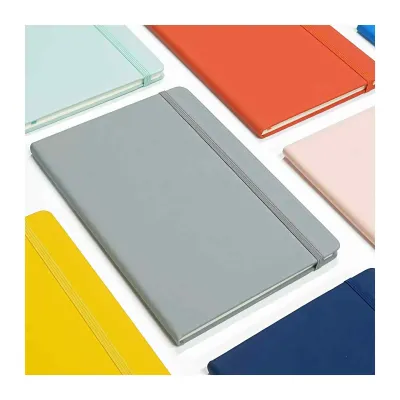
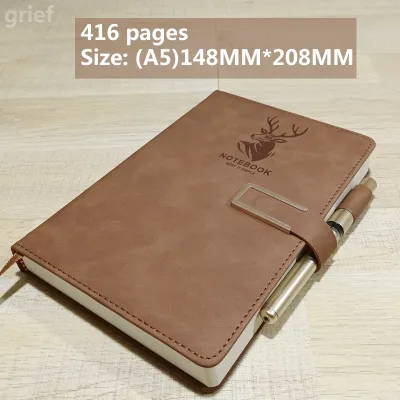
Daily commuting puts significant physical stress on stationery, especially in tropical climates where high humidity and sudden rain showers can soften paper and weaken covers. Bound notebooks with hardcovers or heavy-duty faux leather wraps offer excellent protection against bending, moisture, and corner wear inside a packed backpack. Because the pages are sewn or glued securely to the spine, they are highly resistant to tearing out during transit, ensuring your records remain intact over years of storage.
Loose-leaf binders, particularly large three-ring models, can be bulky and heavy to carry daily. While flexible plastic binder shells offer a lighter alternative, they provide less structural protection for the paper edges inside. The primary durability risk with loose-leaf systems lies at the contact points between the paper holes and the binder rings. Frequent page-turning can cause the paper around the holes to wear down and tear, eventually causing pages to fall out. Using reinforcement stickers or choosing high-quality, high-GSM refill paper can prevent this issue, but it requires extra effort.
Before purchasing any notebook, perform a few simple physical checks to assess its build quality. For bound books, gently open the notebook to the center and inspect the spine; visible stitching is generally a sign of a durable, lay-flat binding, whereas excess dried glue may indicate a spine that could crack under heavy use. For loose-leaf binders, open and close the rings several times to ensure they align perfectly without gaps. Misaligned rings will catch on the paper holes, causing frustration and tearing when you turn the pages.
Cost, Refill Economics, and Long-Term Value
When evaluating the financial aspect of your stationery setup, consider both the initial purchase price and the long-term maintenance costs. A premium bound notebook can range from ₱150 to over ₱800 depending on the brand, cover material, and paper quality. Once you fill every page of a bound notebook, you must purchase an entirely new book, meaning your stationery expenses remain constant over time.
A loose-leaf system requires a higher upfront investment, as you must purchase the binder shell or ring mechanism, which can cost anywhere from ₱100 to ₱500 or more for durable designs. However, the long-term economics of loose-leaf systems are highly favorable. Once you own the binder, you only need to purchase paper refills, which are significantly cheaper than buying new bound books. A pack of 100-sheet B5 or A4 refills often costs a fraction of the price of a new notebook, allowing you to reuse the same binder shell for multiple semesters or fiscal years.
To maximize this economic advantage, verify the local availability of refills before committing to a specific binder system. Some proprietary multi-ring binders require specialized paper with unique hole configurations that can only be found in select specialty stationery stores or specific online marketplaces. Opting for standard hole configurations ensures you can easily source affordable refills from local school supply stores without facing shipping delays or high markup costs.
Decision Framework: Which Notebook Fits Your Routine?
To make your final decision, evaluate your daily routine against the specific strengths of each system. Your choice should align with how you handle information, your physical workspace, and any external constraints.
Choose a loose-leaf notebook if:
- You manage multiple distinct subjects or projects simultaneously and want to carry only one physical book.
- You frequently rearrange your notes, insert handouts, or archive older pages to a home filing system to keep your daily carry light.
- You prefer a highly customizable layout where you can mix lined, grid, and blank paper within the same volume.
Choose a bound notebook if:
- You use your notebook primarily for journaling, creative writing, or maintaining a chronological log of daily tasks.
- You value portability and want a compact, durable book that easily slides into a small bag and can be opened quickly on your lap or a cramped desk.
- You find binder rings distracting or uncomfortable to write around and prefer a seamless, continuous writing surface.
Verify first if:
- Your school, university department, or workplace has strict guidelines regarding note-taking formats. Some academic courses or professional fields require permanently bound laboratory notebooks or logbooks to ensure data integrity and prevent the alteration of records.
Frequently Asked Questions (FAQ)
Are loose-leaf notebooks allowed for board exams or official submissions?
Exam and submission rules vary significantly depending on the governing institution, university department, or professional licensing board. In many formal settings, such as board examinations or official laboratory submissions, authorities strictly require permanently bound notebooks. This requirement prevents page tampering, unauthorized page removal, or the insertion of external notes. Always consult the specific guidelines provided by your exam administrators or course instructors before purchasing your stationery to ensure compliance.
Can I use standard printer paper in a loose-leaf binder?
Yes, you can use standard printer paper in a loose-leaf binder, provided you have a compatible hole puncher that matches your binder’s ring count and spacing. However, keep in mind that standard printer paper is typically designed for high-speed printing rather than hand-writing. It often has a lower GSM and a rougher texture, which can lead to ink feathering, slow drying times, or bleed-through when using gel pens or fountain pens. It is best to test a single sheet with your preferred writing instrument before punching and filing a large batch of printer paper.

Community discussion
Share your experience or ask a question. Comments are reviewed before publication.