
Finding a reliable daily writer is a highly personal journey, especially when navigating the vast world of modern fountain pens. The Majohn P141 has gained attention as a compelling option for writers seeking a balance between classic design and everyday utility. Decoding its key specifications—such as its stainless steel nib, versatile cartridge-converter filling system, and lightweight resin construction—reveals a pen designed for consistent performance. For daily writing, these specs translate to a highly customizable experience that can easily adapt to quick office notes or long, reflective journaling sessions, provided you pair it with the right ink and paper.
Nib Size and Material: How It Affects Line Width and Feedback
The nib is the heart of any fountain pen, directly dictating how your thoughts transfer to the page. When inspecting the Majohn P141, you will typically find the nib size marking—such as Extra Fine (EF) or Fine (F)—engraved directly on the metal face of the nib or indicated on the packaging. On standard notebook paper commonly used in Philippine schools and offices, which is often thin and highly absorbent, a finer nib size is highly advantageous. It restricts ink flow slightly, preventing the ink from spreading excessively. Conversely, if you are writing on premium, coated stationery, a slightly broader nib can showcase the shading and unique characteristics of your chosen ink.
The nib material of the Majohn P141 is stainless steel, a standard choice for modern daily writers. Stainless steel provides a rigid, dependable writing experience with minimal line variation, meaning the line width remains consistent regardless of how much pressure you apply. This rigidity offers clear “feedback”—the tactile sensation of the nib moving across the paper fibers—which helps maintain control during fast cursive writing.
Products mentioned in this guide
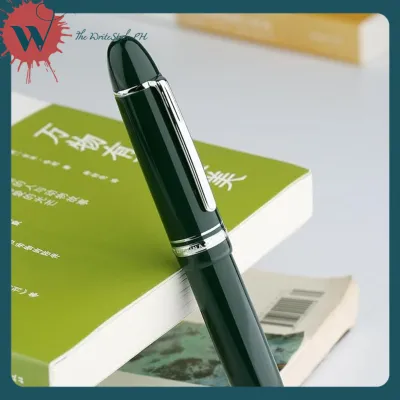
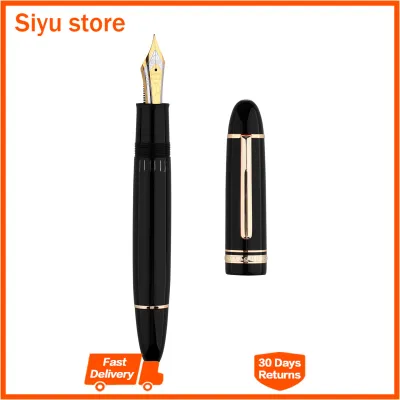
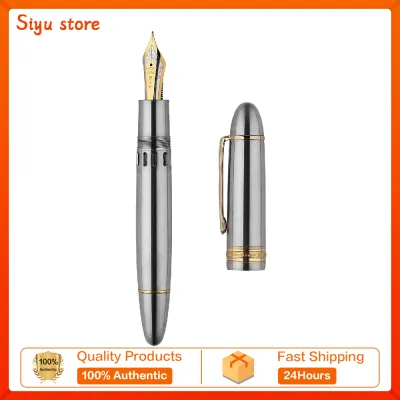
Prices are valid at publication and may change. Please refer to the product page for the latest price.
To determine if this nib setup matches your personal style, perform a simple writing test. Hold the pen at your natural writing angle, typically between 40 and 55 degrees, and write a few sentences at your normal speed without applying downward pressure; a well-tuned steel nib should write under its own weight. If you find yourself pressing down hard to get a consistent line, the nib may require adjustment, or the ink flow may be restricted. Remember that perceived “smoothness” is highly subjective and rarely depends on the nib alone. It is always the result of a three-way relationship between the nib tuning, the viscosity of your ink, and the texture of your paper.
Filling Mechanism: Cartridge vs. Converter Convenience
The Majohn P141 utilizes a standard international cartridge-converter system, which offers excellent flexibility for different writing environments. This system allows you to choose between the ultimate convenience of pre-filled ink cartridges or the creative freedom of bottled inks. When you are on the go, traveling, or working in a busy office, snapping in a standard international cartridge is clean, fast, and highly portable. It eliminates the risk of accidental spills and requires zero preparation.

For desk-bound writing, the included piston converter is the preferred choice. The converter acts as a refillable reservoir, allowing you to draw ink directly from a bottle. This opens up a vast world of ink colors, properties, and brands. However, because converters rely on a tight seal to create a vacuum, it is critical to verify the fit of the converter. A loose or poorly fitting converter can introduce air leaks, resulting in weak ink flow or internal leaks. Always check the manufacturer’s instructions for compatibility before swapping to a third-party converter.
Maintaining this filling mechanism is straightforward and essential for long-term reliability. When changing ink colors or if the pen has been sitting unused, flush the section with room-temperature water. Avoid hot water, as it can warp the plastic feed or internal housing. Draw water up through the converter and expel it repeatedly until the water runs completely clear. This simple, low-risk cleaning routine prevents dried ink particles from clogging the narrow feed channels, ensuring a steady flow every time you write.
Body Material and Weight: Comfort During Long Writing Sessions
A pen’s physical dimensions and materials dictate how comfortable it feels during extended writing sessions. The Majohn P141 is primarily crafted from lightweight resin, a durable acrylic polymer. Resin is highly valued in stationery because it resists scratches and does not feel cold to the touch, which is particularly pleasant in air-conditioned spaces. In the warm, humid climate of the Philippines, resin also provides a reliable grip, resisting the slippery feel that can occur with polished metal sections when hands become slightly warm or damp.
When evaluating the pen’s comfort, consider how you prefer to write: posted or unposted. “Posting” refers to placing the cap securely on the back of the pen barrel while writing. Posting the cap shifts the center of gravity backward, which can make the pen feel back-heavy for those with smaller hands, potentially leading to hand fatigue over time. Writing unposted keeps the balance point closer to the front section, offering a nimble, highly controlled feel.
The diameter of the grip section is another critical factor. A moderate section diameter encourages a relaxed tripod grip, preventing your fingers from cramping during long essays or journal entries. A heavier pen is not inherently superior to a lighter one; rather, a lighter resin pen like the Majohn P141 requires more active hand control but exerts less strain on the wrist, making it an excellent candidate for marathon writing sessions where endurance is key.
Prioritizing Specs: What Actually Matters for Your Needs?
With various specifications to consider, prioritizing what matches your daily routine will simplify your decision. If your primary task is rapid note-taking in meetings or lectures, prioritize a fine nib and a lightweight body. These specs ensure the pen starts instantly, writes cleanly on cheap paper, and does not tire your hand. For more deliberate tasks like signing documents, sketching, or dedicated journaling, you might prioritize ink capacity and a broader nib that highlights ink shading.
Secondary features, such as the specific clip design, the number of cap threads, or decorative metal trim bands, have virtually no impact on how the pen actually writes. While they contribute to the aesthetic appeal on your desk, they should be deprioritized in favor of nib performance and ergonomics.
Before finalizing your choice, use this quick checklist to verify if the specs align with your current stationery ecosystem:
- Paper Compatibility: Do you primarily use standard copy paper, or do you have fountain-pen-friendly notebooks?
- Ink Preference: Do you prefer the convenience of cartridges, or do you have a dedicated desk space for bottled ink?
- Grip and Ergonomics: Does your hand size favor a lightweight, unposted resin pen, or do you prefer a heavy, metallic instrument?
Frequently Asked Questions (FAQ)
Is the Majohn P141 a good choice for fountain pen beginners?
Yes, the Majohn P141 is highly suitable for beginners. Its standard international cartridge compatibility offers a gentle learning curve, letting users experience a fountain pen without the immediate need for bottled ink. The forgiving nature of its steel nib and standard maintenance requirements make it an easy transition from everyday gel pens.
What type of paper should I use to prevent ink feathering?
To prevent feathering and bleed-through, look for paper with a higher GSM (grams per square meter) rating, typically 80 GSM or above, or paper explicitly labeled as fountain-pen-friendly. Coated papers are ideal because they prevent the ink from soaking too rapidly into the fibers. Always test your Majohn P141 on a small, inconspicuous corner of a new notebook to observe the drying speed and line crispness before committing to long writing sessions.

Community discussion
Share your experience or ask a question. Comments are reviewed before publication.