
Quick Guide to Matching Bubu Dudu Stickers to Your Journal
Choosing the right Bubu Dudu sticker set is the key to transforming a standard planner page into a highly personalized, expressive reflection of your daily life. The ideal choice depends entirely on your journaling style: minimalist layouts thrive on small, transparent PET stickers that act as subtle accents, while maximalist and storytelling spreads benefit from large, opaque paper stickers that anchor vibrant, themed pages. By aligning the physical properties of these stickers with your aesthetic goals, you can create cohesive layouts that celebrate these beloved characters without cluttering your thoughts.
The core appeal of Bubu and Dudu lies in their incredibly expressive faces and relatable daily scenarios, which capture everything from joyful snacking to cozy afternoon naps. When selecting a set, you must evaluate three primary decision factors: the material finish, the size scale of the characters, and the background transparency. A simple selection workflow involves assessing your current journal’s page layout, checking how your paper handles local humidity, and choosing a color palette that complements your existing pens and washi tapes.
Understanding Bubu Dudu Sticker Formats and Materials
Understanding the physical properties of your stickers is essential for maintaining the integrity of your journal pages over time, especially in warm, humid climates. Bubu Dudu stickers generally come in two primary materials: polyethylene terephthalate (PET) and paper. PET stickers are waterproof, highly durable, and completely transparent, making them ideal for tropical environments where moisture might otherwise cause paper edges to curl. They lay incredibly flat on the page, giving the illusion that the characters are printed directly onto your paper. Conversely, paper-based stickers offer a classic matte finish that feels organic and warm, though they require careful storage to prevent humidity from degrading the paper fibers.
Products mentioned in this guide

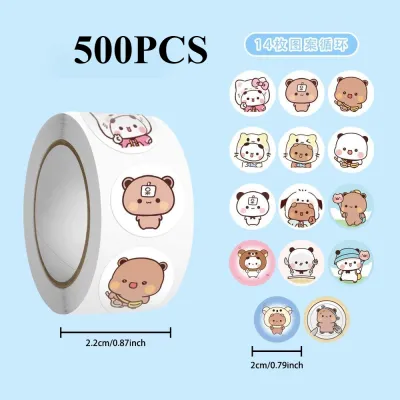
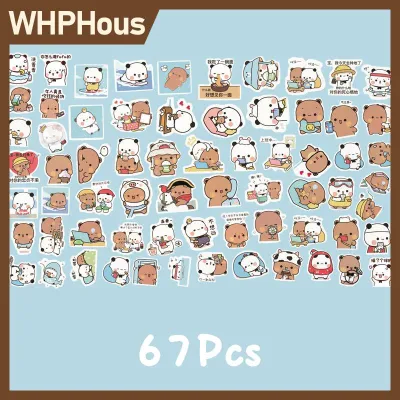
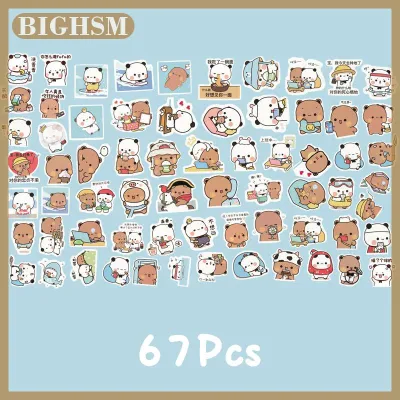
Prices are valid at publication and may change. Please refer to the product page for the latest price.

Within the paper category, you will often encounter standard wood-free paper and authentic washi paper. Washi paper stickers are semi-translucent, allowing some of the background grid or text to show through, which is highly prized for creating soft, blended layers. Standard paper stickers are completely opaque, making them excellent for covering up writing mistakes or layout errors. The choice between these materials directly impacts the visual weight of the sticker on your page, with PET and washi paper offering a lighter touch, while standard paper provides a bold, solid block of color.
The format of the sticker cut also plays a significant role in your page design. Die-cut stickers are trimmed precisely to the edge of the character’s outline, allowing them to blend seamlessly into any background or overlap with other decorative elements. Bordered stickers, which feature a distinct white or clear outline around the characters, create a bold, pop-art contrast that draws the eye immediately. If you prefer a clean, integrated look, die-cut PET stickers are your most suitable option, whereas bordered paper stickers are excellent for creating standalone focal points on a busy page.
Finally, consider how sticker thickness and adhesive strength affect your journal’s overall bulk and usability. Thick, heavy-duty stickers can quickly cause your notebook to swell, resulting in a warped spine that makes writing difficult on subsequent pages. Low-tack adhesives are highly forgiving, allowing you to reposition Bubu or Dudu if you misalign them during placement. High-tack adhesives offer a permanent bond but can easily tear delicate journal pages if you attempt to peel them off. For thin planner papers, lightweight stickers with mild adhesive properties ensure your pages remain flat and easy to write on.
Matching Sticker Sets to Specific Journaling Styles
Achieving a visually satisfying journal spread requires a thoughtful balance between sticker density and design complexity. Rather than scattering stickers randomly across your pages, matching the visual weight of your Bubu Dudu sets to your overarching page style ensures a harmonious layout. Whether you prefer a sparse, functional setup or a chaotic, colorful masterpiece, there is a specific way to integrate these charming characters into your daily routine.
Minimalist and Clean Layouts
For writers who prefer clean lines, ample white space, and functional layouts, Bubu Dudu stickers should serve as quiet companions rather than dominant visual elements.
- Scale and Expression: Opt for small-scale sheets where the characters are depicted in simple, single-pose illustrations. Subtle expressions, such as a tiny waving Bubu or a sleeping Dudu, add a touch of warmth without distracting from your written notes.
- Background Transparency: Use transparent PET stickers to maintain visual lightness. Because these stickers lack a harsh white border, they integrate naturally into dot grids or lined pages, allowing the underlying structure of your journal to remain visible.
- Functional Integration: Use the stickers as functional markers rather than purely decorative pieces. A tiny Dudu holding a coffee cup can mark your morning routine, while a cheering Bubu can serve as a bullet point for a completed task or a mood tracker icon at the corner of your daily log.
Kawaii-Heavy and Maximalist Spreads
If your journaling style embraces vibrant colors, layered textures, and a high density of decorative elements, you can fully indulge in large, expressive Bubu Dudu designs.
- Visual Anchors: Select large-format sticker sheets featuring multi-character scenes, such as Bubu and Dudu sharing a giant bowl of noodles or hugging. These substantial designs act as excellent visual anchors for your page, establishing a central theme around which you can build the rest of your layout.
- Layering and Textures: Pair opaque paper stickers with colorful washi tapes, patterned paper scraps, and bright gel pens. Layering a paper sticker over a strip of grid washi tape creates depth, making the characters pop off the page in a classic maximalist fashion.
- Legibility Balance: To ensure your written entries remain legible amidst the visual excitement, cluster your stickers along the margins or in designated decorative blocks. This creates a framed effect, leaving clear, structured zones for your daily reflections while maintaining a highly decorated aesthetic.
Themed and Storytelling Journals
Storytelling spreads use stickers to build a narrative, documenting specific events, seasonal changes, or daily routines through visual sequences.
- Thematic Props: Look for sticker sets that include a rich variety of accessory stickers, such as food items, weather symbols, household furniture, or seasonal outfits. These props allow you to place Bubu and Dudu in specific contexts that mirror your actual day.
- Sequential Layouts: Use sticker sequences to depict a timeline of your activities. For instance, place a yawning Dudu at the top of the page to represent waking up, a cooking Bubu in the middle for lunchtime, and both characters watching television to mark your evening relaxation.
- Seasonal Mixing: Enhance your spreads by mixing standard daily-life sets with limited-edition seasonal releases, such as autumn-themed or holiday-specific designs. This adds chronological depth to your journal, making it easy to identify different times of the year when flipping through your completed volumes.
Practical Checks Before Buying Sticker Sets
Before purchasing a new set of Bubu Dudu stickers, performing a few practical checks will save you from compatibility issues and ensure a frustrating-free journaling experience. First, verify the physical dimensions of the stickers against your journal’s grid size. If you use a standard 5mm dot grid notebook, stickers that are larger than 3cm can easily swallow up multiple writing lines, which may not suit compact layouts. Checking the product dimensions listed by the seller helps you visualize exactly how much space each character will occupy on your page.
Second, assess how the sticker’s adhesive interacts with your specific journal paper weight. Standard planner pages ranging from 52 gsm to 80 gsm are highly susceptible to ghosting or tearing if you use heavy, high-tack stickers. If you enjoy layering multiple stickers or repositioning them as you design your layout, look for sets explicitly labeled as using removable or low-tack adhesive. Furthermore, in humid tropical climates, paper stickers with poor-quality backing can absorb moisture from the air, causing them to curl or lose their stickiness before you even peel them off. Storing your sticker sheets in airtight plastic sleeves can help preserve their adhesive quality.
Third, examine the backing paper and peeling mechanism. High-quality sticker sheets feature clean kiss-cut lines that allow you to peel each design away effortlessly. Individual sticker flakes, while charming, often require a bit of patience or a dedicated sticker peeling tool to separate the backing from the adhesive layer. If you find yourself struggling to peel individual flakes, kiss-cut sheets are generally much more convenient for quick, daily journaling sessions.
Lastly, review the total piece count and the variety of designs included in the set. A high-quality set should offer a balanced mix of large focal stickers and smaller filler elements, such as tiny hearts, stars, or speech bubbles. This variety ensures you do not run out of usable designs too quickly, allowing you to maintain a consistent theme across multiple weekly or monthly spreads without needing to buy replacements constantly.
Where to Find Authentic Bubu Dudu Stationery
As the popularity of Bubu and Dudu continues to grow, the market has seen an increase in counterfeit stationery products. To ensure you are receiving high-quality prints with safe adhesives, it is crucial to source your stickers from official brand channels, authorized stationery retailers, or highly reputable online stores. Authentic sets feature crisp line art, vibrant color saturation, and durable backing paper that does not tear when peeled.
When shopping on major e-commerce platforms, there are several red flags to watch out for to avoid counterfeit goods. Low-quality replicas often suffer from poor print resolution, resulting in blurry edges, pixelated details, or noticeably incorrect color tones where Bubu appears greyish or Dudu looks washed out. Additionally, authentic merchandise often includes official licensing marks or specific security labels on the packaging. If a listing offers an unusually large bundle of hundreds of stickers for an incredibly low price, such as just a few pesos (₱), it is highly likely a counterfeit print.
To protect your purchase, always read customer reviews carefully, paying close attention to uploaded photos of the actual products received by other buyers. Verify that the seller has a high rating and a clear return policy in case the items arrive damaged or do not match the description. Joining local journaling groups and stationery clubs in the Philippines can also be incredibly helpful, as members frequently share verified links to trusted sellers who import authentic goods. Supporting authorized creators not only guarantees you receive a premium product that will not ruin your journal pages, but it also ensures the original artists are fairly compensated for their work.
Frequently Asked Questions (FAQ)
Can I write on Bubu Dudu stickers with gel pens?
Whether you can write on your Bubu Dudu stickers depends entirely on the material of the set you choose. Matte paper stickers absorb ink beautifully, making them highly compatible with standard gel pens, ballpoints, and fountain pens. However, glossy PET or vinyl stickers have a non-porous surface that causes water-based gel inks to pool and smudge easily. If you need to write on transparent PET stickers, opt for permanent fine liners, oil-based ballpoint pens, or specialized multi-surface paint markers. Always perform a quick trial on a scrap piece or an unused corner of the sticker sheet to verify the drying speed before closing your journal.
How do I remove stickers without tearing my journal paper?
Removing a sticker safely requires patience and the right technique, especially if your journal uses delicate or thin paper. Start by gently lifting one corner of the sticker using a dedicated crafting spatula, a plastic card, or a precision tweezers tool rather than your fingernails, which can crease the paper. Pull the sticker back slowly at a flat, 180-degree angle rather than pulling straight upward, as this minimizes tension on the paper fibers. If the adhesive is stubborn, applying gentle, indirect warmth from a hairdryer on its lowest setting for a few seconds can help soften the glue, making it much easier to lift without causing tears.
Are limited-edition Bubu Dudu sets worth the higher price?
Evaluating the value of limited-edition Bubu Dudu sets depends on your personal journaling goals and how much you value unique design elements. These premium releases often feature exclusive seasonal themes, special finishes like holographic overlays, gold foil accents, or textured flocking that standard sets lack. While they carry a higher price tag in pesos (₱), they offer significant aesthetic variety that can elevate special milestone spreads in your journal. Rather than viewing them as financial investments, base your decision on whether the specific theme resonates with your personal style and if you will genuinely enjoy using the designs on your pages.

Community discussion
Share your experience or ask a question. Comments are reviewed before publication.