
Selecting the right document storage tools is essential for maintaining an organized, efficient workplace. In busy office environments, paper documents must be protected from dust, spills, and the wear of daily handling. Plastic envelopes offer a practical, water-resistant solution, but choosing the wrong style can lead to torn seams, damaged documents, or slowed workflows.
The ideal envelope style depends entirely on your specific filing scenario. By matching the closure type, material, and design to your daily tasks, you can streamline document retrieval, secure confidential archives, and present a polished image to clients.
Active Daily Filing and Internal Transit
For documents that move constantly between desks or require frequent updates, speed of access is the primary consideration. Open-end envelopes, which lack a top flap, allow staff to slide papers in and out instantly. This design is highly efficient for sorting temporary worksheets, active invoices, or daily checklists at a single workstation. However, because they lack a closure, open-end styles offer minimal protection if an envelope is dropped or tilted during transit.
Products mentioned in this guide
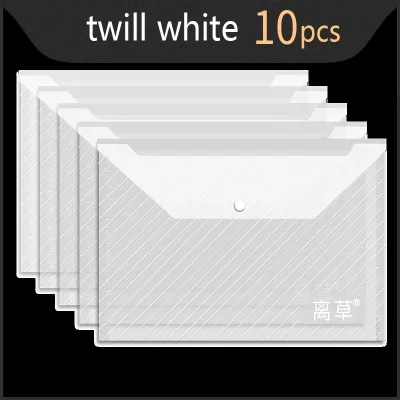
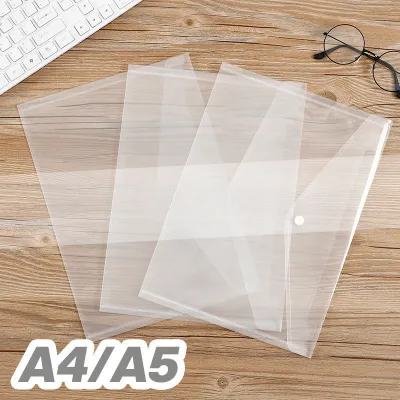
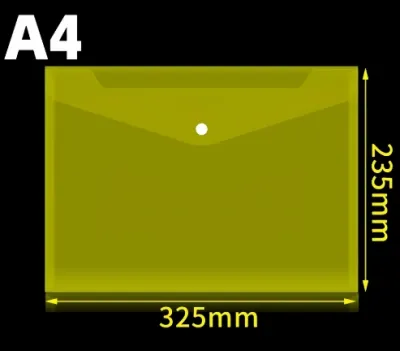
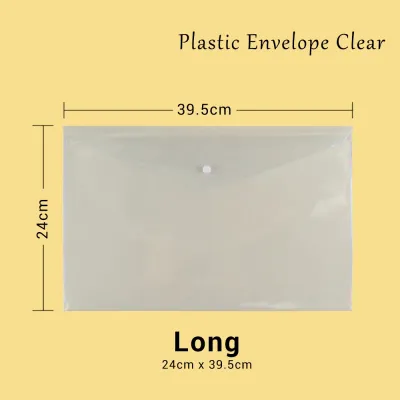
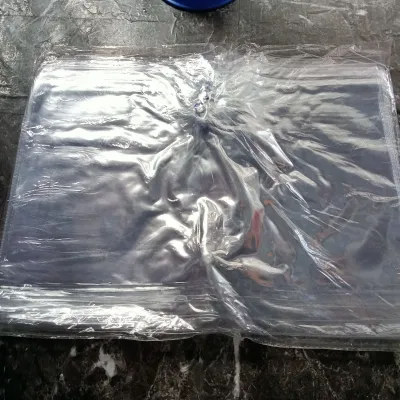
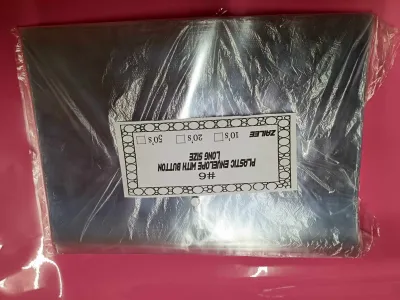
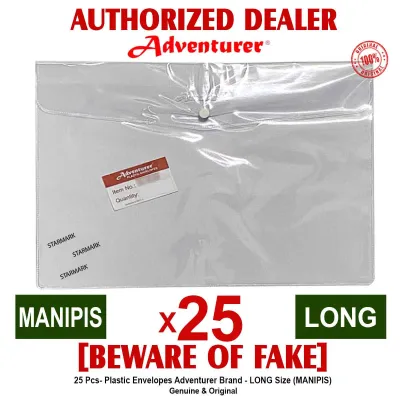
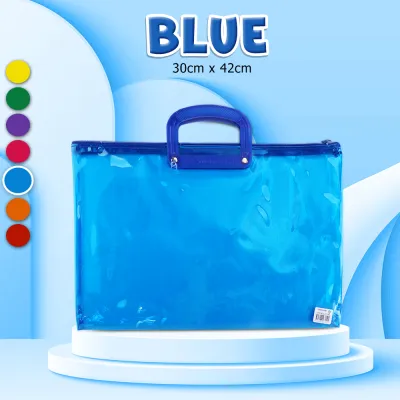
Prices are valid at publication and may change. Please refer to the product page for the latest price.
When documents must travel between departments or offices, button or snap closures provide the necessary security without sacrificing too much speed. A simple plastic snap or a string-and-button tie keeps the top flap firmly shut, preventing papers from sliding out inside a commuter bag or during a walk across the office. For high-frequency daily use, it is important to inspect the weld points where the button or snap is attached to the plastic. A weak weld will quickly tear under repeated pulling, rendering the closure useless.
Visibility is another key factor in active filing. Clear plastic envelopes allow users to identify contents at a glance without opening the flap, which speeds up filing tasks. However, high-gloss clear plastic can reflect bright office lights, creating a glare that makes scanning or copying documents difficult while they are still inside the sleeve. Semi-clear or matte finishes offer a practical compromise, reducing glare while still allowing text to be read.
Secure Archival Storage and Confidential Records
Long-term archiving requires a higher level of protection against environmental factors like dust, pests, and ambient humidity. In tropical climates, high humidity can cause papers to warp or stick to low-quality plastics over time. For these sensitive records, zipper closures provide a continuous, reliable seal along the entire opening. Unlike snap closures, which leave small gaps at the corners, a slide zipper keeps the contents fully enclosed and shielded from airborne particles.

When selecting envelopes for archival storage, material thickness and seam strength are critical specifications. Thin, lightweight plastic envelopes tend to sag, warp, or split when packed to capacity and stacked in storage boxes. Look for heavy-duty options with wide, reinforced heat-sealed seams. Checking the manufacturer’s thickness metrics—often specified in microns or millimeters—ensures the envelope can support the weight of thick document stacks without tearing.
While standard plastic envelopes offer excellent protection against minor spills and dust, they have clear limitations. They are not designed to withstand extreme heat, fire, or prolonged submersion in water. For highly confidential or irreplaceable records, plastic envelopes should only serve as the primary organizing layer inside a specialized fireproof safe or a climate-controlled filing cabinet.
Client Handouts and External Presentations
When presenting proposals, contracts, or marketing materials to clients, the packaging reflects the quality of your business. Standard clear plastic envelopes can look overly utilitarian or casual. Instead, frosted finishes offer a more sophisticated, modern aesthetic. The textured surface diffuses light, giving the envelope a premium feel while hiding fingerprints, smudges, and minor surface scratches that accumulate during travel.
The physical profile of the envelope also affects the presentation. Bulky plastic buttons or thick string ties can snag on other items inside a briefcase, portfolio, or laptop bag. For external meetings, sleek, low-profile snap closures or high-quality open-end sleeves are preferred. These designs lie flat, ensuring the presentation package remains neat and does not damage adjacent documents or folders.
Finally, the envelope must comfortably accommodate the entire document package. Forcing a multi-page proposal, a brochure, and a business card into a standard flat envelope causes unsightly bulging and bent corners. Choosing an envelope with a built-in gusset or expansion fold ensures that all materials fit neatly without creasing, preserving a professional appearance from the moment of handoff.
Evaluating Material and Size Specifications for Wholesale Orders
Purchasing plastic envelopes in bulk requires careful planning to ensure compatibility with your office’s standard paper sizes. In many workplaces, documents are printed on Letter, Legal, or A4 paper. An envelope that is too small will force staff to fold documents, while one that is too large allows papers to slide around, leading to crumpled edges. When ordering wholesale, verify the internal dimensions of the envelopes rather than relying solely on generic size labels.
The type of plastic used significantly impacts the envelope’s durability and safety for documents. Polypropylene (PP) and Polyvinyl Chloride (PVC) are the two most common materials, each with distinct characteristics:
- Polypropylene (PP): This material is lightweight, highly flexible, and acid-free. It does not lift ink from printed pages, making it the safest choice for long-term document storage. PP is also highly resistant to environmental stress cracking and performs exceptionally well in warm, humid conditions.
- Polyvinyl Chloride (PVC): PVC is heavier, more rigid, and often clearer than PP. However, it can degrade over time, releasing plasticizers that cause ink to transfer from the paper to the plastic. In hot or humid environments, PVC can become sticky and cling to other surfaces.
To ensure cost-efficiency and quality when placing a wholesale order, where unit prices are often calculated in ₱ per hundred pieces, always request physical samples from the supplier before finalizing the purchase. This allows you to test the flexibility of the plastic, the strength of the welded seams, and the reliability of the closure mechanisms under actual office conditions. Reviewing the supplier’s technical specifications for thickness tolerances and closure cycle ratings will help prevent bulk defects and ensure the envelopes deliver long-term value for your organization.
Frequently Asked Questions (FAQ)
Can one plastic envelope style work for all office scenarios?
Standardizing on a single style usually requires significant compromises. A secure zipper envelope is highly protective but too slow for rapid daily sorting, while a quick-access open-end sleeve lacks the security needed for confidential transit or long-term archiving. A tiered approach is far more efficient. Use budget-friendly open-end or button envelopes for daily internal tasks, and invest in durable zipper or gusseted PP envelopes for archival storage and client-facing presentations.
How do I verify material quality when ordering wholesale?
Do not rely solely on product titles or online photos. Request a sample pack from the wholesale supplier to test the flexibility, seam strength, and closure durability under actual office conditions. Check if the plastic emits a strong chemical odor, which often indicates low-grade PVC that may transfer ink or degrade quickly in humid environments. Verify the supplier’s thickness tolerances and return policies for bulk defects.

Community discussion
Share your experience or ask a question. Comments are reviewed before publication.