
Choosing the most suitable mechanical pencil lead size for an elementary school child is a balancing act between durability and precision. While traditional wooden pencils are the standard in early grades, many children transition to mechanical options as their writing tasks increase. The ideal lead thickness depends on your child’s grip strength, handwriting development stage, and how hard they press on the paper.
There is no single universal option for every student. Instead, 0.7mm and 0.9mm leads are generally the most forgiving for beginners and heavy pressers due to their resistance to snapping, while 0.5mm is better suited for older children with refined motor skills who write smaller and apply lighter pressure. This guide compares these core sizes to help you match the right thickness to your child’s specific needs.
Understanding Lead Thickness and Handwriting Development
During the elementary school years, children undergo significant fine motor skill progression. Younger students in early grades are often transitioning from a transitional grasp to a mature dynamic tripod grasp. Because their hand muscles are still developing, they frequently compensate for a lack of finger control by gripping the pencil tightly and pressing down with excessive force.
Products mentioned in this guide
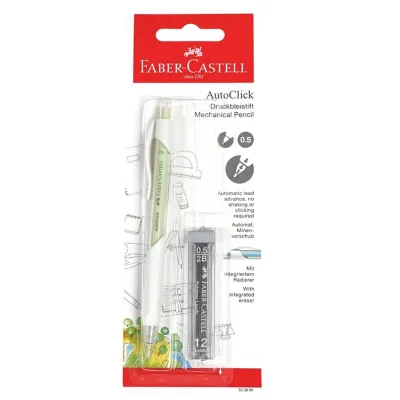
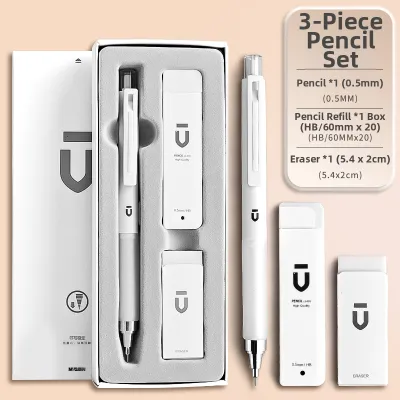
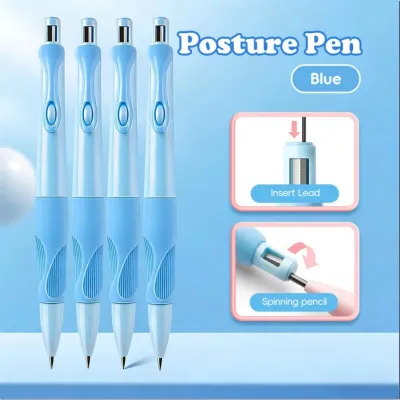
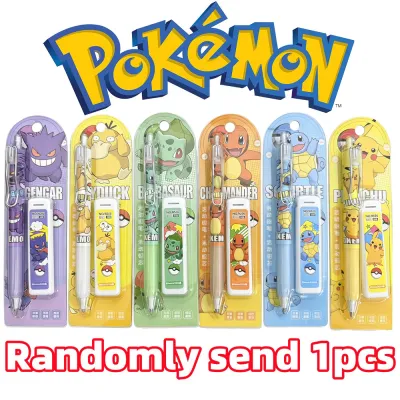
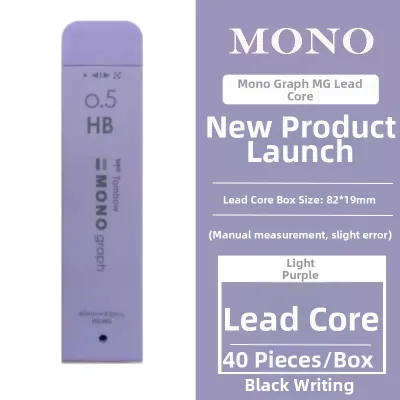
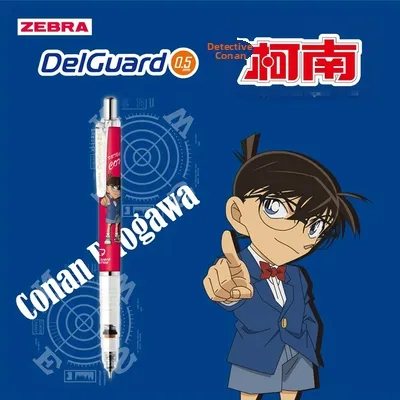
Prices are valid at publication and may change. Please refer to the product page for the latest price.
This heavy writing pressure has direct physical consequences when using mechanical pencils. If the lead is too thin, it will snap repeatedly under pressure, which disrupts the child’s concentration and causes frustration. Furthermore, heavy pressure combined with a sharp, thin lead can easily tear standard school paper, such as intermediate pads or exercise books, leaving deep grooves that are difficult to erase cleanly.
Lead thickness also directly influences line width and letter legibility. Younger students typically write larger letters to master basic letter formation, making broader lines highly practical. As children progress to higher grade levels, their handwriting naturally becomes smaller and more compact. Matching the lead thickness to the child’s writing size ensures that their work remains legible and fits neatly within standard school-ruled lines.
Comparing the Core Lead Sizes: 0.5mm, 0.7mm, and 0.9mm
To choose the right pencil, it is essential to understand how the three primary lead diameters perform under daily classroom conditions. Each size serves a distinct stage of handwriting development.

0.5mm: The Precision Standard
The 0.5mm lead is highly popular for older students who have developed excellent control over their hand strength. It produces clean, crisp, and highly detailed lines, making it excellent for narrow-ruled notebooks and precise math equations. However, because of its thin profile, it carries a high breakage risk if the writer applies even slightly too much downward force. It is generally not recommended for younger children who are still learning to regulate their writing pressure.
0.7mm: The Versatile Middle Ground
Serving as the standard for everyday schoolwork, 0.7mm lead offers a practical balance of durability and line clarity. It is thick enough to withstand moderate writing pressure without snapping constantly, yet it remains fine enough to keep handwriting legible on standard school-ruled paper. For most middle-grade elementary students, this size provides a smooth transition away from traditional wooden pencils.
0.9mm: The Heavy-Duty Beginner Option
The 0.9mm lead is the thickest common size available for standard school pencils. It is exceptionally sturdy and highly resistant to breakage, making it the most forgiving option for beginners or children who naturally press very hard. While the resulting lines are thick and bold, they may crowd narrow-ruled spaces if the child is required to write very small letters.
| Lead Size | Breakage Risk | Ideal User Profile | Line Width & Appearance |
|---|---|---|---|
| 0.5mm | High | Older kids (Grades 5–6) with a light touch | Fine, crisp, and highly detailed |
| 0.7mm | Moderate | Middle grades (Grades 3–4) with average pressure | Medium, clear, and highly versatile |
| 0.9mm | Very Low | Early grades (Grades 1–2) or heavy pressers | Thick, bold, and highly visible |
How to Match the Lead Size to Your Child's Writing Pressure
To determine which lead size is right for your child, you can conduct a simple, supervised writing test at home. Have your child write a few sentences on a sheet of standard school paper using their normal grip and speed.
Once they finish, observe the physical evidence on the page. Run your finger along the back of the paper to check for deep, raised indentations, which indicate heavy writing pressure. If the lead snaps multiple times during this short exercise, or if you notice minor tears in the paper, your child is a heavy presser who will benefit from a thicker lead.
Use this simple decision framework to guide your purchase:
- Choose 0.9mm if the lead snaps constantly under normal use or if the paper shows deep indentations.
- Choose 0.7mm for balanced, everyday use if your child writes with moderate pressure and only occasionally breaks the lead.
- Choose 0.5mm if your child writes small, has a light touch, and needs finer lines to keep their notebook organized.
Before making a final decision, always verify if your child’s school has specific stationery rules. Some elementary schools in the Philippines restrict the use of mechanical pencils in early grades to encourage the use of traditional wooden pencils, which are often preferred for initial handwriting instruction.
Choosing the Right Mechanical Pencil Body for Elementary Kids
The pencil barrel is just as important as the lead size inside it. For young hands, look for ergonomic grips made of soft silicone or textured rubber. These grips prevent fingers from slipping down toward the tip and help reduce hand fatigue during long writing sessions.
Consider the overall weight, length, and thickness of the pencil. Thicker, triangular barrels are highly beneficial for children who are still developing their grip, as they naturally guide the fingers into a proper tripod position. Avoid pencils that are excessively heavy or made entirely of metal, as they can strain a child’s hand muscles.
Additionally, look for durable construction features. A mechanical pencil with a cushioned tip mechanism uses an internal spring to absorb sudden vertical pressure, retracting the lead slightly to prevent breakage. Ensure the pencil has a sturdy clutch mechanism—preferably made of brass or high-quality plastic—to withstand the inevitable drops onto hard classroom floors. Because this product is intended for children, ensure that any small parts, such as eraser caps, fit securely to prevent choking hazards for younger siblings.
Practical Tips for Managing Lead and Pencils at School
Selecting the correct lead hardness is essential for a smooth writing experience. Standard lead is graded as HB, which is equivalent to a No. 2 wooden pencil. If your child struggles to write dark enough, a softer 2B lead is a highly suitable alternative because it flows smoothly and leaves a darker mark with less pressure. However, keep in mind that softer leads wear down faster and can smudge more easily, especially in warm, humid tropical climates.
To prevent frustration at school, teach your child how to manage their supplies. Show them how to store lead refill tubes safely inside their pencil case to prevent the delicate sticks from crushing. Instruct them to only click the pencil once or twice; extending the lead too far is the primary cause of avoidable breakage, regardless of the lead thickness.
Finally, establish a simple routine for checking lead levels before the school day begins. Teach your child how to feed a new piece of lead into the chamber and how to avoid overfilling the barrel, which can cause internal jams. A little preparation at home ensures they can focus entirely on their lessons at school.
Frequently Asked Questions (FAQ)
Can elementary kids use mechanical pencils for standardized tests?
You must check the specific guidelines provided by your child’s school or the local testing board in the Philippines. For standardized tests graded by optical scanners, students are typically required to use standard No. 2 or HB/2B pencils. While some optical scanners can read mechanical pencil marks, the thinness of 0.5mm lead can make it difficult to fill in bubbles quickly and completely, and thin leads may tear the delicate answer sheets. If mechanical pencils are permitted, a 0.7mm or 0.9mm pencil with 2B lead is generally safer for filling bubbles efficiently.
Why does my child's mechanical pencil keep jamming?
Jams usually occur when tiny, broken fragments of lead get lodged inside the metal tip or the internal clutch mechanism. To clear a minor jam, try extending the eraser and checking if there is a built-in cleaning pin attached to the underside of the eraser cap. If a pin is present, gently insert it into the tip of the pencil to push the broken fragment back into the chamber or out of the nozzle. Alternatively, hold the click button down and gently tap the tip against a flat surface to release the stuck piece. If the jam persists, consult the manufacturer’s instructions to avoid damaging the internal mechanism.

Community discussion
Share your experience or ask a question. Comments are reviewed before publication.