
Finding the perfect mechanical pencil refill depends on matching the exact lead diameter of your pencil’s clutch mechanism with a hardness grade that suits your writing pressure and paper type. If you tend to write with a heavy hand, a thicker lead like 0.7mm or 0.9mm in a standard HB or B grade prevents frequent snapping. For those with a lighter touch who prefer dark, effortless lines, a 0.5mm or 0.3mm lead in a softer 2B grade offers a smooth experience without requiring excessive downward force. Balancing these physical dimensions and graphite grades ensures clean, legible notes and reduces hand fatigue during long writing sessions.
Choosing the Right Lead Diameter for Your Pencil and Pressure
Mechanical pencils are precision instruments designed around a specific internal clutch mechanism. You must verify the exact millimeter size required by your pencil model before purchasing a mechanical pencil refill. This measurement is typically printed on the barrel or the push-button cap, such as 0.3, 0.5, 0.7, or 0.9. Attempting to load a size other than the designated diameter will cause the pencil to jam or fail to feed entirely.
Your natural writing pressure is a primary factor in choosing a diameter. If you notice that you frequently break lead or leave deep indentations on the page, you likely write with heavy hand pressure. Thicker leads, such as 0.7mm or 0.9mm, provide the structural integrity needed to withstand this force. Conversely, if you have a light, delicate touch, finer leads like 0.3mm or 0.5mm allow you to produce crisp, precise lines without the risk of constant snapping.
Products mentioned in this guide
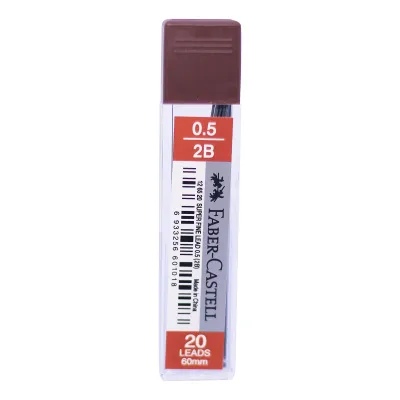
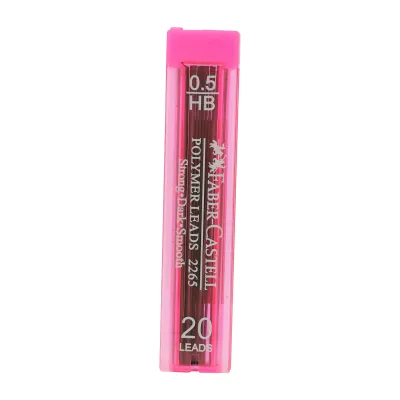
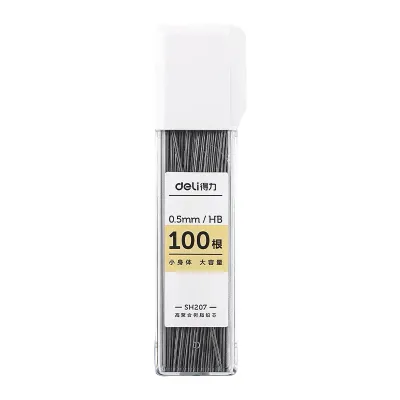
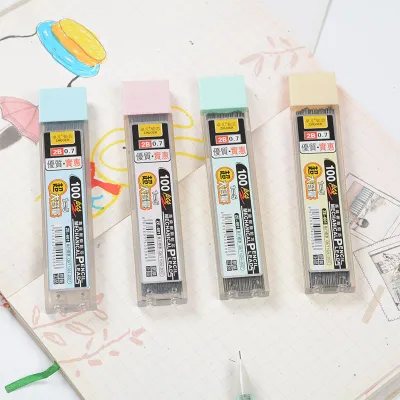
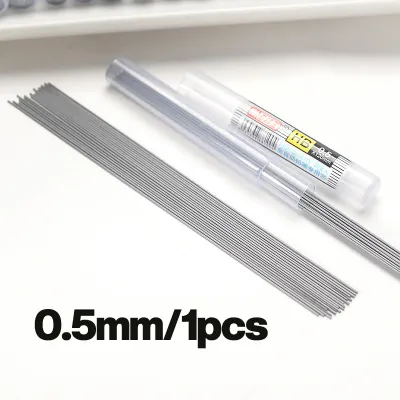
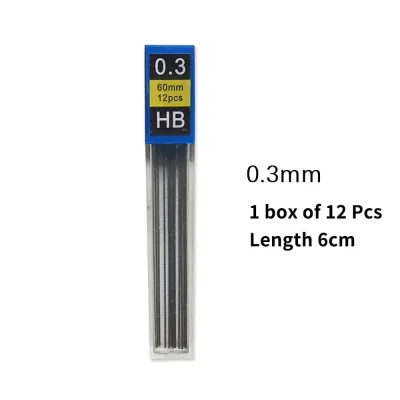
Prices are valid at publication and may change. Please refer to the product page for the latest price.
Different line widths serve distinct tasks. An ultra-fine 0.3mm lead is ideal for detailed drafting, mathematical formulas, or writing in extremely tight margins. The standard 0.5mm lead serves as the versatile choice for everyday note-taking and general writing. For bold signatures, quick sketching, or marking up documents, 0.7mm and 0.9mm leads offer highly visible, robust lines that do not easily fade or break.
Decoding Hardness Grades: Finding Your Ideal Darkness and Smoothness
Mechanical pencil refills use the standard graphite scale to indicate the ratio of graphite to clay binder. The letter “H” stands for hard, meaning the lead contains more clay, resulting in lighter, thinner lines and higher resistance to wear. The letter “B” stands for black, indicating a higher graphite content that produces darker, softer, and smoother lines. “HB” sits directly in the middle, offering a balanced compromise between line darkness and structural hardness.

Softer leads like B and 2B glide effortlessly across the page but leave more loose graphite residue behind. In humid tropical climates, this residue can easily smudge when your hand brushes against the paper. Left-handed writers or those using smooth, glossy paper should observe how different grades behave; a harder grade like HB or H minimizes smudging, while softer grades may require a conscious adjustment in hand posture or a switch to more absorbent, textured paper.
HB remains the universal baseline for school and office work because it balances legibility with clean, smudge-resistant performance. However, if you find yourself pressing hard to make your writing readable, switching to a B or 2B refill provides a darker, more expressive line with far less friction. This makes softer grades highly popular for creative sketching, journaling, and rapid shorthand writing where speed and contrast are essential.
Building Your Perfect Refill Setup for Daily Tasks
To optimize your writing setup, pair your lead diameter and hardness with your primary daily tasks. For fast-paced lecture notes or long journaling sessions, a 0.5mm 2B setup provides dark, legible text with minimal hand effort. For technical drawing, accounting ledgers, or precise diagramming, a 0.3mm HB or H lead ensures that fine lines remain sharp and do not blur together over time.
The texture of your paper directly affects how quickly your lead wears down and how dark it appears. Rough, fibrous paper acts like fine sandpaper, wearing down soft 2B leads rapidly and producing a lot of graphite dust. Smooth, high-density paper requires a slightly softer lead (like B or 2B) to lay down a dark line, as harder leads may slide across the surface without leaving a clear mark. Testing a small sample on your preferred notebook is the best way to verify this interaction.
Hand fatigue often stems from using a lead that is too hard for your writing style, forcing you to press down excessively to achieve readable contrast. By selecting a smoother, softer lead grade, you allow the pencil to glide naturally, reducing physical strain on your fingers and wrist. Adjusting both the lead diameter and hardness to match your natural grip ensures a comfortable, sustainable writing experience during extended study or work sessions.
Frequently Asked Questions (FAQ)
Can I use 0.5mm lead in a 0.7mm mechanical pencil?
No, you cannot use 0.5mm lead in a 0.7mm mechanical pencil. The internal metal or plastic clutch mechanism is engineered to grip a specific diameter. If you insert a 0.5mm lead into a 0.7mm pencil, the clutch will not be able to hold the lead securely, causing it to slide back inside the barrel when you write or fall out of the tip entirely.
Do mechanical pencil refills expire or dry out?
Unlike ink-based pens, mechanical pencil refills do not dry out, evaporate, or expire over time. They are composed of stable graphite and clay binders that remain usable indefinitely. However, they should be stored in a dry environment inside their original plastic cases to prevent physical breakage and to protect them from absorbing excessive atmospheric moisture, which can slightly alter their writing friction.
Why does my lead keep breaking even when I use the correct size?
Frequent breakage usually points to excessive writing pressure, extending the lead too far out of the tip, or a damaged internal mechanism. Try extending the lead by only one or two clicks (about 1 to 2 millimeters) to minimize leverage. If the lead still breaks easily, consider switching to a thicker diameter (like 0.7mm) or a slightly harder grade (like HB), or inspect the pencil tip for tiny, clogged fragments of broken graphite.

Community discussion
Share your experience or ask a question. Comments are reviewed before publication.