
Selecting the perfect modeling clay is the critical first step to ensuring your creative project succeeds. Whether you are crafting intricate jewelry, molding a functional coffee mug, or helping a child with a school diorama, the material you choose dictates your entire workflow. The four primary types of clay—air-dry, polymer, ceramic, and plasticine—differ fundamentally in their composition, curing methods, and final durability.
To make an informed decision, you must evaluate your access to specialized equipment like ovens and kilns, the level of detail your project requires, and whether the finished piece needs to withstand water or daily use. Understanding these distinct properties saves you from common crafting frustrations like structural cracks, melting figures, or ruined tools.
How to Choose the Right Clay for Your Project
Before purchasing any modeling material, you should clarify the ultimate goal of your project. Ask yourself if the piece is purely decorative, a wearable accessory, a functional item for food and drink, or simply a temporary practice model. Your answer will immediately narrow down your options, as each clay type behaves differently under various conditions.
Products mentioned in this guide
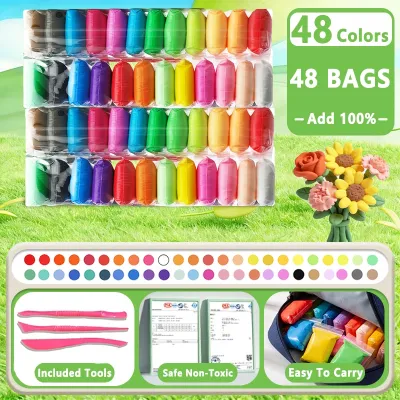
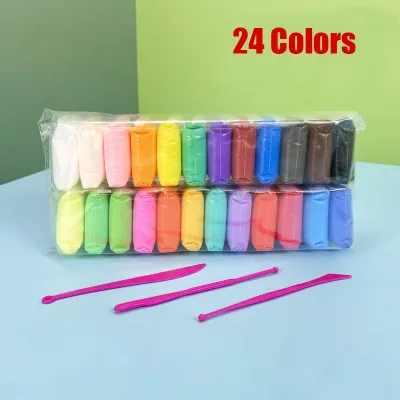
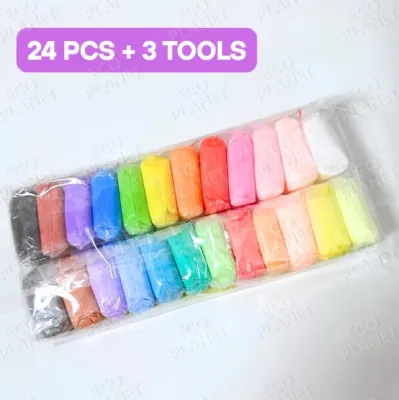
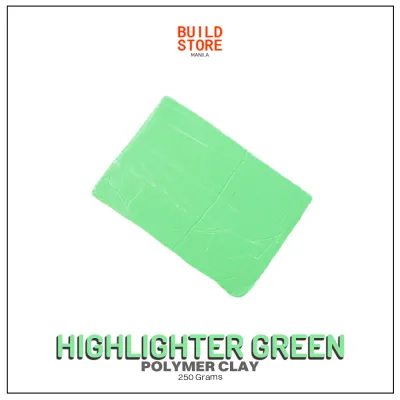
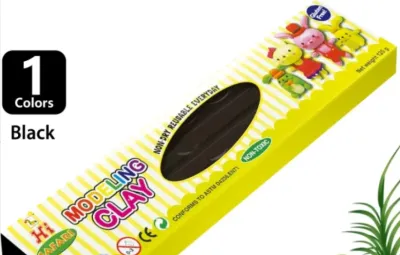
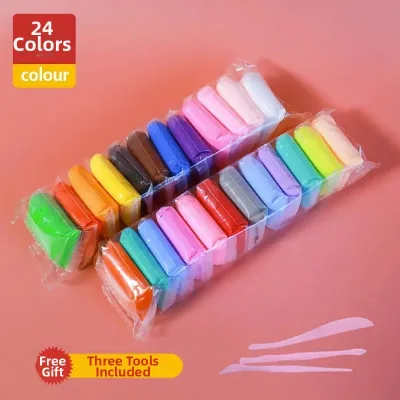
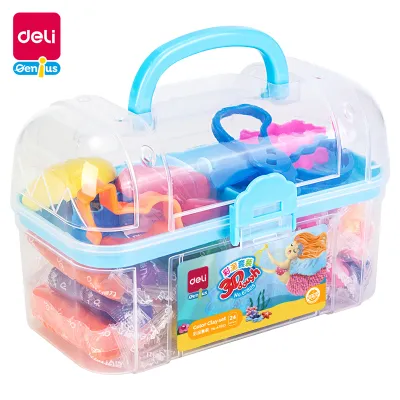
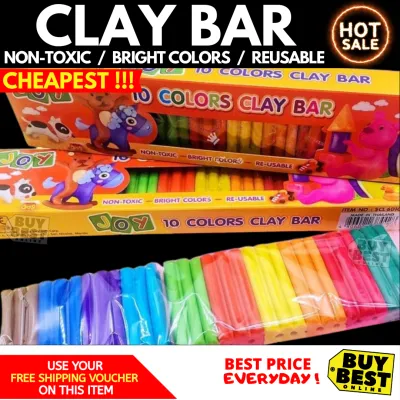
Prices are valid at publication and may change. Please refer to the product page for the latest price.
The curing method is the most practical constraint for home crafters. Ceramic clay requires a high-temperature kiln, making it impractical for casual hobbyists without studio access. Polymer clay needs a standard household oven, while air-dry clay requires no heat at all, curing slowly through ambient air exposure. Plasticine, on the other hand, remains permanently malleable and never cures.
| Clay Type | Curing Method | Water Resistance (Cured) | Best For |
|---|---|---|---|
| Air-Dry Clay | Room temperature evaporation | Low (requires sealant) | Sculptures, school projects, painted crafts |
| Polymer Clay | Domestic oven baking | High (naturally waterproof) | Jewelry, miniatures, highly detailed figures |
| Ceramic Clay | High-heat kiln firing | High (when glazed and vitrified) | Functional tableware, pottery, heavy vases |
| Plasticine | Non-hardening (remains soft) | Moderate (oil-based, repels water) | Stop-motion animation, sculpting practice |
A quick matching guide helps simplify your purchase. If you want to make waterproof jewelry or small, highly detailed miniatures at home, polymer clay is the ideal choice. If you are working on a budget, lack baking equipment, and plan to paint your final creation, air-dry clay is your best option. For functional plates or mugs, ceramic clay is the only safe and durable choice. If you want to practice sculpting techniques repeatedly without wasting material, choose plasticine.
Always check the manufacturer’s packaging for age appropriateness and safety certifications before buying, especially when crafting with children. Look for recognized standards such as the AP (Approved Product) non-toxic seal or the EN71 certification. These labels ensure the materials are free from harmful chemicals and are safe for prolonged skin contact during the molding process.
Air-Dry Clay: Best for Beginners and Paintable Crafts
Air-dry clay is a highly accessible, water-based material that hardens at room temperature. As the water content within the clay evaporates into the surrounding air, the clay particles bind together, leaving behind a lightweight, solid structure. This makes it an incredibly popular medium for beginners, students, and casual crafters who want to create without investing in specialized heating equipment.

This medium is ideal for a wide range of decorative and educational projects. It is commonly used for school dioramas, hand-built decorative bowls, relief plaques, and simple figurines. Once fully dried, the surface of air-dry clay becomes highly porous, making it an excellent canvas for acrylic paints, gouache, and various markers.
However, air-dry clay has notable limitations that you must consider before starting. It is not food-safe, meaning you cannot use it to make functional plates, bowls, or cups for eating. It is also not naturally waterproof; exposure to moisture will cause the clay to soften and eventually dissolve. Additionally, because it relies on water evaporation, air-dry clay undergoes significant shrinkage as it dries, which can lead to warping or cracking if the piece is dried unevenly.
In high-humidity environments, such as the tropical climate of the Philippines, drying times can be unpredictable. While a small piece might dry within 24 hours in a dry room, high ambient humidity can extend this process to 72 hours or more. To check if your piece is fully dry, touch it gently; if it feels cool to the touch, moisture is still evaporating, and the clay is not yet ready for sanding or painting.
To achieve the best results, always check the packaging for the manufacturer’s specific drying instructions. For larger or top-heavy structures, construct an internal armature using aluminum foil or wire mesh to support the weight and prevent the wet clay from collapsing. Once the piece is completely dry, apply multiple coats of a high-quality varnish or acrylic sealer to protect the surface from ambient moisture and dust.
Polymer Clay: Ideal for Jewelry, Miniatures, and Fine Details
Polymer clay is a synthetic modeling material composed of polyvinyl chloride (PVC) resin, liquid plasticizers, and color pigments. Unlike water-based clays, it does not dry out when left exposed to the air. Instead, it remains soft and workable indefinitely until it is subjected to heat in a domestic oven, which fuses the PVC particles into a durable, slightly flexible plastic.
This unique composition makes polymer clay the premier choice for projects requiring high levels of detail and structural strength in small sizes. It is widely used to create intricate jewelry, custom beads, delicate miniatures, and highly detailed figurines. Because it does not shrink during the baking process, the precise details you sculpt into the raw clay will remain perfectly preserved after curing.
Despite its versatility, polymer clay requires careful handling and specific safety precautions. It must never be overbaked, as overheating causes the PVC to burn, releasing irritating and potentially harmful fumes. Because of this risk, polymer clay should be baked in a well-ventilated area, and you should avoid using the same oven for food unless it is thoroughly cleaned afterward. Many dedicated crafters prefer to use a separate toaster oven reserved solely for clay projects.
To ensure a successful cure, you must strictly follow the manufacturer’s temperature and timing guidelines, which typically range between 110°C and 135°C depending on the brand. Do not rely solely on your home oven’s built-in temperature dial, as domestic ovens frequently experience temperature spikes that can scorch your work. Instead, place a dedicated oven thermometer directly on the baking rack next to your piece to verify the actual temperature.
After baking and cooling, polymer clay is naturally waterproof and remarkably durable. However, it is still not food-safe, so it should never be used for surfaces that come into direct contact with food or beverages. If you want to add a glossy finish or protect surface pigments like mica powders or acrylic paints, use only water-based glazes specifically formulated for polymer clay, as solvent-based varnishes can degrade the plastic over time.
Ceramic Clay: The Choice for Functional Pottery and Kiln Firing
Ceramic clay, often referred to as pottery clay, is a natural earth material composed primarily of hydrated aluminum silicates. It is the traditional medium used by potters for thousands of years. To transition from a soft, malleable state to a permanent, rock-hard ceramic, this clay must undergo vitrification—a chemical process that occurs only at extreme temperatures inside a specialized kiln, typically ranging from 1,000°C to over 1,250°C.
This is the only clay type suitable for creating functional, food-safe kitchenware such as coffee mugs, dinner plates, soup bowls, and heavy-duty outdoor planters. Its structural integrity and weight make it ideal for wheel-throwing and advanced hand-building techniques. When properly fired and coated with compatible glazes, ceramic pieces become completely waterproof, microwave-safe, and dishwasher-safe.
The primary limitation of ceramic clay is its high barrier to entry. It is not a project material you can easily use on a kitchen table without specialized infrastructure. Access to a pottery wheel and a high-temperature kiln is mandatory. Additionally, working with ceramic clay requires a dedicated workspace, as the fine silica dust generated during sanding and cleanup can pose respiratory risks if not managed with wet cleaning methods and proper ventilation.
When choosing ceramic clay, you must understand the difference between low-fire and high-fire bodies. Earthenware is a low-fire clay that remains relatively porous even after firing, requiring a glaze coat to hold water. Stoneware and porcelain are high-fire clays that become highly vitrified, dense, and durable.
Before applying any glaze, always verify that the glaze’s firing range matches the specific clay body you are using. Applying a high-fire glaze to a low-fire clay can cause the clay to melt into a puddle inside the kiln, while a low-fire glaze on a high-fire clay will burn off entirely. If you are crafting items for eating or drinking, ensure the glaze packaging is explicitly labeled as non-toxic and food-safe after firing.
Plasticine: Perfect for Sculpting Practice and Stop-Motion Animation
Plasticine, also known as oil-based modeling clay, is made by combining clay minerals with oils, waxes, and plasticizers. Because it contains no water, it does not dry out when exposed to air, nor can it be fired in a kiln or baked in an oven. It remains permanently soft, pliable, and reusable, making it an invaluable tool for temporary modeling and design work.
This non-hardening quality makes plasticine the industry standard for stop-motion animation, where animators must adjust character poses repeatedly over weeks or months. It is also widely used by industrial designers for physical 3D sketching, by sculptors for practicing anatomy, and by mold makers to create temporary walls and containment barriers for casting liquid silicone or polyurethane.
However, plasticine’s oil-based nature introduces several limitations. It cannot be painted with standard water-based acrylics, as the oil in the clay repels the paint. It is also highly sensitive to temperature; in warm tropical climates like the Philippines, plasticine can become overly soft and lose its structural stiffness if left in a warm room, while cold temperatures can make it stiff and difficult to knead. Furthermore, because it never cures, it is unsuitable for permanent display pieces, as it will attract dust and can easily be deformed by accidental contact.
If you plan to use plasticine for mold-making, you must perform a critical compatibility check. Many traditional oil-based clays contain sulfur, which acts as a curing inhibitor for platinum-cure silicones. If sulfur-bearing clay touches the liquid silicone, the silicone will remain a sticky, uncured mess. Always verify that your plasticine is explicitly labeled as “sulfur-free” before using it in conjunction with liquid mold-making rubbers.
Frequently Asked Questions (FAQ)
Is polymer clay safe for children to use?
Polymer clay is generally safe for children when used under close adult supervision. Most major brands manufacture non-toxic formulas that carry safety certifications like AP or EN71, indicating they do not contain harmful phthalates. However, because polymer clay requires precise oven baking to cure, an adult must handle the baking process to prevent accidental burns or overheating. Children should also be taught to wash their hands thoroughly after modeling to remove any oily residue before eating.
Can I make air-dry clay waterproof for outdoor use?
You can make air-dry clay highly water-resistant, but it is extremely difficult to make it completely waterproof for long-term outdoor exposure. To protect a finished piece, apply multiple coats of an outdoor-rated polyurethane sealer, marine varnish, or epoxy resin, ensuring you cover every crevice and the bottom of the piece. Even with these protective layers, the clay core remains vulnerable to moisture penetration. It is best to display sealed air-dry clay pieces in sheltered outdoor areas, like a covered patio, rather than exposing them directly to heavy tropical rains.
Why did my clay crack while drying or baking?
Cracking in air-dry clay is usually caused by uneven drying or rapid water loss. If the exterior dries much faster than the interior—often due to direct sunlight, drafts, or a hairdryer—the shrinking outer layer will split. Using an internal armature or making walls too thick without support also causes cracks. For polymer clay, cracking typically happens if the piece is underbaked, leaving the core weak, or if it experiences thermal shock by being cooled down too quickly after baking. Using a brittle brand or failing to condition the clay thoroughly before sculpting can also cause structural failures.

Community discussion
Share your experience or ask a question. Comments are reviewed before publication.