
When choosing a daily writing tool, the right pencil can significantly impact your comfort and efficiency. In the Philippines, where students and professionals navigate humid classrooms, busy offices, and varying paper qualities, the choice of writing instrument directly affects daily productivity. The Monggol Pencil 2 has long been a familiar staple in local school supply kits and office cabinets, known for its distinct yellow body and classic green eraser ferrule. However, as writing habits evolve and alternative options become more accessible, it is helpful to examine how this traditional wooden pencil holds up against modern competitors.
This guide compares the Monggol Pencil 2 against standard wooden and mechanical alternatives, focusing on the core dimensions of smoothness, line darkness, and grip comfort. Because individual writing pressure and paper types vary, the ideal choice depends on your specific habits. The Monggol Pencil 2 is generally suited for those who prefer the traditional feedback and variable line width of a wooden pencil, while mechanical or specialized alternatives may better serve technical drafting or marathon writing sessions. Use the evaluation criteria below to test and verify which option aligns with your daily needs.
Key Evaluation Criteria for Everyday Pencils
To objectively compare any writing instruments, you need a consistent, observable method to test performance under real-world conditions. Because paper textures and individual hand pressure vary wildly, relying on subjective impressions can lead to mismatched purchases. Establishing a personal testing routine on the specific notebooks or legal pads you use daily is the most reliable way to find your ideal match.
Products mentioned in this guide
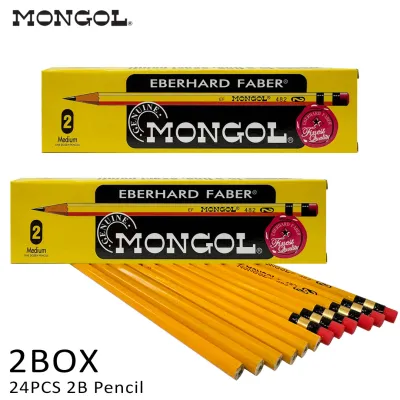
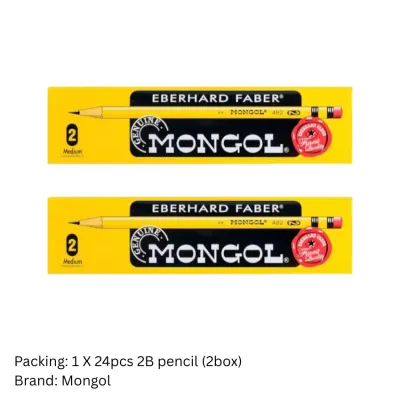
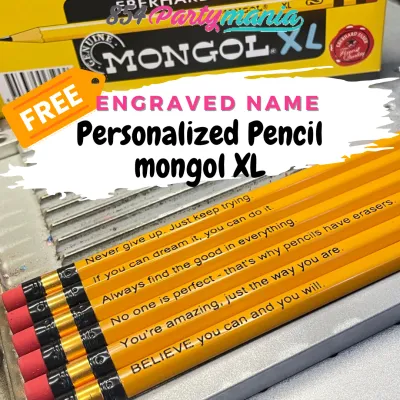
Prices are valid at publication and may change. Please refer to the product page for the latest price.
First, evaluate smoothness by observing how the pencil glides across the page. When writing a continuous paragraph, pay close attention to any sudden scratchiness, drag, or inconsistent graphite deposition. A high-quality lead should feel consistent from the first stroke to the last, without catching on the paper fibers or requiring excessive downward force to leave a clear mark.
Second, assess line darkness and smudge resistance. Write a few bold lines and immediately run a clean finger across them to see how easily the graphite smears. This is particularly important in warm, humid environments where hand moisture can easily transfer to the page. Additionally, test the erasability of the graphite using a standard vinyl eraser; a good everyday pencil should leave a clean surface without tearing the paper or leaving a dark, stubborn shadow behind.
Finally, consider comfort and ergonomics during extended writing sessions. Take note of the barrel shape—whether hexagonal, round, or triangular—and how it rests against your fingers. Observe the weight distribution of the pencil, especially as a wooden pencil grows shorter with use, and monitor your hand for signs of grip fatigue or muscle tension after ten to fifteen minutes of continuous writing.
Comparing Monggol Pencil 2 with Standard Wooden Pencils
When placed side-by-side with generic or budget-friendly wooden pencils, the Monggol Pencil 2 reveals distinct differences in material construction and writing performance. One of the most critical areas of comparison is lead quality and breakage resistance. Standard budget pencils often suffer from off-center graphite cores, which lead to frequent breakage during sharpening and uneven wear during use. The Monggol Pencil 2 features a centered core that responds well to standard manual and rotary sharpeners, minimizing wood wastage and frustrating mid-sentence snaps.

The wood casing itself plays a significant role in the overall user experience. Generic pencils frequently use low-grade, fibrous wood that splinters easily, leaving rough edges near the tip that can scrape against your fingers. The Monggol Pencil 2 utilizes a smoother, more uniform wood casing that shaves away cleanly in a continuous ribbon, resulting in a smooth, comfortable transition between the wood and the exposed graphite.
In terms of writing output, the differences become highly visible on typical notebook paper. Generic wooden pencils often produce inconsistent lines, alternating between faint, hard strokes and sudden, crumbly dark patches that generate excessive graphite dust. The Monggol Pencil 2 delivers a more stable, predictable line with moderate darkness that strikes a balance between legibility and erasability. While it may produce a small amount of graphite dust under heavy pressure, it generally keeps your pages cleaner than softer, lower-quality alternatives.
Comparing Monggol Pencil 2 with Mechanical Pencils
Comparing a traditional wooden pencil like the Monggol Pencil 2 to a mechanical pencil highlights a fundamental divide in writing philosophy and mechanics. The most obvious difference lies in line width consistency. A mechanical pencil utilizes thin, pre-cut leads—typically 0.5mm or 0.7mm—that maintain a constant line width regardless of how long you write. In contrast, the Monggol Pencil 2 starts with a sharp, precise point that gradually wears down to a broader, softer line, offering a natural variation in stroke thickness that many writers find expressive but others find imprecise.
Maintenance requirements also differ significantly between the two formats. The Monggol Pencil 2 requires regular sharpening, which means pausing your work, generating wood shavings, and gradually shortening the physical length of the tool. Mechanical pencils eliminate the need for a sharpener entirely, requiring only a quick click to advance the lead. However, they introduce their own maintenance tasks, such as refilling lead chambers, clearing occasional jams, and ensuring the delicate internal clutch mechanism remains undamaged.
The tactile feedback of these tools creates distinct writing sensations. The wooden barrel of the Monggol Pencil 2 absorbs a portion of the writing vibration, offering a warm, organic feel that connects the writer closely to the paper. Mechanical pencils, often constructed from plastic or metal, provide a stiffer, more direct transfer of energy. While metal grips can offer excellent control for technical drafting, they can feel cold and rigid during long, casual writing sessions compared to the natural yield of a wooden casing.
Decision Framework: When to Choose Monggol Pencil 2 or Alternatives
To streamline your selection process, you can use a structured decision framework based on your daily writing environment, task requirements, and personal comfort preferences. No single pencil is perfect for every scenario, but matching your specific habits to the strengths of each tool will ensure a much more satisfying writing experience.
You should choose the Monggol Pencil 2 if you appreciate the classic, tactile feedback of wood and enjoy the natural variation in line weight that a wearing graphite tip provides. It is an excellent choice for general note-taking, brainstorming sessions, and quick sketching where a rigid, ultra-fine line is not strictly necessary. Additionally, its simple, solid construction means you never have to worry about mechanical failures, making it a highly reliable option for exams, field work, or busy classrooms where tool-free maintenance is a major advantage.
On the other hand, you may want to look at standard wooden alternatives if your work demands highly specialized graphite grades, such as very soft B grades for dark sketching or hard H grades for light drafting. If you experience severe hand fatigue, you might also seek out alternative wooden pencils that feature specialized triangular barrels or thick, oversized grips designed specifically to reduce finger strain.
Mechanical pencils are the clear winner if your daily tasks involve technical drawing, precise mathematical calculations, or filling out compact forms with limited space. They are ideal for individuals who dislike the interruption of sharpening and prefer a consistent, predictable line width from start to finish. If you write for hours at a time, a mechanical pencil with a cushioned, ergonomic rubber grip can also help prevent the calluses and muscle fatigue often associated with holding a slim, hexagonal wooden barrel.
Before making your final decision, always verify how your chosen pencil interacts with your preferred paper. Highly textured, toothy paper will wear down a wooden pencil’s tip very quickly and generate more graphite dust, while glossy or synthetic papers may cause mechanical pencil leads to slip or smudge excessively. Testing a few strokes on a sample sheet will quickly reveal the most compatible combination for your daily routine.
Frequently Asked Questions (FAQ)
How do I prevent my wooden pencil lead from breaking inside the barrel?
Internal lead breakage is usually caused by physical impacts or improper sharpening techniques. To protect the graphite core, avoid dropping your pencils on hard floors, as the shock can fracture the lead along the entire length of the wooden barrel. When sharpening, ensure you are using a sharp, high-quality blade; dull sharpeners pull and twist the wood unevenly, applying lateral pressure that snaps the lead before it can form a point. Holding the pencil straight and rotating it smoothly without forcing it into the sharpener will also help maintain core integrity.
What is the best way to store pencils to maintain their writing quality?
Proper storage protects both the wood casing and the graphite core from environmental degradation. In tropical climates with high humidity, store your pencils in a dry, room-temperature environment to prevent the wood from absorbing moisture, which can cause warping or weaken the glue holding the lead in place. Keep your pencils in a dedicated pencil case, roll, or upright cup with the tips pointing away from hard surfaces. This prevents the exposed points from chipping and stops the barrels from knocking against each other, preserving their finish and structural strength.

Community discussion
Share your experience or ask a question. Comments are reviewed before publication.