
For decades, the yellow wood-cased pencil has been a staple in classrooms and testing centers across the Philippines. When preparing for high-stakes licensure examinations administered by the Professional Regulation Commission (PRC) or college entrance tests, examinees are almost universally instructed to bring a number two pencil. The Mongol #2 pencil is a highly recognizable brand in local bookstores, but choosing it requires understanding how it performs under exam conditions and whether it remains a practical choice for your daily study sessions.
Understanding the #2 (HB) Standard for Standardized Tests
Standardized examinations rely on Optical Mark Recognition (OMR) technology to grade answer sheets rapidly and accurately. These OMR scanners work by shining a light onto the paper and measuring the amount of light reflected back. A standard number two pencil, which corresponds to the medium-grade “HB” on the graphite scale, deposits a specific density of graphite that absorbs light and prevents reflection. If you use a pencil that is too hard, such as a 2H, the mark will be too light for the scanner to detect; conversely, using a very soft lead like a 4B can cause excessive smudging that may lead to grading errors.
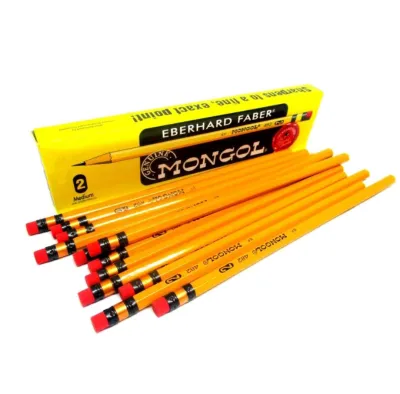
To verify the grade, look closely at the barrel imprint. A compliant pencil will clearly display the “#2” or “HB” designation near the ferrule. However, because manufacturing standards and graphite blends can vary slightly between brands, the physical imprint alone is not a complete guarantee of performance. It is highly recommended to perform a quick test on a sample sheet of paper before your exam day to observe how easily the lead leaves a dark, solid mark without requiring excessive pressure.
Products mentioned in this guide

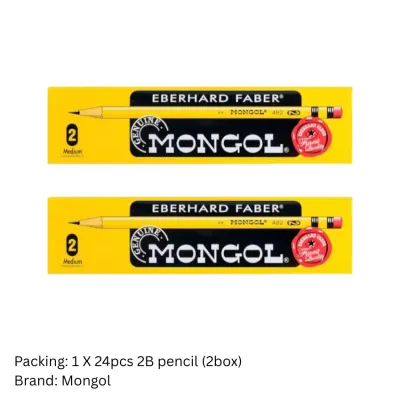
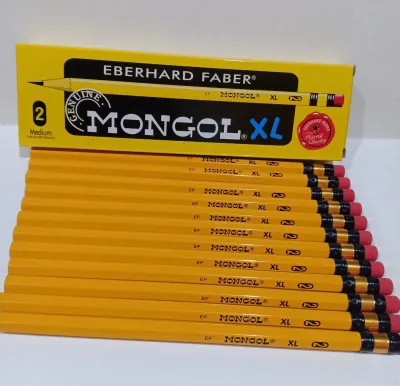
Prices are valid at publication and may change. Please refer to the product page for the latest price.
Evaluating the Mongol #2 for Board Exam Answer Sheets
When shading hundreds of tiny bubbles on an OMR answer sheet, several physical factors determine whether a pencil is reliable. Smudge resistance is critical in the humid tropical climate of the Philippines, where sweaty palms can easily smear loose graphite across the page. You can test this by shading a small block on a practice sheet and firmly rubbing your finger across it; a reliable pencil should leave minimal residue and keep the surrounding paper clean to prevent invalidating adjacent answers.

Shading efficiency is another vital consideration during timed exams. A suitable pencil core must balance darkness with structural strength, allowing you to fill bubbles quickly with a few broad strokes without the tip constantly snapping. Additionally, you must verify eraser compatibility. The eraser attached to the pencil, or any separate block eraser you use, must lift the graphite cleanly without tearing or thinning the delicate exam paper. A torn answer sheet can jam the scanning machine or cause a misread, so testing the erasability of your pencil on a practice sheet is a necessary precaution.
Given the popularity of this specific brand, counterfeit pencils are common in local markets and online marketplaces. These substandard counterfeits often feature brittle, off-center leads that break repeatedly during sharpening or shading. To help ensure consistent performance, inspect the pencil’s physical construction before purchasing. Look for clean, aligned brand imprints, a securely attached metal ferrule, and a centered lead core at both ends of the unsharpened pencil.
Performance in Daily Writing and Sketching
Beyond the high-pressure environment of the testing room, a standard number two pencil serves as a versatile tool for daily note-taking and casual sketching. On standard notebook paper or printed handouts, the graphite should glide smoothly without scratching the surface. The darkness is generally sufficient for legible handwriting, though it may fade slightly over time if the pages rub together inside a crowded backpack.
The quality of the wood casing directly impacts how user-friendly the pencil is for daily tasks. High-quality wood, such as incense cedar or treated softwood, allows for smooth, effortless sharpening without splintering or cracking. If the wood splits easily, it can expose the inner lead core to moisture and physical impact, leading to internal breakage before you even begin writing.
For specialized artistic applications, however, a standard number two pencil has clear limitations. While it is excellent for quick layouts and basic shading, it lacks the range of tonal values required for advanced sketching or detailed technical drawing. Artists and draftsmen typically require a full set of drawing pencils ranging from hard H grades for fine lines to soft B grades for deep shadows, making a single utility pencil insufficient for professional creative work.
Building a Reliable Exam and Study Stationery Kit
Relying on a single writing instrument during a crucial board exam is a significant risk. A practical preparation strategy involves assembling a comprehensive stationery kit designed to handle any minor mishap. Always carry at least three to four pre-sharpened wood-cased pencils to the testing center. This ensures that if a tip breaks mid-section, you can immediately switch to a fresh pencil without losing valuable time to sharpening.
Your kit should also include a high-quality manual pencil sharpener equipped with a sharp, rust-resistant steel blade. A dull blade will tug at the wood casing and snap the fragile graphite core inside the pencil, rendering it useless. A compact sharpener that collects shavings is particularly useful for keeping your exam desk clean and organized.
For corrections, do not rely solely on the pencil’s built-in eraser, which can dry out and harden in warm, humid conditions. Instead, pack a dedicated polymer or plastic eraser designed specifically for graphite. These erasers lift marks with minimal friction, reducing the risk of thinning or tearing the paper. Finally, while some examinees prefer mechanical pencils for their consistent line width, always verify the specific rules of your testing authority; many local board exams strictly prohibit mechanical pencils to prevent cheating or mechanical failures, making the traditional wood-cased pencil a highly reliable primary option.
Frequently Asked Questions (FAQ)
Can I use a mechanical pencil instead of a wood-cased Mongol #2 for board exams?
You must consult the official guidelines provided by your specific examining board, as rules regarding mechanical pencils vary. Many proctors in the Philippines strictly require traditional wood-cased pencils to prevent potential cheating methods or mechanical failures during the test. From a practical standpoint, the thin lead of a mechanical pencil (typically 0.5mm or 0.7mm) takes significantly longer to fill in large OMR bubbles and is much more prone to snapping under the rapid, heavy pressure of exam shading compared to the thick, sturdy core of a wood-cased pencil.
How do I spot counterfeit Mongol #2 pencils before buying?
To avoid purchasing counterfeit pencils that could fail during an exam, perform a careful visual inspection before buying. Check the metal ferrule holding the eraser; on genuine pencils, it is securely crimped, rust-free, and neatly aligned, whereas fakes often have loose, poorly painted bands. Examine the end of the pencil to ensure the graphite core is perfectly centered within the wood casing; off-center leads are a classic sign of poor manufacturing and will break constantly when sharpened. Finally, look at the gold or black lettering on the barrel; authentic pencils feature crisp, clear, and deeply stamped branding, while counterfeits often display blurry text, incorrect fonts, or misaligned logos.

Community discussion
Share your experience or ask a question. Comments are reviewed before publication.