
Choosing the right MUJI notebook depends on how you capture, organize, and revisit your notes. If you prefer a lightweight, classic writing experience for chronological journaling or quick lectures, a standard thread-bound notebook (often colloquially called “campus-style”) is your best option. For those who need a sturdy, lay-flat surface that can fold back completely on cramped desks, a double-ring notebook offers excellent structural support. If your work requires constant reorganization, archiving, and the ability to add or remove pages at will, the multi-ring loose-leaf system is the most adaptable choice.
Before making a purchase, it is helpful to evaluate how your writing tools, carrying habits, and study environments interact with these different formats. In humid tropical climates, paper behavior can change, and the physical footprint of your notebook can dictate how comfortably you work in transit or at a local café. Understanding the structural differences of each MUJI format ensures you select a tool that complements your daily workflow rather than hindering it.
Decoding the Formats: What MUJI Actually Offers
To choose the correct notebook, it is essential to understand the specific terminology and design choices MUJI employs. While students often use the term “campus notebook” to describe any slim, softcover, thread-bound notebook, “Campus” is actually a trademark of another prominent Japanese stationery brand. MUJI’s equivalent is their minimalist, thread-bound or glue-bound notebook series. These notebooks feature clean, cardstock covers, exposed or taped spines, and a fixed number of pages, making them incredibly light and traditional in their utility.
Products mentioned in this guide
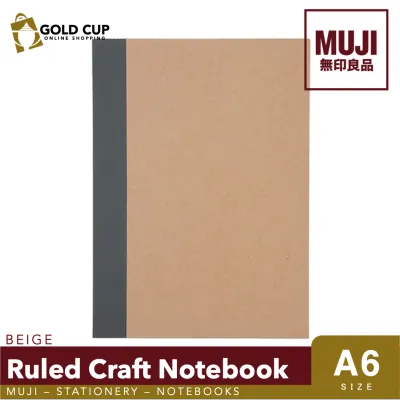
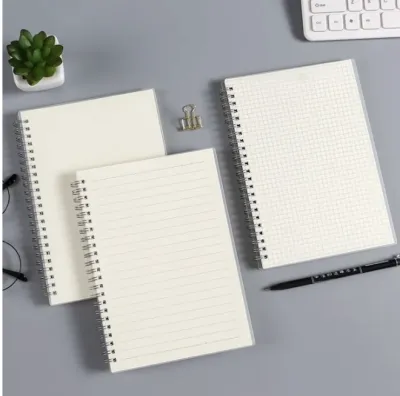
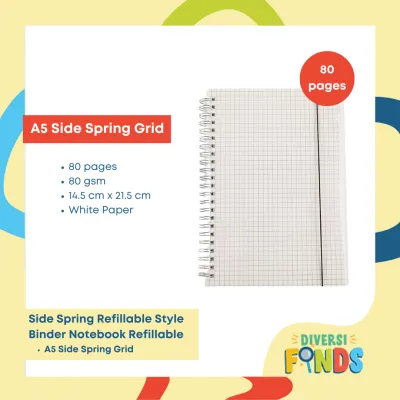
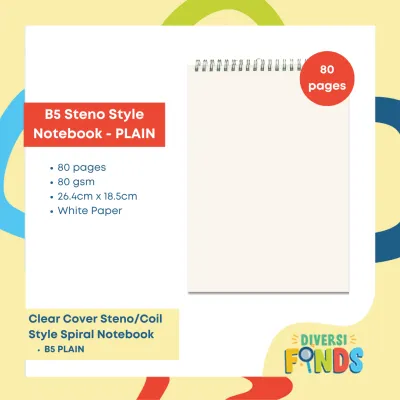
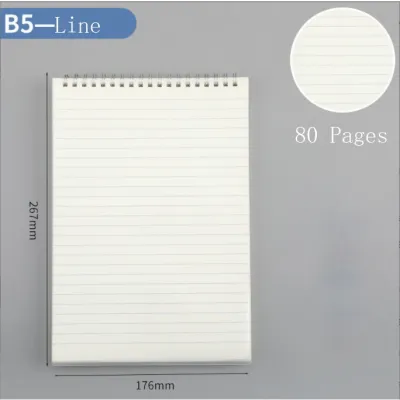
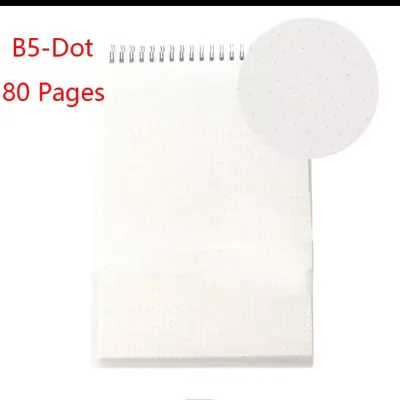
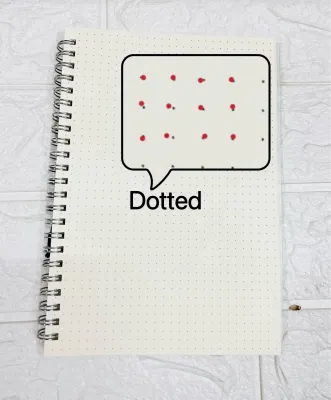
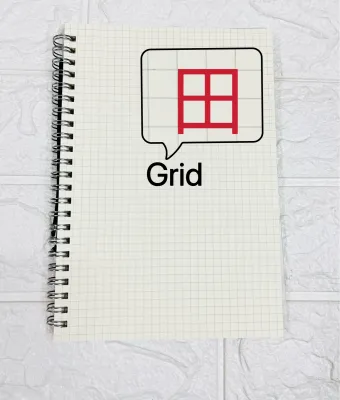
Prices are valid at publication and may change. Please refer to the product page for the latest price.
MUJI’s ring-bound notebooks utilize a double-ring wire binding system. This design secures the pages permanently while allowing the notebook to open a full 360 degrees. The covers are typically available in either a flexible translucent polypropylene (PP) or a rigid, recycled kraft cardboard. This format is highly favored for its structural integrity, as the stiff covers provide a built-in writing surface when a desk is unavailable.
The loose-leaf system is MUJI’s most modular offering, consisting of two separate components: the binder and the refill paper. Binders are available in lightweight PP or heavy-duty cardboard, featuring multi-ring mechanisms that open and close via a sliding or snapping latch. The refill paper is sold in loose packs, featuring a high density of holes along the margin to distribute tension evenly. This system allows you to mix blank, ruled, and grid pages within a single binder, creating a highly customized organizational hub.
Comparing Binding, Paper, and Usability
The physical construction of each notebook format directly impacts your writing comfort and the longevity of your notes. Thread-bound notebooks offer a smooth, continuous surface across the center fold, but they require some breaking-in to lie completely flat. If you write across the gutter of the page, the spine tension of a brand-new bound notebook can cause it to snap shut. In contrast, ring-bound and loose-leaf systems lie perfectly flat from day one, though the physical rings can sometimes obstruct your hand when writing near the margins, especially for left-handed writers.

Paper performance is highly dependent on the specific material composition and the writing instruments you use. MUJI offers several paper types, including recycled paper and high-quality plantation paper. When shopping, check the packaging labels for paper weight and type. In humid environments, paper naturally absorbs moisture from the air, which can increase the likelihood of ink feathering or bleeding through the page. If you use gel pens, rollerballs, or fountain pens, look for packaging marked as high-quality paper, and perform a small trial stroke in an inconspicuous corner to verify drying speed and bleed resistance before committing to heavy use.
Portability and bag-friendliness are critical factors for daily commuters and students. Thread-bound notebooks are exceptionally slim and slide easily into tight backpack compartments or tote bags without snagging. Ring-bound notebooks are slightly bulkier due to the wire rings, which can sometimes catch on loose threads or other items in your bag. Loose-leaf binders are the bulkiest option, requiring significant vertical and horizontal space in your bag. However, they allow you to carry only the pages you need for the day, leaving older notes archived safely at home in a separate binder.
Matching the Format to Your Note-Taking Workflow
Aligning your notebook selection with your specific cognitive style and physical workspace prevents organizational friction. If your note-taking is strictly chronological—such as daily journaling, meeting minutes, or single-semester lecture logs—the standard thread-bound notebook is highly efficient. It forces a linear progression, ensuring that your thoughts remain in the exact sequence they were written. Because they are lightweight and inexpensive, you can easily dedicate one notebook to each subject or project without adding excess weight to your bag.
For those who frequently work on tiny lecture hall desks, public transport, or crowded coffee shop tables, the ring-bound notebook is highly practical. The ability to fold the front cover completely behind the back cover halves the physical footprint of the notebook, allowing you to write comfortably in tight spaces. The rigid cardboard or PP covers also act as a firm clipboard, making it easy to take notes while standing or resting the notebook on your lap.
If your projects are dynamic, non-linear, or require long-term archiving, the loose-leaf system is unmatched. It is ideal for complex subjects where you need to insert handouts, rearrange lecture topics, or discard mistakes without ruining the integrity of the notebook. You can organize your binder with tabbed dividers, moving older notes to storage boxes at the end of a unit while keeping active reference sheets at the front. Before choosing this system, verify that your desk setup and bag can comfortably accommodate the wider footprint of a multi-ring binder.
Managing Refills, Accessories, and Long-Term Costs
Adopting a notebook system requires looking beyond the initial purchase to consider ongoing maintenance and compatibility. For the loose-leaf system, you must ensure that any refill paper you buy matches the exact ring configuration of your binder. MUJI binders typically follow standard Japanese multi-ring spacing: 20 holes for A5, 26 holes for B5, and 30 holes for A4. Always check the label on both the binder and the refill pack to confirm they share the same size and hole count before purchasing, as standard Western two-hole or three-hole punched paper will not align with these multi-ring mechanisms.
From a financial perspective, the long-term cost-effectiveness of these formats depends on your consumption rate. While a loose-leaf binder requires a higher initial investment in ₱ for the cover and ring mechanism, the ongoing cost of refill paper packs is generally lower per page than buying new bound notebooks. If you write extensively every day, the loose-leaf system eventually becomes more economical. Conversely, if you only take occasional notes, the low upfront cost of individual thread-bound notebooks may be more practical.
When planning your stationery setup, consider the local availability of refills and accessories. In the Philippines, specific sizes—particularly the highly popular B5 format—can occasionally experience stock fluctuations in physical retail stores. It is wise to check official online brand channels or visit major physical branches to secure a steady supply of your preferred refill paper. If you choose a bound notebook, availability is less of a concern, as you can easily transition to a different style or brand once the pages are filled.
Frequently Asked Questions (FAQ)
Do MUJI loose-leaf binders fit standard hole-punched paper?
MUJI loose-leaf binders generally do not fit standard international two-hole or three-hole punched paper. They are designed around the Japanese industrial standard for multi-ring stationery, which utilizes a specific hole pitch (the distance between the centers of adjacent holes). To ensure compatibility, always check the hole count and pitch specifications on the binder label. If you wish to insert external documents, you will need a specialized multi-hole punch designed for 20-hole (A5) or 26-hole (B5) paper, or you can use adhesive pockets designed to fit the binder rings.
Which MUJI notebook format is best for fountain pen users?
Fountain pen users should pay close attention to the paper type rather than the binding format. MUJI’s high-quality paper (often labeled as such on the packaging) is generally preferred for fountain pens as it is formulated to resist feathering and bleed-through. Standard recycled paper options may be more fibrous, causing ink to spread and bleed, especially in high-humidity conditions. Because ink drying times can be longer on smoother, high-quality paper in humid climates, it is recommended to test your specific pen and ink combination on a single sheet before committing to extensive writing.

Community discussion
Share your experience or ask a question. Comments are reviewed before publication.