
Finding the right multi function folder organizer often feels like navigating a minefield of over-engineered designs. While product listings promise to streamline your workday with built-in calculators, tablet sleeves, and endless card slots, the reality of daily use is much simpler. A truly effective organizer prioritizes quick access, structural integrity, and physical compatibility with your primary documents. To choose a folder that actually improves your productivity rather than cluttering your bag, you must separate genuine utility from marketing gimmicks.
Essential Features That Drive Daily Utility
The foundation of any reliable folder organizer lies in how it handles your documents under real-world conditions. Pocket configurations dictate how easily you can slide papers in and out during a fast-paced meeting. Horizontal pockets are excellent for quick-access reference sheets, while vertical pockets offer greater security for loose pages that might otherwise slip out during transit. If you regularly carry thick reports, look for gusseted pockets that expand outward; flat pockets quickly become tight and unusable once you insert more than a few sheets of paper.
Dividers are equally critical for maintaining order, but their design must match your sorting style. Fixed dividers provide a rigid, predictable structure that keeps different subjects permanently separated, which is ideal for ongoing projects. Removable or adjustable dividers allow you to customize the internal layout as your workload shifts. Whichever style you choose, ensure the dividers feature clear, legible tabs that remain visible even when the folder is filled to capacity, allowing you to flip directly to the section you need without fumbling.
Products mentioned in this guide
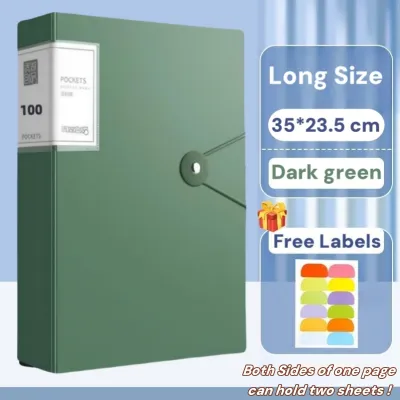
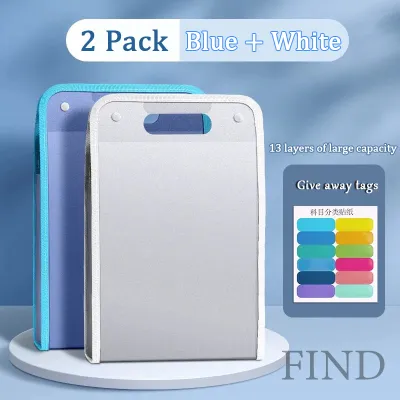
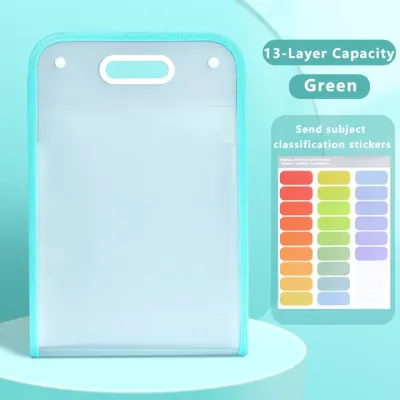
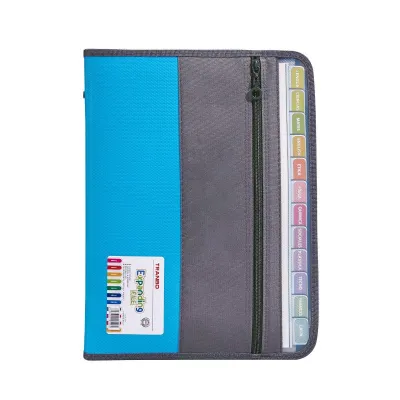
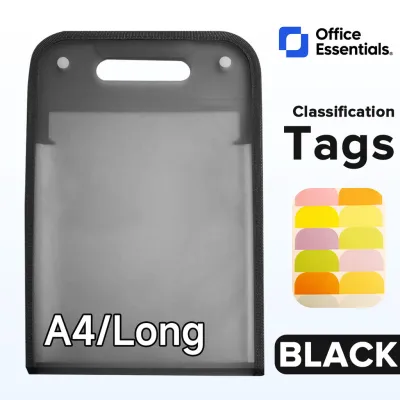
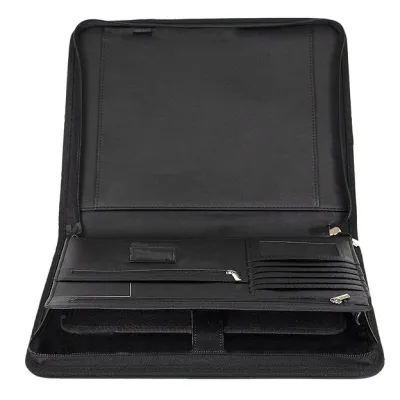
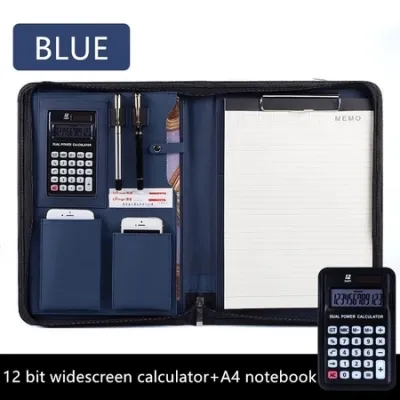
Prices are valid at publication and may change. Please refer to the product page for the latest price.
Finally, the closure mechanism determines how well the organizer protects its contents on the move. Zipper closures offer the most secure option, sealing all four sides to prevent small items from falling out, though they do add slight bulk. Snap buttons and elastic bands provide faster access and a slimmer profile, making them highly convenient for quick transitions between desks. However, elastic bands can lose their tension over time, especially in humid tropical environments, so inspect the quality of the band and its attachment points before committing.
Identifying Marketing Fluff and Unnecessary Add-Ons
Many organizers attempt to justify a higher price tag by packing the interior with features that ultimately compromise its primary purpose. Built-in solar calculators, bulky ring binders that cannot be removed, and excessive rows of tight card slots often look impressive in product photos but consume valuable physical space. When these elements are permanently stitched into the folder, they compress the main document compartments, leaving you with an organizer that is too thick to carry comfortably yet struggles to hold a standard stack of papers.
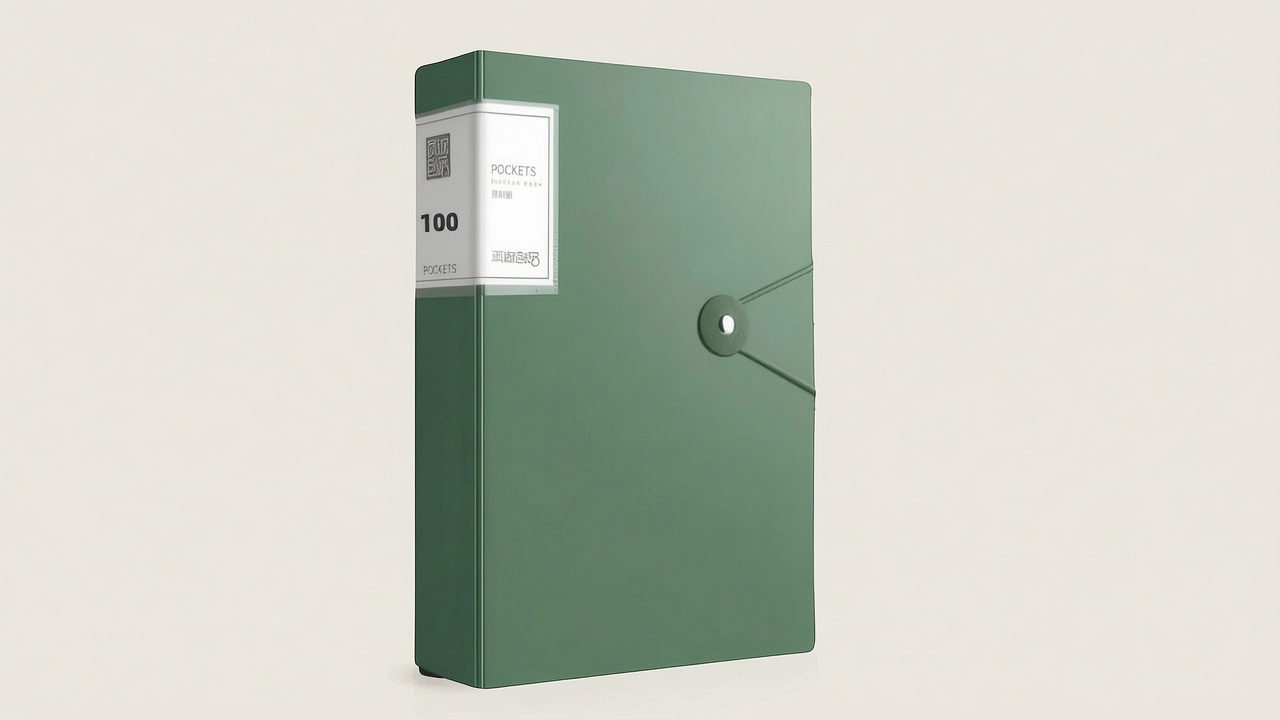
This design conflict directly impacts the folder’s actual capacity for standard A4 or Letter-sized documents. A folder advertised as “multi-functional” might feature a tablet sleeve that, when occupied, pinches the adjacent paper slots so tightly that sliding a single sheet of paper inside becomes a struggle. Before purchasing, evaluate whether these integrated accessories replace items you already carry; if you already use a dedicated smartphone or laptop, a built-in phone stand or a bulky power bank pocket inside your folder is simply dead weight.
To avoid falling for marketing fluff, run through a quick mental checklist before buying. Ask yourself if a specific slot or loop solves an active, daily frustration in your current routine. If you do not carry physical business cards, three dedicated card slots will only collect dust and lint. Focus your budget on high-quality materials and spacious paper compartments rather than paying a premium for novelty add-ons that you will likely ignore after the first week of use.
Matching Organizer Specifications to Your Workflow
Selecting the ideal organizer requires a clear understanding of your daily environment and the specific tasks you perform. For students, the daily routine involves constant movement, shifting from lecture halls to study areas, which demands an organizer that can withstand frequent transit. Students typically benefit from lightweight, highly flexible designs that accommodate a mix of loose-leaf paper, printed handouts, and notebooks. A model with a secure zipper closure and a few spacious, expanding sections is often the most practical choice for keeping multiple subjects organized in a single binder.
In contrast, office professionals often prioritize presentation readiness and strict document protection. If your job involves client meetings or presenting physical contracts, you need an organizer that keeps papers completely flat, crisp, and free of dog-eared corners. A sleek, rigid portfolio with a clean layout, a single dedicated pen loop, and a secure slot for a notepad projects a highly professional image while keeping essential documents pristine.
Regardless of your role, always verify the exact paper size compatibility of the organizer before making a decision. While many international designs are tailored strictly for A4 paper, local academic and professional work in the Philippines frequently utilizes Letter or Legal-sized documents. Ensure the internal dimensions offer at least a few millimeters of clearance beyond your standard paper size so that edges do not get crumpled by the zipper or closure mechanism. Additionally, consider the physical footprint of the folder when fully opened; it should fit comfortably on a standard lecture arm desk or a crowded coffee shop table without spilling over the edges.
Build Quality and Material Checks Before Purchasing
Because you cannot always test a folder’s long-term durability at the point of sale, you must rely on observable construction details to gauge its lifespan. Begin by inspecting the edge binding and stitching along the perimeter of the folder. Double-stitched seams and reinforced fabric borders are strong indicators that the organizer can handle the daily friction of being pulled in and out of a backpack or briefcase. Loose threads, uneven stitching, or raw, unsealed plastic edges are warning signs that the seams may split under the pressure of a fully loaded folder.
The rigidity of the outer shell is your primary defense against bent documents, making material selection crucial. In warm, humid climates, soft cardboard-core organizers can absorb moisture from the air over time, losing their stiffness and sagging under weight. Opt instead for high-density polypropylene (PP) or water-resistant fabric covers with a sturdy internal plastic frame. These materials maintain their structural integrity, protecting your papers from unexpected rain showers during your commute or accidental spills on your desk.
Lastly, test the mechanical components of the organizer repeatedly before finalizing your choice. If the folder features a zipper, slide it back and forth to ensure it glides smoothly without catching on the internal lining or mesh pockets. For snap closures, check that the button aligns correctly without requiring excessive force to press shut, which can warp the surrounding material over time. A well-constructed organizer should operate effortlessly, allowing you to focus on your work rather than fighting with stubborn hardware.
Frequently Asked Questions (FAQ)
How many pockets do I really need in a multi-function folder?
For most daily workflows, an organizer with four to six distinct pockets strikes the ideal balance between categorization and portability. Rather than chasing the maximum pocket count, focus on how you categorize your work; having too many thin slots often leads to forgotten documents buried in obscure sections. Ensure at least one or two of these pockets feature a gusseted, expanding design to accommodate thicker documents or small notebooks, while the remaining flat pockets can hold single-sheet references and active checklists.
Are multi-function folders with shoulder straps worth the extra cost?
Shoulder straps are generally only worth the investment if you plan to use the folder as your primary, standalone bag during short commutes. If you already carry a backpack, messenger bag, or tote, an integrated strap adds unnecessary bulk, extra weight, and dangling hardware that can snag on other items. However, for professionals or students who only need to carry a few documents and a tablet between nearby buildings, a folder with a detachable strap offers a lightweight, hands-free alternative to a full-sized bag.

Community discussion
Share your experience or ask a question. Comments are reviewed before publication.