
Finding the right black dual-tip marker in the Philippines requires balancing ink performance, tip durability, and cost-effectiveness. The Pilot Twin Marker is a familiar sight in local offices, classrooms, and design studios, prized for its dual-tip convenience. However, determining whether it represents the best value for your specific tasks requires comparing its design directly with alternative dual-tip markers on the market. Because no single marker excels at every task, your choice should depend on your primary writing surfaces, paper thickness, and environmental conditions. By evaluating how different ink formulations and tip shapes perform under local conditions, you can select the tool that best supports your daily workflow.
Key Evaluation Criteria for Dual-Tip Markers
When comparing dual-tip markers, the first factor to analyze is the tip configuration. Dual-tip markers typically pair two distinct tip sizes or shapes on a single barrel, such as a broad chisel tip with a fine bullet tip, or a flexible brush tip with an extra-fine plastic point. For general writing, labeling, and organizing, a combination of fine and extra-fine bullet tips provides the most utility. For artistic applications, calligraphy, or highlighting, a brush or chisel tip is often necessary. Understanding your primary application prevents you from purchasing a marker with tips that will remain unused.
Ink formulation is the next critical criterion to verify on the product packaging. Markers generally use either water-based, alcohol-based, or oil-based inks. Water-based inks are excellent for standard paper because they rarely bleed through the page, making them ideal for bullet journaling and note-taking. However, they are highly susceptible to smudging if they encounter moisture. Alcohol-based and oil-based inks, on the other hand, offer permanent, water-resistant marks that adhere well to non-porous surfaces like plastic, metal, and glass. The trade-off is their tendency to bleed through standard paper, requiring thicker sheets or specialized sketchbooks.
Products mentioned in this guide
Prices are valid at publication and may change. Please refer to the product page for the latest price.
Paper compatibility is closely tied to ink formulation and must be tested to avoid ruined pages. In the Philippines, standard school notebooks and office copy papers often range from 50 GSM to 70 GSM (grams per square meter). These thinner papers are highly prone to feathering—where the ink spreads sideways along the paper fibers—and ghosting, where the writing is visible on the reverse side. When evaluating a dual-tip marker, you must consider the weight of the paper you use daily. Testing the marker on a scrap piece of your preferred paper is the most reliable way to verify if the ink will pool or bleed through.
Pilot Twin Marker Black: Design and Specification Checks
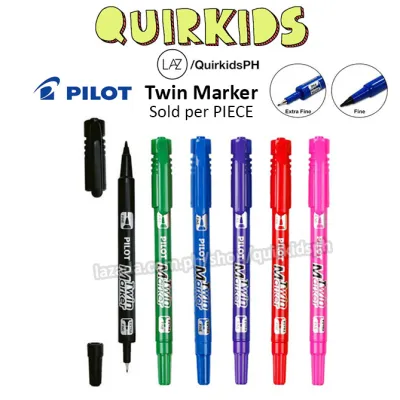
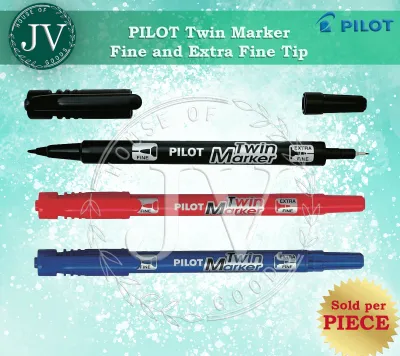
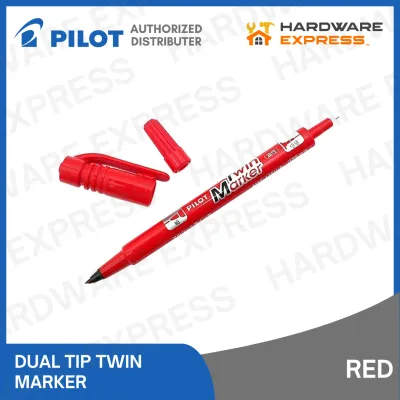
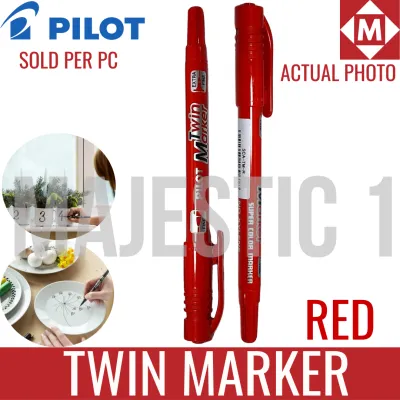
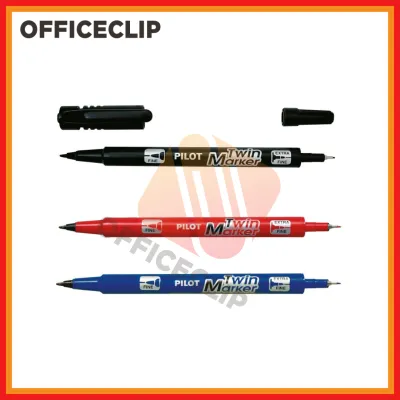
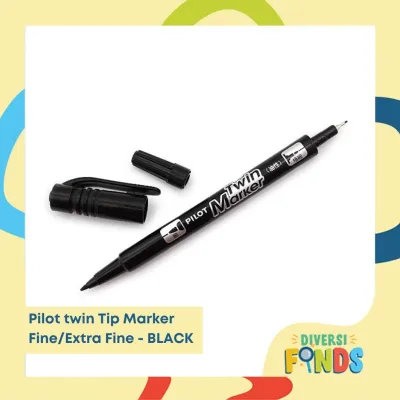
To evaluate the Pilot Twin Marker Black, start by physically inspecting its build quality and cap design. The marker features a double-capped plastic barrel with a slim profile that fits comfortably in standard pencil cases. A critical feature to check is the airtightness of the caps. In the warm, tropical climate of the Philippines, high ambient temperatures can accelerate ink evaporation if caps do not seal perfectly. The Pilot Twin Marker utilizes snap-on caps that should click securely into place, protecting both the fine and extra-fine fiber tips from drying out during storage.

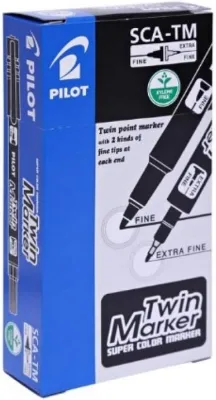
Next, examine the manufacturer’s packaging or product specifications to verify the ink properties. The classic Pilot Twin Marker uses a permanent, oil-based dyestuff ink. This formulation is designed for high opacity, quick drying times, and excellent water resistance once fully cured. Because it is oil-based, the ink is formulated to write smoothly on challenging surfaces, including plastic storage bins, laminated labels, and packing tape. When inspecting the packaging, look for indicators of surface compatibility to ensure the ink matches your intended medium, especially if you plan to use it on glossy or non-porous materials.
The primary workflow advantage of this twin-tip design is the elimination of the need to carry multiple pens. With a fine tip on one end and an extra-fine tip on the other, you can transition seamlessly from bold labeling to detailed note-taking or fine outlining. This dual-tip setup is particularly useful for students organizing study guides, logistics personnel marking packages, or office workers labeling files. Instead of rummaging through a bag for two separate pens, a single dual-tip marker streamlines your workspace and reduces the weight of your daily carry.
Condition-Based Comparison: Pilot Twin Marker vs. Alternatives
The Pilot Twin Marker is highly effective in scenarios that demand precision and durability on diverse surfaces. For example, if you are labeling plastic containers, organizing cables with zip ties, or writing on glossy photo paper, the oil-based ink adheres firmly without smearing. The combination of a fine bullet tip (typically around 0.8 mm) and an extra-fine tip (around 0.4 mm) allows you to write legible text even in cramped spaces, such as the margins of a document or small adhesive labels.
Conversely, competing dual-tip markers may be more suitable if your work is primarily paper-based or artistic. If you practice hand lettering, modern calligraphy, or detailed illustrations, a marker featuring a flexible nylon brush tip on one end and a fine liner on the other will serve you better. Furthermore, if you are working in standard notebooks or planners with thin paper, a water-based dual-tip marker is preferable. Water-based alternatives will not bleed through 70 GSM paper as easily as the Pilot’s oil-based ink, keeping the reverse side of your pages clean and usable.
When comparing these options, consider the inherent trade-offs of each formulation. The Pilot Twin Marker’s permanent oil-based ink offers superior longevity and moisture resistance, which is highly beneficial in humid environments where water-based inks might run or fade. However, this same permanence means the ink will almost certainly bleed through standard notebook paper. If you choose the Pilot for paper-based tasks, you must accept the trade-off of using only one side of the page or upgrading to heavier paper stock, such as 100 GSM or higher.
Evaluating Price and Value in the Philippines
Assessing the value of the Pilot Twin Marker requires comparing its retail price against alternative brands in the local market. In the Philippines, you can find these markers sold individually or in multi-pack bundles at brick-and-mortar stationery chains, local school supply stores, and online marketplaces. When shopping online, calculate the unit price by dividing the total cost (including shipping) by the number of markers in the pack. This allows for a direct comparison with alternative dual-tip markers, which may initially appear cheaper but offer less ink volume or lower tip durability.
Long-term value is determined by factors beyond the initial purchase price, such as ink capacity and tip resilience. A cheaper alternative may save you money upfront, but if the fiber tips fray quickly under normal writing pressure or the caps fail to prevent drying, you will need to replace the marker sooner. The Pilot Twin Marker is known for maintaining its tip shape over extended use, preventing the fine lines from becoming thick and blurry. Inspecting the tips for fraying during your initial uses can help you gauge the marker’s overall lifespan.
When purchasing markers on e-commerce platforms, it is crucial to verify product authenticity to ensure you receive genuine performance. Counterfeit stationery products are common online and often feature inferior ink formulations that dry out rapidly, leak, or fade. To protect your purchase, buy from official brand stores, authorized distributors, or highly rated local sellers with verified customer reviews. Look closely at the product photos for clear, crisp branding prints on the barrel, and check that the cap colors match the official manufacturer specifications.
Final Decision Framework: Which Marker Should You Buy?
To finalize your decision, match your specific daily tasks to the strengths of each marker type.
Choose the Pilot Twin Marker if you require a highly versatile, permanent black marker that can write on both paper and non-porous surfaces like plastic, glass, or metal. It is the ideal choice for labeling, organizing, and detailed outlining where water resistance and quick-drying ink are essential to prevent smudging in humid conditions.
Choose a competing dual-tip marker if your primary focus is artistic creation, calligraphy, or writing in standard, thin-paper notebooks. Look for water-based alternatives to prevent bleed-through on low-GSM paper, or select markers with specialized brush and chisel tips if your projects require varied line widths and blending capabilities.
Verify first by checking your existing paper stock to ensure it can handle permanent oil-based ink without excessive ghosting. Additionally, inspect the physical caps of any new marker immediately after purchase to confirm a tight, snap-fit seal, and review the return policies of your local retailer or online seller in case of manufacturing defects.
Frequently Asked Questions (FAQ)
How can I prevent my dual-tip markers from drying out?
To maximize the lifespan of your dual-tip markers, always store them horizontally. Storing dual-tip markers vertically can cause the ink to pool at one end, leaving the opposite tip dry and unusable. Ensure that you press the caps firmly until you hear a distinct click, which confirms an airtight seal. Keep your markers away from direct sunlight and high-temperature areas, such as windowsills or hot vehicles, as excessive heat can expand the air inside the barrel and force ink to leak or dry out prematurely.
Does black ink from dual-tip markers bleed through standard notebook paper?
Yes, permanent oil-based or alcohol-based black inks will typically bleed through standard notebook paper, which usually ranges from 50 to 70 GSM. Water-based inks are much less likely to bleed, though they may still ghost on very thin sheets. To prevent ruined work, always perform a quick test on an inconspicuous area, such as the very back page of your notebook or a separate scrap sheet of the same paper, before starting your project. If bleeding occurs, place a thick sheet of cardstock behind your active page to protect the subsequent sheets.

Community discussion
Share your experience or ask a question. Comments are reviewed before publication.