
Choosing between classic modeling compound and air-dry clay comes down to whether your child wants to build temporary creations or permanent keepsakes. Modeling compound is soft, highly reusable, and designed for sensory exploration, making it excellent for toddlers and preschoolers. Air-dry clay, on the other hand, is a single-use sculpting medium that hardens over time, allowing older children to paint, seal, and preserve their finished artwork. By understanding how these materials behave, you can select the one that matches your child’s developmental stage and your tolerance for cleanup.
While both materials encourage creativity and fine motor development, they require different levels of physical effort and parental involvement. Modeling compound offers immediate gratification with its pliable texture, whereas air-dry clay teaches patience through a multi-day drying and painting process. Evaluating your child’s current skill level and crafting goals will help you make the right purchase for your next art session.
Understanding the Base Ingredients and Texture
To understand how these materials behave in small hands, it helps to look at what they are made of. Traditional modeling compounds are typically formulated from a simple mixture of water, salt, and wheat flour. This food-grade base gives the material its signature soft, elastic texture that is incredibly easy for tiny fingers to squeeze, roll, and shape. Because it contains wheat, parents must always check the packaging for allergen warnings if gluten sensitivity is a concern in the household.
Products mentioned in this guide

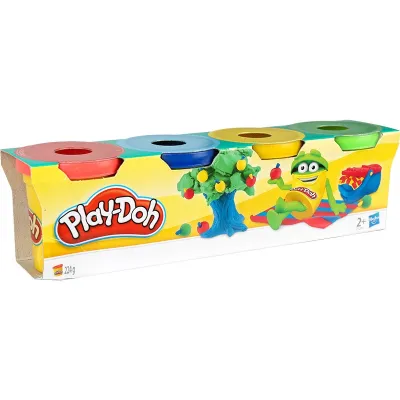
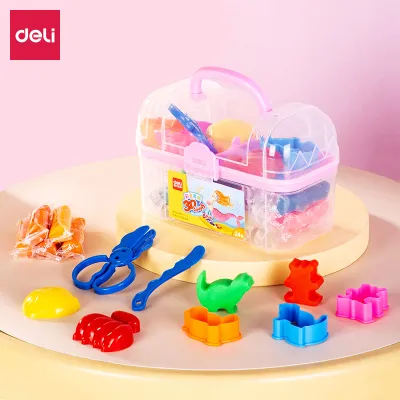
Prices are valid at publication and may change. Please refer to the product page for the latest price.
In contrast, air-dry clay is usually composed of natural clay minerals, paper pulp (cellulose), or synthetic polymers combined with water and chemical binders. This composition makes the clay significantly firmer and slightly sticky when wet. It requires more hand strength to knead, flatten, and sculpt, which can help develop hand muscles in older children but may quickly tire out or frustrate younger toddlers.
These ingredient differences also affect the tactile feedback of each material. Modeling compound feels smooth and slightly oily, leaving virtually no residue on hands or play surfaces during use. Air-dry clay often leaves a powdery or muddy film on fingers as the water evaporates during a sculpting session. Keeping a damp cloth nearby is usually necessary when working with air-dry clay to keep hands clean and the material workable.
Reusability and Cleanup: Managing the Mess
For parents, the practical day-to-day maintenance of art supplies is just as important as the creative process itself. Modeling compound is designed for endless reuse. When stored in its airtight plastic tub immediately after play, it retains its moisture and pliability for months. If a piece is accidentally left out overnight and develops a dry, crusty outer layer, you can often revive it by wrapping it in a damp paper towel for a few hours or kneading in a few drops of water.

Air-dry clay is strictly a single-use medium once it is exposed to the air. The curing process begins the moment you open the packaging. During a crafting session, children must work relatively quickly, and any unused clay must be kept tightly wrapped in plastic wrap or sealed in an airtight zip bag. Once air-dry clay cures completely and hardens, it cannot be reconstituted or softened with water again.
Cleanup methods also differ significantly between the two materials. Modeling compound tends to break into small, rubbery crumbs that can easily scatter across the floor or get ground into carpet fibers. The easiest way to clean these up is to let the crumbs dry completely, making them brittle enough to vacuum up or sweep away. Air-dry clay cleanup involves managing fine clay dust and dried smears on tables. In humid tropical environments, the clay stays workable slightly longer on the table, but any residue left on wooden surfaces can dry into a stubborn chalky film that requires a thorough wipe-down with a wet sponge.
Finished Projects: Temporary Play vs. Permanent Keepsakes
If your child loves the process of building, squishing, and starting over, modeling compound is the ideal choice. It is engineered to remain temporary. While you can technically leave a modeling compound creation out to dry, the resulting object is highly brittle, prone to severe cracking, and will eventually crumble under light pressure. It is not designed to hold up as a permanent toy or ornament.
Air-dry clay is specifically engineered to cure into a durable, solid state without the need for a high-temperature kiln. The drying process relies entirely on environmental evaporation. In high-humidity climates, a sculpture might take two to three days to dry fully, whereas in air-conditioned or dry rooms, it may cure within 24 hours. Once dry, the surface can be painted with acrylics, poster paints, or decorated with markers, and then sealed with a clear varnish for a glossy, water-resistant finish.
However, dried air-dry clay still has structural limits that young artists must learn to navigate. Because the clay shrinks slightly as the water evaporates, thin or protruding parts like long arms, legs, or animal ears are highly likely to warp, crack, or snap off during the drying process. To prevent this, older kids can use basic armatures made of aluminum foil, toothpicks, or wire inside the clay to provide structural integrity. Modeling compound does not require these internal supports because it is rarely dried on purpose.
Matching the Material to Your Child's Age and Skills
Toddlers and preschoolers thrive with modeling compounds because their play is primarily sensory and process-oriented. Children in this age group enjoy the physical sensation of squishing, cutting, and stamping without worrying about a permanent result. The soft texture prevents hand fatigue, keeping frustration low and encouraging independent play while they develop basic fine motor skills.
School-aged children are better suited for the challenges of air-dry clay. They have the fine motor control needed to join separate clay pieces using the “score and slip” method, which involves scratching the surfaces and adding a bit of water to bond them. They also possess the patience required to wait days for a project to dry before painting it, turning their craft into a multi-step, goal-oriented project.
While modeling compound allows for mostly independent play, air-dry clay sessions benefit greatly from adult guidance. Parents can help manage the water supply during sculpting, as adding too much water turns the clay into a slippery, muddy mess, while too little causes it to crack during shaping. Adults can also assist in setting up drying stations away from direct sunlight to prevent uneven drying and cracking.
Quick Comparison Checklist for Parents
| Feature | Modeling Compound (Play-Doh) | Air-Dry Clay | Verify Before Buying |
|---|---|---|---|
| Texture & Feel | Soft, elastic, slightly oily, easy to squeeze | Firm, slightly sticky, requires more hand strength | Check age grading on the package for physical suitability. |
| Reusability | Highly reusable if stored in airtight tubs | Single-use; hardens permanently once exposed to air | Ensure you have airtight containers or zip bags ready. |
| Drying & Curing | Does not dry well; becomes brittle and cracks | Cures naturally in 24 to 72 hours depending on humidity | Check manufacturer instructions for exact drying times. |
| Post-Drying Options | None; designed to be squished and reused | Can be painted, sanded, and sealed with varnish | Verify if paints and sealants are non-toxic and child-safe. |
| Ideal Age Group | Toddlers and preschoolers (ages 2+) | School-aged children (ages 5+) | Look for the AP non-toxic seal on all art materials. |
How to Decide: Choose Play-Doh or Air-Dry Clay
Choose modeling compound if:
- Your child is a toddler or preschooler who enjoys sensory play, squishing, and molding.
- You want a highly reusable material that can be packed away and used again tomorrow.
- You prefer a quick cleanup routine with minimal dust and no need for paints or sealants.
- You want to encourage independent play without constant adult assistance.
Choose air-dry clay if:
- Your child is older and wants to create permanent keepsakes, gifts, or school projects.
- The goal of the activity is a multi-step project that includes sculpting, drying, and painting.
- Your child has the hand strength to manipulate firmer materials and the patience to wait for drying.
- You are willing to assist with structural support, water management, and painting cleanup.
Verify first if:
- Anyone in your household has a wheat or gluten allergy, as traditional modeling compounds often contain wheat.
- You have a safe, flat drying space away from pets and drafty windows where clay projects can sit undisturbed for several days.
- Your child's school project has specific material requirements regarding weight, durability, or paint compatibility.
Frequently Asked Questions (FAQ)
Can you bake air-dry clay to make it dry faster?
No, you should never bake or microwave air-dry clay to speed up the drying process. Air-dry clay is formulated to dry slowly through natural evaporation at room temperature. Subjecting it to oven heat causes the outer layer to dry and shrink much faster than the moist interior, leading to severe warping, deep cracks, or bubbling. In some cases, baking synthetic or polymer-based air-dry clays can release unpleasant fumes or create a fire hazard. For the best results, place the finished sculpture on a wire rack in a well-ventilated room and let it dry naturally.
Is modeling compound safe if my child accidentally eats it?
While reputable modeling compounds are formulated with non-toxic ingredients, they are not food products and are not meant for consumption. The high salt content in these compounds usually deters children from eating more than a tiny taste, but ingesting larger amounts can cause an upset stomach or dehydration due to the sodium levels. Additionally, modeling compound can present a choking hazard for very young children who still put objects in their mouths. Always check the product label for specific allergen warnings, especially regarding wheat, and consult your pediatrician if you suspect your child has ingested a significant amount.

Community discussion
Share your experience or ask a question. Comments are reviewed before publication.