
Choosing the right transaction recording method is a foundational decision for any small business in the Philippines. The choice between a traditional carbonized receipt book (often locally referred to as a resibo) and a modern thermal receipt printer involves balancing daily operational speed, setup complexity, and long-term durability. While carbonized books offer immediate, power-free reliability for mobile vendors and micro-enterprises, thermal printers provide the rapid, automated output necessary for high-traffic retail environments. Deciding which system fits your business requires analyzing your transaction volume, physical workspace, and record-keeping practices.
Understanding Equipment Setup and Daily Workflow
Operating a business efficiently requires tools that match your daily pace. Carbonized receipt books require absolutely zero hardware setup. You simply open the book, place the protective cardboard divider beneath the current set to prevent ink transfer to the pages below, and begin writing. This system relies on physical pressure from a ballpoint pen to rupture micro-encapsulated dye on the back of the top sheet, transferring the image to the duplicate or triplicate sheets below. While highly reliable, this manual process means writing every item, price, and tax calculation by hand, which can slow down customer service during busy periods.
In contrast, thermal receipt printers require an initial hardware and software configuration. You must connect the printer to a stable power source or keep its internal battery charged, then pair it with a point-of-sale (POS) system, tablet, or smartphone via Bluetooth, USB, or Wi-Fi. The daily workflow is highly automated: once you input the sale into your POS application, the printer instantly outputs a clean, legible receipt. This speed is invaluable for managing long queues, though it leaves your checkout process vulnerable to power outages, connectivity drops, or software glitches.
Products mentioned in this guide
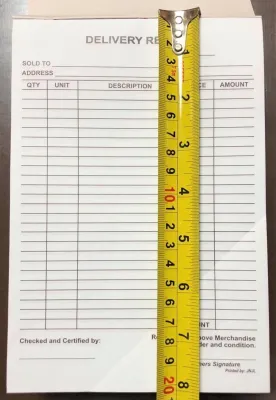
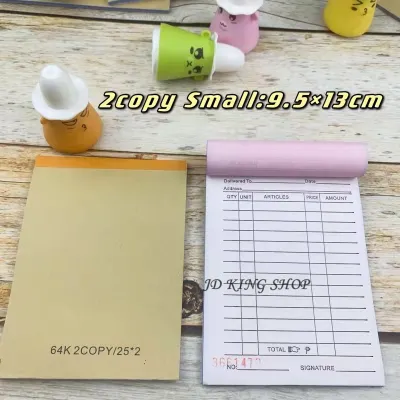
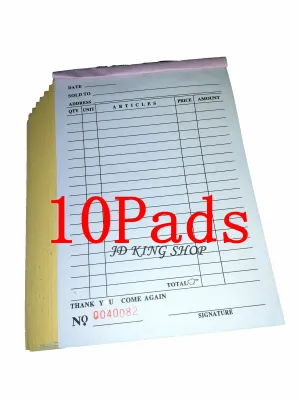
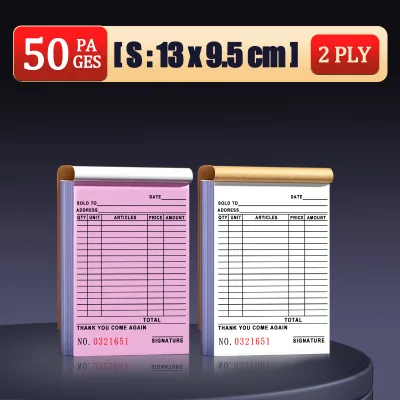
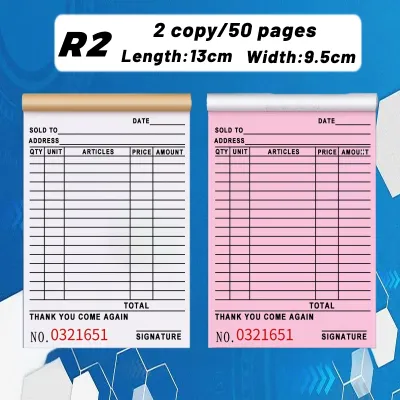
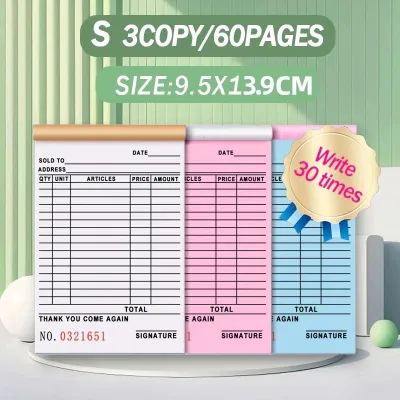
Prices are valid at publication and may change. Please refer to the product page for the latest price.
When choosing between these workflows, you must also consider physical handling and device compatibility. For carbonized books, you need to verify that the binding is sturdy and the perforations are clean, allowing you to tear out the customer’s copy without ripping the merchant’s duplicate. For thermal printers, you must verify that the printer’s firmware is fully compatible with your chosen POS software and that you know how to load the paper roll correctly, as thermal paper only has a heat-sensitive coating on one side.
Comparing Upfront Investments and Ongoing Consumable Costs
The financial impact of your receipting method involves both immediate setup costs and long-term recurring expenses. Carbonized receipt books require a very low upfront investment. A small business can purchase a pack of duplicate or triplicate books from a local stationery store or online marketplace for a minimal cost, making it highly accessible for startups and micro-enterprises. There are no electricity costs, software licensing fees, or hardware maintenance worries associated with manual books.

Thermal receipt systems require a more substantial initial capital outlay. You must purchase the thermal printer itself, compatible connection cables, and potentially a tablet or mobile device to run the POS software. Some advanced POS systems also require monthly or annual software subscriptions. Additionally, you must factor in the cost of electricity to run the printer and keep your connected devices charged throughout the business day.
Ongoing consumable costs also differ significantly in how they are tracked and managed. Carbonized books are purchased as complete units, meaning you know exactly how many transactions (usually 50 sets per book) you are getting for your money. Thermal printers require continuous rolls of thermal paper, typically categorized by width, such as 58mm for mobile handheld devices or 80mm for standard desktop printers. While the cost per individual thermal receipt can be very low, you must verify that the roll’s outer diameter fits your printer’s specific paper chamber, as oversized rolls will prevent the cover from closing. You must also account for occasional maintenance costs, such as cleaning the thermal print head with isopropyl alcohol to remove paper dust and adhesive residue, or replacing the printer entirely if the heating elements fail.
Evaluating Record Longevity and Tax Compliance in the Philippines
Preserving transaction records is a critical operational and legal requirement for businesses in the Philippines. The local tropical climate, characterized by high temperatures and intense humidity, plays a major role in how well your receipts survive over time. Thermal paper is highly sensitive to environmental factors. Because it relies on a heat-sensitive chemical coating to display text, exposure to ambient heat, direct sunlight, or even contact with plastic folders can cause the printed text to fade completely within a few months, leaving you with blank slips of paper.
Carbonized receipts offer much better physical permanence. The chemical dye transfer created by physical pen pressure is highly resistant to fading from heat and light. While carbonless copies can smudge if handled with wet or oily hands, they generally remain legible for years if stored in a cool, dry filing box. To ensure the best results, you should perform an easy pressure test: write a sample transaction using your standard ballpoint pen and check if the duplicate and triplicate copies are sharp, clear, and easy to read.
From a tax compliance perspective, the Bureau of Internal Revenue (BIR) and local government units require businesses to maintain legible transaction archives for several years for audit purposes. Because thermal receipts are prone to rapid fading under tropical conditions, businesses relying on thermal printers must often implement additional record-keeping workflows. This typically involves scanning every thermal receipt to create a digital backup or photocopying the receipts onto standard copy paper for physical filing. Carbonized receipt books, when kept intact, serve as their own organized, chronological physical archive, simplifying the audit process without requiring extra digital storage or photocopying labor.
Matching the Receipt Method to Your Operational Environment
Aligning your receipting method with your physical workspace and business model is essential for smooth daily operations. Mobile and low-volume setups, such as market stalls, weekend bazaars, independent delivery riders, and home-based service providers, benefit greatly from carbonized receipt books. These environments often lack reliable access to electrical outlets or stable internet connections. A carbonized book is completely independent of power grids, lightweight, and highly portable, allowing you to issue receipts anywhere without worrying about battery life or device pairing issues.
Conversely, high-volume retail environments, such as busy convenience stores, cafes, bakeries, and pharmacies, require the speed and standardization of thermal receipt printers. In these settings, handwriting every transaction would cause severe bottlenecks, frustrating customers and increasing the risk of manual calculation errors. Thermal printers ensure that every customer receives a uniform, professional-looking receipt in seconds, while the connected POS system automatically updates your inventory and sales logs in real time.
Many small businesses in the Philippines find success by adopting a hybrid approach. They utilize a thermal printer as their primary tool to maintain fast checkout speeds during regular business hours. However, they keep a few carbonized receipt books under the counter as a manual backup. This ensures that during sudden power outages, internet disruptions, or hardware malfunctions, the business can continue to operate legally and issue receipts to customers without interruption.
Final Decision Framework
To determine which receipting method is right for your business, evaluate your daily operations against these practical guidelines:
Choose carbonized receipt books if:
- You operate in a mobile, outdoor, or variable environment without guaranteed access to electrical power.
- Your daily transaction volume is low enough that handwriting receipts does not delay your customers.
- You want to minimize upfront capital expenses and avoid software setup or hardware maintenance.
- You prefer a physical, bound archiving system that naturally resists fading in tropical humidity.
Choose thermal receipt systems if:
- You manage a fixed retail store, cafe, or high-volume business where transaction speed is critical to customer satisfaction.
- You want to integrate your receipting with a digital POS system to automate inventory tracking and sales reporting.
- You have a stable power supply and are comfortable managing hardware connectivity and basic troubleshooting.
- You are prepared to establish a digital backup workflow to archive scanned copies of faded thermal receipts for long-term tax compliance.
Before purchasing bulk inventory or investing in expensive printing hardware, always verify the specific receipt formatting, registration, and retention requirements of your local tax office. Ensuring your chosen system aligns with local regulations will protect your business from compliance issues while keeping your daily operations running smoothly.

Community discussion
Share your experience or ask a question. Comments are reviewed before publication.