
When browsing online marketplaces in the Philippines for gift wrapping, wedding favors, or school projects, you will often encounter the phrase “ribbons per roll” in product listings. At its core, this specification indicates that the ribbon is supplied as a single, continuous length wound around a central spool or core, rather than as individual pre-cut pieces. However, because online sellers frequently optimize their titles with a mix of keywords, quantities, and dimensions, interpreting these listings can quickly become confusing. Understanding exactly what you are purchasing requires looking past the search-friendly titles and diving into the physical measurements of the spool.
Decoding 'Ribbons Per Roll' and Common Listing Terms
A common point of confusion is whether “ribbons per roll” implies you are receiving multiple individual ribbons. In almost all standard stationery and craft listings, a “roll” refers to one continuous spool of fabric or plastic ribbon. Unless the product description explicitly states that the item consists of pre-cut bows or pre-measured strips, you should assume you are receiving a single uncut length.
It is also crucial to distinguish between “per roll” and “per pack” or “per bundle.” A listing might be titled “5 Rolls Satin Ribbon,” but the technical specifications table might list the length “per roll” as 22 meters. In this scenario, “per roll” tells you the length of each individual spool, while the package quantity tells you how many spools you will receive in total.
Products mentioned in this guide
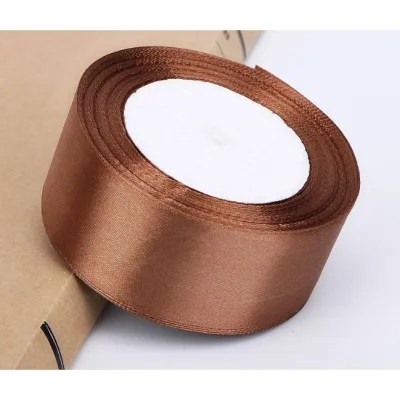
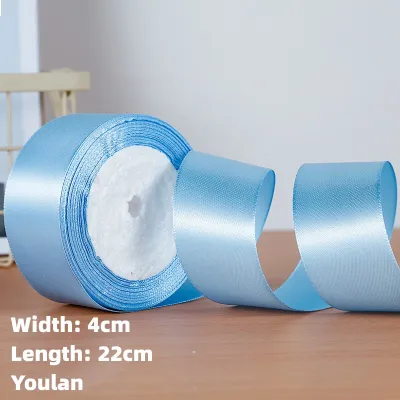
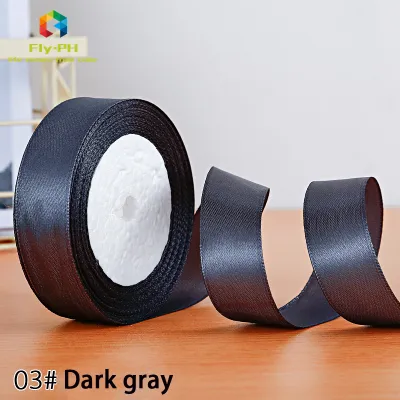
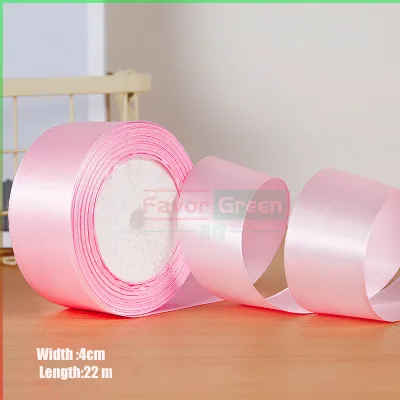
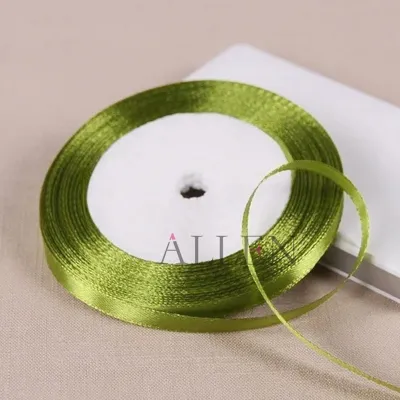
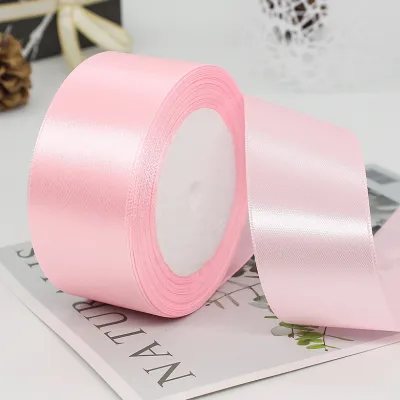
Prices are valid at publication and may change. Please refer to the product page for the latest price.
To avoid ordering errors, bypass the main product title, which is often stuffed with keywords to attract search traffic. Instead, scroll down to the detailed product description or the structured specification table to verify the actual quantity and configuration of your purchase.
Key Ribbon Measurements That Actually Matter
To ensure your ribbon is suitable for your specific wrapping or crafting project, you must focus on two primary physical dimensions: width and length. Relying on vague, subjective descriptors like “wide ribbon” or “long roll” often leads to disappointment, as these terms are not standardized across different brands or sellers.

Length and Width Conversions
Many ribbon listings on local e-commerce platforms use a mix of metric and imperial units. For instance, a title might advertise a ribbon in yards, while the detailed description specifies the length in meters. To make accurate comparisons, it helps to know that 1 yard is approximately 0.91 meters. If a listing states a roll contains 25 yards, you are receiving roughly 22.8 meters of material.
When comparing different listings to find the best value, convert all measurements to a single standard unit. If one seller lists a roll as 10 meters and another lists it as 10 yards, the latter is actually shorter (about 9.1 meters). Always check the detailed description for any discrepancies, and if the units remain unclear, use the platform’s chat feature to ask the seller for clarification before placing your order.
Material and Thickness Variations
The physical material of the ribbon significantly influences how much space it occupies on a spool, which can affect your visual expectations. Thicker, stiffer, or textured fabrics like grosgrain, heavy cotton, or wired satin do not compress easily. Consequently, a 10-meter roll of grosgrain ribbon will look much bulkier and thicker than a 10-meter roll of delicate, sheer organza.
Additionally, the width of the ribbon—usually measured in millimeters (mm) or centimeters (cm)—determines its structural behavior. Narrow ribbons (such as 3mm or 6mm) are highly flexible and excellent for tying small tags, but they lack the stiffness needed for large, structured bows. For prominent gift bows, wider options (such as 25mm or 40mm) provide the necessary surface area and presence, but they also require more physical storage space and may have shorter total lengths per standard spool size. If you use standard ribbon dispensers, organizers, or craft punches, verify that the spool’s inner core diameter and the ribbon’s width are compatible with your existing tools before purchasing.
Furthermore, ribbon characteristics like colorfastness, fray resistance, and how well the fabric holds ink or stamps depend on the exact material combination. Because these properties are rarely detailed in online specifications, you should perform a simple trial on a small cut piece. Rubbing the ribbon against a scrap piece of paper or applying a single drop of water will help you verify if the dye will bleed onto your delicate wrapping paper or cards under humid tropical conditions.
How to Calculate the Ribbon You Need for Your Project
Before purchasing multiple rolls, you can avoid both shortages and excessive waste by calculating the exact amount of ribbon your project requires. For standard gift wrapping, a reliable formula involves measuring the box’s dimensions and accounting for the bow. First, calculate the perimeter of the box along the path the ribbon will travel. For a simple cross-wrap (where the ribbon goes around all four sides), add twice the length, twice the width, and four times the height of the box.
Next, estimate the length needed for the bow itself. A standard bow with two loops and two tails typically requires about 30 to 50 centimeters of ribbon, depending on how large you want the loops to be. Combine the box perimeter and the bow allowance to find your base requirement. For example, if your box perimeter is 60 centimeters and your bow requires 40 centimeters, your base requirement is 100 centimeters (or 1 meter) per gift.
Always add a safety buffer of 10% to 15% to your total calculation. This extra length accounts for diagonal wrapping paths, uneven cutting, fraying ends that need trimming, and any mistakes made during practice ties. If you plan to wrap ten identical gifts, each requiring 1 meter, your base total is 10 meters; adding a 15% buffer brings your target purchase to 11.5 meters. Compare this final figure against the roll’s stated length to ensure you buy enough spools to complete your project without interruption.
Verifying Specifications on Online Marketplaces
Shopping on online marketplaces requires a methodical approach to verify that the product delivered matches your expectations. Start by cross-referencing the listing’s title with the detailed specification section. If a title claims “50 Meters” but the specification table lists “22m,” the lower number in the specifications is often the more accurate reflection of the physical product.
Customer reviews are an invaluable resource for verifying physical dimensions. Look closely at user-submitted photos, paying attention to how the ribbon roll looks when held in a hand or placed next to common household items. These photos can help you gauge the actual thickness of the ribbon and see if the seller is using an oversized plastic or cardboard core to make a short roll look larger than it is.
To determine the true value of a listing, calculate the cost per meter. Divide the total price in ₱ by the total length of the ribbon in meters. This simple calculation allows you to compare a ₱50 roll of 10 meters (₱5.00 per meter) directly with a ₱120 roll of 25 yards (approximately ₱5.26 per meter), helping you make an objective purchasing decision. If the listing’s length, width, or quantity remains ambiguous after reading the description and reviews, send a direct message to the seller to confirm the specifications before checking out.
Frequently Asked Questions (FAQ)
Why does my ribbon roll look smaller or larger than expected?
The visual size of a ribbon roll is often an illusion created by the spool’s central core and the material’s thickness. Sellers frequently use large, hollow cardboard or plastic cores to wind the ribbon, which makes the entire roll appear substantial and full in product photos. Conversely, thin, highly compressible materials like organza or fine satin wind very tightly around small cores, resulting in a compact roll that actually contains a significant length of ribbon. To avoid surprises, always base your purchasing decisions on the written numerical specifications—such as length in meters and width in millimeters—rather than the visual volume of the spool in listing images.
Are wired ribbons sold in the same roll lengths as standard ribbons?
Wired ribbons, which feature thin metal wires embedded along their edges for structural shaping, are typically sold in shorter roll lengths compared to standard satin or grosgrain ribbons. Because the wire adds significant bulk and weight, winding long lengths onto a single spool would make the roll excessively large, heavy, and difficult to ship. While a standard satin ribbon roll might commonly offer 22 to 45 meters of material, wired ribbons are frequently packaged in rolls of 5 to 10 meters. Always verify the exact length specification on the listing, as assuming a wired ribbon roll has the same length as a standard fabric roll can leave you short of material mid-project.

Community discussion
Share your experience or ask a question. Comments are reviewed before publication.