
Choosing the right acrylic markers in the Philippines involves balancing your creative goals against your budget, especially given how our tropical climate and high humidity can affect paint drying times and surface adhesion. Seamiart has emerged as a highly visible brand on local online marketplaces, offering an affordable entry point for students, hobbyists, and DIY crafters. However, determining whether Seamiart or a more established premium brand is the right choice for your art kit depends entirely on your specific project requirements, surface choices, and archival needs.
For budget-conscious creators, beginners, and those working on large-scale craft projects, Seamiart provides an accessible and cost-effective solution that delivers respectable coverage on standard surfaces. Conversely, professional artists, illustrators, and those creating commissioned work that requires guaranteed lightfastness, archival longevity, and precise ink flow control will find that premium, specialized brands remain the necessary standard. By understanding the practical trade-offs in ink formulation, nib durability, and delivery systems, you can make an informed decision that protects both your wallet and your artwork.
Key Factors to Evaluate Before Buying Acrylic Markers
Before investing in any set of acrylic markers, it is essential to understand the mechanical and chemical features that dictate their performance. The first critical component is the nib design, which directly influences your line control and detailing capabilities. Markers typically feature bullet, chisel, brush, or extra-fine plastic tips, and some brands offer reversible nibs that can be flipped from bullet to chisel to extend the tool’s utility. Additionally, you should check if the manufacturer offers replacement nibs, as rough surfaces like unsealed terracotta or raw wood can wear down tips long before the ink reservoir is depleted.
Products mentioned in this guide
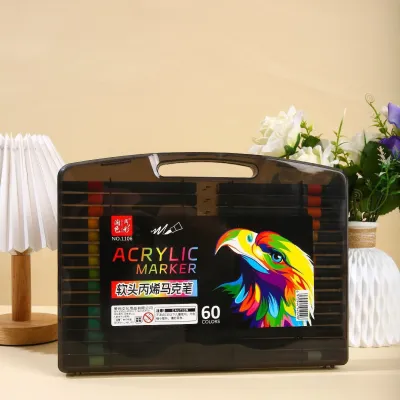
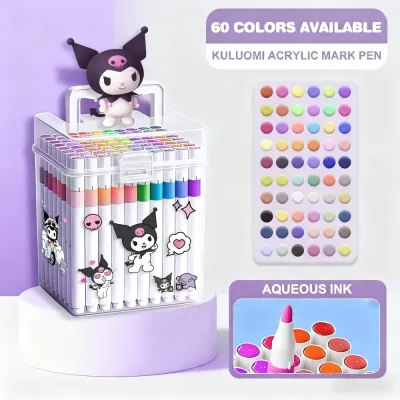
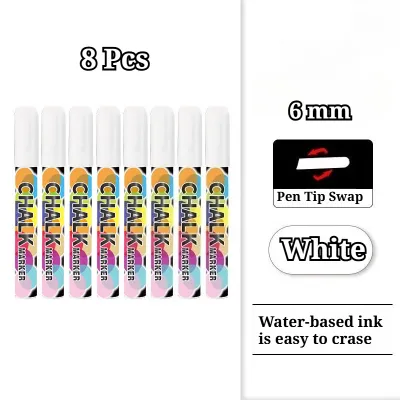
Prices are valid at publication and may change. Please refer to the product page for the latest price.
Ink capacity and the delivery mechanism also play a major role in your daily coloring experience. Traditional valve-action or pump-action markers require you to shake the barrel and press the tip down to saturate the nib, which gives you control over ink flow but can lead to accidental pooling if not done carefully. Newer direct-flow or cotton-core markers do not require priming, offering immediate write-out but sometimes limiting the overall opacity and thickness of the acrylic paint.
Finally, you must evaluate the manufacturer-stated surface compatibility and how the ink behaves under local environmental conditions. In the Philippines, high relative humidity can prolong the drying time of acrylic paint, making bleed resistance and layering capability critical factors. You will want to verify whether a marker is formulated primarily for porous surfaces like paper, canvas, and wood, or if it can successfully adhere to non-porous mediums like glass, plastic, and glazed ceramics without peeling or scratching off easily.
What to Expect From Seamiart Acrylic Markers
Seamiart acrylic markers are widely recognized for their approachable price point and diverse packaging options, making them a staple on local ecommerce platforms. Buyers can typically choose from a wide variety of set sizes, ranging from basic 12-color starter packs to expansive collections featuring 36, 48, or even more shades. This extensive color selection allows beginners to experiment with gradients and complex palettes without having to invest in expensive individual paint tubes or mixing mediums.

In terms of design, Seamiart markers often utilize a direct-flow ink system or a user-friendly tip design that minimizes the need for vigorous priming. While some of their product lines feature classic bullet tips suitable for outlining and filling medium-sized areas, others incorporate brush tips that offer greater line-width variation for hand lettering and detailed illustrations. The ink itself is water-based, designed to dry to a matte finish, and is formulated to be low-odor, which is a significant advantage when working in enclosed indoor spaces.
According to manufacturer guidelines, these markers are ideally suited for standard art surfaces such as heavy cardstock, mixed-media paper, stretched canvas, and basic wooden crafts. They provide a smooth, consistent flow for everyday projects, school assignments, and recreational journaling. However, because they are positioned as an entry-level option, users should expect standard consumer-grade pigments rather than highly specialized, lightfast professional formulas.
How Seamiart Stacks Up Against Other Popular Brands
To determine the true value of Seamiart markers compared to premium alternatives, it is helpful to look at the price-to-volume ratio. You can calculate the cost per marker by dividing the total price of a set by the number of pens included. For instance, if a set costs ₱300 and contains 12 markers, your cost is ₱25 per pen, which you can then compare directly to the individual price of a premium alternative. For a student or hobbyist in the Philippines, this price difference makes Seamiart an incredibly attractive option for daily practice, whereas premium brands represent a much larger financial commitment.
However, this price gap is reflected in the consistency and performance of the ink. Premium brands typically use highly concentrated, artist-grade pigments that offer exceptional opacity in a single pass, even when layering light colors over dark backgrounds. Seamiart markers generally provide good coverage, but you may find that lighter shades require a second coat to achieve complete opacity, particularly on dark or highly absorbent surfaces. There may also be minor batch-to-batch variations in color matching, which is common among budget-friendly stationery brands but rarely seen in professional-grade lines.
Nib durability is another area of contrast. Premium markers often feature highly resilient synthetic nibs that maintain their shape over prolonged use on rough textures, and they frequently offer official replacement tips and refillable ink bottles. Seamiart nibs are durable enough for standard paper and canvas applications, but they may fray or wear down more quickly if used extensively on abrasive surfaces like stone or unglazed pottery.
| Feature | Seamiart Markers | Premium Alternatives | What to Verify |
|---|---|---|---|
| Average Cost per Pen | Highly budget-friendly (low cost per unit) | Moderate to high investment | Check current online marketplace listings for set prices. |
| Ink Delivery System | Mostly direct-flow or simple valve-action | Advanced valve-action or refillable reservoirs | Look at the barrel instructions to see if priming is required. |
| Color Opacity | Good for light surfaces; may need layering on dark | High opacity; single-coat coverage on most surfaces | Test on a scrap piece of dark paper before starting your project. |
| Nib Replaceability | Generally disposable; limited tip replacements | Frequently replaceable nibs and refillable ink | Check the product description for replacement nib availability. |
| Surface Versatility | Best on paper, canvas, and treated wood | Excellent on glass, metal, plastic, and textiles | Read the manufacturer's packaging for specific material compatibility. |
Decision Framework: Which Brand Should You Choose?
Navigating the choice between Seamiart and premium alternatives comes down to matching the marker’s specifications with your creative workflow and budget. You should choose Seamiart if you are working within a strict budget, purchasing supplies for a classroom or workshop, or focusing on large-scale crafts where high ink consumption would make premium brands cost-prohibitive. They are also the ideal choice for beginners who want to practice blending, layering, and line control without the pressure of wasting expensive professional materials.
On the other hand, you should opt for established premium brands if your work is intended for exhibition, sale, or archival preservation. Professional illustrators and fine artists require guaranteed lightfastness—meaning the colors will not fade when exposed to sunlight over the years—and precise, predictable ink flow that does not skip or puddle during intricate detailing. If your livelihood or professional reputation depends on the longevity and consistency of your medium, the higher investment in premium tools is fully justified.
Before making your final purchase, always verify the specific demands of your canvas. If you plan to apply acrylic paint to unconventional or outdoor surfaces—such as custom-painted sneakers, outdoor plant pots, or glazed ceramic mugs—you must check the manufacturer’s instructions regarding curing, baking, or applying protective clear sealants. No matter which brand you choose, proper surface preparation and post-application sealing are the true keys to ensuring your artwork survives the humid Philippine climate.
How to Test and Verify Your Markers Upon Arrival
Because shipping conditions and local humidity can affect stationery products during transit, it is highly recommended to perform a quick quality check as soon as your markers arrive. If your markers are valve-action, begin by shaking the pen thoroughly with the cap securely on to distribute the pigment evenly. Gently press the nib down vertically on a scrap piece of paper several times until you see the ink begin to saturate the tip; avoid pressing too hard or repeatedly pumping the nib, as this can cause the paint to flood the page.
Once the ink flows smoothly, conduct a simple opacity and drying test on a piece of scrap material that matches your intended project surface. Draw a solid block of color and observe how long it takes to dry completely under your local room conditions. In humid environments, acrylic paint may take slightly longer to cure, so patience is key. Once dry, attempt to layer a lighter color directly over the top to verify the marker’s opacity and check if the underlying layer bleeds or lifts.
Finally, inspect the edges of your test lines for any signs of feathering, bleeding, or paper peeling. If you are testing on thin paper and notice significant bleed-through, you may need to switch to a heavier cardstock or apply a gesso primer to your surface first. Checking these performance characteristics on a test sheet ensures that you will not encounter unexpected ink behavior on your final masterpiece.
Frequently Asked Questions (FAQ)
Are Seamiart acrylic markers safe for children?
When purchasing art supplies for younger users, safety is always a primary concern. You should always check the product packaging for recognized safety certifications, such as the AP (Approved Product) seal or the CE mark, which indicate that the formulation has been evaluated for toxicity. While water-based acrylic markers are generally low-odor and safer than solvent-based alternatives, children should always be supervised to prevent accidental ingestion or prolonged skin contact, and any accidental spills on the skin should be washed off promptly with soap and water.
Can I use these markers on fabric or glass?
Yes, but the permanence of the ink depends heavily on the surface type and how you treat it afterward. On porous fabrics, the paint will soak into the fibers, but you will need to heat-set the design with an iron (using a protective cloth) to make it wash-resistant. On non-porous surfaces like glass or glazed ceramics, the paint sits on top of the surface and can be easily scratched off; to make your designs semi-permanent, you must check the manufacturer’s guidelines to see if the markers can be baked in a home oven or if they require a clear, weather-resistant acrylic sealant.

Community discussion
Share your experience or ask a question. Comments are reviewed before publication.