
Starting a commercial craft business requires transitioning from hobby-grade materials to reliable, production-grade mediums. In the Philippines, where high relative humidity and warm temperatures directly influence how materials behave, selecting the right air dry clay set is a foundational business decision. The ideal clay for a commercial venture must deliver consistent shrinkage rates, high structural integrity after curing, and excellent compatibility with post-processing finishes. Rather than searching for a single universal brand, successful craft business owners establish a systematic evaluation process to identify clay sets that match their specific product lines, production schedules, and shipping requirements.
Key Criteria for Commercial-Grade Air Dry Clay
When producing items for sale, dimensional accuracy is paramount. Every air dry clay experiences some degree of shrinkage as moisture evaporates during the curing process. Manufacturers typically specify shrinkage rates, which can range from negligible percentages to significant volume reductions depending on whether the clay is paper-based, resin-based, or mineral-based. For a business, high shrinkage rates can lead to warping, cracking, or mismatched components in multi-part assemblies. Checking these specifications beforehand allows you to design molds, armatures, and templates that account for the final cured dimensions of your products.
Structural integrity determines whether your finished crafts can survive the journey from your workspace to the customer. Air dry clay lacks the vitrification of kiln-fired ceramics, meaning cured pieces remain inherently more susceptible to impact and moisture. You must evaluate the fragility of the cured clay by testing its resistance to bending, dropping, and pressure. If your product line includes delicate, protruding details like flower petals or thin figurines, a resin-based or nylon-fiber-reinforced air dry clay may be necessary to prevent breakage during handling, packaging, and transit.
Products mentioned in this guide
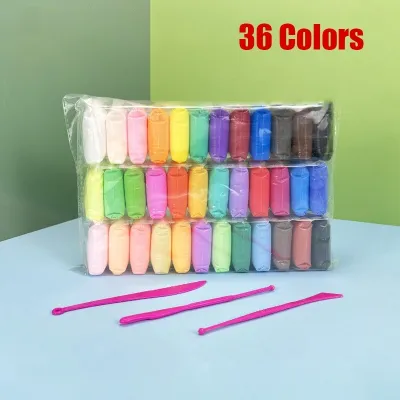
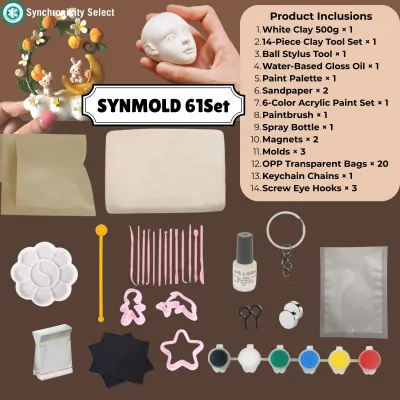
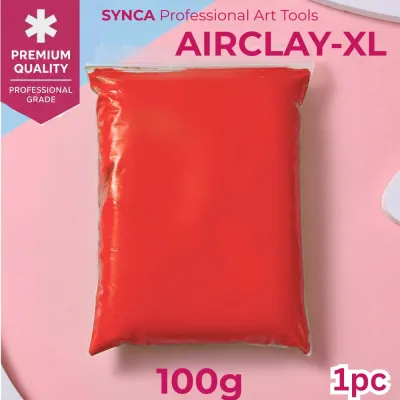
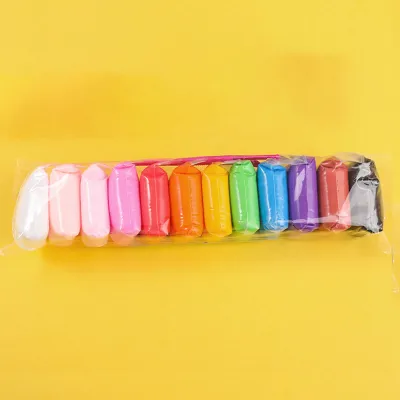
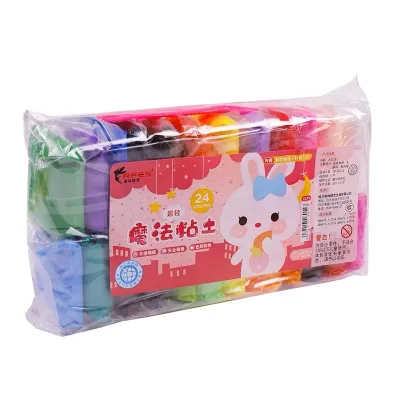
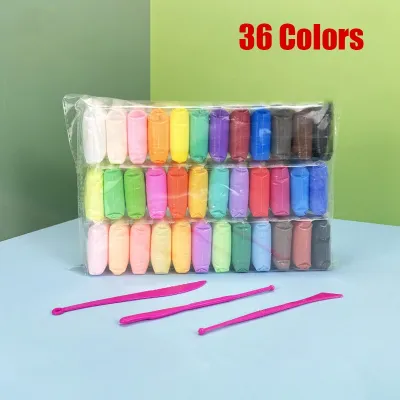
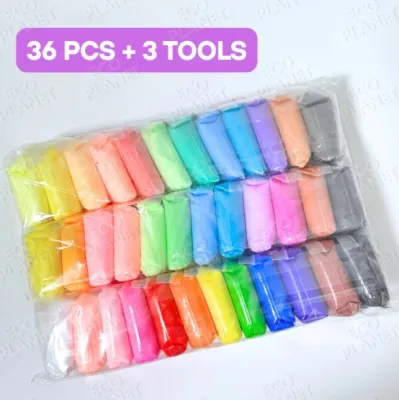
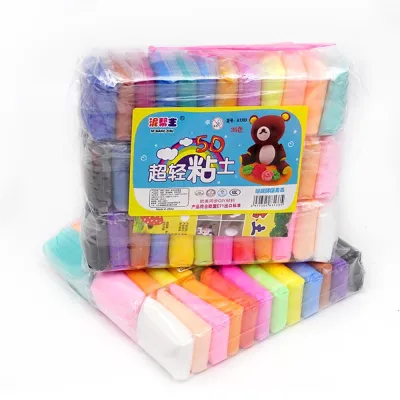
Prices are valid at publication and may change. Please refer to the product page for the latest price.
Material weight and volume directly dictate your production economics and shipping costs. Heavy, mineral-based clays provide a premium, stone-like feel that is highly desirable for home decor items like trinket dishes or incense holders, but their weight increases shipping fees across domestic courier networks. Conversely, lightweight, paper-based or polymer-alloy air dry clays are ideal for wearable items like earrings or hairpins, where comfort and low shipping weight are prioritized. Calculating the volume yield per pack helps you establish an accurate baseline for your material cost per unit, ensuring your retail pricing covers both production expenses and healthy profit margins.
Evaluating Workability and Drying Characteristics
The handling characteristics of your chosen clay set directly affect your daily production efficiency. Open working time—the duration the clay remains pliable before forming a dry skin—varies widely between formulations. A clay with a short open time forces you to work in small, rapid stages, which can hinder the assembly of complex, multi-part sculptures. Testing how well the clay accepts joining techniques, such as scoring and slipping or blending seams with water, is essential for ensuring that joints do not separate or crack as the piece dries.

Drying speed is heavily influenced by the tropical climate of the Philippines. High ambient humidity levels slow down the evaporation of water from the clay, extending drying times from the standard 24 hours to several days. While slower drying can sometimes reduce the risk of surface cracking, it also creates production bottlenecks and requires more physical storage space for curing inventory. You must monitor and document drying times in your specific workspace throughout the year, adjusting your production schedules to account for the increased humidity of the wet season.
Warping is a common challenge when drying flat or thick clay pieces, as uneven moisture loss causes different sections of the clay to contract at different rates. To minimize this issue, you should implement controlled drying techniques, such as placing pieces between breathable wooden boards or flipping them regularly during the curing process. For thicker sculptures, using lightweight internal armatures made of aluminum foil or wire not only reduces the volume of clay required but also ensures even drying throughout the piece, preventing deep internal cracks that could ruin a commercial batch.
Post-Processing: Sanding, Sealing, and Painting Compatibility
Achieving a professional, market-ready finish requires a clay that responds well to post-processing techniques. Once fully cured, the surface of the clay must be prepared to receive paint and sealant. Sanding is often necessary to remove fingerprints, seams, and minor imperfections. You must assess how easily the clay sands down and manage the resulting fine dust safely by working in a well-ventilated area and wearing appropriate respiratory protection. Some clays sand to a smooth, porcelain-like finish, while others may remain slightly fibrous or rubbery, requiring different grades of sandpaper or specialized carving tools.
Paint adhesion is another critical factor for product longevity. Before committing to a specific clay set, test how various primers and paints interact with the cured surface. Acrylic paints are the industry standard for air dry clay due to their flexibility and coverage, but their adhesion can be compromised if the clay contains oily plasticizers or has an overly slick surface. Applying a high-quality gesso or primer first can improve paint bonding, preventing the color layers from peeling, chipping, or bubbling over time when handled by customers.
Because air dry clay remains sensitive to moisture even after curing, selecting and applying an effective sealant is non-negotiable for commercial products. The sealant acts as a protective barrier against ambient humidity, finger oils, and minor splashes. You should test both matte and glossy sealants to determine which finish complements your brand aesthetic while providing adequate water resistance. Ensure the sealant is fully compatible with your paint layer to avoid chemical reactions that could leave the surface permanently tacky or cause the colors to bleed.
Sourcing and Batch Consistency for Small Businesses
For a growing craft business, material consistency is just as important as initial quality. When purchasing air dry clay sets, always check the expiration dates and inspect the packaging integrity. Air dry clay has a finite shelf life, and micro-punctures in the plastic wrapping can cause the clay to partially cure inside the package before you even open it. Establishing proper storage protocols in your workshop—such as double-bagging opened clay with a damp paper towel and storing it in airtight plastic containers—prevents premature drying and minimizes material waste.
Relying on a single local retail store for your clay supply can introduce severe production risks if they experience stockouts. You should evaluate multiple suppliers on reputable ecommerce platforms and local art distributors to ensure a steady, predictable supply of your chosen clay. Establishing relationships with wholesale distributors can secure bulk pricing and provide early warnings about potential supply chain disruptions, allowing you to stock up on inventory before peak selling seasons like the holidays.
To maintain profitability, you must calculate the true cost per unit using a standardized formula. This calculation should factor in the purchase price of the clay set, the yield (how many finished pieces can be made from a single pack), and the proportional costs of primers, paints, sealants, and packaging materials. Use the formula: Unit Material Cost = (Clay Pack Price / Yield) + Auxiliary Material Costs + Packaging Costs. By tracking these expenses in ₱, you can ensure that your wholesale and retail prices are built on hard data rather than estimation, protecting your business from hidden costs that erode your margins.
Building Your Initial Clay Shortlist
Before investing heavily in bulk quantities of a specific air dry clay, you should conduct a structured, small-scale testing phase. Begin by purchasing individual packs of three or four candidate clay sets to create a comparative shortlist. Design a standardized test batch consisting of simple shapes that mimic your intended product line—such as flat tiles to test warping, thin strips to test flexibility, and thick spheres to test internal cracking. Document the performance of each candidate throughout the sculpting, drying, and finishing stages.
To organize your findings, create a physical or digital comparison matrix. Track key performance indicators across your candidates, including ease of modeling, observed shrinkage percentage, drying time under your local workspace conditions, resistance to dropping from table height, and paint adhesion. This systematic approach removes emotional bias from your selection process, allowing you to choose the clay that offers the most reliable performance for your specific commercial applications.
Finally, establish clear, non-negotiable stop conditions to quickly eliminate unsuitable clay types. For example, if a clay candidate consistently develops hairline cracks during drying despite controlled conditions, or if the cured surface repels your chosen sealant, it must be rejected immediately. Setting these boundaries early prevents you from wasting time and capital trying to adapt your production workflow to a fundamentally flawed material, ensuring that your final product line is built on a reliable, high-quality foundation.
Frequently Asked Questions (FAQ)
Is air dry clay waterproof enough for functional items like mugs?
No, air dry clay is not waterproof and cannot be made safe for functional items that hold food or liquids. Even when coated with multiple layers of commercial polyurethane, epoxy resin, or acrylic sealants, the underlying clay remains porous and water-soluble. Over time, moisture will inevitably penetrate the sealant barrier, causing the clay to soften, warp, and degrade. Furthermore, commercial sealants and air dry clays are not certified food-safe, meaning they can leach harmful chemicals into food or beverages. For functional kitchenware like mugs, plates, or bowls, you must use traditional kiln-fired ceramics with food-safe glazes.
How do I prevent air dry clay from molding during storage?
To prevent mold growth on your air dry clay inventory, you must control moisture and exposure to airborne spores. Always store unused clay in its original airtight packaging, or wrap it tightly in plastic cling wrap before placing it inside a heavy-duty, zip-top bag with all the air squeezed out. Keep the storage containers in a cool, dry, and dark place, away from direct sunlight and extreme temperature fluctuations which can cause condensation inside the packaging. If you add moisture to revive slightly dry clay, use distilled water rather than tap water, as tap water contains organic impurities that can accelerate mold growth. Regularly inspect your stored clay for discoloration or sour odors, and discard any contaminated material immediately to protect your workspace.

Community discussion
Share your experience or ask a question. Comments are reviewed before publication.