
Choosing between SFIAH alcohol markers and premium alternatives like Copic comes down to balancing your creative needs against your budget. For students, hobbyists, and casual illustrators in the Philippines, budget-friendly options like SFIAH offer an incredibly accessible entry point into alcohol-based rendering. However, professional artists who require exact color consistency, seamless blending, and a long-term refill system often find that premium markers justify their higher price tag.
In a tropical climate where high humidity and warm ambient temperatures are common, the physical characteristics of alcohol markers become even more critical. Alcohol-based ink evaporates rapidly when exposed to air, meaning that cap seals, barrel construction, and nib quality directly impact how long your markers will last on your art desk. Understanding the practical differences between these tiers will help you make an informed decision before investing your hard-earned money.
Understanding the Core Differences Between Budget and Premium Markers
At first glance, all alcohol markers might seem to perform the same basic function, but their internal and external construction tells a different story. Premium markers typically feature ergonomic, roll-resistant barrels made of high-grade, durable plastics that withstand daily wear and tear. Budget options like SFIAH often utilize simpler, round or basic triangular barrels which, while functional, may feel lighter and less robust in the hand. The interior ink reservoir of a premium marker is also engineered to hold a consistent volume of ink, whereas budget alternatives sometimes exhibit variance in reservoir capacity from one marker to the next.
Products mentioned in this guide
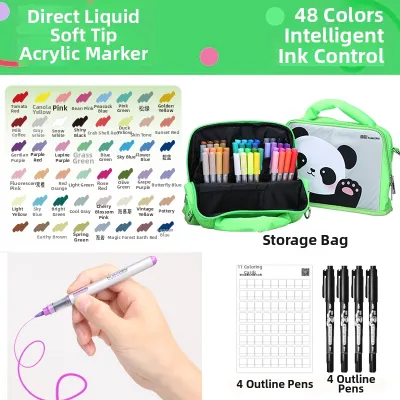
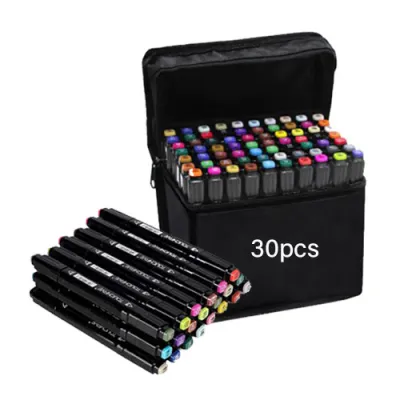
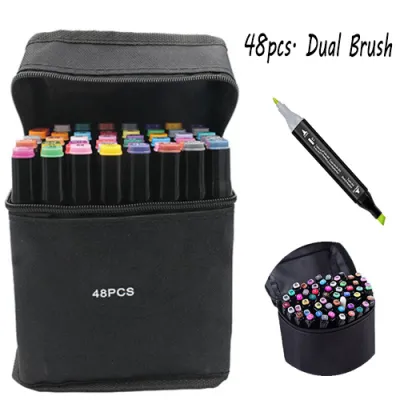
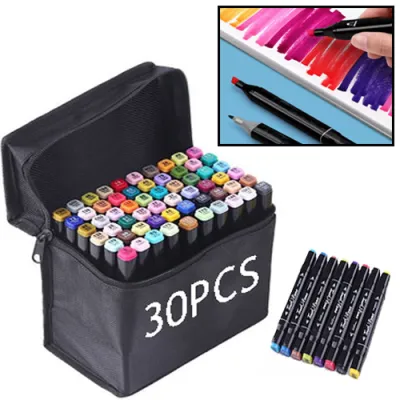
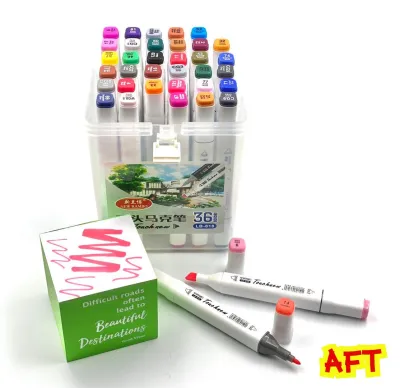
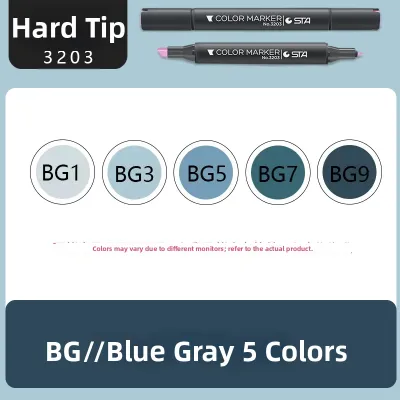
Prices are valid at publication and may change. Please refer to the product page for the latest price.
Manufacturing tolerances represent another major dividing line between these two tiers. Premium brands maintain strict quality control standards, ensuring that a specific color code matches perfectly across different production batches. With budget brands, slight variations in ink saturation and pigment ratios can occur between batches, which can be frustrating if you need to replace a single color in the middle of a major project.
Furthermore, the long-term usability of these markers depends heavily on refill availability. Premium markers are designed as lifetime tools, supported by dedicated refill inks and replaceable nibs that are widely available in local stationery shops and online marketplaces. In contrast, budget markers are often treated as disposable; once the ink runs dry or the nib wears down, you typically have to replace the entire marker, as proprietary refills and matching replacement nibs can be difficult or impossible to find.
Critical Performance Dimensions to Test and Verify
Before committing to a massive set of markers, it is essential to run hands-on tests to evaluate how they perform under real-world conditions. The performance of any alcohol marker is highly dependent on the paper medium you use. Testing should always be conducted on dedicated marker paper or heavy, smooth cardstock, as standard copy paper will cause rapid ink absorption, feathering, and excessive bleeding.

Ink Blending, Saturation, and Paper Interaction
To evaluate the blending capabilities of your markers, create a simple gradient test on your preferred paper. Lay down a layer of a lighter shade, overlap it with a medium shade, and then attempt to soften the transition line using the lighter marker again. Premium inks are formulated to blend effortlessly, allowing the solvents to reactivate the underlying pigment without tearing the paper fibers.
When testing budget-tier inks, look closely for signs of ink pooling or uneven saturation. Some budget formulations contain heavier solvents or lower pigment concentrations, which can lead to streaking or patchy coverage on large areas. Additionally, observe the back of your paper to check for excessive bleed-through; while all alcohol markers bleed to some extent, lower-quality ink formulations often oversaturate the paper quickly, ruining subsequent pages in a sketchbook.
Nib Quality, Fraying, and Replaceability
The nib is your direct point of contact with the paper, and its quality dictates the level of detail you can achieve. Premium markers often feature flexible, durable brush nibs made of synthetic rubber or high-grade polyurethane that mimic the feel of a real paintbrush, springing back into shape after every stroke. Budget markers, on the other hand, frequently use stiffer, fiber-based brush nibs that can feel mushy over time.
Inspect both the brush and chisel tips of your markers for early signs of fraying, splitting, or inconsistent ink flow. A high-quality nib should deliver a continuous line without dry spots or sudden drops of excess ink. It is also wise to verify if the manufacturer offers official replacement nibs; if the nibs are prone to fraying and cannot be replaced, the marker’s lifespan is severely limited regardless of how much ink remains inside.
Color Accuracy and Cap Seal Integrity
One of the most common frustrations with budget marker sets is the discrepancy between the color printed on the plastic cap and the actual ink on the paper. To avoid ruined drawings, always create a physical swatch chart on your chosen paper rather than relying on the cap colors. Premium brands invest heavily in color matching, ensuring the cap plastic closely mirrors the dried ink, whereas budget caps often serve as a very rough approximation.
Cap seal integrity is another critical factor, especially in warm climates where evaporation occurs quickly. Test the caps of your markers to ensure they click securely and tightly into place. A weak cap seal allows air to enter the barrel, drying out the alcohol solvent and rendering the marker useless within a matter of weeks. If you have to struggle to snap a cap shut, or if it feels loose, the marker is highly susceptible to premature drying.
Assessing the True Cost of Ownership
When deciding between budget and premium markers, looking only at the initial price tag can be misleading. In the Philippines, a single premium marker can cost anywhere from ₱300 to ₱450, while a comprehensive budget set of 80 to 120 markers might cost roughly the same as three or four premium pieces. This makes budget sets incredibly attractive for those who want a wide palette of colors immediately without a massive financial outlay.
However, the true cost of ownership shifts over time. If you use your markers frequently, you will inevitably run out of popular colors like grays, skin tones, or blending shades. With a premium system, you can purchase a refill bottle for around ₱400, which can top up a single marker up to ten times, bringing the cost per refill down to a fraction of the original price.
With budget markers, the lack of individual replacements or refill inks means you may have to purchase an entirely new multi-pack just to replace a few dried-out, essential colors. If you find yourself replacing whole sets every few months due to frayed nibs or dried ink, the long-term cost can quickly surpass the investment of a smaller, high-quality premium set. For occasional hobbyists, the budget option remains highly economical, but daily illustrators will find the refillable premium system far more cost-effective over a year or two of consistent use.
Decision Framework: Choosing the Right Marker for Your Workflow
To make the right choice for your creative space, evaluate your current skill level, project requirements, and how often you plan to use the markers.
Choose SFIAH or similar budget markers if:
- You are a beginner, student, or hobbyist exploring alcohol marker art for the first time.
- You need a massive variety of colors quickly for casual sketching, bullet journaling, or coloring books.
- You primarily use markers for laying down flat base colors where minor blending imperfections or slight streaking can be easily covered with colored pencils or ink liners.
- Your budget is limited, and you want to practice basic techniques without worrying about the cost of wasting expensive ink.
Choose Premium Brands if:
- You are a professional illustrator, designer, or architect whose livelihood depends on exact color replication and archival-quality results.
- Your art style relies heavily on seamless, multi-layer blending, smooth gradients, and fine detail work that requires a highly responsive brush nib.
- You want to build a sustainable, long-term art kit where every single marker can be refilled and repaired for years to come.
- You prefer to buy a small, curated palette of high-quality colors that you can expand gradually over time.
Verify first if:
- You are transitioning from premium markers to budget alternatives to save money. Before buying a massive budget set, purchase a small, inexpensive test set of grays or skin tones. Test how the budget ink layers over your existing premium markers, and check if the solvents react poorly, smudge your line art, or cause unexpected bleeding on your favorite paper stock.
Frequently Asked Questions (FAQ)
Can I use SFIAH marker ink to refill premium brand markers?
It is highly discouraged to mix different ink formulations across brands. Premium markers are engineered to work with specific, proprietary alcohol-based inks that maintain a precise viscosity and chemical balance. Introducing a budget ink formulation into a premium marker can clog the internal core, ruin the delicate brush nib, and cause unexpected color shifting or chemical reactions that could permanently damage the marker.
How should I store alcohol markers to maximize their lifespan?
To prevent your alcohol markers from drying out prematurely, always store them horizontally in a cool, dry place away from direct sunlight. Horizontal storage ensures that the ink is distributed evenly between both the brush and chisel nibs, preventing one end from drying out while the other becomes oversaturated. In warm, humid climates, keeping your markers away from heat sources is especially important, as temperature fluctuations can cause the air inside the barrel to expand, leading to ink leaks when you remove the caps.

Community discussion
Share your experience or ask a question. Comments are reviewed before publication.