
Choosing the right scratch pad paper depends entirely on how you interact with your notes. If your daily workflow demands a completely flat writing surface and frequent page flipping, spiral-bound pads offer the most practical structure. For those who prioritize a clean, professional appearance and need to tear out pages smoothly for sharing, glue-bound formats are the better fit. Conversely, if your drafting process requires rearranging pages, selective archiving, or mixing different paper weights, loose-leaf systems provide the necessary flexibility. Evaluate your specific tearing, archiving, and portability needs to select the binding that supports your actual workflow rather than just the aesthetic.
In tropical environments like the Philippines, where high humidity can affect paper structural integrity and adhesive strength, understanding these differences becomes even more critical. Damp air can soften certain glues or cause thin paper sheets to curl, making the physical construction of your stationery just as important as the paper quality itself. By analyzing how each binding style handles daily wear, environmental exposure, and writing pressure, you can avoid the frustration of loose pages scattering or binding coils snagging in your bag.
Understanding the Core Binding Structures
To make an informed choice, it is essential to understand the mechanical differences that define these three common formats. Spiral-bound scratch pads utilize a continuous plastic or metal coil threaded through evenly spaced punches along the top or side margin. This design allows the pages to rotate a full 360 degrees around the spine, meaning you can fold the front cover and used pages completely behind the pad to save desk space. The physical footprint of a spiral pad is highly adaptable, making it a favorite for quick, on-the-go note-taking where desk space is a luxury.
Products mentioned in this guide
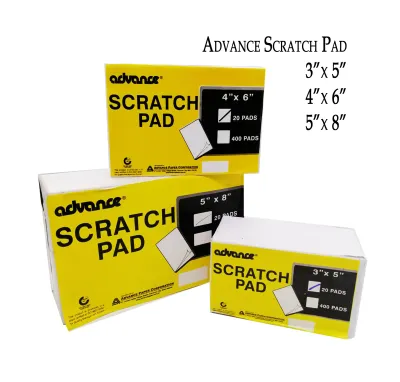
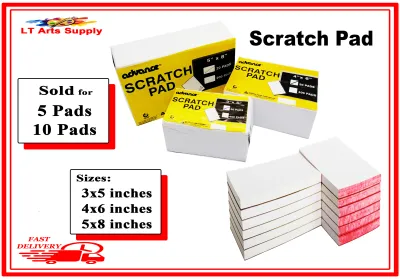
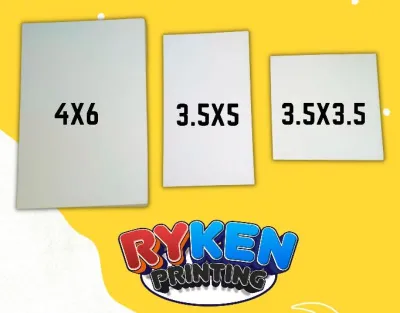
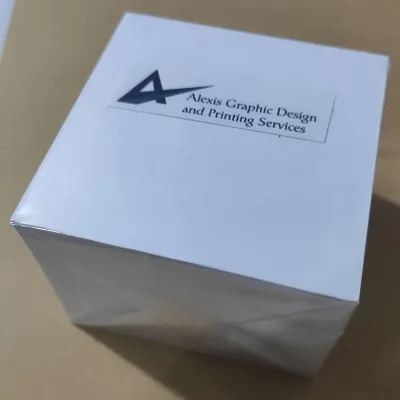
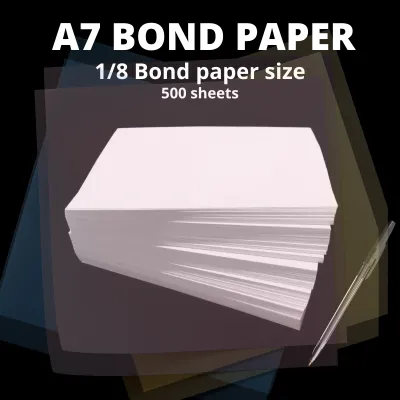
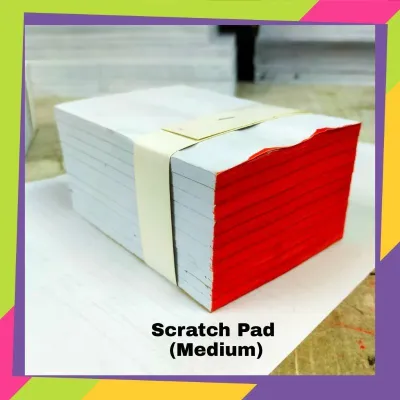
Prices are valid at publication and may change. Please refer to the product page for the latest price.
Glue-bound scratch pads, often referred to as padded paper, rely on a flexible adhesive strip applied along the top edge of the paper stack. This adhesive, typically a specialized padding compound, holds the sheets securely together while allowing them to be peeled away individually with minimal effort. The back of the pad is reinforced with a thick, rigid chipboard backing that provides a stable writing surface. Unlike spiral pads, glue-bound pads maintain a fixed, flat footprint and cannot be folded back without permanently damaging the adhesive spine.
Loose-leaf scratch pad systems consist of entirely independent sheets of paper that are not permanently bound to one another. These sheets are often pre-punched with standard hole configurations—such as two, three, or twenty-six holes—to fit into binders, or they may remain completely unpunched for use on clipboards or in desktop trays. Because there is no physical binding holding the sheets together permanently, the capacity of a loose-leaf system is limited only by the size of the external organizer or binder you choose to use.
Key Comparison Dimensions for Daily Note-Taking
When evaluating scratch pad paper for daily drafting and writing, several practical performance metrics dictate your overall comfort and efficiency. The first major consideration is lay-flat capability. Spiral-bound pads excel in this area, lying completely flat on any surface without requiring you to hold the pages down. However, the physical presence of the coil can create an awkward barrier for your hand, particularly when writing near the inner margin. Left-handed writers often find side-spiral pads uncomfortable, a challenge that can be mitigated by choosing top-bound spiral pads instead.

Glue-bound pads offer an entirely unobstructed writing surface because there are no coils or rings to interfere with your hand movement. You can write comfortably from edge to edge on both sides of the sheet. However, because the pages are glued at the top, the pad may resist lying perfectly flat when you reach the middle of the stack, requiring you to hold the top down or tear off the top sheet to write comfortably on the next one. Loose-leaf sheets provide the ultimate lay-flat experience, as individual pages can be removed from binders and laid flat on a desk, ensuring complete writing comfort across the entire page.
Page removal is another critical differentiator. Tearing a page from a standard spiral-bound pad without micro-perforations often results in messy, ragged edges that leave paper debris on your desk. If clean presentation is important, you must look for spiral pads specifically labeled with micro-perforations. Glue-bound pads are designed specifically for clean tearing; sheets peel away smoothly from the adhesive spine without leaving any residue or ragged edges. Loose-leaf paper requires no tearing at all, preserving the pristine edges of every sheet for professional submissions or filing.
Durability and portability also vary significantly between these formats. In humid climates, the adhesive on glue-bound pads can soften over time, causing pages to detach prematurely when carried in a bag. Spiral-bound pads are highly durable and keep pages secure, but the metal coils can bend or snag on clothing and bag linings. Loose-leaf sheets are the most fragile when carried individually, as they lack a protective cover and are prone to bending, creasing, or scattering unless they are housed inside a rigid binder or folder.
Matching the Right Binding to Your Workflow
Selecting the ideal scratch pad paper depends heavily on your specific daily tasks and how you process information. A spiral-bound scratch pad is highly suited for active, mobile environments. If you are a student moving between lecture halls, a field researcher taking notes outdoors, or a professional conducting site inspections, the ability to fold the pad in half and write on a rigid backing board is invaluable. The secure binding ensures that your chronological notes remain intact and organized, preventing accidental loss during transit.
For office administrators, designers, and customer service representatives, a glue-bound scratch pad is often the most practical choice. If your workflow involves sketching quick diagrams, writing down phone messages, or drafting calculations that must be handed over to a colleague or client immediately, the clean tear-off design of glue-bound paper is unmatched. It allows you to maintain a neat desk environment without paper scraps, and the detached sheets look professional when shared. Once a page is removed, the remaining pad retains its clean, compact shape for easy storage on a shelf or in a drawer.
If your work requires non-linear thinking, frequent reorganization, or long-term archiving, a loose-leaf system is the superior option. Writers, researchers, and project managers benefit from the ability to insert new sheets, rearrange existing notes, or discard outdated drafts without disrupting the order of the entire document. Loose-leaf also allows you to mix different paper styles—such as blank sheets for sketching, lined sheets for text, and grid sheets for diagrams—within a single organizer, tailoring the medium to the task at hand.
However, none of these standard formats may be suitable if your workflow demands permanent, tamper-proof records. For legal logs, laboratory notebooks, or official accounting ledgers where page deletion must be easily detected, thread-bound or case-bound books are required. Additionally, if you work in extreme outdoor environments with high exposure to rain or moisture, standard paper bindings will degrade quickly, necessitating specialized waterproof paper and synthetic covers designed to withstand wet conditions.
Checkpoints for Verifying Paper and Binding Quality
To ensure your scratch pad paper performs reliably under daily use, you should evaluate several physical characteristics before making a purchase. Begin by checking the paper weight, measured in grams per square meter (GSM), which is typically printed on the product label. Standard, budget-friendly scratch pads often use thin paper ranging from 50 to 60 GSM, which is highly susceptible to ink bleed-through, feathering, and ghosting when using gel pens, rollerballs, or fountain pens. For a clean writing experience with minimal show-through, look for pads featuring 70 to 80 GSM paper, or 100 GSM if you plan to use heavy ink markers or high-flow pens.
Next, inspect the physical integrity of the binding mechanism. For spiral-bound pads, examine the ends of the wire coil; they should be crimped inward securely to prevent the wire from uncoiling or scratching your hands. For glue-bound pads, gently bend the pad to test the flexibility of the adhesive spine. The glue should feel rubbery and pliable rather than brittle; brittle glue will crack under light pressure, causing pages to fall out in chunks. For loose-leaf paper, ensure the punched holes are cleanly cut without paper hanging inside, which can cause sheets to catch and tear when turning pages in a binder.
Pay close attention to the perforation quality and paper grain. If buying a spiral pad, run your finger along the micro-perforations to verify they are deep and consistent. Shallow or uneven perforations will cause the paper to tear diagonally rather than along the intended line. You can also check the paper grain direction by gently flexing a sheet horizontally and vertically; paper naturally folds and tears more cleanly parallel to the grain, which is a helpful indicator of how easily the sheets will handle daily manipulation.
Finally, perform a simple writing test on a single sheet if possible. Assess the paper’s “tooth,” which refers to the surface texture. Extremely smooth paper allows gel pens to glide effortlessly but can slow down ink drying times, increasing the risk of smudging—especially in humid tropical conditions. Conversely, paper with a slight texture or tooth provides excellent control for pencils and ballpoint pens, helping the ink grip the surface and dry quickly to prevent smearing.
Frequently Asked Questions (FAQ)
Can I refill a spiral-bound or glue-bound scratch pad?
Permanently bound formats like spiral and glue-bound pads are structurally designed for single-use lifecycles. Re-crimping metal coils requires specialized binding machines, and reapplying padding compound adhesive at home is rarely cost-effective or durable. If sustainability and refilling are your priorities, transition to a dedicated loose-leaf binder, a disc-bound system, or a reusable clipboard setup where you only replace the inner paper sheets.
Does the binding type affect scanning and digitizing?
Yes, binding structure directly impacts digital archiving workflows. Raised spiral coils can cast shadows on mobile scanning apps and prevent pages from laying flat on flatbed scanners. Thick glue-bound pads can be difficult to press flat, leading to distorted text near the spine. For seamless scanning, loose-leaf sheets or cleanly torn pages from a micro-perforated or glue-bound pad are ideal, as they feed smoothly into automatic document feeders and lay perfectly flat under camera lenses.

Community discussion
Share your experience or ask a question. Comments are reviewed before publication.