
Choosing the right notebook with divider depends heavily on how you plan to manage your notes over time. Ring-bound (loose-leaf) systems offer superior flexibility for adding, removing, and reorganizing pages, while spiral-bound notebooks provide a secure, fixed-capacity layout that excels in portability and writing comfort. Understanding the physical mechanics of these two binding styles is the first step in building an efficient, frustration-free note-taking system.
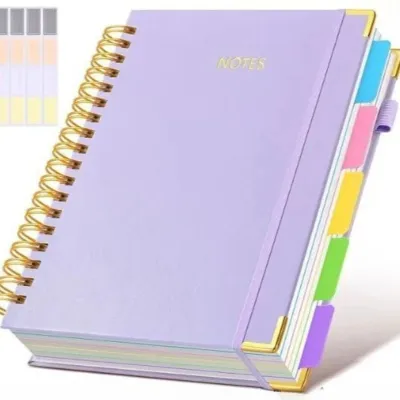
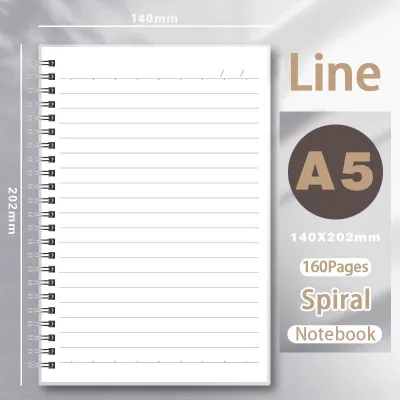
Spiral-bound notebooks utilize a continuous metal or plastic coil threaded through a row of pre-punched holes along the edge of the paper. Once the coil is crimped at the ends, the pages are permanently locked into their sequence. In contrast, ring-bound systems rely on individual metal or plastic rings—often integrated into a rigid spine or cover—that can be snapped open and closed. This simple mechanical difference dictates how easily you can manipulate your pages, customize your dividers, and handle your notebook during daily tasks.
This comparison focuses on the practical organizational needs of students and professionals. By evaluating page manipulation, divider customization, and daily durability, you can determine which binding style best supports your workflow.
Products mentioned in this guide
Prices are valid at publication and may change. Please refer to the product page for the latest price.
Flexibility for Adding and Removing Pages
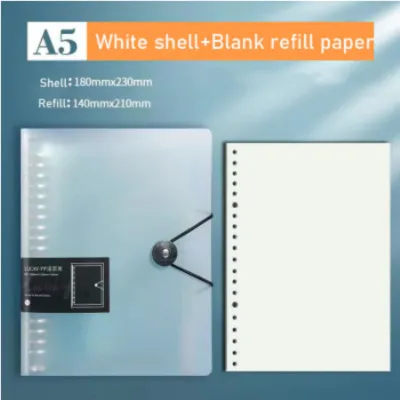
Ring-bound notebooks excel at page manipulation because their opening mechanisms allow you to insert or remove sheets at any point in the notebook. If you receive a printed handout, a syllabus, or a project brief, you can simply punch matching holes in the document and snap it directly into the relevant section. This makes the ring binder an excellent tool for cumulative subjects where new reference materials must be integrated alongside handwritten notes.
Spiral-bound notebooks, by contrast, are fixed-capacity systems. Adding a page to a spiral notebook is not possible without physically unbinding the coil, inserting the page, and rebinding the book using specialized workshop machinery or manual wire-binding tools. For daily note-taking, this means you must work strictly within the page count provided at the time of purchase. If you run out of space in one section of a divided spiral notebook, you cannot easily insert extra sheets; you must either continue writing in a different section or carry a second notebook.
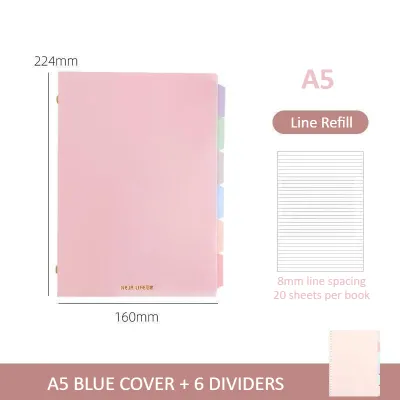
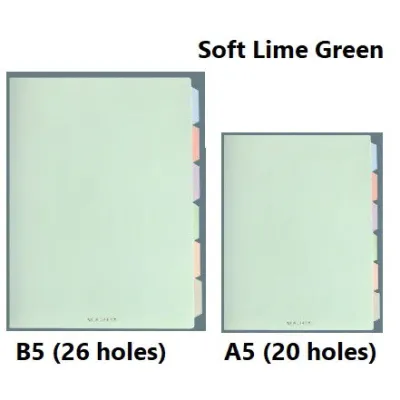
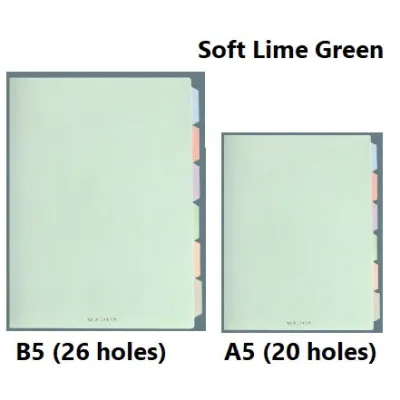
Paper compatibility is another critical factor to consider. Ring-bound systems often use standardized hole configurations, such as the international 20-ring standard for A5 paper, the 26-ring standard for B5 paper, or classic 3-ring formats. This standardization makes it easy to purchase loose-leaf refills from various stationery brands or use a standard adjustable hole punch to create your own pages. Spiral notebooks rely entirely on proprietary factory-punched paper, meaning you cannot easily mix and match paper types from different manufacturers.
To prevent damage to your notebook, always check the manufacturer’s specified maximum page capacity. Overstuffing a ring binder forces the paper against the rings, causing the sheets to catch, crumple, and tear during page turns. Similarly, packing too many pages into a spiral notebook puts pressure on the coil, which can distort the binding and make turning pages difficult.
Reorganizing and Customizing Dividers
Dividers are essential for categorizing your thoughts, but their usefulness depends on how easily they can be rearranged. In a ring-bound notebook, dividers function as movable signposts. Because the rings open, you can instantly relocate a divider tab to accommodate a growing section, swap the order of your subjects, or remove unused dividers entirely to save space. This adaptability is ideal for dynamic projects where categories evolve over time.

In a spiral-bound notebook, the dividers are threaded directly onto the coil during manufacturing, making their sequence permanent. If you purchase a notebook with five pre-installed sections, you are locked into that specific layout. You cannot move a divider from the middle to the back without uncoiling the notebook, which limits your ability to adapt the notebook to changing workloads or semester schedules.
Creating custom dividers is highly accessible in a ring-bound system. You can punch holes in any sturdy material—such as heavy cardstock, laminated sheets, or plastic pockets—and snap them into the rings. For spiral notebooks, custom dividers are much harder to implement. While some manufacturers offer slide-in dividers with slotted plastic teeth that grip the coil, these are less common and can easily detach and fall out when the notebook is carried in a bag.
When evaluating a notebook with divider, perform a quick physical check of the tab durability and alignment. Look for dividers made from flexible polypropylene (PP) plastic rather than basic paperboard, as plastic resists bending and tearing when exposed to daily handling. Ensure the tabs extend far enough past the edge of the paper to remain visible when the notebook is fully loaded, allowing for quick navigation between sections.
Durability and Daily Handling
Spiral-bound notebooks offer a distinct handling advantage: they can fold completely flat and bend back 360 degrees. This lay-flat capability minimizes the notebook’s footprint, making it ideal for writing on small lecture hall desks, on your lap, or while standing. The continuous coil also ensures exceptionally smooth page-turning, as the paper slides effortlessly along the wire without catching.
However, spiral coils are vulnerable to physical deformation. Metal coils can easily get crushed or bent inside a packed backpack, which permanently restricts page movement and causes pages to snag. In the tropical climate of the Philippines, high humidity can also cause low-quality metal coils to rust over time, potentially staining your paper. Opting for plastic coils or nylon-coated wires can help mitigate these environmental risks.
Ring-bound notebooks are inherently bulkier and heavier due to their rigid spine and ring mechanisms. They cannot fold back 360 degrees, meaning you always require a desk space equivalent to the fully opened binder. The rings themselves can also bend out of alignment if the binder is dropped or compressed, creating small gaps where pages catch and tear during use.
Furthermore, because ring-bound pages are held at a few concentrated points rather than along a continuous edge, the paper around the punch holes experiences significant stress. In humid conditions, paper fibers soften, making standard loose-leaf pages more susceptible to tearing out of the rings. To prevent this, look for D-ring mechanisms rather than traditional O-rings; D-rings allow pages to lie flat on one side of the binder, reducing tension on the holes and allowing the binder to close more securely.
Decision Framework: Which Binding Should You Choose?
To select the ideal notebook with divider for your daily routine, consider how your work is structured and where you typically write.
Choose Ring-Bound if:
- You need to constantly reorganize, add, or archive pages to keep your current notes concise.
- You want to mix different paper styles, such as grid, lined, and blank sheets, within a single notebook.
- You prefer a long-term, reusable system where you only need to replace the paper refills rather than the entire notebook.
Choose Spiral-Bound if:
- You work in tight spaces, such as transit or small desks, and need a notebook that can fold completely flat.
- You prefer a lightweight, compact profile that slides easily into a bag without adding bulk.
- Your notes follow a linear, chronological order that does not require restructuring or page removal.
Neither binding style may fit your needs if you dislike the physical presence of binding hardware. Both large rings and thick spiral coils can obstruct your hand and wrist when writing near the inner margins of the page. If this interference disrupts your writing flow, a thread-bound or glue-bound notebook paired with adhesive divider tabs may offer a more comfortable, seamless writing surface.
Before making a purchase, verify your existing stationery setup. Check if you own a compatible hole punch for your preferred ring standard, and ensure the paper weight (ideally 80 gsm or higher) is thick enough to resist ink feathering and bleed-through. To test paper compatibility with your favorite gel or fountain pens, perform a quick ink trial on a back page to observe drying speed and bleed resistance before committing to a full pack of refills.
Frequently Asked Questions (FAQ)
Can I convert a spiral-bound notebook into a ring-bound system?
Converting spiral-bound pages to fit a ring binder is generally difficult due to mismatched hole spacing. Spiral notebooks utilize a very tight hole pitch (typically 3:1 or 4:1, meaning three or four holes per inch), whereas standard ring binders use widely spaced 2-ring, 3-ring, or multi-ring configurations. If you attempt to force spiral-punched pages into a ring binder, the holes will not align, leading to crumpled edges and torn paper. To transfer your notes successfully, you must cut off the spiral-punched margin entirely and punch new holes using a compatible paper punch, which will reduce the usable width of your pages.
How do I prevent ring-bound dividers from tearing at the holes?
To protect your dividers and pages from tearing, avoid overfilling your binder past its recommended ring capacity, as overstuffing places excessive tension on the punched holes. Choose dividers made from durable polypropylene (PP) plastic rather than standard paperboard, or look for dividers that feature reinforced, laminated hole strips along the binding edge. When navigating your notebook, always lift and turn the pages from the middle of the sheet rather than pulling from the outer edges or the divider tabs. For high-traffic pages, applying adhesive reinforcement rings around the punched holes can also significantly extend their lifespan.

Community discussion
Share your experience or ask a question. Comments are reviewed before publication.