
Choosing the right binding for a large notebook is the difference between a seamless daily workflow and constant physical frustration. When working with larger paper formats, such as A4 or B5, the way the pages are held together dictates how much desk space you consume, how easily you can write near the margins, and whether your notes will survive daily transport. The right choice depends entirely on your writing environment, your need to reorganize information, and how you prefer to position your hands.
For those who prioritize space-saving flexibility and a completely flat writing surface, spiral bindings offer the ability to fold pages back-to-back. If your work demands a professional presentation, long-term archival security, and a smooth surface across two-page spreads, a stitched binding is the traditional standard. Meanwhile, if your projects are dynamic, requiring you to insert handouts, rearrange sections, or mix lined and blank paper, a loose-leaf system provides the modular freedom that fixed bindings cannot match.
How Spiral, Stitched, and Loose-Leaf Bindings Differ
To make an informed decision, it is essential to understand the physical construction of each binding style. These mechanical differences directly influence how the notebook behaves when opened, carried, and filled with ink.
Products mentioned in this guide


Prices are valid at publication and may change. Please refer to the product page for the latest price.
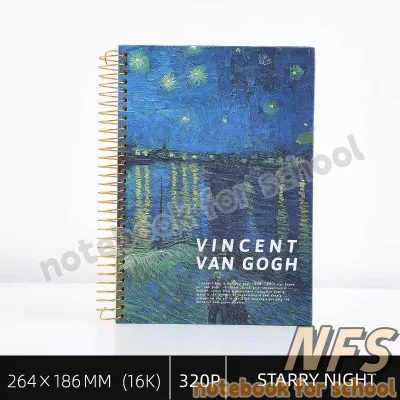
Spiral-bound notebooks utilize a continuous metal wire or plastic coil that threads through a series of evenly spaced holes punched along the edge of the paper. This design allows each page to rotate independently around the coil. Because the pages are not physically joined to one another at a spine, they can turn a full 360 degrees, allowing you to fold the notebook in half to save desk space. Within this category, you will find single-coil designs, which are highly flexible, and double-loop wire bindings, which offer a more secure hold and keep pages perfectly aligned when the notebook is opened flat.
Stitched notebooks, often referred to as thread-bound or sewn, are constructed by folding groups of pages, known as signatures, and sewing them together along the fold line. These signatures are then glued to a flexible spine backing, which is often reinforced with fabric tape. This traditional method ensures that pages remain securely anchored within the book, creating a cohesive, book-like volume that resists page loss even under heavy use. Some premium stitched notebooks feature an exposed spine, where the colorful sewing threads are visible, allowing the book to open completely flat without the resistance of a stiff outer spine cover.
Loose-leaf systems rely on individual, pre-punched sheets of paper held together by an opening mechanism, such as metal rings, flexible plastic discs, or multi-ring binder bars. Unlike fixed bindings, loose-leaf systems allow you to open the rings or slide pages off the discs at any time. This mechanical independence means you can customize the contents of your notebook continuously, adding dividers, pockets, and various paper styles as your needs evolve. Disc-bound systems, a popular subset of loose-leaf, use mushroom-shaped punches that snap onto plastic or metal discs, combining the page-turning smoothness of a spiral notebook with the modularity of a traditional ring binder.
Key Comparison Dimensions for Large Notebooks
Evaluating a large notebook requires looking beyond aesthetics to analyze how the binding interacts with the physical scale of the paper. Large formats present unique challenges, such as increased page weight, wider hand movements, and greater vulnerability to wear during transport.

Lay-Flat Performance and Writing Comfort
The physical comfort of writing in a large notebook is heavily influenced by how flat the pages lie. When using a large format, you need to utilize the entire width of the page, including the area closest to the binding, often called the gutter. If a notebook resists staying open, you are forced to use one hand to hold the pages down while writing with the other, which quickly leads to fatigue during long study or work sessions.
Spiral and loose-leaf bindings excel at lay-flat performance because the pages rotate freely around the rings or coils. This allows the notebook to lie completely flat on a desk without requiring you to hold the edges down with your hands or paperweights. Furthermore, the ability to fold a spiral notebook completely in half is a major advantage when working on cramped desks, lecture hall tablets, or while taking notes on your lap. This 360-degree folding capability effectively halves the desk footprint of a large A4 notebook, making it highly practical for crowded workspaces.
Stitched bindings vary significantly in their lay-flat capability depending on the quality of the spine construction. High-quality thread-bound notebooks are designed to lay flat when opened, but cheaper glued alternatives often resist staying open, forcing the pages to curve upward near the center. This curve creates a steep slope that makes writing near the gutter uncomfortable and can cause your hand to cramp during long writing sessions. For left-handed writers, this slope can be particularly frustrating, as their hand must constantly ride over the hump of the spine.
Durability and Page Security
A large notebook represents a significant investment of time and information, making structural durability a primary concern for students and professionals alike. The larger the paper, the more leverage is exerted on the binding when pages are turned, meaning the binding must withstand greater physical stress over its lifespan.
Stitched bindings offer excellent page security because the sewn signatures prevent individual sheets from slipping out. However, if you repeatedly force a stitched spine to lay flatter than its design allows, the glue can crack, leading to loose signatures and eventual page loss. Additionally, the thread can wear down over years of heavy use, though high-quality archival options are built to last decades. The lack of moving parts means there are no rings to bend or coils to unravel, making stitched notebooks highly reliable for long-term storage.
Spiral coils are highly durable but are prone to physical deformation if squeezed inside a packed bag. A bent metal coil can snag on clothing or prevent pages from turning smoothly, while plastic coils can crack under sudden impact. Loose-leaf systems offer excellent durability for the paper itself, but the rings can become misaligned over time if overloaded, causing pages to catch or tear at the punched holes when turned. Furthermore, the constant friction of turning heavy, large-format pages can gradually enlarge the punched holes in a loose-leaf system, eventually requiring reinforcement stickers to prevent sheets from falling out.
Flexibility and Reorganization
The ability to adapt your notebook to changing projects is a crucial factor in maintaining an efficient organization system. As your notes accumulate, a rigid structure can become a bottleneck, forcing you to plan your page usage far in advance.
Loose-leaf systems provide exceptional flexibility, allowing you to insert, remove, and rearrange pages at will. This is particularly useful for large-format notebooks used for multi-subject study, project planning, or combining typed printouts with handwritten notes. You can easily move a page of meeting notes to a different section or discard mistakes without leaving torn paper stubs behind. This modularity also allows you to archive completed sections to a storage binder at home while keeping only active pages in your daily carry notebook, keeping your bag light.
In contrast, spiral and stitched notebooks are fixed formats where the order of pages is permanent. If you need to share a page or remove a mistake from a stitched notebook, cutting the page out can compromise the structural integrity of the matching page on the opposite side of the signature. If you choose a spiral notebook, look for options with micro-perforated pages, which allow you to tear out sheets cleanly without leaving messy paper shreds along the coil. While some modern spiral notebooks feature specialized rings that allow pages to be repositioned, standard wire spirals remain strictly permanent.
Choose Your Binding: A Decision Framework
Selecting the right binding is a matter of matching these mechanical characteristics to your daily habits, writing environment, and organizational style.
Choose a spiral-bound notebook if your daily work involves sketching, quick brainstorming, or writing in tight spaces. The ability to fold the notebook flat makes it ideal for left-handed writers who want to avoid resting their wrists on a bulky center binding. It is also the most practical choice for field research, laboratory work, or active environments where you do not always have a spacious desk available. The quick page-turning action is perfect for fast-paced environments where you cannot afford to fumble with rings or stiff spines.
Opt for a stitched notebook if you prioritize a professional aesthetic, archival longevity, and a smooth, uninterrupted writing experience across two-page spreads. Stitched notebooks are perfect for journaling, structured project logs, and executive meetings where a clean, book-like appearance is valued. Because they lack protruding rings or coils, they slide smoothly into laptop sleeves and stack neatly on bookshelves without catching on other items. They are the natural choice for permanent records that you intend to refer back to for years to come.
Select a loose-leaf system if your workflow is highly dynamic and requires constant categorization. This setup is ideal for students managing multiple courses in a single binder, researchers compiling diverse data sources, or professionals who need to archive old notes while keeping current projects close at hand. You can mix grid, lined, and blank paper within the same volume to suit different tasks, and easily integrate printed documents by punching holes in them.
Before making your final choice, consider how you transport your stationery. In tropical climates like the Philippines, sudden downpours and high humidity can soften paper and covers. An exposed metal spiral or loose-leaf ring can easily snag on the interior lining of a backpack or collect moisture, potentially leading to rust or paper damage. If you travel frequently, a stitched notebook with a sealed spine or a loose-leaf binder with a protective zippered cover will offer better protection against the elements. Additionally, a sturdy plastic cover on a spiral notebook can shield the inner pages from sweat and humidity during a humid commute.
Essential Specs to Check Before Purchasing
Once you have decided on a binding type, verifying a few technical specifications will ensure your large notebook performs reliably under daily use.
First, examine the paper weight, measured in grams per square meter (GSM). For large notebooks, paper between 80 GSM and 120 GSM is ideal. In humid environments, lighter paper tends to absorb moisture from the air, making it limp and highly susceptible to ink feathering or bleed-through, especially when using gel pens or fountain pens. Testing a small corner of the page with your favorite pen can help you verify ink compatibility before committing to a full volume.
Next, evaluate the margin and hole-punch alignment. In large formats, the binding mechanism should not encroach on your active writing space. For spiral and loose-leaf notebooks, ensure the punched holes are clean and positioned far enough from the margin to prevent your pen from hitting the rings. For stitched notebooks, check that the gutter margin is wide enough so that text does not get lost in the deep fold of the spine.
Finally, assess the stiffness of the cover. A large notebook requires a sturdy backing to protect the expansive pages from bending. If you often write on the go, a thick cardboard, plastic, or hardbound cover is essential to provide a stable writing surface. Conversely, if you always write at a desk, a flexible softcover may be preferred to reduce overall weight and bulk in your bag.
Frequently Asked Questions (FAQ)
Can I convert a stitched notebook into a loose-leaf system?
Converting a stitched notebook into a loose-leaf system is technically possible but highly impractical. To do so, you must carefully cut the signatures away from the glued spine, trim the uneven edges, and punch holes along the margin of every individual sheet. This process significantly reduces the usable writing area and risks tearing the paper. Additionally, without professional paper cutters and heavy-duty hole punches, the resulting pages may align unevenly, leading to a frustrating writing experience and compromised structural integrity.
Does the binding type affect the total page count of a large notebook?
Yes, the binding mechanism directly dictates the maximum page capacity of a notebook. Stitched notebooks are limited by the physical width of the spine and the thickness of the sewn signatures; exceeding a certain thickness makes the book bulky and difficult to lay flat. Spiral notebooks are constrained by the diameter of the coil, as overloading a small coil prevents pages from turning smoothly. Loose-leaf systems offer great capacity flexibility, allowing you to expand or contract the page count simply by choosing larger or smaller rings to match your current storage needs.

Community discussion
Share your experience or ask a question. Comments are reviewed before publication.