
Choosing the right journal notebook is a highly personal decision that directly shapes your daily writing routine, creative expression, and organizational habits. The binding of your notebook is not merely a structural detail; it dictates how the book behaves when opened on a cramped desk, how easily it slips into your bag during a humid commute, and how well your thoughts are preserved over time. By understanding the physical characteristics, practical trade-offs, and long-term durability of spiral, stitched, and loose-leaf bindings, you can select a journal that seamlessly integrates into your lifestyle.
Understanding the Core Binding Types
To make an informed choice, it is essential to understand the mechanical differences between the three primary binding methods. Each system handles paper, covers, and structural tension in fundamentally different ways, which influences everything from page-turning smoothness to overall notebook thickness.
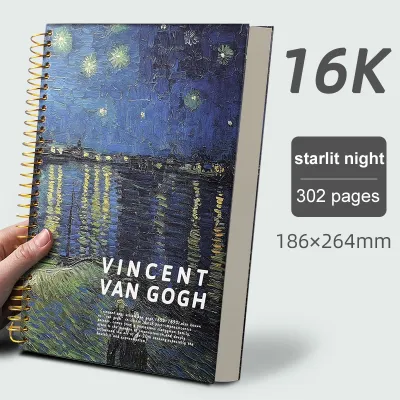
Spiral binding utilizes a continuous coil—typically made of plastic or coated metal wire—that threads through a series of holes punched along the edge of the paper and cover. A common variation is twin-ring or double-loop wire binding, where individual loops of wire secure the pages in pairs. This design ensures that pages remain perfectly aligned and turn smoothly. Plastic coils offer flexibility and resist permanent bending, while metal wires provide a more rigid structure but can deform under heavy pressure.
Products mentioned in this guide
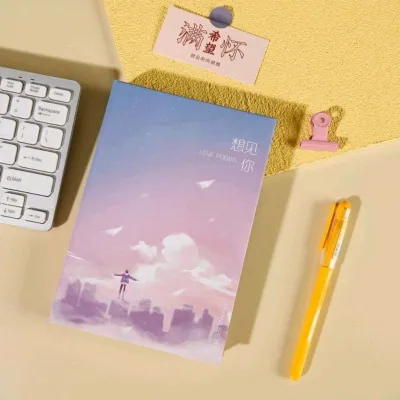
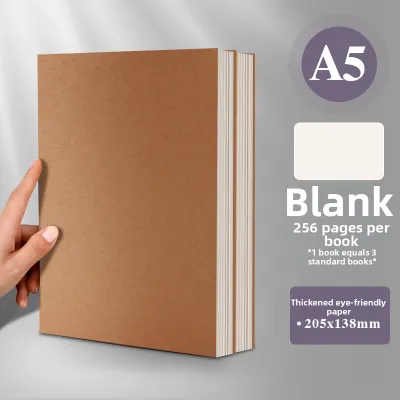
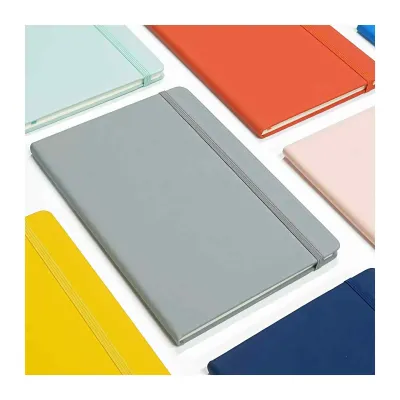
![[A5 Size] Stationery 25K Moleskin Rubber Diary Strap Notebook w/ String Lock](https://img.lazcdn.com/g/p/08767f5921c9c9d01e69076fe785e988.jpg_400x400q80.jpg_.webp)
Prices are valid at publication and may change. Please refer to the product page for the latest price.
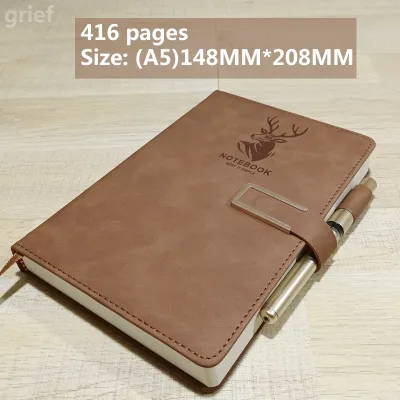
Stitched binding, often referred to as thread-sewn or Smyth-sewn, is the traditional method used in bookmaking. In this construction, sheets of paper are folded into small booklets called signatures, which are then sewn together with strong thread along the center fold. These signatures are subsequently glued to a fabric backing and attached to the outer spine of the cover. This method creates a clean, professional, book-like appearance and allows the journal to lie flat when opened. Because the binding is entirely enclosed within the spine, there are no exposed wires or rings to catch on external objects.
Loose-leaf binding relies on openable rings or discs that hold individual, pre-punched sheets of paper. Standard ring binders use a metal or plastic mechanism with rings that snap open and shut, typically featuring 3, 6, 20, or 30 rings depending on the paper size. Disc-bound systems, a popular alternative, use individual plastic or metal discs with raised rims; the paper is punched with unique mushroom-shaped slots that grip the rims of the discs. This system offers unmatched customization, allowing you to add, remove, or rearrange pages as your needs change, though the hardware adds noticeable bulk.
Comparing Portability and Daily Handling
When carrying a journal notebook through a busy day, physical dimensions and weight play a significant role in portability. Stitched journals offer the slimmest profile because they lack external hardware, making them easy to slide into a tight backpack sleeve, a small tote bag, or even a large pocket. Because the thickness of a stitched journal is determined solely by the paper weight and cover material, it remains compact and lightweight. In contrast, the metal rings of a loose-leaf binder or the thick coils of a spiral notebook add substantial depth, requiring more physical space in your bag regardless of how many pages are actually inside.

Bag safety is another practical concern, especially when commuting in humid tropical climates where paper can absorb moisture and become more fragile. The smooth, rounded edges of a stitched cover prevent snagging on delicate fabrics, scratching other personal electronics, or damaging nearby documents. Spiral coils, particularly metal ones with exposed ends, can catch on bag linings, while loose-leaf rings can occasionally pinch nearby items if they spring open under pressure. Furthermore, in high-humidity environments, exposed paper edges in spiral and loose-leaf systems are more vulnerable to absorbing ambient moisture, which can cause the pages to curl or wave over time.
For writing on the go, foldability is a major advantage. Spiral notebooks excel here because you can fold the cover and unused pages all the way around to the back, creating a rigid, compact writing surface that fits comfortably on your lap, a crowded commute seat, or a tiny coffee shop table. Stitched journals require a flat surface to use comfortably, as folding them backward will crack the spine, break the glue, and ruin the binding. Disc-bound loose-leaf systems can also be folded 360 degrees, but traditional ring binders must remain fully open, requiring double the desk space.
Evaluating the Writing Experience and Layout Flexibility
The physical barrier of the binding mechanism directly impacts your hand comfort and writing flow. Stitched journals provide a seamless lay-flat experience, allowing your hand to glide smoothly across the center seam without obstruction. This makes them ideal for two-page spreads, sketching, mind mapping, or continuous long-form writing where you want to utilize every square millimeter of the page. The lack of central hardware means your hand never bumps into a metal ring or wire coil, regardless of which side of the page you are writing on.
Spiral and loose-leaf systems present a physical obstacle near the inner margins. If you are right-handed, the coils or rings can press uncomfortably into your wrist or palm when writing on the left page, and the opposite occurs for left-handed writers on the right page. To maintain comfort, you may need to adjust your hand angle, leave wider margins near the binding, or physically remove the page from a loose-leaf binder to write on it before snapping it back in. This extra step can disrupt the flow of spontaneous journaling or rapid note-taking.
However, loose-leaf systems offer unparalleled layout flexibility that permanently bound journals cannot match. If you make a mistake, want to reorganize your thoughts, or need to group related topics together, you can simply open the rings and move the page to a different section. This is impossible with stitched journals, where pages are permanently fixed, and removing a sheet can compromise the structural integrity of the entire signature, causing adjacent pages to fall out. Loose-leaf systems also allow you to mix different paper types—such as lined paper for journaling, dotted paper for bullet journaling, and blank paper for sketching—within a single binder.
Durability and Long-Term Archival Quality
If you plan to keep your journals for years, page retention is a key consideration. Spiral notebooks often feature perforated pages for easy removal, but this also means sheets can tear out accidentally under frequent handling or when the notebook is stuffed into a tight bag. Stitched journals secure each page with thread, ensuring that sheets remain firmly in place even after years of opening and closing. The pages in a stitched book are structurally interdependent, which prevents individual sheets from slipping out or becoming lost.
Hardware wear is another factor that limits the lifespan of certain bindings. Over time, spiral coils can bend out of shape, preventing pages from turning smoothly and causing the paper to catch or tear on the wire ends. Loose-leaf rings can lose their alignment, creating small gaps that catch paper or allow sheets to slip out when the binder is turned. Stitched bindings can also wear out, particularly if the spine glue dries out and cracks in hot, humid conditions, but high-quality thread sewing generally resists daily wear exceptionally well.
For long-term archival quality, thread-sewn bindings remain the gold standard. They stack neatly on a bookshelf without tilting, protect the inner pages from dust, and preserve your writing in a chronological, tamper-proof format. Loose-leaf binders are bulky to store on shelves, and the punched holes on the paper can wear out and tear over decades of storage. Additionally, the metal components of ring binders can rust or corrode in humid environments, potentially staining the paper with rust marks over time.
How to Choose the Right Journal Notebook for Your Style
To find your ideal journal notebook, consider how your writing environment, organizational habits, and long-term goals align with each binding type.
Choose a spiral notebook if you prioritize space-saving utility and write frequently on the go. This style is perfect for quick note-taking, sketching in tight spaces, and situations where you need to tear out pages cleanly without ruining the book. It is an excellent choice for students, field journalists, and casual writers who value physical flexibility over archival longevity.
Choose a stitched journal if you value a premium, book-like feel and want a smooth, uninterrupted writing surface. It is the best fit for dedicated daily journaling, creative writing, and creating a permanent, durable archive of your thoughts. If you enjoy writing across the entire page spread and want a journal that sits beautifully on a bookshelf, a thread-sewn notebook is the ideal companion.
Choose a loose-leaf system if you prefer a highly customized setup and enjoy organizing your thoughts topically rather than chronologically. This option is ideal for those who like to mix different paper types, insert printed templates, or archive specific pages while discarding others. It is highly suited for project planning, study guides, and multi-subject journaling.
Before making a purchase, always verify the physical specifications of your chosen system. If you opt for a loose-leaf journal, check the ring spacing, hole count, and paper size to ensure compatibility with future refills, as standards vary widely between regions. For spiral notebooks, inspect the coil pitch and wire thickness to ensure the pages turn smoothly without catching. If you choose a stitched journal, look for “Smyth-sewn” or “thread-bound” labels to ensure the book will lie flat and resist spine cracking over time. Additionally, because ink smoothness, bleed resistance, and drying speed depend on the exact combination of your pen’s ink and the journal’s paper, perform a small trial on an inconspicuous back page before committing to a full layout.
Frequently Asked Questions (FAQ)
Can I convert a stitched journal into a loose-leaf system?
Converting a stitched journal into a loose-leaf system is highly discouraged because it causes severe structural damage. Cutting the threads of a stitched spine will release the individual folded sheets, causing the pages to fall apart and shed fibers. Because the pages are printed and folded in signatures, cutting the spine will leave you with loose, half-sized sheets that lack a proper margin for punching holes. If you want to transfer content from a stitched book, a safer alternative is to use adhesive pockets to hold loose notes or to scan the pages digitally to preserve them in a flexible format.
How do I check if loose-leaf refills will fit my existing binder?
To ensure replacement paper fits your loose-leaf binder, you must measure the hardware specifications carefully. Count the number of rings or discs and measure the exact distance between the centers of adjacent holes. For disc-bound systems, verify that the punch shape matches your discs and check that the disc diameter is sufficient to handle the thickness of your new paper refills without restricting page movement. Always check the manufacturer’s specification sheet for standard sizes like A5, B5, or A4, as hole configurations can differ significantly between international standards.

Community discussion
Share your experience or ask a question. Comments are reviewed before publication.