
Choosing between the Staedtler Noris and the Mars Lumograph depends entirely on your primary daily tasks, as each line is engineered for distinct user needs. The Noris series is designed as a reliable workhorse for general writing, schoolwork, and office tasks, featuring its iconic yellow-and-black or green-and-black hexagonal barrel that prevents the pencil from rolling off flat desks. On the other hand, the Mars Lumograph is a premium technical and artistic tool, easily recognized by its signature blue barrel, which offers a vast range of specialized lead grades tailored for drafting, sketching, and detailed shading. If your routine consists of taking quick notes, filling out forms, or completing classroom exercises, the Noris line provides a practical and cost-effective solution. However, if your work demands precise tonal gradients, architectural layouts, or smudge-resistant technical lines, the Mars Lumograph is engineered to meet those rigorous creative standards.
Core Differences in Design and Intended Use
To make an informed choice, it is helpful to understand how the manufacturer positions these two iconic lines through their visual design and physical construction. The Staedtler Noris is immediately recognizable by its high-contrast striped pattern, traditionally in yellow and black, though green and black variations are also common in certain markets. This hexagonal design is not merely aesthetic; the flat sides provide a secure grip for students and office workers, reducing hand fatigue during long writing sessions. The Noris is built for general-purpose utility, meaning its core is formulated to deliver a balanced, dark line on standard lined paper without requiring frequent sharpening.
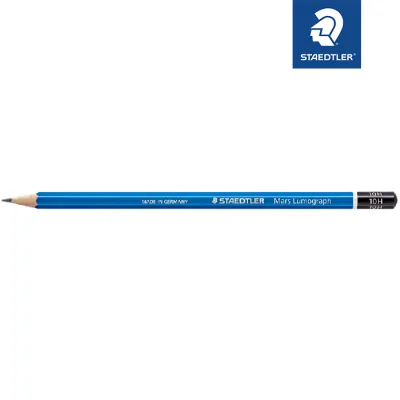
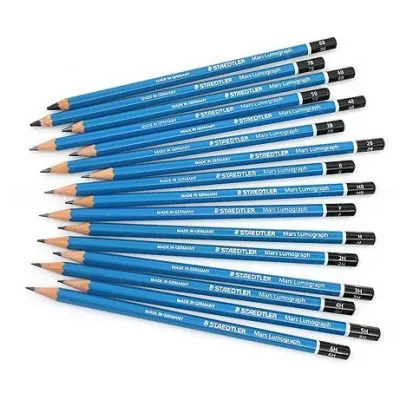
In contrast, the Mars Lumograph features a distinctive solid blue barrel with a black crown, signaling its status as a professional-grade instrument. This line is specifically optimized for artists, designers, and architects who require precision in their line weights. The barrel is also hexagonal, but the overall finish and wood-to-core integration are tailored for fine-art applications where the pencil must be held at various angles for shading.
Products mentioned in this guide
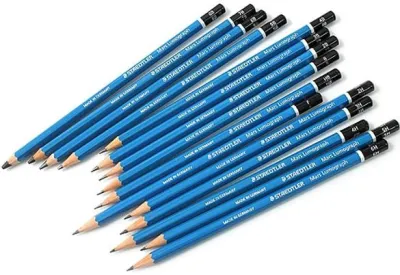
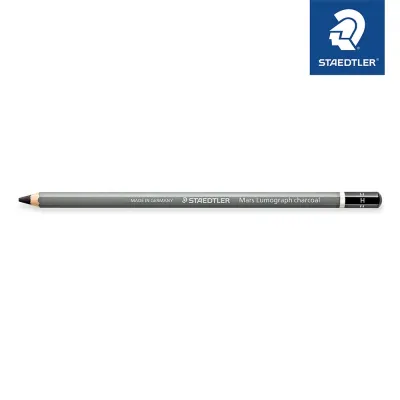
Prices are valid at publication and may change. Please refer to the product page for the latest price.
You can easily verify the intended use of any Staedtler pencil by examining the markings stamped onto the barrel. The Noris typically displays a simplified grading system, often focusing on standard writing grades like HB or 2B, alongside a clear barcode for individual retail scanning. The Mars Lumograph, however, prominently displays its precise hardness grade on multiple sides of the end cap, allowing artists to quickly identify the correct pencil from a crowded sketch box or drafting table. Additionally, the packaging for the Mars Lumograph often highlights its suitability for technical drawing and graphic design, whereas Noris packaging emphasizes school and office utility.
Comparing Available Lead Grades and Barrel Materials
The variety of available lead grades is one of the most significant differentiators between these two product lines. The Noris line generally limits its selection to the most common writing grades, such as 2B, HB, and occasionally H or B. This narrow range is highly practical for everyday users, as 2B and HB offer an ideal balance of darkness and hardness for standard handwriting on notebook paper. In tropical climates like the Philippines, where high humidity can soften paper fibers, a standard HB or 2B lead provides a clean, legible line that does not easily smear under warm hands.

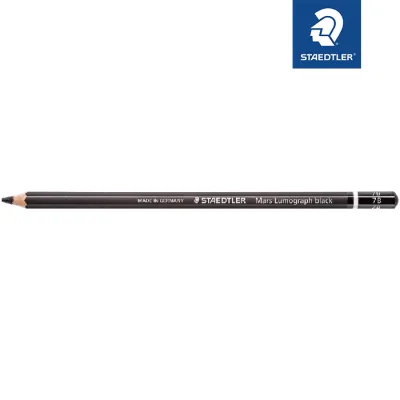
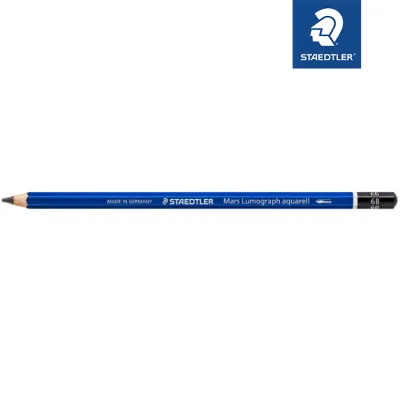
The Mars Lumograph line, by contrast, offers an expansive spectrum of hardness grades, typically ranging from a very soft, deep black 9B to an extremely hard, light grey 9H. This extensive range allows artists to execute delicate technical layouts with hard leads that resist smudging, or rich, expressive charcoal-like drawings with soft leads. When selecting a Mars Lumograph, you must match the specific grade to your paper type; for instance, hard H-grades perform best on heavy, smooth drafting film or high-gsm cartridge paper, while soft B-grades require a textured sketch paper to grab the graphite particles effectively.
Beyond the lead, the wood casing plays a crucial role in the pencil’s performance and environmental footprint. Both lines utilize high-quality wood that allows for smooth, continuous sharpening without splintering. To verify the sustainability of these materials, look for official eco-labels, such as the PEFC (Programme for the Endorsement of Forest Certification) or FSC (Forest Stewardship Council) logos, which are typically printed on the back of the cardboard boxes or metal tins. These certifications guarantee that the wood is sourced from responsibly managed forests, ensuring your stationery choices align with environmental conservation standards.
Evaluating Writing Smoothness and Break Resistance
Because smoothness and break resistance depend heavily on the interaction between the graphite mixture and your specific paper, conducting a personal trial is the most reliable way to evaluate performance. To assess writing smoothness, perform a simple swatch test on the paper you use most frequently. Draw a series of continuous loops and solid gradient blocks, paying close attention to whether the lead glides effortlessly or catches on the paper fibers. A high-quality core should feel consistent throughout the stroke, without hard clay spots that scratch the surface or sudden variations in darkness.
During this swatch test, you should also observe the lead’s smudging behavior, which is particularly important in humid environments. Rub a clean finger or a blending stump across the shaded area to see how easily the graphite particles migrate. Generally, softer grades in both lines will smudge more easily, but the premium binder formulation in the Mars Lumograph is designed to minimize graphite transfer, keeping your technical drawings and sketches clean.
Break resistance is another critical factor, especially if you tend to write with a heavy hand or use manual sharpeners frequently. The durability of a pencil lead depends on the bonding quality between the wood casing and the graphite core, a manufacturing process often referred to as systematic bonding. You can evaluate this by sharpening the pencil to a fine point; if the lead frequently snaps inside the sharpener or crumbles the moment it touches the paper, it may indicate that the pencil has suffered internal fractures from being dropped, or that the bonding has failed. A well-bonded core will retain its sharp point under normal writing pressure, allowing for clean, uninterrupted lines.
Assessing Value and Availability in the Philippines
When deciding which line to integrate into your daily routine, practical availability and cost-effectiveness within the local market are key considerations. In the Philippines, the Staedtler Noris is widely accessible and can be found in almost any local school supply store, neighborhood bookstore, or major office supply retailer. It is commonly sold in highly economical formats, such as bulk boxes of twelve or blister packs that often include a sharpener and an eraser. This widespread availability and low cost per unit make the Noris a logical choice for students, teachers, and office administrators who need to purchase writing instruments in large quantities.
The Mars Lumograph, being a specialized professional tool, is typically found in larger art supply stores, specialty stationery boutiques, or dedicated online marketplaces. While it is available as individual pencils to allow artists to replace specific worn-down grades, it is also frequently sold in curated metal tins containing sets of six, twelve, or twenty-four distinct grades. To determine the best value for your budget, compare the cost per pencil by checking current retail listings in ₱. You will find that the Mars Lumograph carries a noticeable price premium over the Noris, reflecting its specialized formulation and broader grading scale.
For long-term planning, consider your consumption rate and the environments where the pencils will be used. If you are prone to losing pencils in busy classrooms or offices, investing in a premium Mars Lumograph for basic writing may lead to unnecessary expenses. Conversely, if you are working on professional design projects where line consistency is paramount, the higher initial investment in a Mars Lumograph set is justified by the precision and specialized performance it delivers to your creative workflow.
Decision Framework: Which Staedtler Pencil Should You Buy?
To finalize your purchasing decision, match your primary activities to the specific strengths of each pencil line. Choose the Staedtler Noris if your daily tasks consist of standard handwriting, note-taking, exam preparation, or general office work. The Noris provides a highly durable, cost-effective, and easily replaceable tool that performs exceptionally well on standard notebook and copy paper, making it the ideal everyday companion for students and professionals alike.
Opt for the Mars Lumograph if your work involves technical drawing, architectural drafting, fine-art sketching, or complex shading. The Lumograph’s extensive range of lead grades and refined graphite formulation provide the exact tonal control and line precision required for professional creative outputs.
Before committing to a bulk purchase, it is highly recommended to buy a single unit of your preferred grade—such as an HB or 2B—to test its compatibility with your favorite notebook or drawing paper. This simple trial allows you to personally observe the smoothness, erasability, and break resistance under your unique writing pressure and local environmental conditions, ensuring you select the most suitable tool for your needs.
Frequently Asked Questions (FAQ)
Can I use Mars Lumograph pencils for standard school note-taking?
Yes, you can certainly use Mars Lumograph pencils for everyday school note-taking, but it may not be the most economical choice. While an HB or 2B Mars Lumograph will write beautifully on standard lined paper, its premium price point means you are paying for a level of grading precision and specialized formulation that is largely unnecessary for simple handwriting. Additionally, because soft artistic leads can smudge more easily on thin notebook paper, a standard Noris pencil is generally more practical and cost-effective for daily classroom use.
How do I properly store wooden pencils to prevent lead breakage?
To protect the internal graphite core of your wooden pencils from fracturing, store them in a stable environment away from physical shocks and extreme conditions. In the humid climate of the Philippines, keeping your pencils in a dry, cool place prevents the wood casing from absorbing excess moisture, which can soften the wood and lead to uneven sharpening. Always use a dedicated pencil case, wrap, or slot holder to prevent the pencils from rolling off desks or knocking against each other, as drop impacts are the primary cause of internal lead breakage.

Community discussion
Share your experience or ask a question. Comments are reviewed before publication.