
Quick Answer: Which Staedtler Pencil Should You Choose?
Choosing the right woodcase pencil depends entirely on your primary daily tasks, as both of these iconic lines from the German manufacturer serve distinct purposes. If you need a reliable tool for everyday writing, schoolwork, or standard office note-taking, the yellow-and-black striped Staedtler Noris is designed to handle these general activities. On the other hand, if your work involves technical drawing, detailed sketching, or professional drafting, the blue-bodied Mars Lumograph offers a specialized design tailored for precision.
It is important to remember that the specific graphite grade you select, such as HB or 2B, will influence your writing experience far more than the model name alone. A softer grade in either line will feel smoother and look darker on paper, while a harder grade will hold its sharp point longer. When searching for a dependable steadlers pencil, evaluating your typical paper type and writing pressure is the best way to determine which model fits your workflow.
Comparing the Writing Experience: What to Verify
To find the pencil that feels most comfortable in your hand, you must look closely at how the core and casing are constructed. Evaluating specific physical attributes will help you predict how each pencil performs under daily writing conditions.
Products mentioned in this guide
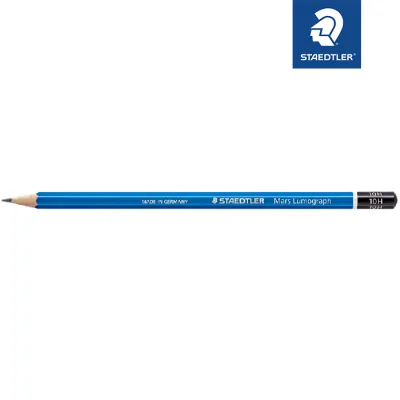
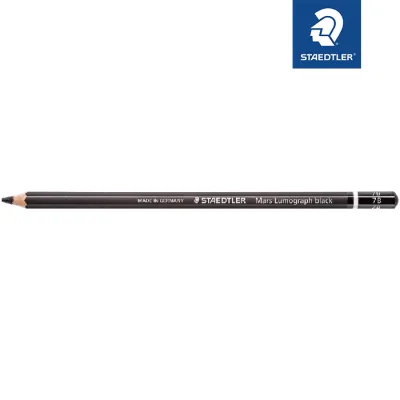
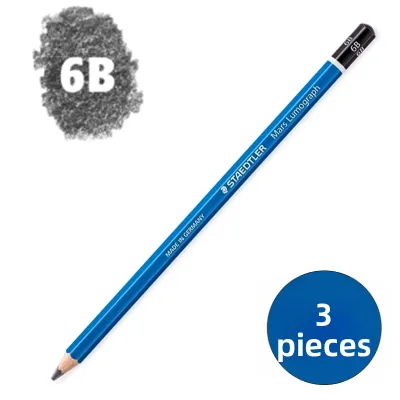
Prices are valid at publication and may change. Please refer to the product page for the latest price.

Graphite Grades and Line Darkness
The graphite core is the heart of any pencil, and understanding the grading scale is essential for finding your preferred level of darkness and smoothness. Both product lines use the standard HB scale, where “H” stands for hardness and “B” stands for blackness. When browsing options, look for the specific grade clearly printed on the end of the pencil barrel.
A standard HB pencil sits in the middle of the scale, offering a balance of moderate darkness and point retention that works well for general writing. If you prefer a darker, bolder line that glides across the page with minimal friction, you should look for softer grades like 2B, 3B, or 4B. Conversely, if you tend to write with heavy pressure or need clean, thin lines that do not smudge, harder grades like H or 2H are more appropriate.
Because paper textures vary, a grade that feels perfectly smooth on one notebook might feel scratchy on another. In the tropical climate of the Philippines, high humidity can cause paper fibers to absorb moisture from the air, making the sheets slightly soft. This dampness can cause softer graphite grades to smudge more easily, while harder grades might drag or tear the softened paper.
To avoid buying a large pack that does not suit your style, visit a local stationery store to purchase a single pencil first. Testing it on your preferred notebook or pad under your typical writing conditions will give you an accurate preview of its smoothness and darkness.
Lead Bonding and Break Resistance
Nothing disrupts a productive writing or drawing session like a pencil lead that repeatedly snaps during use or sharpening. To minimize this frustration, look at the packaging for details on how the graphite core is secured inside the wood casing. Manufacturers often use specialized bonding processes, sometimes referred to as SV bonding or anti-break systems, to glue the lead along the entire length of the pencil.
This continuous bonding cushions the graphite core, helping it absorb the shock when the pencil is accidentally dropped onto a hard floor. However, break resistance is not solely determined by manufacturing technology; it also depends on your choice of sharpener and your writing habits. A dull sharpener blade can twist and fracture the lead inside the wood before you even begin writing.
Your writing pressure and the angle at which you hold the pencil also play a significant role in lead durability. Softer graphite grades have less structural strength than harder grades, meaning a 4B lead will naturally snap more easily under heavy pressure than an HB lead.
Before purchasing, inspect the physical alignment of the pencil by looking directly at the unsharpened end. The graphite core should be perfectly centered within the wooden circle. If the lead is off-center, one side of the wood casing will be thinner than the other, which often leads to uneven sharpening and frequent lead breakage.
Wood Casing and Sharpening Quality
The quality of the wood casing directly affects how easy the pencil is to sharpen and how comfortable it feels to hold over long periods. High-quality woodcase pencils typically use sustainably sourced wood that is straight-grained and free of knots. This ensures that when you rotate the pencil inside a sharpener, the blade cuts smoothly and evenly.
When you sharpen a premium pencil, the wood should shave off in continuous, clean ribbons rather than crumbling into rough splinters. Splintering is a sign of dry or low-grade wood, which can leave rough edges that irritate your fingers during long writing sessions. The exterior lacquer or paint finish should also feel smooth and consistent, without any sticky residue or peeling.
To maintain the integrity of the wood casing, always use a sharpener with a high-quality, sharp steel blade. A worn-out blade will tear the wood fibers instead of cutting them, which puts unnecessary stress on both the casing and the graphite core. Investing in a reliable pocket sharpener or a sturdy desk-mounted rotary sharpener will extend the lifespan of your pencils and prevent wood waste.
Matching the Pencil to Your Daily Tasks
Aligning your pencil choice with your daily routine ensures you get the best performance out of your stationery. Each line is engineered with a specific user base in mind, making them suited for different environments.
The yellow-and-black Noris line is a staple in classrooms and offices, where the primary demand is for a durable, no-fuss writing tool. Its standard HB formulation is optimized for taking quick notes, filling out forms, and completing school worksheets. The lead holds its point well, meaning you do not have to stop and sharpen it constantly during a busy workday or exam.
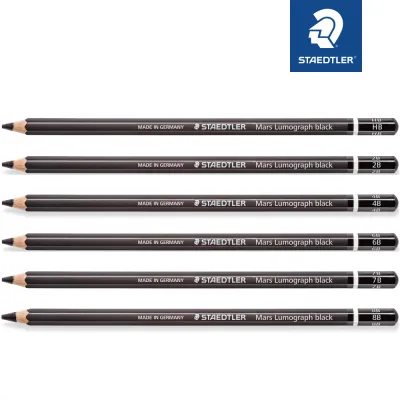
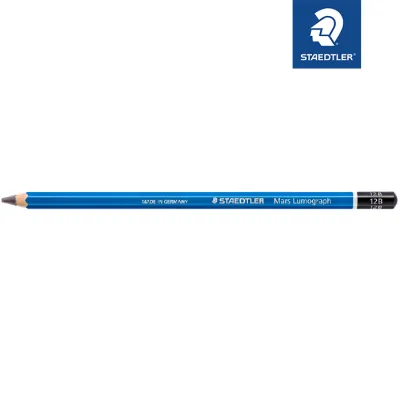
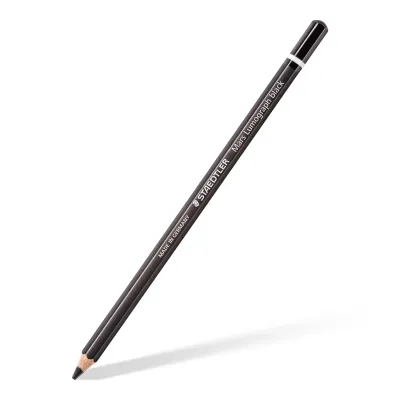
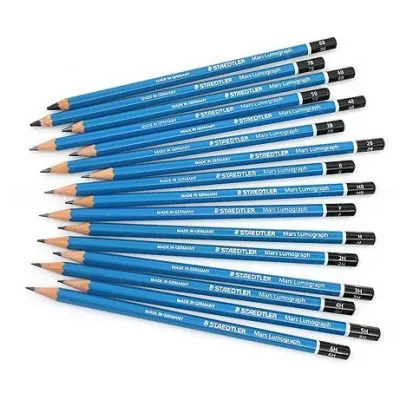
In contrast, the blue Mars Lumograph line is designed as a professional-grade tool for artists, architects, and designers. It is offered in a much wider range of graphite grades, from extremely hard leads for precise technical drafting to very soft, deep black leads for expressive sketching and shading. The formulation is crafted to allow for subtle tonal transitions and clean erasing, which are critical for detailed creative work.
Your personal writing style should also guide your decision. If you have a light grip and prefer fast, cursive writing, a softer Mars Lumograph grade might feel more effortless. If you have a firm grip and write with heavy downward pressure, the sturdier core of a standard Noris HB pencil will better resist snapping.
Furthermore, consider the paper you use most often. Rough sketchbooks with a lot of tooth will wear down pencil leads quickly, making a durable core highly desirable. Smooth, low-absorbency paper used in high-grade journals will showcase the rich, dark lines of a premium drafting pencil beautifully.
Purchasing and Verification Checklist
With many options available in the market, taking a systematic approach to your purchase will help you secure authentic, high-quality stationery. Use this checklist when shopping at local retailers or online stores:
- Examine the Packaging: Look for clear, crisp printing of the official brand logo and product details on the box. Authentic packaging should display a legible barcode, clear country of origin information, and consistent color schemes without blurry text.
- Verify the Graphite Grade: Check that the specific grade (such as HB, F, or 2B) is clearly stamped on both the outer box and the individual pencil barrels. Ensure all pencils inside a multi-pack match the grade indicated on the packaging.
- Inspect the Pencil Barrel: Run your fingers along the hexagonal sides of the pencil to check for a smooth, even lacquer finish. Look at the end of the pencil to confirm that the graphite core is perfectly centered within the wood.
- Compare Prices at Authorized Outlets: Check the unit or box prices at authorized stationery stores or official online mall flagship stores. In the local market, expect to see a price difference, with individual everyday writing pencils generally costing less than specialized drafting pencils. A typical box of everyday pencils may range from ₱150 to ₱300, while professional-grade drawing pencils are priced higher per unit.
- Buy Single Units for Testing: If you are transitioning to a new grade or model, purchase a single pencil to test on your usual paper before committing to a full box of twelve.
Final Decision Framework
To make your final selection, focus on how you plan to use the pencil most of the time. This simple framework will guide you to the right choice:
- Choose the Staedtler Noris if you need a dependable, cost-effective pencil for everyday writing, school assignments, or general office tasks. It offers excellent point retention and durability for standard writing needs.
- Choose the Staedtler Mars Lumograph if you require a high-precision tool for sketching, technical drawing, or shading. Its extensive range of graphite grades allows for greater artistic control and cleaner erasing.
If you are still undecided, start by purchasing one HB pencil from each line. Testing them side-by-side on your favorite notebook will reveal the subtle differences in feel, darkness, and feedback, allowing you to make an informed decision for your daily writing setup.

Community discussion
Share your experience or ask a question. Comments are reviewed before publication.