
Choosing between student-grade and artist-grade acrylic paints is one of the most important decisions you will make as an artist. The right choice depends on your current skill level, your budget, and the specific goals of your creative projects. While professional-grade paints offer rich pigment loads and archival longevity, student-grade paints provide an affordable, forgiving medium for practice, large-scale underpaintings, and learning color theory. You do not always need the most expensive tubes to create beautiful work, but understanding how these two categories behave on your canvas will help you make a smart investment.
By evaluating the physical properties, handling characteristics, and long-term durability of each grade, you can avoid wasting money on materials that do not suit your workflow. Whether you are a hobbyist painting in a home studio or an art student preparing your first exhibition, matching your paint grade to your immediate needs ensures a smoother painting experience and better control over your final results.
Understanding the Core Differences in Formulation
The primary distinction between student-grade and artist-grade acrylic paints lies in their chemical formulation. Acrylic paint consists of pigment particles suspended in an acrylic polymer emulsion binder. In artist-grade paints, manufacturers maximize the pigment concentration, using pure, finely ground organic or inorganic pigments. This high pigment load gives the paint its intense color, high tinting strength, and excellent coverage.
Products mentioned in this guide
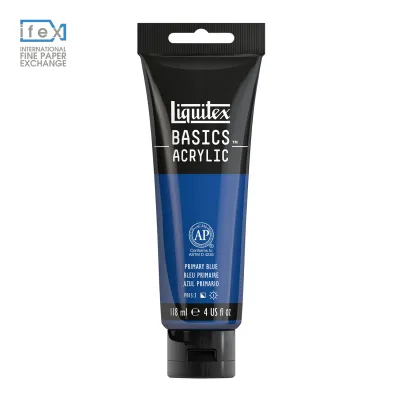
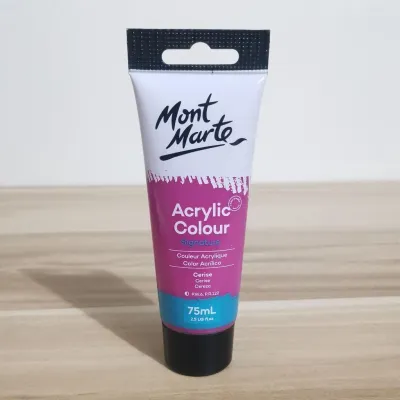
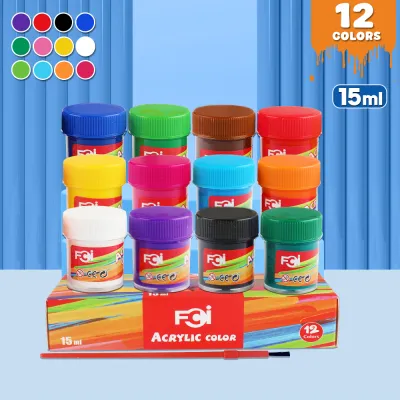


Prices are valid at publication and may change. Please refer to the product page for the latest price.
In contrast, student-grade paints contain lower concentrations of pure pigment. To keep production costs low, manufacturers substitute expensive pigments with synthetic alternatives, often labeled as “hues.” They also add significant amounts of extenders, opacifiers, and fillers, such as calcium carbonate or barium sulfate. While these additives bulk up the paint and ensure a uniform consistency across the entire color range, they dilute the color purity and reduce the paint’s overall vibrancy.
Binder quality also varies significantly between the two grades. Artist-grade paints utilize high-quality acrylic polymer binders that dry to a highly flexible, durable, and clear film. This robust binder structure resists cracking, yellowing, and peeling over time, even when applied to flexible supports like stretched canvas. Student-grade binders often contain more water and lower-quality polymers, which can result in a weaker paint film that is more susceptible to environmental wear.
Lightfastness, or a paint’s resistance to fading under prolonged light exposure, is another critical factor. Artist-grade paints are rigorously tested and labeled with standardized lightfastness ratings, typically using the ASTM (American Society for Testing and Materials) scale, where ASTM I represents excellent lightfastness and ASTM II represents very good lightfastness. Student-grade paints rarely carry these official ratings, as their synthetic pigments and fillers are more prone to fading or shifting color over time. To verify archival permanence, always check the tube label for the specific Pigment Index name (such as PW6 for Titanium White or PB29 for Ultramarine Blue) and the manufacturer’s lightfastness guarantee.
Matching Paint Grade to Your Skill Level and Goals
For beginners and students, the uniform consistency and lower cost of student-grade paints make them highly practical. When you are first learning brush control, color theory, and composition, you need to paint without the fear of wasting expensive materials. Student-grade paints are incredibly forgiving; they dry at a relatively uniform rate across all colors because the formulation is standardized with additives. This predictability allows beginners to focus on basic techniques without worrying about the unique handling quirks of individual natural pigments.

As you progress to an intermediate or advanced level, your technical demands will change. Advanced techniques like glazing—applying thin, transparent layers of paint to build depth—require the high pigment load of artist-grade acrylics. When you dilute student-grade paint with water or glazing mediums, the low pigment concentration quickly washes out, leaving a weak, patchy layer of color. Artist-grade paints retain their color integrity and tinting strength even when heavily diluted, allowing for luminous, complex glazes.
Your choice should also align with the specific type of project you are undertaking. Quick studies, color charts, sketchbook entries, and classroom exercises are ideal candidates for student-grade paints. These projects do not require archival permanence, making budget-friendly paints the logical choice. However, if you are creating final pieces intended for sale, gallery exhibition, or commission, artist-grade paints are non-negotiable. Professional collectors and galleries expect archival quality, and using artist-grade materials ensures your artwork will remain vibrant and intact for decades.
Comparing Performance, Mixing, and Handling
One of the most noticeable differences on the palette is color shift. Acrylic paints naturally dry slightly darker than they appear when wet, because the wet acrylic binder is milky white and cures to a completely transparent state. In student-grade paints, this color shift is often much more pronounced. The high volume of fillers and opacifiers can cause the dry paint to look significantly darker, duller, or more chalky than the wet paint. Artist-grade paints, with their clear binders and minimal fillers, exhibit a highly predictable, minimal color shift, allowing you to mix colors with confidence.
Mixing predictability is heavily influenced by the presence of fillers. Because student-grade paints contain synthetic “hues” and bulking agents, mixing multiple colors can quickly result in muddy, desaturated tones. For example, mixing a student-grade blue and yellow to create green often yields a dull, olive shade rather than a vibrant grass green. Artist-grade paints, which frequently use single, pure pigments, mix cleanly and predictably, allowing you to achieve bright, clean secondary and tertiary mixtures with fewer layers.
Texture and body also differ between the two grades. Heavy body artist-grade paints retain crisp brushstrokes, palette knife marks, and texture straight from the tube, responding beautifully to impasto techniques. Student-grade heavy body paints can sometimes feel gelatinous or “short,” losing their texture as they dry due to the high water content in the binder. Furthermore, when diluting your paints, artist-grade formulas tolerate mediums and water much better. In tropical environments with high humidity, such as the Philippines, student-grade paints with weak binders can take longer to cure properly if diluted excessively, sometimes leaving a tacky, dust-attracting surface.
Assessing Price, Value, and Budgeting
When budgeting for art supplies, looking only at the retail price of a tube can be misleading. Student-grade acrylics are highly economical upfront, often sold in large 120ml or 250ml tubes for a fraction of the cost of professional alternatives. In local art supply stores, a student-grade tube might cost between ₱150 and ₱300. Artist-grade paints, on the other hand, are typically sold in smaller 60ml tubes and are priced by “series” based on the cost of the raw pigment, with prices ranging from ₱500 to over ₱1,500 per tube.
However, student-grade paints carry a hidden cost: product consumption. Because of their lower pigment density, you must use significantly more paint to achieve the same level of opacity and color saturation that a tiny dab of artist-grade paint provides. If you find yourself applying three or four coats of student-grade paint to cover a canvas background that would only require one coat of artist-grade paint, you are consuming your budget-friendly paint at three times the rate. Over time, this high consumption rate can close the price gap between the two grades.
To balance your budget, consider adopting a hybrid paint system. You do not have to choose exclusively one grade. Many professional artists use student-grade paints for blocking in large background areas, creating underpaintings, or priming textured surfaces where high pigment density is not critical. They then reserve their expensive, artist-grade paints for the top layers, fine details, highlights, and areas requiring precise color mixing. This hybrid approach maximizes both your budget and the visual impact of your finished artwork.
Final Decision Framework: When to Choose Which
To make your final purchase decision, evaluate your current project requirements against these clear, condition-based guidelines:
Choose student-grade acrylic paints if:
- You are a beginner practicing basic brushwork, color mixing, and canvas preparation.
- You are working on large-scale murals, temporary installations, or background underpaintings where high volume is more important than archival longevity.
- You are teaching art classes or working with children where safety, easy cleanup, and low cost are the primary concerns.
- You are working on a strict budget and need to build a wide color palette quickly.
Choose artist-grade acrylic paints if:
- You are creating finished artwork intended for sale, exhibition, or long-term display.
- Your painting style relies heavily on glazing, fine detail, or heavy impasto texture that must hold its shape.
- You require precise, clean color mixing without the risk of muddy or chalky results.
- You want to ensure your work is archival, with verified lightfastness ratings that resist fading over time.
Before purchasing any tube of paint, always verify its specifications. Check the back of the tube for the Pigment Index code to ensure you are getting pure pigments rather than a synthetic hue mixture. Look for the ASTM lightfastness rating (preferring Class I or II) and check for non-toxic safety certification seals, such as the AP (Approved Product) seal, to ensure a safe and successful painting session.
Frequently Asked Questions (FAQ)
Can I mix student-grade and artist-grade acrylic paints?
Yes, you can safely mix student-grade and artist-grade acrylic paints on your palette. Because both grades utilize a compatible acrylic polymer emulsion binder, they will chemically bond without cracking or separating as they dry. However, keep in mind that mixing them will dilute the high pigment concentration of the artist-grade paint. The resulting mixture will inherit some of the characteristics of the student-grade paint, meaning you may experience a more noticeable color shift, reduced tinting strength, and lower overall lightfastness depending on the ratio of the mix.
How do I transition from student to artist-grade paints?
You do not need to replace your entire paint collection at once, which can be incredibly expensive. The most practical way to transition is to replace your student-grade tubes gradually as they run out. Start by upgrading your high-use mixing colors first. Investing in an artist-grade Titanium White, along with a warm and cool version of each primary color (such as Cadmium Red, Alizarin Crimson, Ultramarine Blue, Phthalo Blue, Cadmium Yellow, and Lemon Yellow), will immediately improve your color mixing results while allowing you to use up your remaining student-grade earth tones and secondary colors.

Community discussion
Share your experience or ask a question. Comments are reviewed before publication.