
Quick Answer: Technical vs. Art Drawing Sets
Choosing the right drawing set depends entirely on the primary goal of your project. If your work requires absolute precision, standardized line weights, and geometric accuracy, a technical drawing set is your ideal match. These kits are designed for creating clean, measurable layouts, such as architectural plans, engineering diagrams, and precise scale drawings.
Conversely, if your goal is to capture light, shadow, texture, and human expression through freehand drawing, an art sketching set is the correct choice. These sets focus on tonal range, blending capabilities, and expressive line dynamics, allowing you to create depth and realism in portraits, landscapes, and illustrations.
Ultimately, the deciding factor is the nature of your final output. While technical sets rely on rigid rules and specialized tools to maintain perfect consistency, art sets offer the flexibility and varied mediums needed for creative freedom and visual storytelling.
Products mentioned in this guide
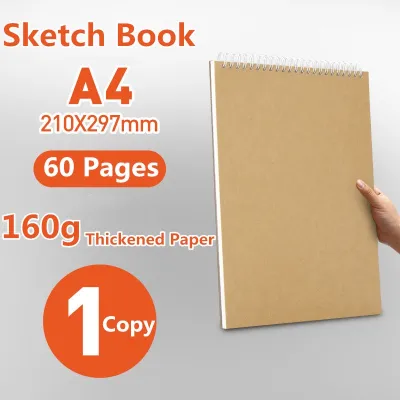
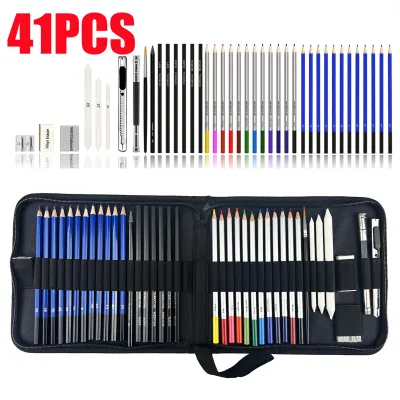
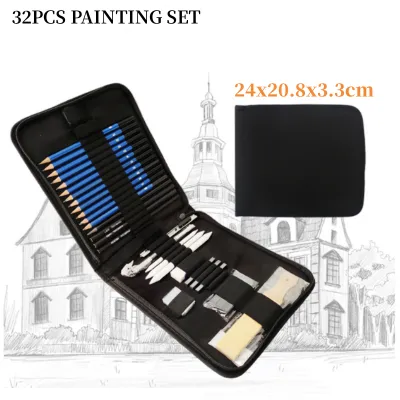
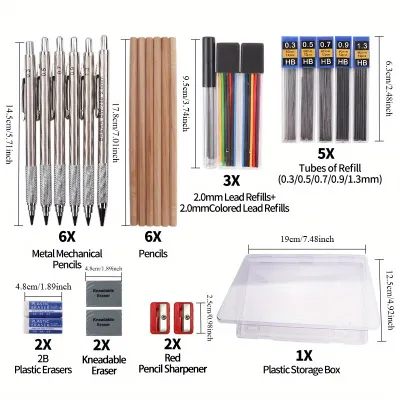
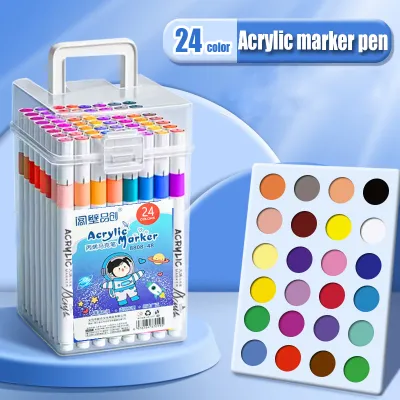
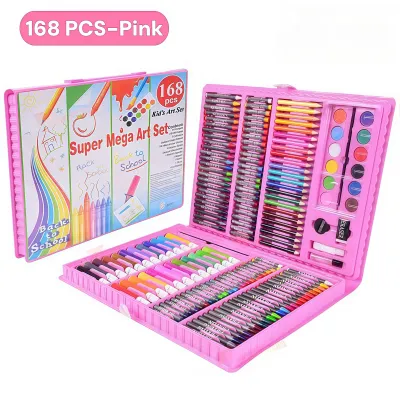
Prices are valid at publication and may change. Please refer to the product page for the latest price.
What Is Inside: Comparing Tools, Pencils, and Accessories
To understand which drawing set fits your workflow, it is essential to look at the specific tools included in each package. While both kits are designed for marking paper, their contents serve completely different functional purposes.

Technical drawing sets are built around consistency and mathematical accuracy. Inside a typical technical set, you will find:
- Mechanical Pencils: These usually feature fixed metal sleeves (often 4mm in length) designed to slide smoothly against rulers, T-squares, and templates without breaking the lead. They utilize precise lead diameters, such as 0.3mm, 0.5mm, and 0.7mm, to ensure line widths remain completely uniform.
- Drafting Pens (Fineliners): These pens use pigment-based, water-resistant ink and feature metal-clad tips. They are calibrated to deliver exact line weights, allowing you to draw identical lines repeatedly without variation.
- Compasses and Protractors: Essential for geometry, these tools allow you to draw perfect circles and measure precise angles. High-quality compasses in these sets often feature a center-wheel adjustment to prevent slipping during use.
- Eraser Shields and Lettering Guides: An eraser shield is a thin metal template with various openings, allowing you to erase tiny details without disturbing surrounding lines. Lettering guides help you maintain uniform text height for annotations.
Art sketching sets, by contrast, are designed to maximize tonal range and texture. A standard art set typically includes:
- Wooden Graphite Pencils: These pencils span a wide range of hardness levels, usually from hard H grades (like 2H or 4H) to soft, dark B grades (like 2B, 4B, 6B, and 8B). The H grades are perfect for light, erasable guidelines, while the B grades provide the rich, dark values needed for deep shadows.
- Charcoal Sticks and Pencils: Available in vine, willow, or compressed forms, charcoal offers an intense, matte black finish that is highly blendable and expressive.
- Blending Stumps (Tortillons): Made of tightly rolled paper, these tools allow you to smooth out graphite or charcoal gradients gently, preventing the transfer of natural skin oils from your fingers to the paper.
- Kneaded Erasers: These pliable, clay-like erasers can be molded into custom shapes to lift graphite highlights cleanly from the page without tearing the paper fibers.
While technical sets demand that a 0.5mm line remains exactly 0.5mm from start to finish, art sets thrive on the variable pressure of your hand, allowing a single soft pencil to transition from a whisper-thin line to a broad, dark shadow.
Matching the Drawing Set to Your Projects and Skill Level
Selecting the right drawing set also depends on your specific field of study, hobby, or professional requirements. Aligning your tools with your project goals prevents frustration and ensures a smoother creative process.
Technical drawing sets are highly specialized and are the standard choice for several professional and academic fields:
- Engineering and Architecture: Creating detailed floor plans, orthographic projections, and structural schematics where scale accuracy is mandatory.
- Fashion Design: Drawing flat technical sketches (flats) that show exact garment construction details, seams, and stitching lines for manufacturing.
- Precise Diagramming: Developing patent drawings, flowcharts, or scale models that require clean, unsmudged lines and perfect geometric shapes.
Art sketching sets are far more versatile for creative endeavors and are preferred for:
- Fine Art and Portraiture: Capturing realistic skin textures, hair, and soft transitions of light on a face.
- Landscape Sketching: Rendering organic shapes, foliage, clouds, and rough rock textures where rigid lines would look unnatural.
- Creative Illustration: Developing character designs, concept art, and editorial illustrations where emotional expression and visual depth are key.
Your current skill level and learning path should also influence your decision. Beginners often find art sketching sets more forgiving. If you make a mistake with a soft graphite pencil, you can easily blend it away, soften the transition, or lift it with a kneaded eraser. The tools encourage exploration, hand-eye coordination, and an understanding of light and shadow.
Technical drawing sets, however, require a disciplined approach. Working with fineliners and mechanical pencils demands a steady hand, consistent pressure, and an understanding of geometric rules. For students entering drafting, engineering, or design courses in the Philippines, mastering these tools early is essential for academic success, even as digital drafting software becomes more common.
Paper and Surface Compatibility for Each Set
The interaction between your drawing tools and your paper surface is critical to achieving clean results. This is especially true in the humid tropical climate of the Philippines, where high humidity can soften paper fibers, making them more susceptible to tearing, bleeding, and warping.
Technical drawing sets require smooth, high-density papers to prevent fine pen tips from catching or bleeding. Ideal surfaces include:
- Drafting Paper and Vellum: These papers (usually 80 gsm to 110 gsm) feature a highly calendered, smooth surface. Vellum has a slightly waxy texture that allows ink to sit on top and dry without spreading, maintaining sharp, clean line edges.
- Tracing Paper: Excellent for layering revisions over existing plans, tracing paper must be smooth enough to handle fine-tip technical pens without absorbing excess ink.
- Smooth Bristol Board: A heavier, multi-ply paper that provides a sturdy, ultra-smooth surface for final presentation drawings.
Art sketching sets require paper with “tooth”—a microscopic surface texture that acts like a file to shave off graphite or charcoal particles from the pencil core. Suitable options include:
- Cartridge Paper: Standard sketchbook paper (typically 110 gsm to 150 gsm) with a medium texture that provides enough grip for layering and blending graphite.
- Textured Drawing Paper: Heavier papers designed specifically for dry media, allowing you to build up multiple layers of charcoal or soft pencil without the surface becoming slick or saturated.
- Watercolor or Mixed-Media Paper: If you plan to combine your sketching with light washes, a heavier, textured paper (200 gsm or above) resists warping in humid conditions.
To verify compatibility before starting a major project, check the paper weight and surface finish labels on the packaging. You can also perform a simple dry-run test on a scrap piece of paper: draw a solid line and rub it gently with an eraser to check for fiber tearing, and apply a wet fineliner stroke to observe any immediate feathering or bleed-through.
Final Decision Framework: Which Drawing Set to Buy
To finalize your purchasing decision, evaluate your primary goals, budget, and workflow against this clear decision framework.
Choose a technical drawing set if:
- Your work involves architectural layouts, engineering diagrams, or geometric patterns.
- You require exact, repeatable line widths (such as 0.5mm) that do not change with hand pressure.
- You need specialized drafting accessories like compasses, rulers, and eraser shields to complete your projects.
- You are preparing for professional board exams or academic courses in engineering, architecture, or design.
Choose an art sketching set if:
- Your primary focus is freehand drawing, portraiture, still life, or landscape sketching.
- You want to master shading, tonal values, and realistic textures using a wide range of graphite grades (from 2H to 8B).
- You enjoy expressive, variable line weights and blending techniques.
- You prefer working with dry mediums like charcoal and graphite on textured paper.
Verify first if:
- You need a hybrid approach: Many illustrators use technical fineliners to draw clean outlines and then use art pencils or markers to shade the interior. If this is your workflow, buying individual high-quality tools may be more practical than a single pre-packaged set.
- You are budgeting for specific quality levels: Whether you are budgeting ₱300 for a basic student kit or over ₱2,000 for a professional-grade setup, ensure the set includes the specific lead hardness levels or pen tip sizes required for your projects.
- Your environment requires special storage: In high-humidity regions, look for sets that come in durable, airtight, or zippered carrying cases to protect your paper, wooden pencils, and metal compasses from moisture and rust.
Frequently Asked Questions (FAQ)
Can I use an art sketching pencil for technical drafting?
While you can physically use any pencil to draw a line, soft art sketching pencils (like 2B to 6B) are highly unsuitable for technical drafting. These soft leads wear down rapidly, causing your line width to thicken as you draw, which ruins scale accuracy. Additionally, soft graphite smudges easily under the sliding movement of rulers and T-squares, leaving dark streaks across your clean drafting paper. For precise technical work, stick to hard-grade wooden pencils (such as 2H or 4H) or mechanical pencils with consistent lead diameters.
Is it better to buy a complete set or individual tools?
For beginners, a complete drawing set is highly recommended because it offers excellent value and ensures all basic tools are compatible right out of the box. A pre-packaged set saves you the hassle of sourcing individual items and usually comes in a protective carrying case, which is convenient for students commuting to school or studios. However, advanced users often prefer buying individual tools. This allows you to customize your kit, select only the specific pencil grades you actually use, and invest in higher-quality individual pens or compasses without paying for filler accessories you might never need.

Community discussion
Share your experience or ask a question. Comments are reviewed before publication.