
Selecting the right art supplies for an elementary school student requires balancing variety, safety, and usability. A comprehensive jumbo art set can be an excellent all-in-one solution, provided it contains the specific tools required for classroom activities. To ensure your child is fully prepared for their creative projects, a high-quality set must offer a balanced selection of coloring, crafting, and painting mediums that are both safe for young hands and durable enough to survive the school year.
Evaluating these sets involves looking beyond the sheer number of pieces to assess the physical design, safety certifications, and practical utility of each component. By focusing on ergonomic tools that support motor skill development and choosing washable, non-toxic materials, parents can provide a creative kit that inspires confidence in the classroom.
Core Criteria for Selecting a Jumbo Art Set
In the stationery market, the term “jumbo” can refer to two distinct concepts: a bulk quantity of items packed into a single large carrying case, or physically oversized, thick-barreled drawing tools designed for younger children. For elementary school art classes, the ideal set often combines both aspects, offering a wide variety of tools that are specifically scaled for smaller hands.
Products mentioned in this guide
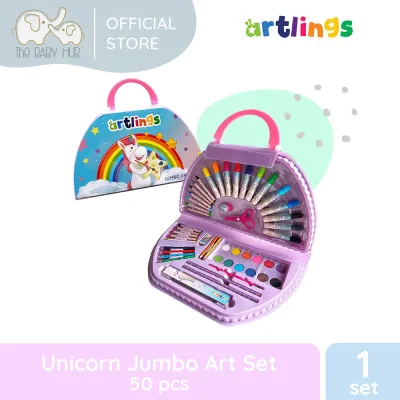
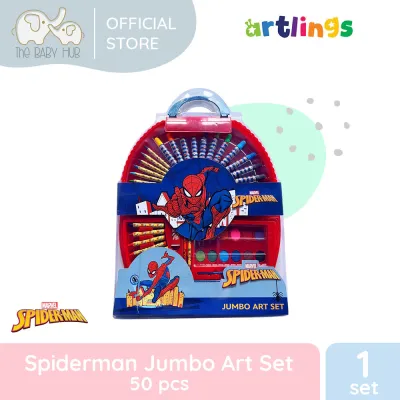
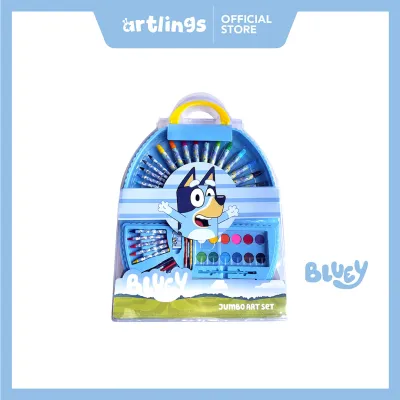
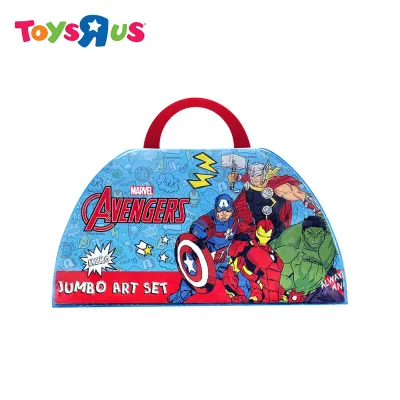
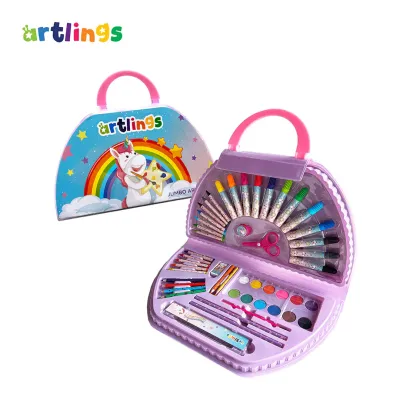
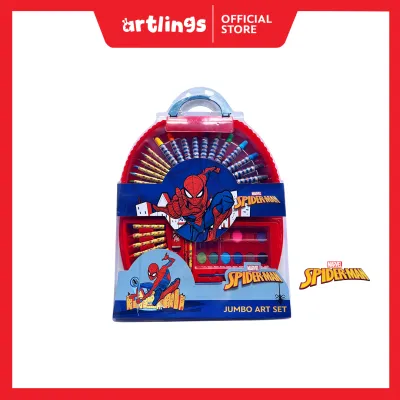
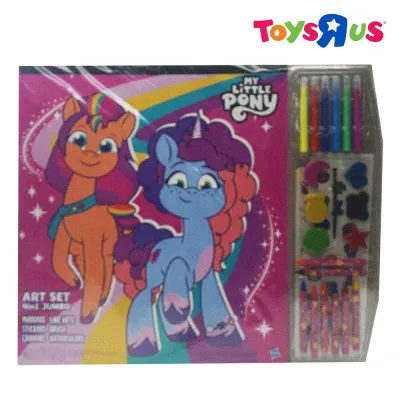
Prices are valid at publication and may change. Please refer to the product page for the latest price.
Early writers and artists in lower elementary grades are still developing their fine motor skills and hand strength. Standard-sized pencils and thin crayons can cause hand fatigue or lead to improper grip habits. Thick, triangular, or hexagonal barrels help stabilize their grip, allowing them to control their strokes with less physical strain.
Safety is a paramount concern when selecting materials that children will handle daily. Non-toxic certifications are non-negotiable for school supplies. Look for clear labeling on the packaging, such as the AP (Approved Product) seal from the Art and Creative Materials Institute (ACMI) or compliance with international safety standards like EN71. These labels verify that the materials have been evaluated by toxicologists and do not contain harmful levels of toxic substances.
A sturdy, organized case is essential for keeping the classroom tidy and preventing lost supplies. Art classes are often fast-paced, and students need to pack up their materials quickly at the end of a lesson. A case with dedicated, molded slots for each item helps children see exactly where each tool belongs, reducing the likelihood of misplaced markers or broken crayons. Look for durable latches, reinforced hinges, and a comfortable carrying handle that can withstand daily transport in a school backpack.
Must-Have Supplies in a Complete Jumbo Art Set
A well-rounded art set should cater to the three primary pillars of elementary art education: coloring, crafting, and painting. Rather than focusing solely on a high piece count—which is often padded with duplicate colors or low-quality plastic accessories—parents should prioritize a balanced variety of functional tools.

Many pre-packaged sets boast over a hundred pieces, but if eighty of those pieces are identical thin crayons, the set will fail to support diverse classroom projects. A balanced set ensures that when a teacher assigns a mixed-media collage or a watercolor landscape, the student has the necessary tools ready at hand.
Before purchasing, always cross-reference the contents of the art set with the official school supply list provided by the teacher. This prevents you from buying unnecessary duplicates while ensuring that any specialized items required for the curriculum are accounted for.
Drawing and Coloring Mediums
Coloring tools form the foundation of most elementary art projects. A standard jumbo art set should include a selection of crayons, colored pencils, and markers. For younger students, prioritize jumbo-sized barrels for these mediums, as they are less prone to snapping under the enthusiastic pressure of early artists.
When evaluating colored pencils, look for break-resistant cores. Soft-core pencils provide vibrant color laydown but can break easily during sharpening or if dropped on hard classroom floors. Harder, bonded cores offer a good balance of durability and color payoff, ensuring the pencils last longer between sharpenings.
Markers must feature washable ink formulas to prevent permanent stains on clothing and skin. Young artists frequently get ink on their hands, clothes, and school desks. Washable inks are formulated to wash out of most fabrics and wipe clean from non-porous surfaces with simple soap and water.
Look for broad-line markers with conical tips, which allow students to draw both fine lines and color in large areas easily. A color variety of 12 to 24 shades is typically sufficient to cover all basic color-mixing concepts without overwhelming the storage case.
Cutting, Adhesives, and Modeling Tools
Crafting activities like paper cutting, collages, and three-dimensional modeling require specialized tools that must be both safe and functional. Safety scissors are a critical component of any elementary art kit. They should feature blunt, rounded tips to prevent accidental pokes, and the blades should be designed to cut paper while remaining safe for small fingers. Ensure the handles are ergonomically designed, and if your child is left-handed, verify that the scissors are either ambidextrous or specifically designed for left-handed use.
Adhesives are another daily essential in the classroom. Washable glue sticks are the preferred choice for paper-to-paper crafts because they dry quickly, do not wrinkle the paper, and create minimal mess. However, for heavier materials like cardboard, felt, or wooden craft sticks, a small bottle of liquid white school glue is necessary. Liquid glue should have a clog-free nozzle that allows for precise application.
For 3D modeling projects, look for sets that include non-toxic, air-dry modeling clay or reusable dough. High-quality modeling compounds should be soft, pliable, and resistant to crumbling. In the warm, humid climate of the Philippines, clay can easily dry out if left exposed, so it is vital that the set includes airtight storage tubs or resealable bags to preserve the clay’s texture between uses.
Brushes, Paints, and Mixing Palettes
Painting introduces children to color theory and fluid mediums. A complete jumbo art set should feature a reliable watercolor pan or a set of small tempera paint pots. Watercolor pans are highly practical for the classroom because they are dry, portable, and less prone to major spills compared to liquid paints. Look for pans with vibrant, easily soluble pigments that activate quickly with a wet brush.
The quality of the included paintbrushes can significantly impact a student’s experience. Cheap plastic bristles often shed, leaving stray hairs embedded in the child’s artwork, and they tend to lose their shape quickly. Opt for brushes with synthetic nylon or natural pony hair bristles that are securely crimped to the ferrule. A basic set should include at least two or three brush sizes: a flat brush for covering large background areas and a round brush for detailed linework.
A reusable, easy-to-clean mixing palette is another valuable addition. Many watercolor sets feature a lid that doubles as a mixing tray, which saves space and simplifies cleanup. If the set includes separate paint pots, a small plastic palette with shallow wells allows students to experiment with color mixing without contaminating the original paint containers.
How to Evaluate Quality and Safety Before Buying
When shopping for a jumbo art set, safety must always be the primary consideration. Always inspect the packaging for official non-toxic certifications. In addition to international standards, look for clear age recommendations. Many art sets contain small parts—such as pencil sharpener blades, small caps, or tiny paint pot lids—that present choking hazards for children under the age of three. Ensure the set you choose is rated for your child’s specific age group.
Physical durability is equally important for classroom survival. Examine the construction of the carrying case. Zippers should glide smoothly without catching, and plastic latches or hinges should feel thick and robust rather than brittle. A flimsy case that pops open inside a school bag can lead to spilled supplies, broken pencil tips, and stained textbooks.
Before sending the set to school, perform a quick quality check on the liquid components. Open a few markers and test them on scrap paper to ensure they are fully saturated and have not dried out on the store shelf. Press down on the marker caps to verify they click securely into place, creating an airtight seal. Similarly, check that paint pot lids and glue caps screw or snap on tightly. In the tropical heat of the Philippines, poorly sealed containers will dry out rapidly, rendering the tools useless before the school year is halfway through.
Smart Shopping and Restocking Strategies
Purchasing a pre-packaged jumbo art set is often highly convenient, but it is wise to evaluate its financial value. Before buying, compare the cost of the bundled set against the total price of purchasing the equivalent items individually. While bundles often offer a lower upfront cost and the benefit of a matching, organized case, some sets may include filler items of lower quality. If you find that the scissors, brushes, or glue in a set feel flimsy, it may be more cost-effective to buy a smaller, high-quality coloring set and purchase the crafting tools separately.
When sourcing these supplies in the Philippines, you can find a wide variety of options both in local stationery stores and on popular online marketplaces. Shopping locally allows you to physically inspect the quality of the case and the thickness of the drawing tools before purchasing. If shopping online, read customer reviews carefully, focusing on feedback regarding shipping damage, dried-out markers, or broken crayon tips.
Keep in mind that certain high-consumption items will inevitably run out before the school year ends. Glue sticks, white glue, drawing paper, and popular marker colors are typically the first to go. Instead of buying an entirely new jumbo set when these items run out, plan to restock them individually.
To manage your school budget effectively, establish a realistic spending plan in ₱. Base your budget on the specific demands of your child’s school art curriculum. For younger students doing basic coloring, a modest, durable set is sufficient. For older elementary students engaging in more complex mixed-media projects, investing a bit more in a set with higher-quality paints, brushes, and specialized paper will yield better results and fewer frustrations in the classroom.
Frequently Asked Questions (FAQ)
Is a jumbo art set more cost-effective than buying individual supplies?
Generally, a pre-packaged jumbo art set offers excellent convenience and a lower initial cost compared to buying every tool separately. It provides a coordinated collection of colors and a dedicated storage case that helps keep supplies organized. However, the overall cost-effectiveness depends on the quality of the components. Some sets prioritize quantity over quality, including cheap scissors or brushes that break quickly and must be replaced. If the set contains many items your child’s curriculum does not require, you may end up paying for unused materials. For the best value, choose a set where the core items—like markers, colored pencils, and crayons—are of reliable quality, even if the piece count is slightly lower.
How should I store a large jumbo art set at home to prevent drying?
Proper storage is crucial for extending the lifespan of art supplies, especially in the warm and humid climate of the Philippines. Always store markers, highlighters, and brush pens horizontally. Storing them vertically can cause the ink to pool at one end, leading to either dried-out tips or oversaturated, leaky nibs. Ensure that all caps are pressed firmly until they click shut to prevent air from drying out the ink. For modeling clay or dough, remove them from any flimsy packaging and store them in airtight plastic containers or heavy-duty resealable bags. Keep the entire art set in a cool, dry place away from direct sunlight, as excessive heat can melt crayons, warp plastic cases, and dry out water-based paints and glues.

Community discussion
Share your experience or ask a question. Comments are reviewed before publication.