
Selecting the right transparent envelope with a handle requires matching your document’s dimensions with the carrier’s physical design. To keep your papers pristine, look beyond the basic size label on the packaging. A standard sheet of paper needs breathing room inside its container to prevent bent corners and crumpled sides. By measuring your documents and accounting for the envelope’s seams, handles, and closures, you can select a carrier that offers both protection and ease of use.
Match Envelope Dimensions to Standard Document Sizes
Standard office and school papers in the Philippines typically follow A4 or Letter formats. An A4 sheet measures 210 by 297 millimeters, while a Letter-sized sheet measures 8.5 by 11 inches (216 by 279 millimeters). When choosing a transparent envelope, a flat sleeve labeled exactly “A4” may feel too snug for a stack of loose sheets. To ensure smooth insertion, look for an envelope that offers at least 10 to 15 millimeters of internal clearance beyond these standard dimensions.
Certificates, diplomas, and official government documents require specialized handling. Many of these papers are printed on thick cardstock or parchment that cannot be folded without permanent damage. Standard diplomas often measure 8.5 by 11 inches, but some institutions issue larger, custom-sized certificates. For these delicate items, a wider rectangular envelope or a Legal-sized carrier (8.5 by 13 inches or 216 by 330 millimeters) is highly recommended to keep the corners crisp.
Products mentioned in this guide
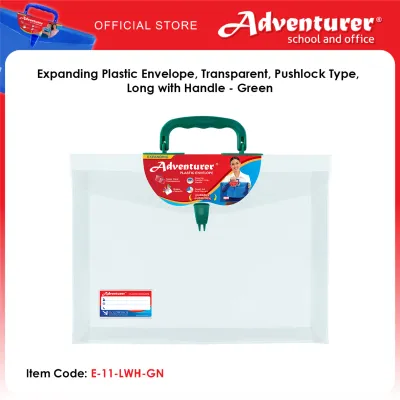
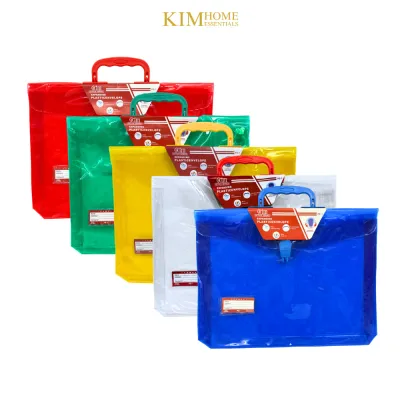
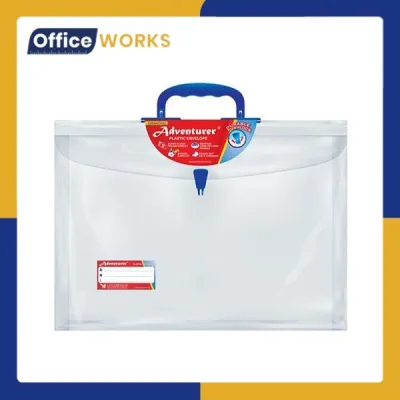
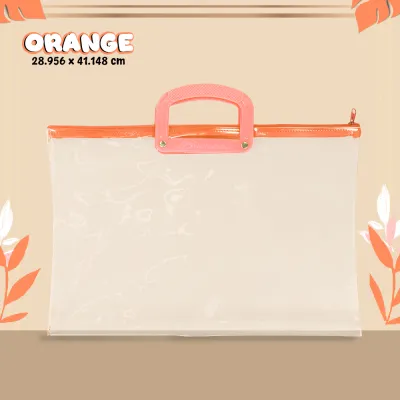
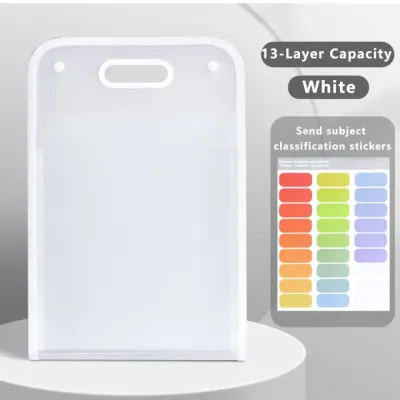
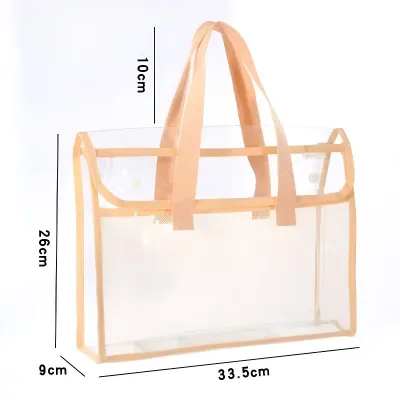
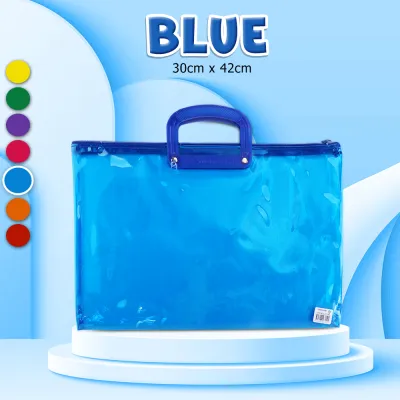
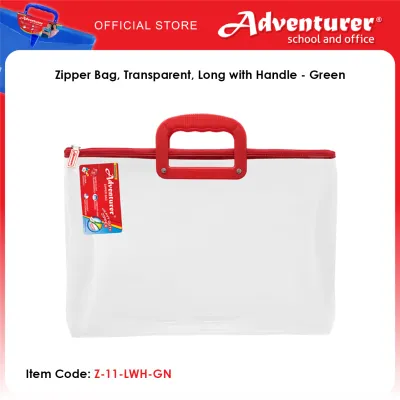
Prices are valid at publication and may change. Please refer to the product page for the latest price.
Smaller papers, such as A5 notebooks, receipts, barangay clearances, or identification cards, present a different challenge. Placing these compact items into a large A4 envelope causes them to slide around, gather at the bottom, and crease under their own weight. If you frequently carry smaller documents, opt for a dedicated A5-sized transparent envelope. This keeps your compact papers neatly aligned and prevents them from shifting during travel.
Verify Internal Capacity and Usable Space
When browsing online marketplaces or local stationery stores, the dimensions listed are almost always the external measurements. The actual usable space inside a transparent envelope is always smaller than these advertised numbers. Heat-sealed edges, stitched fabric borders, and handle rivets all eat into the interior cavity. Before buying, subtract at least 10 millimeters from both the height and width of the external dimensions to estimate the true usable area.

The thickness of your document stack determines whether you need a flat envelope or an expanding gusset. A flat plastic envelope is ideal for holding up to 20 loose sheets of paper. However, if you are carrying thick school modules, multi-page tax filings, or bound reports, a flat design will stretch, warp, and potentially split at the seams. For larger bundles, look for a transparent envelope with an expandable gusset of 20 to 30 millimeters.
The closure mechanism also plays a critical role in defining usable space. Envelopes with snap buttons, slide zippers, or hook-and-loop fasteners require clearance at the top. If your documents sit too high, the button or zipper can pinch, tear, or indent the top edge of the paper when closed. Always ensure that the height of your document stack sits at least 15 millimeters below the closure line to maintain a safe, clean seal.
Avoid Common Sizing and Fit Mistakes
One of the most frequent mistakes is purchasing an envelope that matches the exact dimensions of your documents. For example, buying an envelope with an internal width of exactly 210 millimeters for A4 papers makes insertion frustrating. You will find yourself forcing the paper inside, which bends the corners and wrinkles the edges. Always build in a safety margin of 5 to 10 millimeters on all sides to allow your documents to slide in effortlessly.
Another overlooked detail is the physical placement of the handle. On many transparent envelopes, the handle is attached via plastic rivets or heat welds that protrude into the main compartment. If you slide a delicate document all the way to the top, these hard plastic parts can press against the paper, leaving permanent indentations. When organizing important certificates, position them so they do not make direct contact with the handle’s mounting points.
Lastly, do not assume that all envelopes labeled “A4” are built to the same standard. Some manufacturers design their envelopes to fit only loose sheets of paper, while others make them slightly larger to accommodate plastic clear books, folders, or ring binders. If you plan to carry pre-organized folders inside your transparent envelope, you must measure the outer dimensions of the folder itself rather than the paper inside it.
Account for Material and Design Constraints
The material composition of your transparent envelope directly influences its internal capacity and flexibility. Most transparent envelopes are made from polypropylene (PP) plastic, which varies in thickness and rigidity. Thicker, heavy-duty plastic offers excellent protection against tropical humidity and sudden rain splashes, but it does not stretch. If you choose a highly rigid envelope, you must be precise with your measurements, as the stiff walls will not flex to accommodate an oversized document stack.
The construction of the edges also affects the interior space. Envelopes with heat-welded seams are generally sleeker but can split if overfilled. On the other hand, envelopes with fabric-reinforced borders offer superior durability, but the stitched fabric trim reduces the internal width by several millimeters. When choosing a fabric-bordered model, pay close attention to the inner seam line to ensure your documents will still fit without binding.
Flexible, soft plastic sleeves offer a bit more leeway when it comes to stuffing extra papers inside, but they provide less structural support. Over time, soft plastic can warp under high temperatures or cling to printed ink in humid environments. To prevent ink transfer and maintain document integrity, look for acid-free, non-stick polypropylene envelopes. These materials ensure that your printed certificates and reports remain clean, legible, and free from damage.
Frequently Asked Questions (FAQ)
Can I fit a padded folder inside a standard A4 transparent envelope with a handle?
A standard, flat A4 transparent envelope is designed for loose sheets and will not accommodate a padded folder or a multi-ring binder. Padded folders add substantial thickness and width, which exceeds the flat capacity of standard envelopes. To carry a folder, you will need an expanding transparent envelope with a gusset of at least 30 millimeters, or a larger legal-sized carrier that provides the necessary physical clearance.
Will the handle mechanism damage my certificates or delicate papers?
Yes, the plastic rivets or heat-sealed joints used to attach the handle can press against delicate papers and cause creases or indentations. To protect valuable certificates or diplomas, place them inside a thin, acid-free plastic sleeve or a clear sheet protector before sliding them into the envelope. This extra layer acts as a shield against any internal friction points or pressure from the handle mechanism.

Community discussion
Share your experience or ask a question. Comments are reviewed before publication.