
Choosing between the Uni Kuru Toga Advance and the original Kuru Toga depends entirely on your specific writing habits and precision needs. If you write with heavy pressure and require consistently sharp lines for detailed work, the Advance’s updated mechanism may serve you better. However, if you prefer a classic grip feel, need specific lead diameters, or want a more traditional rotation pace, the original model might be the right fit. Since individual hand feel varies, the best approach is to compare their mechanical specifications on the packaging and test their physical feedback before committing to one.
Understanding the Auto-Rotation Mechanism
The core innovation of the Kuru Toga line is its internal lead-rotation engine, designed to solve the common issue of uneven lead wear. When writing with a standard mechanical pencil, the lead wears down at an angle, creating a chisel tip that produces thick, inconsistent lines and easily breaks. The Kuru Toga engine addresses this by utilizing a spring-loaded clutch that rotates the lead slightly every time the pencil is lifted from the paper. This continuous rotation ensures that the lead wears down evenly into a symmetrical, cone-shaped point.
To understand how each model sharpens the lead, you should check the packaging or manufacturer specifications for the exact rotation trigger conditions. The original Kuru Toga features a standard engine that rotates the lead by a specific increment with each stroke. This traditional rotation pace is optimized for standard writing styles, requiring a certain number of lifts from the paper to complete a full rotation. If you write in cursive or make long, continuous strokes, this slower rotation allows the lead to maintain a stable edge without rotating too rapidly.
Products mentioned in this guide
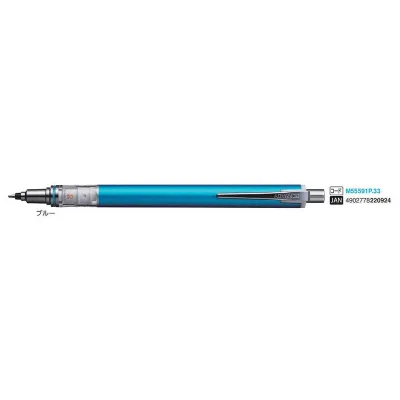
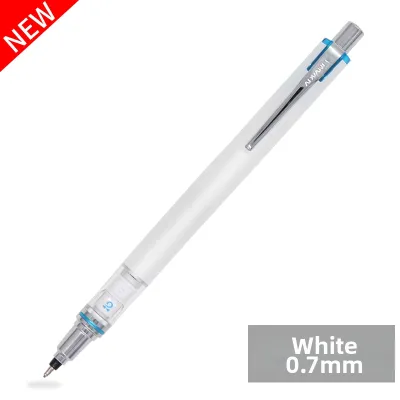
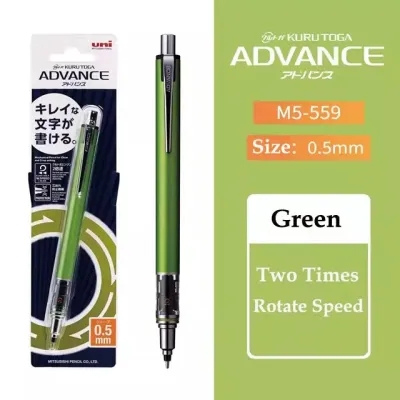
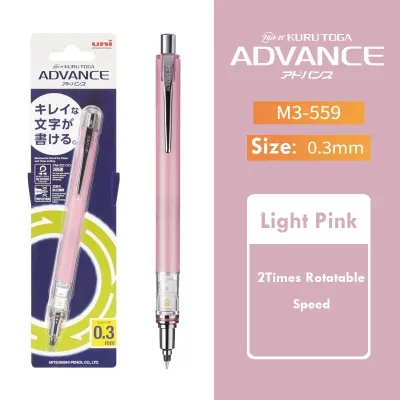
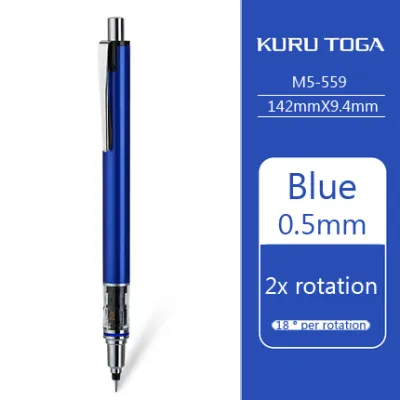
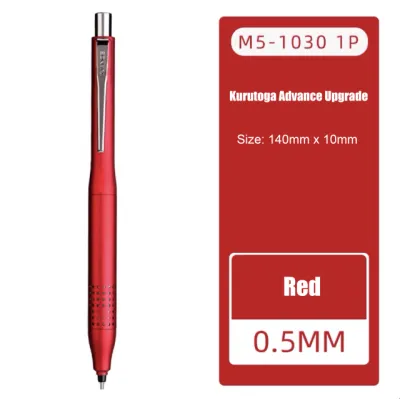
Prices are valid at publication and may change. Please refer to the product page for the latest price.
In contrast, the Kuru Toga Advance is engineered with a double-speed rotation mechanism, often referred to as the W-Speed engine. This updated design rotates the lead twice as fast per stroke compared to the original model. By doubling the rotation angle with each lift, the Advance keeps the lead tip significantly sharper even during brief, rapid strokes. This makes it highly effective for print writing, block lettering, and intricate character drawing where the pencil frequently leaves the paper.
You can observe the internal gear structure of these pencils through the transparent grip sections of many models. The original Kuru Toga typically displays a three-geared mechanism with a central indicator, often shaped like a logo, that spins as you write to confirm the rotation is active. The Advance model features a more compact, enclosed gear system that is less visible but operates with tighter tolerances. Reviewing these stated rotation angle increments on the product documentation helps you understand how each model manages lead wear.
These different rotation speeds directly impact lead dulling and line uniformity during continuous writing sessions. If you use soft lead grades, such as 2B, the lead wears down much faster than harder grades like HB. In the humid climate of the Philippines, where paper can absorb moisture and increase friction, soft leads are highly favored for their smooth, dark lines. The faster rotation of the Advance prevents soft leads from flattening out too quickly, maintaining a crisp line width throughout your notes.
Comparing the Writing Experience and Grip
Beyond the internal gears, the physical construction of the pencil plays a critical role in your daily writing comfort. When comparing the two models, pay close attention to the barrel materials, overall weight, and center of gravity. The original Kuru Toga is widely known for its lightweight, plastic body, which keeps the hand nimble during quick note-taking. The center of gravity is balanced toward the middle, offering a familiar feel that closely resembles a traditional wooden pencil.

The Kuru Toga Advance introduces a slightly different weight distribution and a more streamlined body profile. While still primarily constructed from durable plastics, the Advance often incorporates a metal pocket clip and a sliding lead sleeve mechanism. This sliding sleeve retracts into the nose cone as the lead wears down, protecting the lead from breakage under heavy writing pressure. This added hardware shifts the balance slightly, which some writers find provides a more grounded and controlled feel on the page.
Grip design is another essential factor, especially under different hand conditions and holding postures. The standard original Kuru Toga features a smooth, translucent plastic grip section with subtle ridges to prevent slipping. For writers in tropical environments, high humidity can cause fingers to slide down smooth plastic during long study sessions or board exam preparation. If you experience sweaty hands, you may want to look for premium variants of either model that offer textured rubber or knurled metal grips.
The standard Advance model features a smooth, opaque grip that matches its sleek, modern aesthetic. Because it lacks deep texturing, it relies on its ergonomic contours to keep your fingers in place. If you prefer a highly tactile grip, the original Kuru Toga’s ribbed section might feel more secure, whereas the Advance appeals to those who prefer a clean, uninterrupted surface. Testing both models in hand allows you to evaluate how the grip materials interact with your skin over extended periods.
During a test write, you should also note the observable feedback of each pencil, including the scratching sensation on paper and lead deployment smoothness. The original Kuru Toga has a slight vertical play in the tip, which is a natural byproduct of the spring-loaded rotation mechanism. Some writers describe this as a subtle “spongy” feel when the pencil first touches the paper. The Advance model refines this mechanism to minimize the vertical movement, offering a firmer, more direct connection to the writing surface.
Additionally, the tactile resistance of the click mechanism differs between the two. The original model provides a distinct, audible click when advancing the lead, giving clear feedback that a new segment has been deployed. The Advance features a smoother, slightly quieter click that requires less effort. Observing these subtle differences in physical feedback will help you determine which pencil feels more natural for your writing style.
Lead Sizes, Refills, and Practical Use Cases
To ensure the pencil fits your daily routine, verify the supported lead diameters and hardness grades printed on each model’s packaging. The original Kuru Toga is highly versatile, often available in a wide range of lead sizes including 0.3mm, 0.5mm, and 0.7mm. This broad compatibility makes it easy to find a model that matches your preferred line thickness. Whether you need a thick 0.7mm lead for bold, everyday writing or a fine 0.3mm lead for detailed drafting, the original lineup has options to suit your needs.
The Kuru Toga Advance is also available in multiple lead sizes, with 0.3mm and 0.5mm being the most common. Because the Advance rotates the lead twice as fast, it is particularly well-suited for ultra-fine writing tasks. If you use a 0.5mm lead in the Advance, the rapid rotation keeps the line looking as thin and precise as a standard 0.3mm pencil, without the fragility associated with thinner leads. This makes the Advance an excellent choice for technical sketching, mathematical formulas, and writing small characters in compact planners.
Matching these rotation behaviors to your specific use cases is key to a satisfying writing experience. For daily journaling or essay writing where you write in continuous, cursive strokes, the original Kuru Toga’s slower rotation is highly effective. It allows the lead to wear down at a moderate pace that complements flowing script. For exam answering, where you must quickly fill in bubbles or write print letters under tight time constraints, the Advance’s fast rotation and sliding sleeve prevent lead breakage and keep your lines consistently sharp.
Long-term maintenance is another practical consideration when choosing a mechanical pencil. Before purchasing, check the availability and packaging codes for replacement leads and erasers to ensure convenient upkeep. Both pencils use standard lead refills, but using high-quality refills designed for rotating pencils can optimize performance. These specialized leads often feature a softer core surrounded by a harder outer shell, which enhances the sharpening effect of the Kuru Toga engine.
The erasers housed under the push button also require attention, as they can vary in size and shape between different models. The original Kuru Toga and the Advance may use different replacement eraser codes, which are typically printed on the back of the product card. Ensuring you can easily source the correct eraser refills locally or online will prevent frustration when the original eraser wears down. Keeping a stock of the correct consumables ensures your pencil remains a reliable tool for years to come.
Decision Framework: Which Kuru Toga Should You Buy?
To make your final decision, establish a clear framework based on your writing style, pressure, and environmental conditions. Choose the Kuru Toga Advance if your primary need is ultra-fine, highly consistent lines and your writing rhythm consists of short, print strokes. The double-speed rotation mechanism and the protective sliding sleeve make the Advance ideal for those who write quickly, apply heavier pressure, or work on detailed technical drawings. It is the preferred option if you want to maximize the sharpening effect on softer leads like 2B.
Choose the original Kuru Toga if you prefer a classic ergonomic feel, a wider selection of body styles, or a more traditional auto-rotation pace. The original model is excellent for writers who use a mix of print and cursive, prefer a lightweight pencil with a familiar balance, or want a highly visible gear mechanism. It is also the better choice if you prefer a slightly softer, springier feel when the pencil tip contacts the paper, or if you require specific lead diameters like 0.7mm.
Before making your purchase, always cross-check the specific model’s packaging to verify the exact specifications, including lead size, grip material, and replacement part codes. If possible, visit a local stationery store to hold both models and feel their weight distribution. By matching the pencil’s mechanical features to your personal writing habits, you can select the Kuru Toga that will provide the most comfortable and precise writing experience for your daily tasks.
Frequently Asked Questions (FAQ)
Do both pencils use the same replacement erasers and lead refills?
While both the original Kuru Toga and the Kuru Toga Advance are compatible with standard mechanical pencil lead refills of the matching diameter, their replacement erasers may differ. The internal design of the push-button cap and the eraser holder can vary between the two models, meaning they often require different eraser part numbers. To avoid purchasing the wrong size, always check the specific consumable codes printed on the back of the pencil’s packaging before buying replacements. Using the manufacturer’s recommended eraser refills ensures a secure fit and prevents the eraser from slipping inside the barrel during use.
Can the auto-rotation mechanism be turned off or adjusted?
The auto-rotation mechanism in both the original Kuru Toga and the Kuru Toga Advance is entirely mechanical and built directly into the internal gear structure of the pencil. There is no switch, button, or adjustment dial to disable or alter the rotation speed. The lead will automatically rotate whenever pressure is applied and released from the tip during writing. If you find the rotating action or the slight vertical movement of the tip distracting, you may want to consider a standard, non-rotating mechanical pencil instead, as the Kuru Toga’s core feature cannot be turned off.

Community discussion
Share your experience or ask a question. Comments are reviewed before publication.