
The quest for the perfect mechanical pencil often leads to a single, highly influential technology: the lead-rotation engine. Developed by Uni-ball (Mitsubishi Pencil Company), the Kuru Toga lineup has long been celebrated for solving the age-old problem of the “flat spot”—the slanted edge that develops as you write, causing your lines to grow thick, fuzzy, and prone to smudging. By rotating the lead slightly every time you lift the pencil from the paper, the Kuru Toga ensures a consistently sharp point. However, the introduction of the premium Uni Kuru Toga Dive has completely shifted the landscape, introducing an automated lead-extension system that sets it apart from its manual-click predecessors.
Choosing between the high-end Kuru Toga Dive and the classic, budget-friendly Standard Kuru Toga models requires looking closely at how you write, how long you write, and how much you are willing to invest in your stationery setup. While the Dive represents the absolute pinnacle of mechanical pencil engineering, the Standard lineup remains an incredibly practical, versatile, and accessible choice for students and professionals alike.
Quick Verdict: Which Kuru Toga Should You Choose?
If you prioritize an uninterrupted, completely automated writing flow and have the budget for a luxury writing instrument, the Uni Kuru Toga Dive is the ultimate choice. It is designed specifically for those who engage in long, continuous writing or drafting sessions and want to eliminate the minor but frequent distraction of clicking the pencil cap to extend the lead. The Dive handles the entire process for you, adjusting to your writing pressure and maintaining a perfect tip length from the moment you remove its magnetic cap.
Products mentioned in this guide
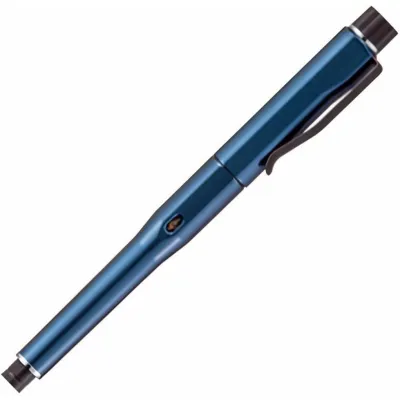
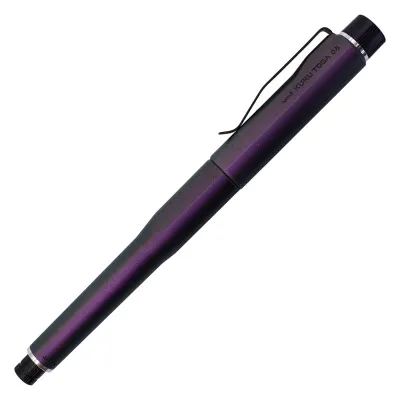
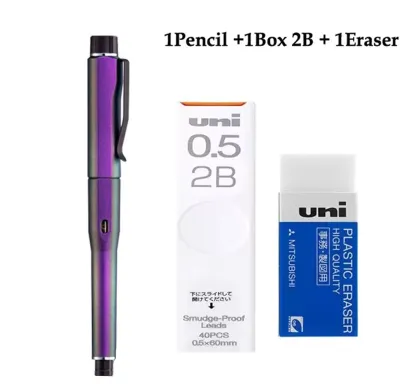
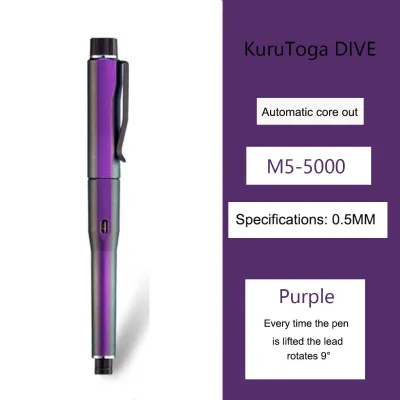
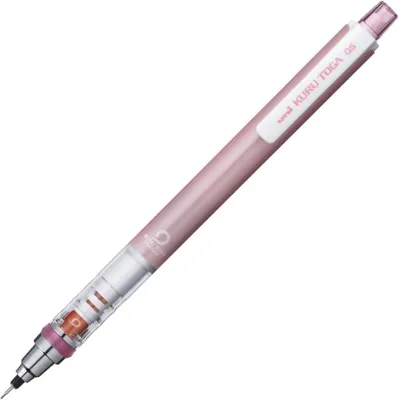
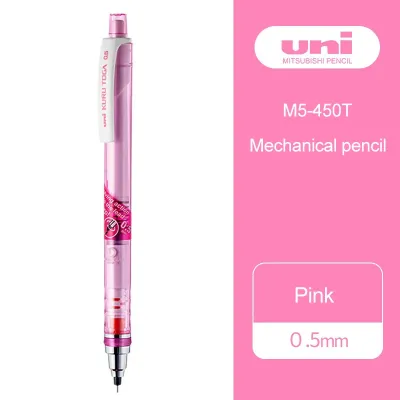
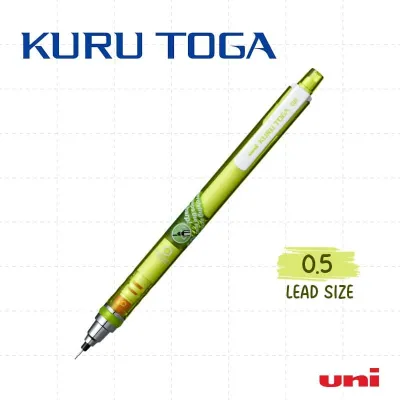
Prices are valid at publication and may change. Please refer to the product page for the latest price.
Conversely, you should choose a model from the Standard Kuru Toga lineup—such as the Standard, Advance, Roulette, or Alpha Gel Switch—if you prefer a lighter pencil, want specific grip materials like knurled metal or soft gel, or simply want excellent performance at a highly accessible price point. The Standard models require you to manually click the top button to extend the lead when it wears down, but they offer a wider variety of physical designs that can be tailored to your specific ergonomic preferences.
Before making your decision, you must verify your writing habits and lead preferences. If you primarily use very soft leads, such as 2B or 3B, or if you apply exceptionally heavy writing pressure, these factors will interact differently with the Dive’s automated mechanism than they will with a manual clicker. Soft leads wear down much faster, which can challenge auto-advance systems, whereas standard manual clickers give you absolute, direct control over lead exposure regardless of the lead grade you choose.
Additionally, your physical writing environment plays a role in how these pencils perform. In the Philippines, high tropical humidity can make paper fibers slightly damp, which increases friction and accelerates lead wear. If you often write in non-airconditioned classrooms or offices, a standard model with a textured grip might be more practical, whereas the Dive offers a highly sophisticated, self-adjusting experience best suited for controlled environments.
The Core Mechanism: Auto-Advance vs. Manual Clicking
The fundamental difference between the Uni Kuru Toga Dive and the Standard Kuru Toga models lies in how they deploy lead to the paper. While both families of pencils utilize an internal engine to rotate the lead, they handle lead advancement in entirely different ways. Understanding this mechanical distinction is key to choosing the pencil that matches your natural writing rhythm.

The Uni Kuru Toga Dive features a highly sophisticated, dual-action mechanism that combines the classic rotation engine with an automated lead-advance system. Inside the Dive, a patented mechanism utilizes the physical motion of writing—specifically, the downward pressure and subsequent release as you lift the pencil between strokes—to turn a micro-gear. This gear gently pushes the lead forward by a fraction of a millimeter at regular intervals. Because this happens continuously as you write, the lead never wears down to the metal pipe guide, allowing you to write page after page without ever pausing to click.
Furthermore, the Dive features a physical adjustment dial with five distinct settings, allowing you to fine-tune how much lead is deployed per stroke based on your writing pressure and the hardness of your lead. The magnetic cap of the Dive is also an active component of the deployment mechanism. When you cap the pencil, a magnetic catch aligns the internal components. Upon uncapping, this magnetic pull draws the lead forward to a precise, pre-determined starting length. This means you never have to click the pencil even once to begin writing after a break, creating a completely touchless experience from storage to paper.
In contrast, Standard Kuru Toga models rely on a traditional manual click mechanism to extend the lead. While you write, the Kuru Toga engine rotates the lead to maintain a sharp, conical point, but it does not push the lead forward. Once the exposed lead wears down to the protective metal or plastic pipe, you must pause your writing, shift your hand position, and press the top cap to feed more lead. Some advanced standard models, like the Kuru Toga Advance, feature a “sliding pipe” that retracts as the lead wears down, extending the writing time between clicks, but the fundamental act of deploying new lead remains manual.
This mechanical difference has a profound impact on your daily writing workflow. For fast-paced note-taking during university lectures, professional meetings, or intense board exam preparation, the Dive’s auto-advance mechanism prevents any disruption to your train of thought. You can focus entirely on the content of your notes without the physical interruption of clicking. On the other hand, many writers find comfort in the deliberate, controlled pacing of manual clicking. The tactile click provides a natural pause in writing, and standard models give you immediate, unambiguous control over exactly how much lead is exposed at any given moment.
Writing Experience and Lead Sharpness Maintenance
The feel of a mechanical pencil on paper is a highly subjective experience, heavily influenced by how the internal mechanism interacts with your writing style. Both the Dive and the Standard models excel at maintaining a sharp point, but they deliver this benefit through slightly different experiences on the page.
At the heart of both pencils is the Kuru Toga rotation engine, which rotates the lead slightly with every lift of the pencil. In standard models, this rotation occurs at either 9 degrees per stroke (taking 40 strokes for a full rotation) or 18 degrees per stroke in the “double-speed” engines found in the Advance models (taking only 20 strokes for a full rotation). The Dive utilizes a highly calibrated version of this engine designed to work in perfect harmony with its auto-advance system. By keeping the lead sharp, both models prevent the uneven wear that leads to sudden lead breakage, thick smudgy lines, and lead dust accumulation on your paper.
However, lead grade compatibility introduces a distinct point of comparison. Standard Kuru Toga models are highly forgiving of different lead hardness grades. Whether you prefer a hard, clean HB lead or a dark, buttery 2B lead, you can easily manage the wear rate by clicking the cap whenever necessary. In the Philippines, where high tropical humidity can make paper fibers slightly damp and soft, many writers prefer darker, softer leads like 2B because they glide more smoothly across the page. With the Kuru Toga Dive, using a soft 2B lead requires careful calibration of the auto-advance adjustment dial. Because soft lead wears down rapidly, you must set the dial to a higher deployment setting to prevent the protective pipe from scraping against the paper. If you switch back to a harder HB or H lead, you must readjust the dial to a lower setting to prevent the lead from advancing too quickly and snapping.
Writing pressure and angle also play a critical role in how these mechanisms perform. The Kuru Toga engine—and specifically the Dive’s auto-advance system—requires a certain amount of vertical pressure and a relatively steep writing angle (typically 60 to 90 degrees) to engage the internal spring and gears. If you write with an exceptionally light touch, or if you hold your pencil at a very shallow, slanted angle, you may find that the Dive’s auto-advance does not trigger consistently, causing the lead to wear down to the pipe. Standard models are slightly more forgiving of lighter writing pressure, as the rotation engine still operates, and any failure to advance is easily corrected with a quick manual click.
Ultimately, the smoothness of your writing experience depends on the exact combination of lead hardness, paper texture, and your physical writing angle. When trying either pencil for the first time, it is highly recommended to perform an observable trial: write a few sentences on your preferred paper type and check for consistent line width, lead stability, and whether the protective pipe makes contact with the paper. This simple test will help you determine if the automatic rotation and advancement settings are properly aligned with your natural writing posture.
Build Quality, Ergonomics, and Grip Options
The physical design and materials of a mechanical pencil directly affect your comfort during long writing sessions. While the Dive represents a singular, premium design philosophy, the Standard Kuru Toga lineup offers a vast array of ergonomic options tailored to different hand shapes and grip preferences.
The Kuru Toga Dive is constructed with premium materials, featuring a high-quality resin body with a sophisticated, matte finish that feels substantial in the hand. One of its most striking design features is its magnetic cap, which protects the retractable lead pipe when the pencil is not in use. The grip section of the Dive is slightly wider than that of a basic mechanical pencil, featuring a subtle, molded texture designed to provide a secure hold without being abrasive. However, the Dive does not offer alternative grip materials, meaning you are locked into its default resin grip regardless of your personal preferences.
The Standard Kuru Toga lineup, by contrast, is celebrated for its incredible diversity of grip styles and materials. If you suffer from hand fatigue or writer’s cramp, the Kuru Toga Alpha Gel Switch features a squishy, shock-absorbing silicone grip that cushions your fingers during long writing sessions. For those who prefer a solid, professional feel, the Kuru Toga Roulette offers a knurled metal grip and a low center of gravity, which provides exceptional control and prevents the pencil from slipping—a major advantage for writers with sweaty hands in warm, humid tropical climates. The Kuru Toga Advance Upgrade features a sleek, punched metal grip that offers a modern, minimalist aesthetic.
Weight and balance are equally important considerations. The Kuru Toga Dive is a relatively heavy pencil, weighing approximately 19 grams. This weight is concentrated slightly toward the middle and rear when the cap is posted, but when writing uncapped, it offers a beautifully balanced, solid feel that guides your hand across the page. Standard models are generally much lighter, with the basic plastic Kuru Toga Standard weighing only about 9 grams, and the metal-grip Roulette weighing around 15 grams.
If you prefer a featherlight pencil that requires minimal effort to move, a standard model may be more comfortable for extended use. However, if you prefer a weightier instrument that feels substantial and premium, the Dive’s balance is unmatched. We advise readers to consider their personal hand fatigue during long study or work sessions, as a heavier pencil can sometimes cause quicker fatigue if you hold it with a tight, tense grip.
Price, Maintenance, and Long-Term Value
When evaluating the Kuru Toga Dive against the Standard models, the financial investment and long-term maintenance requirements are critical factors that will shape your ownership experience.
The initial investment represents the widest gap between these two options. The Kuru Toga Dive sits firmly in the premium luxury tier, often costing several thousand Philippine pesos (‛3,000 to ‛5,000+ depending on importer markups and color rarity). It is designed as a collector’s item and a high-end tool for stationery enthusiasts. Standard Kuru Toga models, on the other hand, are highly accessible. A basic Kuru Toga Standard can be purchased for a budget-friendly price (often under ‛300), while mid-range models like the Roulette or Advance Upgrade typically range from ‛500 to ‛900. This makes the Standard models an easy, low-risk purchase for students or everyday office use.
Lead consumption and refills also present minor differences in long-term value. Because the Dive automatically advances the lead to a highly controlled, minimal exposure length, it significantly reduces the likelihood of lead breakage. When writing with a standard pencil, exposing too much lead via manual clicking often results in the tip snapping under pressure, leading to wasted lead. However, the Dive’s complex internal mechanism means that using low-quality, brittle lead can lead to internal jams that are difficult to clear. To ensure smooth operation, it is highly recommended to use high-quality refills, which may carry a slight price premium.
In terms of longevity, the standard Kuru Toga models are remarkably resilient despite their lower price point. The Kuru Toga Roulette, with its metal barrel and robust internal gears, can easily withstand years of daily use in a backpack or pencil case. The Kuru Toga Dive, while built to incredibly high standards, features a complex assembly of magnets, springs, and micro-gears. This complexity makes it more vulnerable to drop damage. If a standard pencil falls onto a hard concrete floor, the worst-case scenario is usually a bent metal pipe that can be replaced cheaply. If the Dive suffers a hard fall, the impact can misalign the delicate auto-advance gears or damage the magnetic capping mechanism, resulting in an expensive loss.
Availability and replacement parts are another practical consideration for writers in the Philippines. Standard Kuru Toga models and their corresponding eraser refills are widely available in major local bookstores, department stores, and online marketplaces. If you lose an eraser cap or need to replace a worn-out eraser, finding parts is simple and inexpensive. The Kuru Toga Dive is much more exclusive, often requiring purchase from specialized online stationery importers or specialty shops in major metropolitan areas. Replacement parts for the Dive are virtually non-existent, meaning that if you damage the magnetic cap or the delicate internal tip, repairing or replacing the unit can be a costly and difficult endeavor.
Frequently Asked Questions (FAQ)
Can I use standard 0.5mm lead refills in the Kuru Toga Dive?
Yes, you can use any standard 0.5mm lead refills in the Kuru Toga Dive. However, for the absolute best performance of both the rotation engine and the auto-advance mechanism, it is highly recommended to use high-quality leads designed specifically for Kuru Toga pencils or premium polymer leads. These leads feature a unique structure with a harder core and a softer outer layer, which helps the rotation engine carve a perfect conical point while minimizing lead dust that could clog the delicate auto-advance gears.
Does the Kuru Toga Dive mechanism jam more easily than standard models?
Because the Kuru Toga Dive features a highly complex, multi-gear auto-advance mechanism alongside its rotation engine, it is naturally more sensitive to lead dust, debris, and broken fragments than a basic mechanical pencil. If you use low-quality, brittle lead that snaps inside the sleeve, or if you force multiple leads into the chamber at once, a jam can occur. To prevent jams, always clear any broken lead immediately using a thin cleaning pin (typically found attached to the underside of the eraser on many standard mechanical pencils) and avoid overfilling the lead reservoir—keeping only two to three spare leads inside the chamber at any given time is ideal.

Community discussion
Share your experience or ask a question. Comments are reviewed before publication.