
Selecting the right coloring tools for toddlers and preschoolers requires balancing creative freedom with practical cleanup. When young children explore their artistic boundaries, ink inevitably finds its way onto hands, clothes, and household surfaces. Choosing high-quality washable markers designed specifically for early childhood development ensures that these creative sessions remain joyful rather than stressful. By focusing on water-soluble formulations, durable tip designs, and ergonomic barrels, you can provide a safe, engaging, and mess-free drawing experience for your little ones.
In tropical climates where high humidity can affect how ink dries on paper, selecting the correct marker type becomes even more critical. Standard drawing paper can quickly saturate, and cheap inks may bleed through or run under humid conditions. Understanding the physical and chemical characteristics of children’s markers allows you to make an informed purchase that protects your home while supporting your child’s fine motor skill development.
Understanding "Washable" Claims and Cleaning Expectations
The term “washable” is widely used on children’s stationery packaging, but its practical performance depends heavily on the chemical formulation of the ink. Most standard markers use alcohol-based or permanent pigments that bind chemically to fibers and surfaces. In contrast, high-quality washable markers utilize water-soluble acid dyes or polymeric colorants. These colorants are designed to remain suspended in a water-based solvent, meaning they do not form permanent chemical bonds with organic fibers like cotton or skin cells. When exposed to water and mild detergents, the dye molecules easily detach from the surface and dissolve into the wash water.
Products mentioned in this guide
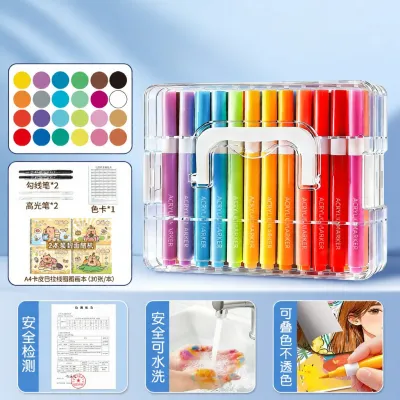
Prices are valid at publication and may change. Please refer to the product page for the latest price.
Cleaning outcomes vary significantly depending on the material the ink contacts. On human skin, the natural oils and constant shedding of outer skin cells actually assist in preventing the water-soluble dye from penetrating deeply. A simple wash with lukewarm water and mild baby soap is usually sufficient to remove fresh marks. On cotton clothing and other washable fabrics, the porous fibers will absorb the liquid ink, but because the dye is water-soluble, a standard machine wash cycle will typically release the stain. However, non-porous surfaces like plastic play tables, sealed wooden highchairs, and glazed ceramic tiles are the easiest to clean, often requiring nothing more than a damp microfiber cloth.
Porous household surfaces present a much greater challenge. Unsealed wood, matte-painted walls, drywall, and delicate wallpapers can absorb the water-soluble ink deeply into their structures. Once the ink penetrates these porous materials, it can become trapped, making complete removal difficult without damaging the underlying surface. For this reason, parents should always distinguish between surface types and establish clear boundaries for where marker play is permitted.
The timing of your cleanup efforts is the single most critical factor in preventing permanent stains. Fresh, wet ink is incredibly easy to dissolve and wipe away because the water-soluble dyes have not yet settled or dried. Once the ink dries completely, the colorants solidify and bind more tightly to the material’s fibers or pores. In warm, humid environments, dried stains can become even more stubborn if they are exposed to heat, such as direct sunlight or hot laundry water, which can bake the dye into the fabric. Prompt action—ideally washing the stained item or skin immediately after the coloring session—ensures the highest rate of successful stain removal.
Key Design Features for Little Hands
Toddlers and preschoolers do not write or draw with the same hand control as older children or adults. Instead of a refined finger grip, very young children typically use a palmar grasp, holding the marker with their entire fist and applying downward force with their whole arm. This physical behavior requires specific marker tip designs. Standard fine-point markers will quickly bend, fray, or retract into the barrel under this heavy pressure. Look for broad, conical-tipped markers (often referred to as chisel or bullet tips). The wide, tapered base of a conical tip distributes the downward force evenly, preventing the tip from being pushed back into the plastic barrel even during enthusiastic “stamping” motions.

The physical dimensions of the marker barrel play a vital role in supporting your child’s developing hand muscles. Jumbo or ultra-thick barrels are ideal for toddlers aged one to three, as their larger diameter is much easier for small hands to grasp securely without causing muscle fatigue. As children transition into preschool (ages three to five), you can introduce medium-sized or triangular-shaped barrels. Triangular grips naturally guide the fingers into a proper tripod grasp, helping to prepare them for holding pencils when they enter school.
Another common challenge with young artists is their tendency to leave markers uncapped during play. Standard markers can dry out within hours if left open, rendering them useless. High-quality children’s markers often feature anti-dry ink formulations or specialized cap-off technology that allows the marker to remain uncapped for several days without drying out. Additionally, look for caps that feature ventilated safety designs. These caps have small holes or channels running through them, ensuring that if a child accidentally swallows a cap, air can still pass through the windpipe while emergency medical help is sought.
When selecting a marker set, the number of colors included can influence both your child’s focus and the level of mess in your home. While a massive set of 64 colors might seem appealing, it often overwhelms toddlers and preschoolers, leading to decision fatigue. A large number of open markers also increases the likelihood of caps being lost and ink drying out. For beginners, a basic set of 8 to 12 primary and secondary colors is highly recommended. This limited palette is more than enough to teach color recognition and basic drawing skills while keeping the cleanup process manageable.
Verifying Safety Labels and Age Recommendations
Because toddlers and preschoolers frequently explore their world through touch and taste, verifying the safety credentials of any stationery product is paramount. Children often mouth the tips of markers or draw directly on their own skin, making chemical safety a non-negotiable factor. When shopping for marker sets, look for recognized non-toxic certification seals on the packaging. The most common international standard is the AP (Approved Product) Seal from the Art and Creative Materials Institute (ACMI), which certifies that the product has been toxicologically evaluated and contains no materials in sufficient quantities to be toxic or injurious to humans. Other reliable marks include the CE mark, which indicates compliance with European toy safety standards (specifically EN71), or local food and drug administration clearances.
Carefully inspect the packaging for ingredient disclosures and avoid any products that contain harsh chemical solvents, strong chemical odors, or unlisted additives. High-quality children’s markers are strictly water-based and should have virtually no scent, or only mild, food-grade scents if they are specifically marketed as scented markers. Avoid alcohol-based markers, permanent markers, or solvent-based paint pens, as these emit volatile organic compounds (VOCs) that can irritate young respiratory systems and cause skin irritation upon contact.
It is also essential to understand the distinction between age recommendations on packaging. Markers labeled for toddlers (often ages 1 to 3) are designed with ultra-safe, chunky components, secure end-plugs that cannot be pried off, and highly washable inks. Markers labeled for ages 3 and up (preschoolers and older) may have smaller caps, thinner barrels, or slightly different ink formulations that are still non-toxic but may not wash out of fabrics as effortlessly. Always match the marker set to your child’s developmental stage rather than buying ahead, as younger children face a higher risk of choking on small caps or swallowing ink from finer tips.
Regardless of how safe or non-toxic a marker set claims to be, adult supervision remains the most effective safety measure. An adult should always be present during coloring sessions to guide proper usage, prevent children from putting markers in their mouths, and ensure that caps are replaced correctly. Supervision also provides an excellent opportunity to engage with your child, helping them learn color names and encouraging their creative expression in a safe, controlled environment.
How to Evaluate and Compare Marker Sets
When shopping for washable markers in local department stores or through online marketplaces, having a structured evaluation framework helps you cut through marketing claims and find the best value. Before making a purchase, run through a quick pre-purchase checklist. Verify that the packaging explicitly states “washable” or “ultra-washable” rather than just “water-based.” Check for physical indicators of quality, such as a sturdy plastic barrel, a firmly seated tip, and clear safety certification seals. Reading user reviews specifically filtering for keywords like “washability,” “stain removal,” and “toddler durability” can provide valuable real-world insights into how the markers perform on different fabrics and skin types.
The packaging format of the marker set is another practical consideration that affects daily organization and product longevity. Basic cardboard boxes are common and inexpensive, but they tend to disintegrate quickly, especially in humid tropical climates or when exposed to damp hands. Once the box tears, markers and caps easily go missing. Investing in sets that come in durable plastic tubs, reusable zippered pouches, or desktop caddies is highly beneficial. These sturdy storage solutions keep the markers organized, make it easy to see if any caps are missing at the end of a session, and protect the markers from environmental moisture.
Be cautious of marketing traps that use confusing terminology to mimic washability. Some products are labeled as “erasable,” “dustless,” or “peel-off.” Erasable markers typically require a specific physical eraser or friction to remove, which is too complex for a toddler to manage and does not protect clothing from stains. Dustless markers are often chalk-based and not suitable for paper drawing, while peel-off variants are designed for glass or non-porous windows and can leave stubborn residues on fabrics. Stick to dedicated water-soluble washable markers for general paper coloring.
If you are planning to buy markers in bulk for a preschool classroom, a daycare, or a large family, it is wise to purchase a small test pack first. This allows you to conduct a simple home test to verify the ink’s performance. Draw a few lines on a scrap piece of cotton fabric and a small patch of your own skin, let the ink dry for an hour, and then attempt to wash it out using your regular laundry detergent and mild soap. This hands-on trial ensures the product meets your cleaning standards before you commit to a larger financial investment.
To determine the true value of a marker set, compare the cost per marker rather than just looking at the total retail price. Calculate this by dividing the total price in Philippine Pesos (₱) by the number of markers in the set. For example, a set priced at ₱240 containing 12 markers costs ₱20 per marker, which may offer better value and durability than a cheaper ₱150 set of 15 markers (₱10 per marker) that dries out quickly or has tips that collapse under pressure. Investing slightly more per unit often yields a significantly longer-lasting product that saves you money over time.
Managing the Mess: Setup and Stain Removal Tips
Creating a controlled environment before your child starts coloring is the best way to minimize cleanup stress. Start by laying down a large, waterproof silicone mat or a cheap plastic tablecloth over your dining table or floor. These mats catch stray marks and can be easily wiped clean or rinsed in the sink. Dress your child in old play clothes, a dedicated art smock, or a plastic apron to protect their everyday clothing. Establishing a designated “creative zone” in your home—such as a specific child-sized table on a tiled floor—helps teach your child that coloring is an activity reserved for specific areas, keeping markers away from carpeted rooms or fabric sofas.
If an accident does happen and ink gets onto clothing or skin, follow a gentle, systematic cleaning process. For skin, wet a soft washcloth with lukewarm water, apply a small amount of mild baby soap or body wash, and gently wipe the area in a circular motion. Avoid vigorous scrubbing, which can irritate sensitive young skin; any remaining faint trace of ink will naturally fade within a day as the skin produces natural oils. For clothing, rinse the stained area from the backside with cool running water to flush out as much loose dye as possible. Apply a small amount of liquid laundry detergent directly to the stain, rub the fabric together gently, and let it sit for five minutes before washing the garment in a standard cool-water cycle. Avoid using hot water or putting the garment in a clothes dryer until you are certain the stain is completely gone, as heat can permanently set the dye into the fabric fibers.
Proper daily storage and maintenance will significantly extend the lifespan of your washable markers. Store markers horizontally in their container when not in use; this keeps the ink distributed evenly between the tip and the reservoir, preventing one end from drying out or becoming oversaturated. When capping the markers, teach your child to listen for the audible “click” that indicates the cap is fully sealed. If a marker tip has dried out slightly because the cap was left off, you can often revive it by dipping the very tip into a cup of warm water for a few seconds, then capping it and letting it sit vertically, tip-down, for a few hours to allow the moisture to draw the remaining ink forward.
Knowing when to discard a marker is important for maintaining a safe and frustrating-free creative environment. You should throw away markers if the tips become severely deformed, frayed, or pushed entirely into the barrel, as they can no longer deliver smooth ink flow and may scratch the paper. Markers that fail to revive after water hydration or those that produce a faint, scratchy line should also be discarded. Finally, in humid tropical climates, inspect your stationery regularly; if you notice any unusual, musty odors or visible mold growth on the felt tips or barrels, discard the affected markers immediately to protect your child’s health.
Frequently Asked Questions (FAQ)
Can washable markers be used on walls or furniture?
Washable markers are primarily formulated for use on paper, skin, and washable fabrics. While they wipe off easily from non-porous surfaces like plastic, metal, or sealed wood, they can permanently stain porous surfaces such as unsealed wood, matte-painted walls, and wallpaper. If your child draws on a painted wall, wipe it immediately with a damp microfiber cloth and a drop of mild dish soap. To prevent permanent damage, always test a small, hidden area of your furniture or wall before allowing marker use nearby.
What should I do if a toddler ingests marker ink?
If a toddler sucks on a marker tip or ingests a small amount of ink, remain calm. High-quality children’s markers are formulated with non-toxic, water-based ingredients designed to be safe in case of accidental ingestion. Check the product packaging immediately for specific first-aid instructions and safety certifications. Wipe the child’s mouth with a damp cloth and offer them a few sips of water to rinse their mouth. Contact a medical professional or a local poison control center for guidance, and never induce vomiting unless explicitly instructed to do so by a healthcare provider.
How long do washable markers typically last before drying out?
The lifespan of washable markers depends on usage frequency, storage conditions, and how reliably the caps are replaced. Under normal conditions with caps securely sealed, a quality set of markers can last for several months to over a year. In humid tropical climates, the ink reservoir is less prone to rapid evaporation, but leaving caps off will still dry out the tips within a few days. If a marker begins to dry out, you can attempt to revive it by dipping the tip in warm water for a few seconds and storing it capped and tip-down overnight, subject to the manufacturer’s care instructions.

Community discussion
Share your experience or ask a question. Comments are reviewed before publication.