
Selecting a sticker pack for your journal is more than just picking pretty designs. When shopping for a new set of stickers—often searched online as a stikerss 100 pcs pack—it is easy to get overwhelmed by the sheer volume of options. Not all sticker packs are created equal, and choosing the wrong type can lead to smudged ink, ruined journal pages, or designs that simply do not fit your layout style.
To find the perfect set for your creative projects, you must look closely at the physical specifications of the stickers before purchasing. Evaluating four core dimensions—material finish, adhesive quality, design variety, and cutting format—ensures that your stickers will look beautiful, perform well with your favorite pens, and withstand the local climate.
Material and Finish: Matching the Surface to Your Pens
The material of your stickers determines how they interact with your writing instruments and how they look on the page. Sticker packs generally come in three primary materials: matte paper, glossy vinyl, and transparent PET (polyethylene terephthalate). Matching these materials to your specific journaling style is essential for preventing creative frustration.
Products mentioned in this guide
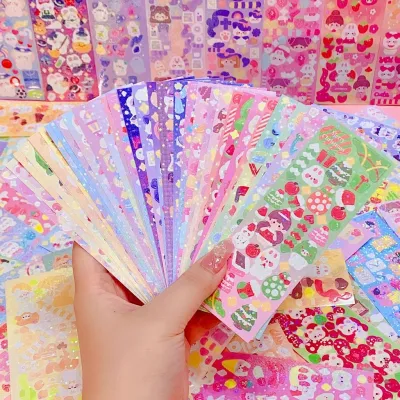
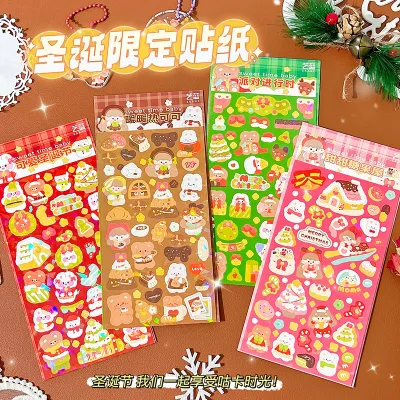
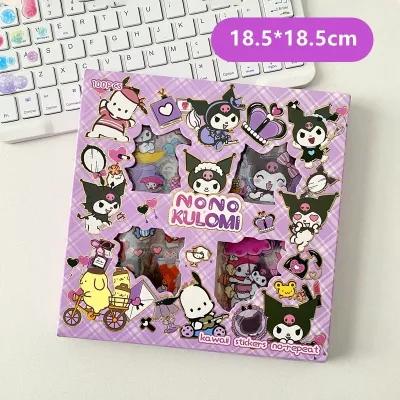
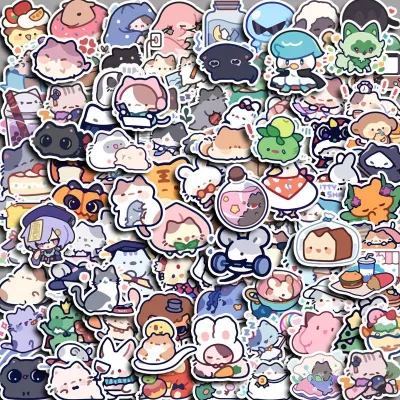
Prices are valid at publication and may change. Please refer to the product page for the latest price.
Matte paper stickers are the gold standard for writers who love to annotate, label, or doodle directly on top of their decorations. Because matte paper is porous, it absorbs ink exceptionally well, making it highly compatible with gel pens, fountain pens, and water-based markers. You can write your daily reflections or dates directly on these stickers without worrying about smudging. The main trade-off is that matte paper is highly sensitive to moisture and lacks water resistance, meaning it can tear easily if exposed to dampness.
Glossy or vinyl stickers offer vibrant colors and a high level of durability, but they present a challenge if you plan to write on them. The non-porous coating that makes vinyl water-resistant also prevents standard water-based inks from drying. If you attempt to use a standard gel pen on a glossy sticker, the ink will likely smear or bead up. If you choose vinyl, you must use specialized permanent markers or oil-based ballpoint pens to write on the surface.
PET or transparent stickers are favored by journalers who love the look of seamless layering. Because these stickers have a clear background, they allow you to layer designs over handwritten text, washi tape, or photos without completely obscuring what lies beneath. They create a beautiful “printed-on-the-page” effect that blends naturally into your journal.
When shopping online, always look for explicit material keywords in the product description rather than relying solely on product photos. Studio lighting and digital mockups on online marketplaces can easily make matte paper look glossy, or hide the fact that a sticker has a white border instead of a transparent one. Checking the specifications list is the only reliable way to verify what you are buying.
Adhesive Quality and Paper Safety: Protecting Your Journal Pages
The adhesive backing on your stickers plays a critical role in preserving the integrity of your journal over time. Cheap adhesives can degrade, yellow, or even bleed through thin paper, ruining adjacent pages in your favorite notebook. This is especially true when journaling in tropical climates where ambient heat and humidity are constant factors.

To ensure your memories last for years, prioritize stickers that explicitly claim to be acid-free and archival-safe. Acidic adhesives will slowly break down paper fibers over time, leading to unsightly yellow or brown halos around your stickers. If you are using high-quality journals with delicate paper, archival-safe stickers are non-negotiable for long-term preservation.
You must also consider the adhesive strength, which is typically categorized as either permanent (high tack) or repositionable (low tack). Permanent stickers stay firmly in place once applied, but they are unforgiving if you make a mistake during layout placement. Repositionable stickers, often made from washi paper, allow you to peel and adjust them easily. However, in highly humid environments, low-tack adhesives can lose their grip over time, causing the edges of the stickers to curl or lift off the page.
Another common issue is adhesive bleed-through, where the glue penetrates the paper and leaves a sticky residue on the opposite side of the page. This risk is significantly higher if you use standard 80gsm notebook paper compared to thicker 100gsm or 160gsm mixed-media paper. To prevent this, check customer reviews for complaints about sticky residue or page bleed.
Before committing a new sticker to a highly detailed journal spread, perform a simple safety test. Apply a single sticker from the pack onto a scrap piece of the exact same journal paper, leave it for 24 hours, and check for any curling, lifting, or oil bleeding on the reverse side.
Design Variety and Size Distribution: Decoding the "Stikerss 100 Pcs" Pack
A product listing that promises a large quantity of stickers can be misleading if you do not look closely at how that quantity is distributed. Some buyers assume they are getting 100 entirely unique designs, only to open the package and find multiple duplicate sheets. Understanding the anatomy of a 100-piece pack is key to getting real value.
Always verify the unique-to-duplicate ratio in the product description. A high-quality pack will state that it contains 100 unique, non-repeating designs. Lower-cost packs often achieve the 100-piece count by including five identical sheets of 20 stickers, or ten sheets of 10 stickers. While duplicates can be useful if you like to repeat themes across multiple weeks, they can quickly become repetitive if you prefer a fresh look for every page.
Size distribution is another vital factor for balanced journal layouts. A functional sticker pack should offer a mix of large focal pieces (typically 5cm to 8cm) and smaller accent elements (1cm to 3cm) like borders, icons, or tiny words. If a pack consists entirely of massive stickers, they will quickly crowd out your writing space. Conversely, a pack of only tiny stickers can make your layouts feel cluttered and disorganized.
Theme cohesiveness is what ties a journal spread together. Look for packs that feature a unified color palette and a consistent art style, such as vintage botanicals, pastel watercolors, or minimalist line drawings. Clashing styles within a single pack make it difficult to create a harmonious page.
Be wary of vague product descriptions that omit these details. If a listing only mentions the quantity without specifying the dimensions, the number of unique designs, or the material, it is a major red flag that the pack may consist of low-quality duplicates or poorly scaled prints.
Cutting Style and Format: Die-Cut, Kiss-Cut, or Sticker Books?
The physical format of your sticker pack affects how easy they are to peel, store, and carry with you. Stickers generally come in three formats: die-cut, kiss-cut sheets, and sticker books or rolls.
Die-cut stickers are individually cut through both the sticker material and the backing paper. Because they are separate pieces, they are incredibly easy to sort through, share with friends, or tuck into a travel journal pocket. They are perfect for quick, on-the-go decorating because you can easily visualize where a single sticker will go before peeling off the backing.
Kiss-cut sheets feature multiple designs printed on a single sheet of backing paper, with only the sticker layer cut through. This format keeps your stickers highly organized and prevents them from getting lost or bent. However, peeling them requires a bit more dexterity, and you may occasionally need a pair of fine tweezers to lift delicate designs without tearing them.
Sticker books and rolls offer excellent portability but come with their own trade-offs. Sticker books keep hundreds of designs bound together like a notebook, which is fantastic for keeping your desk clean but can add substantial bulk to your journal bag. Rolls are compact but can cause the stickers to curl tightly, making them difficult to flatten out on your pages.
To choose the right format, match the cutting style to your daily journaling habits. If you prefer to journal at a dedicated desk with plenty of storage, kiss-cut sheets are highly organized and easy to file away. If you enjoy journaling in cafes or while traveling, individual die-cut stickers are much easier to pack and use on the move.
Frequently Asked Questions (FAQ)
Can I write on vinyl or PET stickers with standard gel pens?
Standard water-based gel pens, fountain pens, and water-based markers will generally smear or bead up on non-porous surfaces like vinyl or transparent PET. Because these materials do not absorb moisture, the ink simply sits on top of the plastic and cannot dry properly. If you want to write on these stickers, you should use oil-based ballpoint pens, permanent fine-liners, or dedicated multi-surface markers. If writing directly on your stickers is a core part of your journaling process, it is best to stick to matte paper stickers, which readily absorb all types of ink.
How should I store leftover stickers in a humid climate?
In tropical areas with high humidity, storing your stickers properly is essential to prevent the adhesive from degrading and the paper from warping. Keep your sticker sheets flat inside sealed plastic sleeves, clear organizing folders, or ziplock bags. To actively combat moisture, place a few small silica gel packets inside your storage containers. This simple step prevents the ambient humidity from weakening the adhesive, stops the edges of kiss-cut sheets from curling, and ensures your stickers remain easy to peel and apply when you are ready to use them.

Community discussion
Share your experience or ask a question. Comments are reviewed before publication.