
A complete beginner scrapbook materials set for girls should provide a self-contained creative experience, allowing them to preserve memories immediately without needing to run to the store for missing essentials. At its core, a well-rounded starter kit must include a durable base album, a selection of acid-free patterned papers, reliable adhesives that withstand local humidity, basic cutting tools, and a curated assortment of embellishments like stickers and washi tape. In a tropical climate like the Philippines, high humidity can cause low-quality papers to warp and cheap glues to lose their bond, making the choice of materials in a starter set critical for long-term preservation. By choosing a kit that balances these core elements, young crafters can focus on the joy of storytelling and artistic expression rather than troubleshooting failing materials.
Essential Components to Look for in a Starter Set
To ensure a beginner can complete a project from start to finish, a starter set must contain several foundational categories of stationery. The first is the base medium. A high-quality scrapbook album serves as the anchor for all creative work. Look for albums with sturdy binding systems; spiral-bound or ring-bound albums are highly recommended for beginners because they lie completely flat when open, making it easier to arrange and glue elements. The pages inside should ideally be protected by clear plastic sheet protectors, which shield the delicate paper layouts from dust, fingerprints, and moisture.
The paper selection within the kit is equally vital. Standard copy paper is far too thin to support the weight of photos, layers of cardstock, and heavy embellishments. A good starter set should include patterned paper pads and solid cardstock with a minimum weight of 160 GSM (grams per square meter). This thickness ensures the paper can handle adhesives without buckling or tearing. Furthermore, all papers must be explicitly labeled as acid-free and lignin-free. Acid and lignin are natural compounds in wood pulp that, over time, react with light and air to turn paper yellow and brittle, which can permanently ruin precious photographs.
Products mentioned in this guide
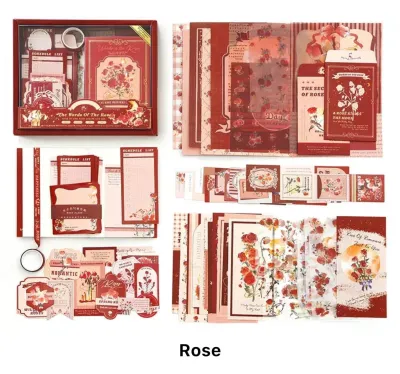
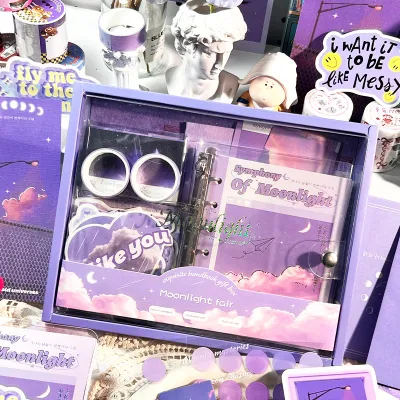
![ENWEI 10 Pcs [Romantic Encounter Series] Aesthetics Journal Material Paper Cassia Paper Deco Paper Scrapbooking Sticker Scrapbook Kit](https://img.lazcdn.com/g/p/717fc9e32cfc9fcf641e3262e12c8c4a.jpg_400x400q80.jpg_.webp)
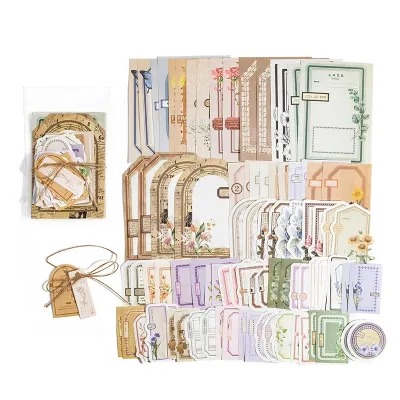
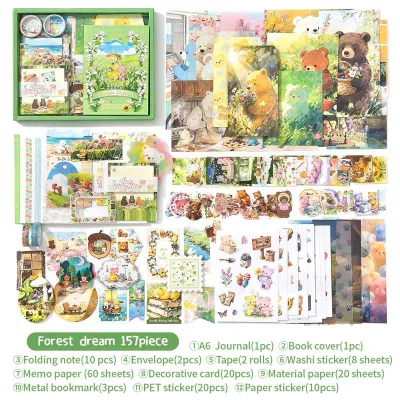
![ENWEI 16 Pcs [Hollow Mesh Series] Lovely Journal Material Paper Multiple Materials Deco Paper Scrapbooking Sticker Scrapbook Kit](https://img.lazcdn.com/g/p/9ce4acc63b20d805edc518051425c8cb.jpg_400x400q80.jpg_.webp)
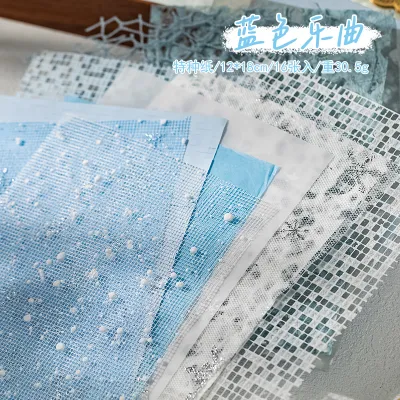
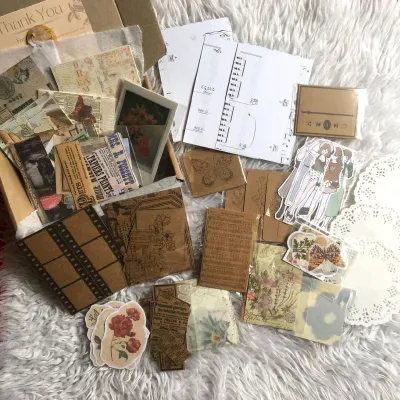
Prices are valid at publication and may change. Please refer to the product page for the latest price.
Adhesives are the literal glue that holds the scrapbook together, and a single type of adhesive is rarely enough. A comprehensive kit should include a mix of dry and wet adhesives. Acid-free glue sticks are excellent for light, paper-on-paper bonding and are easy for younger hands to control. Double-sided tape or tape runners provide a stronger, flatter hold for larger photo mats and background papers. For securing actual photographs, photo-safe mounting squares or photo corners are indispensable; they hold the photo securely in place without applying wet glue directly to the back of the print, preserving the integrity of the image.
Cutting and measuring tools are necessary for shaping layouts and cropping photos. A basic starter set should include a pair of safety scissors with comfortable, ergonomic handles designed for smaller hands. For older girls, a small craft paper trimmer with a fully enclosed sliding blade is a massive upgrade, allowing for perfectly straight, clean cuts that are difficult to achieve with scissors alone. A clear acrylic ruler is also a valuable addition, helping crafters measure dimensions and align elements precisely before committing them to the page.
Finally, embellishments add personality and theme to the scrapbook. A well-curated kit should include coordinated embellishments such as die-cut cardstock shapes, themed sticker sheets, and a few rolls of paper-based washi tape. Having these items pre-coordinated within a specific aesthetic—such as floral, pastel, or travel themes—helps beginners create visually cohesive pages without feeling overwhelmed by mismatched colors and styles.
Pre-Packaged Kits vs. Custom Bundles: Which is Better?
When starting out, parents and young crafters often face the choice between buying a pre-packaged, all-in-one boxed kit or assembling a custom bundle of individual supplies. Both approaches have distinct advantages and trade-offs in terms of cost, quality, and creative freedom.

From a cost efficiency perspective, pre-packaged kits are incredibly attractive. Buying a single boxed set often costs significantly less in ₱ than purchasing a blank album, several packs of stickers, multiple rolls of tape, and a high-quality paper pad individually. For parents or gift-givers who want to test a child’s interest in the hobby without making a major financial commitment, a pre-packaged kit offers a predictable, budget-friendly entry point. It eliminates the guesswork of matching compatible products and ensures that the crafter has everything needed to start immediately.
However, mass-market kits sometimes compromise on material quality to keep their retail prices low. The paper included in budget pre-made sets is often thin (sometimes under 120 GSM), which easily tears, wrinkles, or bleeds when markers or wet glues are applied. Additionally, the adhesives included in cheap kits may not be formulated for long-term durability, especially in warm, humid tropical environments where cheap glue can dry out and lose its grip over time. Custom bundles, while more expensive upfront, allow you to select premium, archival-grade materials from trusted stationery brands, ensuring that the finished scrapbook will last for decades.
Customization is another major factor to consider. Pre-made kits lock the crafter into a specific color palette, theme, or style. If a girl prefers a vintage, minimalist, or highly specific artistic style, a bright, glittery cartoon-themed kit might limit her creative expression. Assembling a custom bundle allows complete freedom to choose specific pastel shades, botanical patterns, or specialized tools like corner rounders and calligraphy pens. For absolute beginners, a pre-packaged kit is usually the best way to learn the basics, while transitioning to custom bundles makes sense once they develop specific stylistic preferences.
Age-Appropriate Tools and Safety Checks
Scrapbooking is a wonderful way to develop fine motor skills and spatial awareness, but the tools and materials must be carefully matched to the crafter’s age and developmental stage to ensure a safe and frustrating-free experience.
For younger girls, typically between the ages of 5 and 8, cutting tools must prioritize safety. Blunt-tip plastic or metal safety scissors are the standard, as they are designed to cut paper easily while minimizing the risk of accidental cuts to skin or hair. For older girls and teenagers, precision is more important than absolute bluntness. A sliding paper trimmer with a fully enclosed blade housing allows them to make straight, professional-looking cuts safely, as the sharp edge is only exposed when pressed down against the cutting track.
Chemical safety is another critical consideration, particularly when dealing with adhesives, markers, and ink pads. Always inspect the packaging for clear safety certifications, such as the AP (Approved Product) non-toxic seal. Acid-free and lignin-free labels are not only important for preserving photos; they also indicate that the products do not contain harsh chemical solvents that emit strong fumes. This is especially important in indoor crafting spaces where ventilation might be limited.
Physical hazards should also be evaluated based on the child’s age. Many scrapbook kits include small, loose embellishments like sequins, plastic beads, metal brads, and miniature die-cuts. While these add beautiful texture to a page, they present a serious choking hazard for younger children or younger siblings in the household. If the kit is intended for a younger crafter, it is safer to choose sets that rely on larger sticker sheets, pre-cut paper shapes, and wide washi tapes rather than loose, microscopic decorations.
Common Missing Items and What to Buy Separately
Even the most comprehensive pre-packaged scrapbook kits rarely contain absolutely everything a crafter will need. To avoid mid-project interruptions and ensure a smooth crafting experience, it is helpful to know what items are typically excluded from standard starter sets so you can budget for them separately.
The most common omission in beginner kits is high-quality journaling tools. While kits excel at providing decorative papers and stickers, they seldom include the specialized pens needed to write captions, dates, and personal stories. To ensure your writing stands the test of time, you should purchase archival-safe, fine-tip pens. Look for pens with pigment-based ink that are labeled water-resistant and fade-resistant. Standard ballpoint pens or cheap felt-tip markers can bleed through thin paper, smudge easily, or fade to a dull purple over time, potentially ruining the written memories on your layouts.
Because smoothness, bleed resistance, drying speed, and water resistance depend entirely on the exact combination of your pen’s ink and the kit’s paper, always perform an observable trial on a scrap piece of paper first. Write a test line, wait a few seconds to check the drying speed, and inspect the reverse side of the paper to verify that the ink does not bleed through before writing on your final layout. This simple check ensures that your journaling remains clean and legible.
Heavy-duty adhesives are another common gap. While starter kits usually include a basic glue stick or light double-sided tape, these adhesives are often not strong enough to hold heavier 3D embellishments like wooden shapes, thick chipboard, ribbons, or fabric. To secure these dimensional elements, you will need to purchase a dedicated liquid craft glue that dries clear and flexible, or a roll of heavy-duty double-sided foam tape, which also adds a beautiful raised effect to your designs.
Finally, organization is rarely addressed in beginner kits. Scrapbooking naturally generates a large volume of small paper scraps, half-used sticker sheets, and loose ribbons. Without a proper storage system, these delicate materials can easily get bent, dusty, or lost. Investing in a few clear plastic storage bins, expanding folders, or zippered pouches will keep the workspace organized and protect your leftover supplies for future projects.
Frequently Asked Questions (FAQ)
What is the difference between scrapbooking and journaling?
Scrapbooking is primarily a visual, photo-centric craft focused on preserving memories, photographs, and memorabilia on decorated pages. Journaling, on the other hand, is a text-heavy practice centered on writing, reflection, and daily thoughts. While both hobbies share overlapping supplies like pens, stickers, and notebooks, scrapbooking prioritizes photo preservation and structured layouts, whereas journaling focuses on written expression.
Can I use regular school glue for scrapbooking?
It is highly discouraged to use standard white school glue or liquid school glue for scrapbooking. These glues have a high water content that causes paper to wrinkle, buckle, and warp as it dries. Furthermore, standard school glues are often acidic, which will cause photographs to yellow, fade, and degrade over time. Always choose acid-free, photo-safe adhesives specifically formulated for paper crafts.
How much should I expect to spend on a good beginner set?
A reliable beginner set does not need to be expensive, but you should evaluate its value by comparing the included items against individual retail prices in ₱. Prioritize kits that invest in high-quality, acid-free paper and reliable adhesives over those that offer a massive quantity of cheap, flimsy plastic embellishments. A mid-range kit that provides a sturdy album, a decent paper pad, and basic safe tools offers the best long-term value for a beginner.

Community discussion
Share your experience or ask a question. Comments are reviewed before publication.