
Choosing the right mechanical pencil set for daily schoolwork requires looking beyond basic aesthetics to evaluate how the tools handle long lectures, heavy note-taking, and varied subjects. A well-chosen set balances lead consistency, ergonomic comfort, and long-term refill availability. This guide breaks down the essential specifications and structural features you need to verify, helping you build a reliable shortlist that supports your academic workflow without constant interruptions for broken lead or uncomfortable grips.
Match Lead Size and Grade to Your Schoolwork
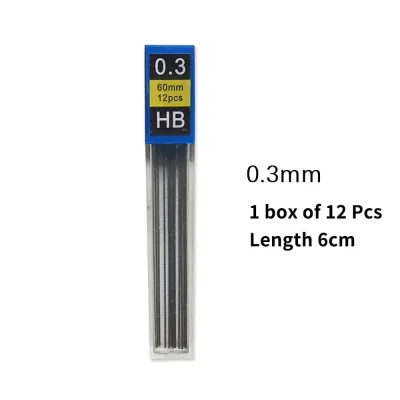
Selecting the correct lead diameter and hardness grade is the first step in finding a mechanical pencil set that matches your writing style. Standard lead diameters range from ultra-fine to thick, with 0.5mm and 0.7mm being the most common choices for students. A 0.5mm lead is excellent for detailed notes, mathematical formulas, and small handwriting, as it produces clean, precise lines. However, because the lead is thin, it is more prone to snapping if you apply heavy writing pressure.
For general note-taking and faster writing, a 0.7mm or 0.9mm lead is often more practical. These thicker diameters offer greater break resistance and glide more smoothly across standard school paper, making them ideal for students who write quickly or tend to press down hard.
Products mentioned in this guide
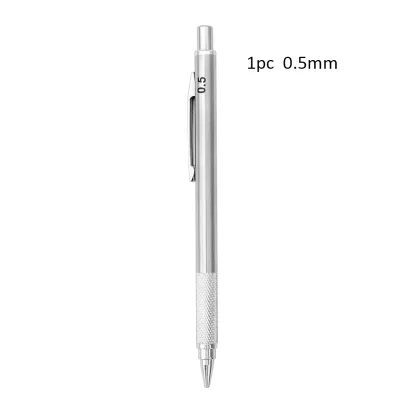
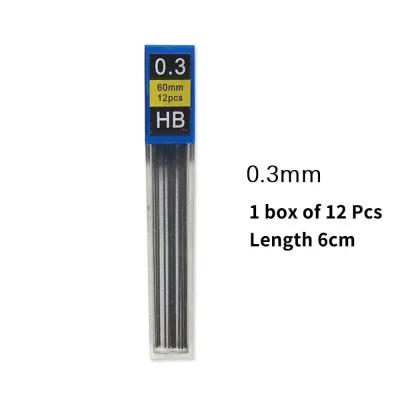
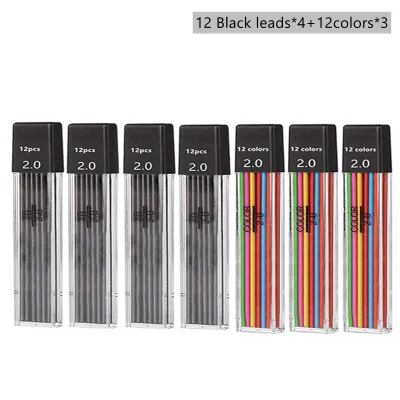
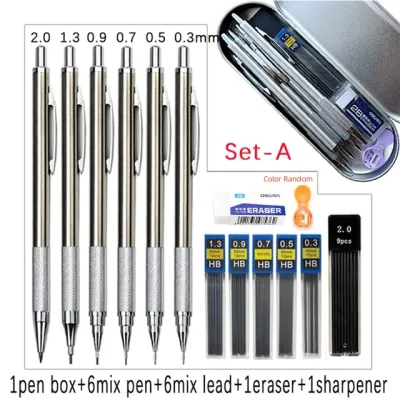
Prices are valid at publication and may change. Please refer to the product page for the latest price.
Beyond diameter, the lead grade significantly affects your writing experience. Standard mechanical pencil sets typically come with HB lead, which offers a balanced medium darkness and hardness. If you prefer darker, smoother lines with less writing effort, look for sets that include B or 2B lead. In the Philippines, 2B lead is highly recommended for standardized exams, as optical mark recognition scanners require dark, solid marks to register answers accurately.
However, softer leads like 2B wear down faster and produce more graphite dust, which can smudge easily in high-humidity environments or if your hands become sweaty during long writing sessions.
Before purchasing refills, always check the designated lead size printed on the pencil’s barrel or clip. Attempting to load 0.7mm lead into a 0.5mm pencil will cause immediate jams, while loading 0.5mm lead into a 0.7mm pencil will result in the lead slipping through the clutch without holding.
Evaluate Grip Design and Barrel Materials for Daily Comfort
The grip is the primary interface between your hand and the pencil, making it a critical factor in preventing hand fatigue during extended study sessions. Textured rubber grips provide excellent cushioning and reduce the finger pressure required to maintain control, making them highly comfortable for long lectures. However, in tropical climates with high humidity, standard rubber grips can degrade, become sticky, or attract dust over time.

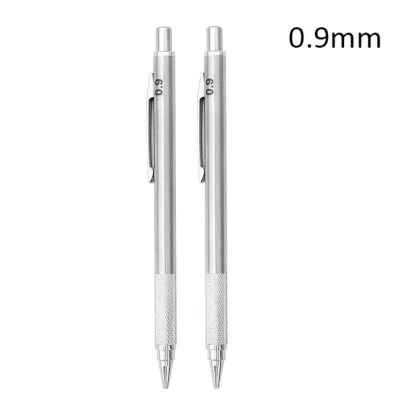
Knurled metal grips offer a highly durable, non-slip surface that does not degrade over time. They provide exceptional control for precise drawing and writing, but the textured metal can feel abrasive during multi-hour writing sessions if you hold the pencil with a tight grip.
Bare plastic or smooth metal barrels are lightweight and easy to clean, but they can become slippery if your hands sweat. For these barrels, adding a separate, removable silicone grip sleeve can offer a customizable compromise.
Weight distribution significantly affects hand fatigue. Pencils with a low center of gravity—where the weight is concentrated near the tip—naturally fall forward onto the paper, reducing the muscular effort needed to guide the pencil. Lightweight plastic pencils are highly portable and put less weight in a pencil case, but they may require more downward hand pressure to produce dark lines if the lead grade is hard.
If you have sensitive skin, check product labels for latex-free or hypoallergenic materials, as some budget rubber grips can trigger contact dermatitis during prolonged use.
Check Mechanism Durability and Extra Features
The internal clutch and tip design determine both writing precision and pocket safety. Fixed metal sleeves (typically 4mm long) are designed for drafting and ruler work, providing an unobstructed view of the paper. However, these fixed sleeves are fragile; dropping the pencil on a hard floor can bend the tip, rendering the entire pencil useless. They can also tear fabric pockets or scratch other items in a pencil case.
Retractable tips solve this issue by allowing the metal sleeve to slide back into the nose cone when not in use. This protects the tip from damage and prevents accidental punctures.
Shock-absorbing mechanisms use an internal spring that allows the lead to retract slightly into the sleeve when excessive downward or lateral pressure is applied. This feature is highly beneficial for students who write quickly or apply heavy pressure, as it significantly reduces lead breakage.
Clicking mechanisms vary in convenience. The traditional top-click mechanism is simple and highly reliable, utilizing a metal or plastic clutch inside the cap. Side-click mechanisms place the button near the grip, allowing you to advance the lead with a simple thumb press without changing your hand position. Auto-advancing systems feed lead continuously as the sleeve touches the paper, eliminating the need to click entirely, though some users find the sensation of the sleeve touching the paper slightly scratchy.
Extra features like built-in erasers are convenient for quick corrections, but they are usually small and wear down rapidly. Look for pencils with twist-up erasers, which offer more usable material. Lead hardness indicator dials help you keep track of which grade (e.g., HB, 2B) is currently loaded, while clear or translucent reservoirs allow you to see how many spare lead sticks remain inside the barrel.
Assess the Set Composition and Refill Availability
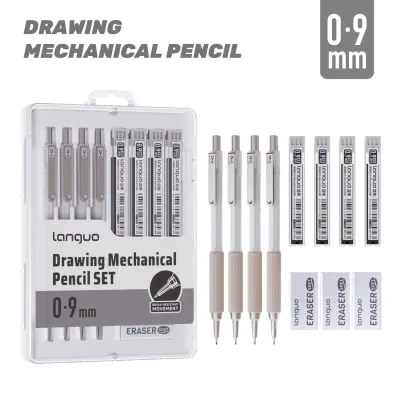
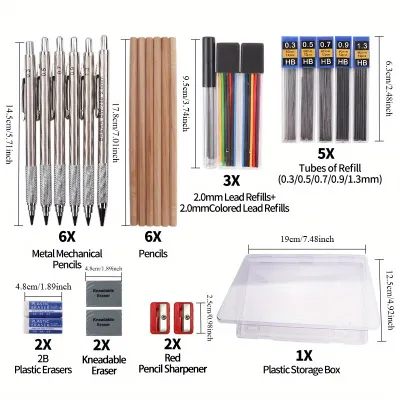
When purchasing a mechanical pencil set, evaluating the bundle’s composition ensures you get long-term value. A practical set should include at least two pencil bodies (allowing you to keep one as a backup or load different lead grades), a generous supply of lead refills (usually in tubes of 12 to 30 leads), and several replacement erasers.
Refill availability is crucial for avoiding mid-semester disruptions. Before buying a set, verify that the lead and eraser refills are standard sizes. Standard lead diameters (0.5mm and 0.7mm) are universally available in local stationery shops and online marketplaces.
However, eraser refills are often proprietary to specific brands or models. If a pencil uses a non-standard eraser size, you may struggle to find replacements once the initial supply is exhausted, forcing you to carry a separate block eraser.
Compare the total cost of the set in Philippine Pesos (₱) against the cost of buying the items individually. A high-quality set priced between ₱150 and ₱500 should offer a clear discount compared to purchasing separate pencils, lead tubes, and erasers. Avoid extremely cheap, unbranded sets, as they often use low-grade plastic clutches that wear out quickly, leading to slipping lead and frequent jams.
Build Your Shortlist: A Student's Evaluation Checklist
To help you choose the right mechanical pencil set, use this structured checklist to evaluate your options:
- Lead Compatibility: Does the set support standard 0.5mm or 0.7mm lead?
- Clutch Material: Is the internal clutch made of brass (highly durable) or plastic (prone to wearing out)?
- Grip Comfort: Is the grip material suitable for your hand sweat levels and writing duration?
- Tip Protection: Does the pencil have a retractable tip or a shock-absorbing mechanism?
- Refill Accessibility: Can you easily purchase replacement erasers and lead refills locally?
If you are shopping in a physical stationery store, perform a few quick tests. Click the advance mechanism several times; the click should feel crisp and consistent, advancing a precise, uniform amount of lead each time. Press the lead firmly against a hard surface; if it slips back into the barrel, the internal clutch is weak. Gently wiggle the metal sleeve; any noticeable wobble indicates poor manufacturing tolerances, which can lead to frequent lead breakage.
When shopping on online marketplaces, scrutinize the product descriptions for material specifications (such as brass clutches or latex-free grips). Read user reviews carefully, filtering for terms like “jammed,” “broken,” or “clutch.” Pay attention to feedback regarding the durability of the pocket clip and whether the package arrived with all the advertised lead and eraser refills.
Frequently Asked Questions (FAQ)
Is a 0.5mm or 0.7mm mechanical pencil better for taking notes?
The choice depends on your handwriting style and writing pressure. A 0.5mm mechanical pencil is ideal for students with small, neat handwriting who need to fit dense notes, mathematical formulas, or detailed diagrams into tight margins. However, because the lead is thin, it requires a lighter touch to prevent snapping. A 0.7mm mechanical pencil is better for general note-taking, fast cursive writing, and students who apply moderate to heavy pressure, as the thicker lead offers greater break resistance and a smoother writing feel on standard school paper.
Do I need a shock-absorbing mechanical pencil for school?
While not strictly necessary, a shock-absorbing mechanical pencil is highly beneficial if you frequently break lead or write under high-stress conditions, such as timed exams. The internal spring mechanism cushions sudden downward or lateral pressure, allowing the lead to retract slightly rather than snapping. This prevents constant interruptions during lectures and saves lead. If you have a light writing touch, a standard fixed or retractable sleeve pencil will perform perfectly well without the added complexity of a shock-absorbing system.
How many replacement erasers should a good set include?
A comprehensive mechanical pencil set should include at least three to five replacement erasers, or a dedicated twist-up eraser mechanism with a long eraser stick. Built-in erasers on mechanical pencils are small and deplete much faster than the lead supply. If the set only includes the tiny erasers pre-installed under the cap, you will likely need to carry a separate block eraser. Always check if the set’s replacement erasers are standard sizes that can be easily repurchased in local stationery shops.

Community discussion
Share your experience or ask a question. Comments are reviewed before publication.