
Selecting the right colouring book for a school art class involves balancing artistic freedom with academic utility. Unlike home activities where any whimsical book will do, a classroom environment requires materials that can withstand specific grading criteria, diverse art mediums, and rigorous handling. The ideal book serves as a reliable canvas, allowing students to demonstrate their understanding of colour theory, shading, and neatness without the frustration of tearing paper or bleeding ink. By focusing on structural quality and design suitability, you can ensure your child has the tools necessary to succeed in their structured art curriculum.
Key Features to Evaluate for School Art Projects
The physical construction of a colouring book determines how well it performs under different classroom conditions. The most critical factor is paper weight, typically measured in grams per square meter (gsm). Standard, budget-friendly colouring books often use thin paper around 70 gsm to 90 gsm, which is highly susceptible to buckling, feathering, and bleeding when paired with wet media. For school art classes where students frequently use water-based markers, gel pens, or light watercolours, look for books featuring medium-to-heavyweight paper of at least 120 gsm to 150 gsm. If the syllabus specifically calls for wet painting techniques, specialized mixed-media or watercolour colouring books with paper weights exceeding 200 gsm are necessary to prevent the fibers from pilling or warping under moisture.
Humidity plays a significant role in paper performance, particularly in tropical climates like the Philippines. High ambient moisture can soften paper fibers, making even decent-quality sheets more prone to tearing when subjected to heavy friction from coloured pencils or erasers. Choosing paper with a slight texture, often referred to as “tooth,” helps hold dry pigments like coloured pencils, crayons, and oil pastels more effectively. Smooth, glossy paper might look appealing, but it often resists dry pigments, leading to uneven colour application and smudging under warm, humid classroom conditions.
Products mentioned in this guide
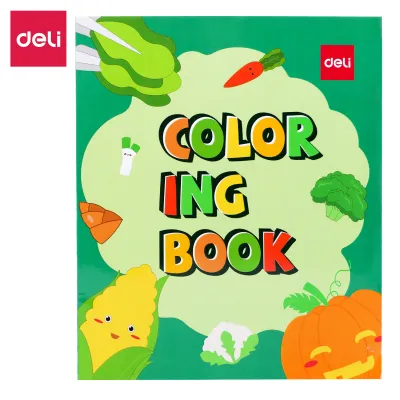
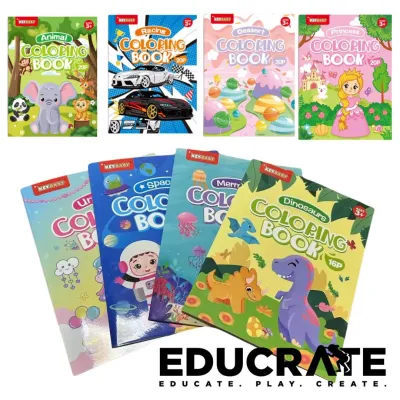
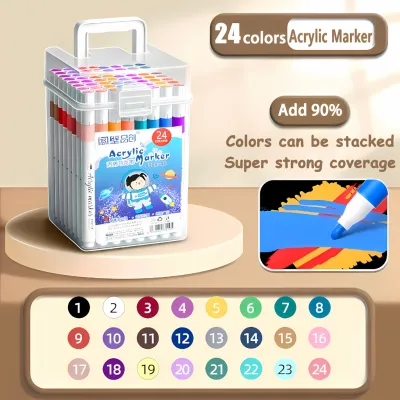
Prices are valid at publication and may change. Please refer to the product page for the latest price.
Binding is another structural element that directly impacts a student’s classroom experience. Traditional glue-bound or saddle-stitched (stapled) books often resist lying flat on a school desk, forcing the child to hold the pages down with one hand while trying to colour with the other. This physical resistance can lead to hand fatigue and accidental tears near the spine. Spiral-bound or wire-bound colouring books are highly recommended for school use because they fold back completely, providing a flat, stable surface. Alternatively, look for books with perforated pages, which allow students to cleanly detach their work for grading, display, or inclusion in a physical portfolio without leaving ragged, torn edges.
Page layout is equally vital when evaluating a book’s suitability for school projects. Single-sided printing is the practical standard for classroom art because it eliminates the risk of ruining a reverse-side illustration. When a student uses heavy markers or wet media on a double-sided page, the ink inevitably bleeds through, rendering the back image unusable and potentially affecting the graded work. Single-sided pages also allow students to use protective backing sheets—such as a simple piece of scrap cardstock—to catch any bleed-through, keeping the subsequent pages pristine. If you must purchase a double-sided book, ensure it is strictly reserved for dry media like wax crayons or hard-lead coloured pencils.
Matching Design Complexity to Age and Skill Level
An effective school art project relies on a colouring book that matches the student’s developmental stage and fine motor skills. For early childhood and primary school students, look for books featuring thick, bold outlines and large, uncomplicated spaces. These broad designs accommodate the developing grip of younger children, who typically use thick wax crayons or chunky markers. The clear boundaries help them practice spatial awareness and basic hand-eye coordination without becoming overwhelmed by intricate details.

As students progress into intermediate and high school levels, their art curriculum shifts toward advanced techniques like light source rendering, gradient shading, and cross-hatching. For these older students, select books with thinner lines and higher detail density, such as geometric patterns, architectural drawings, or detailed botanical illustrations. These complex designs provide the necessary structure for practicing sophisticated colour transitions and value scales. However, avoid overly cluttered patterns that leave no room for individual creativity; the design should guide the student’s hand, not restrict their ability to experiment with shading and depth.
Thematic relevance is another key consideration that distinguishes a classroom-ready book from a recreational one. While cartoon characters and commercial media tie-ins are popular at home, they are rarely suitable for graded school projects. Art teachers generally prefer themes that align with academic subjects, such as natural landscapes, historical motifs, scientific diagrams, or cultural patterns. Choosing a book with educational themes makes it easier for the student to adapt their colouring assignments to specific classroom prompts, such as studying indigenous art styles or exploring botanical anatomy.
Furthermore, look for books that strike a balance between structured outlines and open-ended spaces. Some of the best educational colouring books leave portions of the page blank or lightly dotted, encouraging students to draw their own backgrounds, add mixed-media elements, or write explanatory labels. This hybrid approach allows art teachers to assess both the student’s technical colouring skills and their original creative input within a single assignment.
Types of Colouring Books for Different Art Class Needs
Understanding the different categories of colouring books helps you narrow down the options based on your child’s specific syllabus. Standard themed colouring books are the most common and are excellent for general art classes focusing on colour theory. These books typically feature cohesive illustrations centered around a single subject, such as marine life or geometric mandalas. They are ideal for teaching students how to work with warm and cool colour palettes, complementary colour schemes, and basic blending techniques using standard coloured pencils or oil pastels.
Educational and cross-curricular colouring books are designed to bridge the gap between art and other academic subjects like science, history, or geography. For instance, anatomy colouring books help students memorize muscle groups or skeletal structures while practicing precise colour-coding. Nature-focused books featuring accurate botanical or zoological illustrations allow students to study species characteristics while refining their realistic rendering skills. These books are highly valuable for integrated school projects where art is used as a tool for scientific observation and documentation.
For advanced art classes or older students, guided sketch-and-colour journals offer a more flexible alternative to traditional colouring books. These books combine pre-drawn borders, light grey guidelines, or partial illustrations with high-quality blank spaces. They are specifically designed for mixed-media experimentation, allowing students to combine sketching, ink wash, and colouring on a single page. This format is particularly useful for end-of-term portfolio building, as it showcases the student’s progression from guided colouring to independent artistic expression.
A Practical Checklist for Purchasing and Preparation
Before purchasing a colouring book, always review the teacher’s official supply list for specific size and medium constraints. Standard school desks have limited space, so an oversized book may be cumbersome for your child to manage alongside their pencil cases and water cups. A4 and A5 formats are generally the most practical sizes for classroom use. Additionally, check if the teacher has explicitly banned certain mediums, such as alcohol-based markers or liquid paints, which will dictate the minimum paper weight you need to look for.
When shopping in physical stationery stores, perform a quick tactile inspection of the book. Feel the thickness of the pages between your fingers; high-quality paper feels sturdy and slightly textured, whereas cheap paper feels thin, smooth, and almost translucent when held up to the light. If you are purchasing from online stationery retailers or online marketplaces, look closely at the product specifications for terms like “acid-free,” “heavyweight,” or specific gsm ratings. Read customer reviews to see how the paper behaves under different mediums, paying close attention to reports of bleeding or tearing.
Once you have selected and purchased the book, prepare it for class by conducting a simple medium test at home. Have your child select an inconspicuous corner on one of the back pages or a test sheet to apply the exact art supplies they will use in class. Observe how the paper reacts: does the ink spread or feather at the edges? Does the water cause the paper to warp significantly? Does the pencil lead glide smoothly, or does it scratch and tear the surface? This quick trial ensures there are no unpleasant surprises during a graded classroom activity, giving your child the confidence to create their best work.
Frequently Asked Questions (FAQ)
Can I use regular printer paper colouring books for watercolour assignments?
Regular printer paper, which typically ranges from 70 gsm to 80 gsm, is not designed to handle wet media. When exposed to watercolours or heavy ink washes, the wood fibers in the paper quickly saturate, causing the page to buckle, warp, and eventually tear or pill under the brush. For watercolour assignments, it is essential to use colouring books specifically labeled for mixed media or watercolour use, featuring paper weights of at least 200 gsm. These specialized papers are treated with sizing agents that control water absorption, allowing the paint to sit beautifully on the surface without destroying the page.
Should I buy single-sided or double-sided pages for school submissions?
Single-sided pages are highly recommended for school submissions because they offer maximum flexibility and protection for your child’s artwork. They allow the student to use a wider variety of mediums, including markers and gel pens, without worrying about ruining an illustration on the reverse side. Single-sided pages are also much easier to tear out cleanly for grading or display. Double-sided pages are acceptable only if the art class strictly uses dry, non-bleeding media like coloured pencils, crayons, or hard pastels, and if the teacher does not require the pages to be removed from the book.
How do I know if a colouring book's theme is appropriate for a graded project?
To determine if a theme is appropriate, evaluate whether the designs offer educational value, technical practice, or alignment with the curriculum. Look for books that focus on natural history, geometric patterns, cultural heritage, or classic art styles rather than commercial cartoon characters or pop culture icons. If the project rubric emphasizes shading, perspective, or colour harmony, ensure the illustrations provide enough detail and varied spaces to demonstrate those skills. When in doubt, send a quick note or a photo of the book’s interior to the art teacher to confirm it meets their academic expectations.

Community discussion
Share your experience or ask a question. Comments are reviewed before publication.