
Selecting an ice cream clay set for children involves more than just picking the brightest box on the toy store shelf. These creative kits offer an excellent avenue for sensory exploration, fine motor development, and imaginative role-play, but their quality, safety, and usability vary significantly. To find a set that provides hours of frustration-free entertainment, you must look closely at the chemical composition of the compound, the structural integrity of the molding tools, and the practicalities of post-play cleanup. In tropical climates like the Philippines, where high humidity can alter how modeling compounds dry and store, making an informed choice is especially important for preserving the life of the toy.
By focusing on verifiable safety standards, age-appropriate tool designs, and durable materials, you can select a set that matches your child’s developmental stage. This guide outlines the essential features to evaluate before making a purchase, helping you balance creative value with safety and convenience.
Safety First: Verifying Non-Toxic Labels and Age Grading
When shopping for any modeling compound, safety is the absolute priority. Children frequently touch their faces, mouths, and eyes during play, making it vital to verify that the clay and its accessories are entirely safe. Always begin by checking the age grading printed on the packaging. Most detailed ice cream clay sets are rated for children aged three and older because they contain small parts. Miniature spoons, plastic cherries, and tiny sprinkle molds can easily become choking hazards for toddlers who still explore toys with their mouths.
Products mentioned in this guide
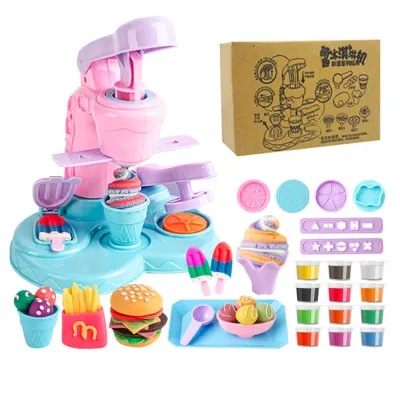
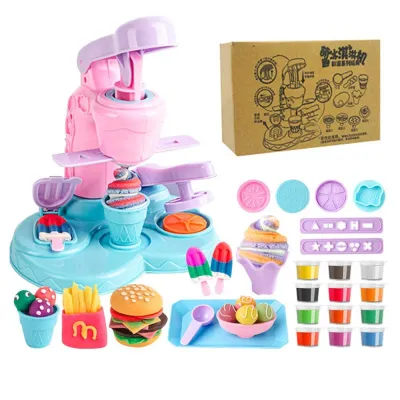
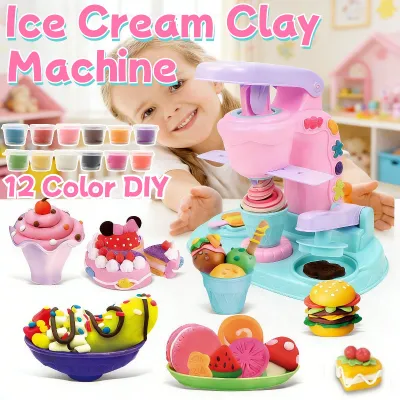
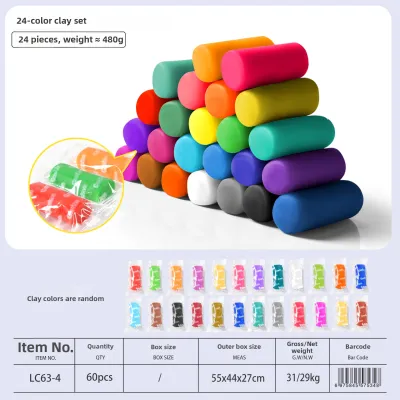
![[READY STOCK]3D Color Clay Toy Dough Set Ice cream Double Twister Playdoh Play Doh Plasticine Toys](https://img.lazcdn.com/g/p/94390d7aba4a842e7eec41dc34f43e26.png_400x400q80.png_.webp)
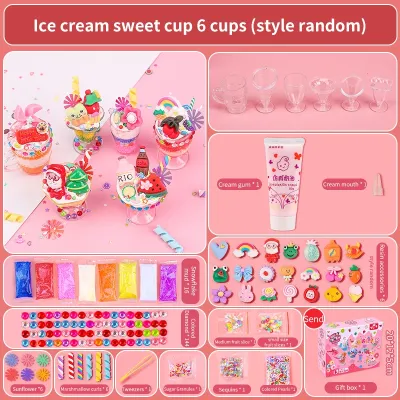
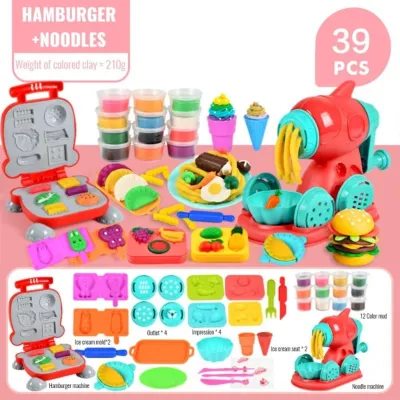
Prices are valid at publication and may change. Please refer to the product page for the latest price.
Beyond age recommendations, look for recognized non-toxic compliance marks printed directly on the box. In international toy manufacturing, standards such as ASTM D-4236 in the United States or EN71 in Europe indicate that the materials have been evaluated by a toxicologist and cleared of harmful formulations. In the local market, reputable brands will clearly display these certifications. Avoid unbranded products or those sold in plain packaging without clear safety labels, as these may contain industrial colorants or preservatives that are unsafe for prolonged skin contact.
Allergen awareness is another critical factor when evaluating modeling compounds. Many traditional play doughs use a wheat-flour base, which contains gluten. For children with celiac disease, wheat allergies, or severe gluten sensitivities, handling these clays can trigger adverse reactions if they accidentally ingest residue from their hands. If your child has these sensitivities, look for gluten-free alternatives, which are typically made from soy, rice, or synthetic polymers, and verify the ingredient list on the packaging.
Finally, consider your child’s individual skin sensitivity. Some modeling clays contain artificial fragrances to mimic sweet ice cream scents like vanilla, strawberry, or chocolate. While these scents enhance sensory play, they can sometimes trigger contact dermatitis or respiratory irritation in children with eczema or asthma. If your child has highly sensitive skin or known allergies, it is wise to consult a pediatrician before introducing heavily scented or dyed compounds, or to opt for fragrance-free, hypoallergenic alternatives.
Clay Texture: Ensuring the Compound Is Easy for Small Hands
The physical texture of the clay determines how easily a child can shape, roll, and squeeze it. Young children are still developing their hand strength and fine motor skills, so a compound that is too stiff will quickly lead to frustration. Conversely, clay that is excessively sticky will cling to fingers, ruin molded shapes, and make the play experience messy and unsatisfying. When reading product descriptions, look for terms like “pliable,” “soft-squeeze,” or “easy-to-mold” to ensure the material is responsive to gentle pressure.

It is also important to understand the difference between air-dry and non-drying formulas. Air-dry clays are designed to harden permanently into solid keepsakes within 24 to 48 hours. While this is excellent for saving finished “ice cream” creations, it means the clay has a limited working window and cannot be reused. Non-drying formulas, often wax- or oil-based, remain soft indefinitely, allowing for endless rebuilding. In the warm and humid climate of the Philippines, air-dry clays may take slightly longer to cure completely, but they can also dry out prematurely during play if left uncovered on a hot afternoon. Choose the formula that aligns with whether your child wants to keep their creations or play repeatedly.
Color-mixing potential is another feature that defines a high-quality set. Children love to swirl different colors together to create realistic-looking soft-serve ice cream. High-quality pigments should blend smoothly without turning into a muddy, unappealing gray instantly. More importantly, these pigments should be formulated to avoid staining hands, clothing, or play surfaces. You can verify this by checking user reviews on online marketplaces to see if other parents have reported stubborn color transfer on skin or furniture.
Because you rarely have the opportunity to touch and test the clay before buying, relying on detailed product specifications and verified customer feedback is essential. Look for reviews that specifically mention how the clay feels after several weeks of use. If multiple reviews note that the compound arrived crumbly, dry, or sticky, it is a strong indicator of poor quality control or inadequate packaging, and you should consider alternative options.
Molds and Tools: Evaluating the Ice Cream Shop Play Experience
The accessories included in an ice cream clay set are what truly bring the role-play experience to life. A basic set might only include a couple of plastic cups and a simple roller, while deluxe sets feature elaborate soft-serve extruders, waffle cone presses, and intricate topping molds. When evaluating these tools, inspect the quality of the plastic. Look for sturdy, thick-walled plastic parts that can withstand the pressure of a child leaning on them to press out a clay noodle or shape a waffle cone.
Pay close attention to the finish of the plastic tools. Cheaply manufactured toys often have sharp seams or rough edges left over from the injection molding process. These rough spots can scratch sensitive skin or catch on the clay, making it difficult to release molded shapes cleanly. High-quality sets feature smooth, rounded edges on all scoops, dishes, and molds, ensuring safe and comfortable handling during long play sessions.
Mechanical accessories, particularly clay extruders or “soft-serve machines,” require careful evaluation. These devices work by pushing clay through a small grate to create spaghetti-like strands or star-shaped swirls. If the mechanism is poorly designed or if the clay compound is too firm, it will require excessive force to operate. This can lead to the plastic levers snapping or cause younger children to become frustrated when they cannot operate the machine independently. Look for designs with wide, ergonomic handles that leverage a child’s downward weight rather than relying solely on grip strength.
Additionally, assess the variety and size of the decorative molds. A diverse selection of molds—such as those for making cherries, chocolate bars, fruit slices, and sprinkles—keeps the play experience engaging over time. However, ensure that these decorative pieces are not so small that they are easily lost or swallowed. If the set includes very small decorative molds, verify that your child has the coordination to use them and the maturity to keep them out of their mouth.
Cleanup and Storage: What Parents Must Check Before Buying
The joy of creative play can quickly be overshadowed by a difficult cleanup process. Before purchasing a set, consider how the clay compound behaves when it inevitably falls onto the floor or gets pressed into household surfaces. Some doughs dry into hard, crumbly pieces that are easy to sweep or vacuum up once dry. Others, particularly lightweight polymer-based clays, can leave a greasy or sticky residue on wooden tables, plastic mats, and fabrics. Checking the manufacturer’s cleanup instructions can give you a clear idea of what to expect.
Proper storage is critical to extending the lifespan of reusable modeling compounds. Look for sets that include individual, airtight storage tubs for each color. Flimsy plastic bags or thin film wraps are highly ineffective at keeping air out, causing the clay to dry out and become unusable after just one or two play sessions. In tropical environments, organic, wheat-based doughs can also attract mold if stored damp in non-airtight containers. Sturdy, snap-tight plastic tubs help prevent moisture loss and protect the compound from environmental humidity and pests.
Cleaning the plastic molds and extruders themselves should be straightforward. Clay can easily get stuck inside the small crevices of a soft-serve extruder or the detailed patterns of a waffle mold. Check if the manufacturer designs these tools to be easily disassembled for washing. Tools that can be taken apart are much easier to clean with warm water and a soft brush, preventing old, dried clay from clogging the mechanisms and spoiling future play sessions.
Finally, plan for the future by checking the availability of refills. Even with meticulous care, clay colors will eventually get mixed together into a single shade, or small portions will dry out and need to be discarded. Before buying a specific brand’s set, check if they sell standalone clay refills or if you can easily use generic modeling dough with the included tools. Choosing a set compatible with standard, widely available refills ensures the plastic tools remain useful long after the original clay is gone.
Building Your Shortlist: A Pre-Purchase Checklist for Parents
To make your final decision easier, use a structured approach to compare the different ice cream clay sets available on online marketplaces or in local toy stores. By filtering your options systematically, you can avoid low-quality purchases and find a set that offers the best balance of safety, durability, and play value.
- Step 1: Verify Safety and Age Suitability. Check the box for ASTM D-4236 or EN71 marks. Ensure the age rating matches your child's development, paying close attention to any small parts that could pose a choking hazard.
- Step 2: Assess the Compound Type. Decide between reusable dough (best for continuous play) and air-dry clay (best for keeping finished models). Ensure the set includes airtight, snap-close storage tubs.
- Step 3: Inspect Tool Quality. Look for thick, durable plastic with smooth edges. Avoid sets with flimsy extruders or sharp injection-molding seams.
- Step 4: Compare Value and Quantity. Weigh the price of the set against the total weight of the clay and the number of durable tools included. For example, a basic set priced at ₱350 might offer less long-term value than a robust ₱850 set that includes heavy-duty extruders and reusable storage tubs.
- Step 5: Match Play Style. Choose a set that aligns with your child's preferences. If they enjoy structured role-play, look for sets with realistic menus, cups, and cash register accessories. If they prefer sensory exploration, focus on sets with varied textures and mold shapes.
Be cautious of unbranded, extremely cheap sets that lack ingredient lists or clear manufacturer contact information. Investing a little extra in a well-designed, certified set ensures a safer, cleaner, and far more enjoyable creative experience for your child.
Frequently Asked Questions (FAQ)
Can I revive an ice cream clay set if the clay dries out?
Whether you can revive dried clay depends entirely on its chemical formulation. Traditional water-based modeling doughs can often be rehydrated if they have only partially hardened. To do this, wrap the dry dough in a damp paper towel, place it back inside its airtight container, and let it sit overnight before kneading it thoroughly. However, if the set uses air-dry polymer clay that has fully cured and hardened, the chemical change is permanent. Fully cured air-dry clay cannot be rehydrated and must be discarded.
Are ice cream clay sets suitable for children with sensory processing differences?
Ice cream clay sets can be highly beneficial for children with sensory processing differences, as they offer rich tactile feedback and encourage fine motor exploration. However, you must select the set carefully based on your child’s specific sensory profile. Children who are hypersensitive to textures may dislike sticky or crumbly doughs, making smooth, non-sticky ultra-light clays a better choice. Additionally, avoid heavily scented sets if your child is sensitive to strong artificial fragrances. Always supervise the initial play session to monitor their comfort and reactions.

Community discussion
Share your experience or ask a question. Comments are reviewed before publication.