
Quick Selection Guide for Orange Plastic Envelopes
In tropical climates where high humidity and sudden downpours are common, protecting your paperwork is a daily necessity. Selecting the right orange plastic envelope requires balancing size, closure type, and material thickness to ensure your documents remain dry and organized.
Before making a purchase, verify the standard paper sizes you use most frequently, such as A4, Letter, or Legal. Consider whether you need a flat envelope for a few sheets or an expandable gusset for thick files. The closure mechanism—whether a snap button, zipper, or hook-and-loop strip—will dictate how quickly you can access your files and how securely they are held during transit.
Using a vibrant orange finish serves as an instant visual cue in any filing system. You can choose between translucent orange for quick content identification or opaque orange for added privacy. By matching these specifications to your daily workflow, you can build a durable and highly efficient document management setup.
Products mentioned in this guide
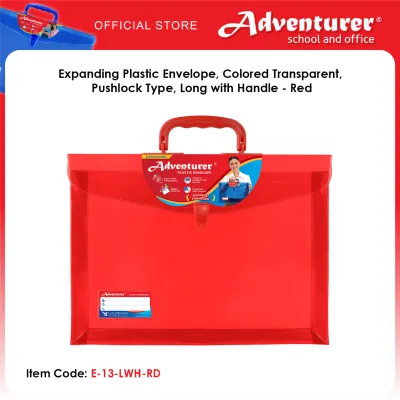
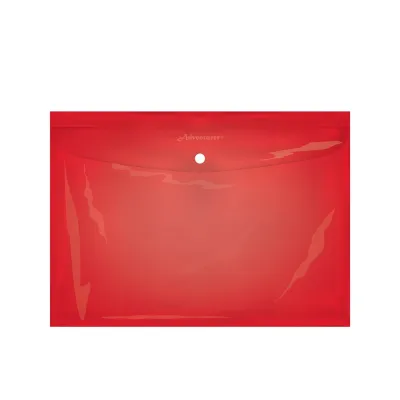
Prices are valid at publication and may change. Please refer to the product page for the latest price.
Sizing and Capacity: Matching Envelopes to Your Documents
Choosing the correct envelope size prevents your documents from bending, creasing, or tearing at the edges. In offices and schools, the three most common paper sizes are Letter (8.5 x 11 inches), A4 (8.27 x 11.69 inches), and Legal or “Long” size (8.5 x 13 inches). Always check the manufacturer’s labeled dimensions to ensure the envelope is designed to accommodate your specific paper standard.

It is essential to distinguish between the external dimensions of the envelope and the actual usable internal space. Welded side seams and plastic borders reduce the interior width of the envelope. If you attempt to slide a thick stack of A4 papers into an envelope that measures exactly A4 on the outside, the sheets will catch on the seams. Look for envelopes that offer at least a half-inch of clearance beyond the dimensions of your paper.
For high-volume storage, flat plastic envelopes are insufficient and will warp when overfilled. If you need to store multi-page contracts, school modules, or tax files, opt for envelopes equipped with expansion gussets. These accordion-style sides allow the envelope to expand from a flat profile to over an inch in depth, comfortably holding up to 200 sheets of paper without putting stress on the seams.
Paper compatibility also depends on the thickness of the items you insert. Laminated sheets, bound booklets, and heavy cardstock require more physical space than standard copy paper. When organizing these thicker mediums, select an envelope with a wider top or side opening to allow your hands to slide in and retrieve documents smoothly without scraping against the plastic edges.
Material Thickness and Closure Mechanisms
To ensure your filing system lasts through daily use, you must evaluate the durability of the plastic. Avoid relying on generic marketing terms like “heavy-duty” or “premium quality.” Instead, look for technical specifications that state the material thickness in microns or mils. Lightweight envelopes typically range from 150 to 180 microns, which is suitable for stationary desk storage, while heavy-duty options for daily travel should measure between 200 and 350 microns.
Polypropylene is the preferred plastic material for document envelopes because of its flexibility and resistance to tearing. Unlike polyvinyl chloride, polypropylene does not emit a strong chemical odor and is less likely to transfer ink from printed pages onto the plastic surface under warm, humid conditions. You can verify this by performing a quick touch test to ensure the plastic feels smooth and non-sticky.
Your choice of closure mechanism directly impacts how you interact with your files. Snap buttons are the most common option, offering quick, one-handed access that is ideal for desk organization. However, plastic snap buttons can crack or detach if pulled too aggressively, so look for reinforced button backings that distribute the pulling force evenly across the plastic flap.
Zipper closures provide a higher level of security, making them excellent for transporting documents between home, school, and the office. Slide zippers or zip-lock tracks seal the envelope completely, protecting the contents from dust, dirt, and light rain. The primary trade-off is that zippers can occasionally catch on loose paper edges if the envelope is packed past its recommended capacity.
Hook-and-loop closures offer a durable alternative that withstands frequent opening and closing without wearing out. They are highly forgiving when the envelope is slightly overstuffed, as the flexible fabric strips can still grip each other. However, the fibrous material can collect lint, dust, and hair over time, which gradually reduces its gripping strength and requires occasional cleaning.
Regardless of the closure type, inspect the seam welding and corner stress points before finalizing your purchase. High-quality envelopes feature double-welded seams or fabric-reinforced edges that prevent splitting. Pay close attention to the bottom corners, as these areas bear the weight of the paper and are the most common failure points during regular use.
Organization Features: Leveraging Orange for Color-Coding
Integrating orange plastic envelopes into your filing system is an excellent way to establish a visual hierarchy. Orange is a high-visibility color that naturally draws attention, making it perfect for categorizing urgent files, active projects, or financial records. By assigning specific meanings to your colored envelopes, you can locate critical documents on a crowded shelf in seconds.
When selecting your envelopes, consider how the level of transparency fits your privacy needs. Translucent orange envelopes allow you to read the title page of the enclosed document without opening the flap, which speeds up daily retrieval tasks. Opaque orange envelopes, conversely, provide confidentiality for sensitive personal data, grades, or financial statements, keeping them hidden from casual onlookers.
To maximize organization, look for envelopes equipped with built-in labeling features. A clear card slot or label pocket on the front cover allows you to slide in a printed or handwritten index card. This makes it easy to update the category or project name without replacing the entire envelope. If a pocket is not available, verify that the plastic surface accepts adhesive labels or permanent markers without smudging.
Some advanced plastic envelopes feature internal dividers or index tabs that allow you to sub-categorize documents within a single folder. This is highly useful for separating receipts by month, organizing school subjects, or dividing a project into distinct phases. Utilizing these internal structures keeps your paperwork organized and prevents loose sheets from sliding around inside the envelope.
Purchasing Checklist and Storage Integration
When shopping on online marketplaces, carefully read the product descriptions to verify the exact specifications. Check the dimensions in millimeters or inches rather than relying on product photos, which can be misleading. Confirm the pack count to calculate the unit price, ensuring you get a fair deal, especially when budgeting around ₱15 to ₱50 per piece depending on the thickness and closure type.
Before purchasing, measure your existing storage spaces to ensure the envelopes will fit. If you plan to store them in a standard filing cabinet, a desk drawer organizer, or a backpack, compare those dimensions with the external measurements of the envelopes. If you use binder systems, look for envelopes with pre-punched margins that align with your binder’s ring configuration.
If you are buying envelopes in bulk for an office or classroom, it is wise to order a small sample pack first. This allows you to test the plastic thickness, seam strength, and closure reliability in your actual working environment. Additionally, verify the seller’s return and exchange policies so you can easily return any items that exhibit manufacturing defects, such as broken snaps or split seams, upon arrival.
Frequently Asked Questions (FAQ)
Can I use plastic envelopes for long-term archival storage?
Standard plastic envelopes are generally not recommended for long-term archival storage of irreplaceable historical documents, certificates, or family photos. Many common plastics contain plasticizers and acids that can degrade paper and cause ink to transfer or fade over several years. For archival purposes, look for envelopes explicitly labeled as acid-free, lignin-free, and PVC-free, which are typically made of archival-grade polypropylene. Always check the manufacturer’s specifications to verify archival safety before storing sensitive documents long-term.
How do I clean and maintain plastic envelopes to prevent sticking?
To keep your plastic envelopes clean and prevent pages from sticking to the interior, perform routine maintenance using a soft, dry, or slightly damp microfiber cloth. Avoid using harsh chemical solvents, alcohol-based cleaners, or abrasive pads, as these can cloud or degrade the plastic surface. Ensure all documents are completely dry and that any fresh ink or adhesive has fully cured before placing them inside. Finally, store your envelopes in a cool, dry place away from direct sunlight and heat sources to prevent the plastic from warping, melting, or sticking together.

Community discussion
Share your experience or ask a question. Comments are reviewed before publication.