
Selecting the right subjects sticker set for your academic planner or bullet journal involves balancing visual appeal with practical functionality. The ideal stickers do more than just label your notes; they streamline your study schedule, highlight critical deadlines, and keep your weekly spreads organized. To make a smart purchase, you must evaluate how different sticker materials, adhesive types, and sizes interact with your specific planner paper and writing instruments.
In tropical environments like the Philippines, high humidity can significantly affect how adhesives perform and how quickly inks dry. A sticker that works perfectly in a dry climate might curl at the edges or cause your favorite gel pen to smudge when the air is damp. Understanding these material interactions ensures your academic journal remains clean, legible, and intact throughout the school year.
Key Features to Evaluate in Subject Stickers
When shopping for a subjects sticker set, the material finish is one of the most important decisions you will make. Matte paper stickers are highly popular because they behave almost exactly like regular planner paper. You can write on them with ballpoint pens, gel pens, and highlighters without worrying about extreme smudging. On the other hand, glossy finishes offer vibrant colors and a sleek look, but their non-porous plastic or vinyl coatings repel water-based inks, requiring specialized permanent markers to write on them.
Products mentioned in this guide




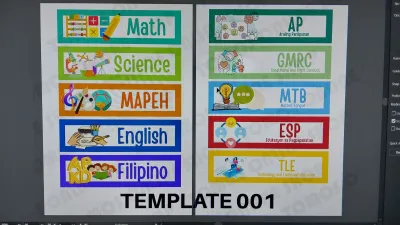
Prices are valid at publication and may change. Please refer to the product page for the latest price.
Adhesive strength is another critical factor that dictates how you use your stickers. Repositionable or low-tack adhesives are excellent for students who like to draft layouts or whose class schedules frequently change. These stickers can be peeled off and moved without tearing the page. Permanent adhesives, conversely, are designed for long-term tracking, such as semester overviews or exam logs. In humid conditions, cheap permanent adhesives can become gummy, while low-quality removable adhesives may lose their grip entirely and peel away from the page corners.
Sticker dimensions must match your planner’s layout to maintain a neat aesthetic. Most academic journals and bullet journals use a standard 5mm grid or dot matrix, while vertical column planners often have columns measuring around 3.8 centimeters wide. Before purchasing, check the product specifications for the individual sticker sizes. A subject label that is too wide will spill over into adjacent columns, while a sticker that is too large will dominate your daily log boxes, leaving you with very little space to write down actual assignments and tasks.
Matching Sticker Styles to Your Journaling System
Your choice of stickers should align closely with your personal tracking methodology. If you prefer a minimalist, highly structured layout, functional subject labels are your best option. These are straightforward text stickers featuring subject names like “Mathematics,” “Literature,” or “Physics” in clean, readable fonts. If you enjoy a more creative and visual approach, look for decorative thematic sheets that combine subject names with small illustrations, such as a microscope for science or a globe for geography, which add visual context to your spreads.

Color-coding is a highly effective cognitive tool for managing a heavy course load. Assigning a specific color to each academic subject allows your brain to categorize information instantly when you glance at your weekly spread. For instance, you might use blue stickers for English, green for Biology, and yellow for exam dates. When browsing for a subjects sticker pack, look for sets that offer consistent color palettes across different subjects, or choose multi-colored sheets that allow you to establish a clear, personalized color hierarchy.
Layout compatibility is the final piece of the stylistic puzzle. Weekly overviews require compact, horizontal strip stickers that fit neatly within narrow daily columns. If you use a daily page layout, you have more freedom to use larger block-style stickers, checklist templates, or decorative headers. Ensure the shapes in the sticker pack—whether they are circles, rectangles, or custom die-cuts—comport with the structural lines of your planner so your pages look intentional rather than cluttered.
Checking Paper and Ink Compatibility
Before committing to a specific sticker brand, you must consider how the sticker surface interacts with your writing tools. Gel pens, which are incredibly popular among students for their smooth ink flow, require a porous surface to dry properly. On semi-gloss or synthetic sticker papers, water-based gel inks can take several minutes to dry, especially during the rainy season when humidity levels are high. If you prefer using fine-liners or fountain pens, matte paper stickers are essential to prevent feathering and smudging.
Adhesive thickness and backing materials also play a role in preserving the integrity of your planner pages. Very thick vinyl stickers can add significant bulk to your journal, causing the pages to warp or preventing the notebook from laying flat. Furthermore, if you use thin planner paper, such as 52gsm or 68gsm sheets, heavy adhesives can pull at the delicate paper fibers, causing ghosting or even tearing when you turn the pages. Lightweight paper-based or washi-style stickers are generally much safer for thin-paper journals.
To avoid ruining an active weekly spread, always perform a small, hidden test. Apply a sample sticker from the sheet onto a blank page at the very back of your planner. Write on it with your primary study pens to observe the drying time and check for smudging. Leave the sticker in place for a few days to see how the adhesive reacts to the paper over time, and then try peeling it off gently to evaluate if it leaves a sticky residue or tears the page fibers. This simple check can save you from ruining months of academic records.
Building Your Subject Sticker Shortlist
To get the most value out of your purchase, evaluate the overall sheet layout and sticker density. Some sticker sheets may look appealing but contain only a few actual subject labels, filling the rest of the space with generic decorative shapes that you might not use. Calculate the utility of the sheet by counting how many specific subject stickers are provided versus filler designs. A well-designed academic sticker pack should offer a balanced ratio, ensuring you do not run out of common subject labels halfway through the school semester.
When shopping on online marketplaces, do not rely solely on the seller’s stylized product renders. These digital mockups often make colors look brighter and finishes smoother than they are in reality. Instead, scroll down to the customer review section and examine user-uploaded photos. Look closely at the die-cut precision to ensure the cuts are perfectly aligned with the printed designs. Off-center die-cuts can leave awkward white borders on one side of your stickers, which can be frustrating when you are trying to create a clean, professional-looking layout.
If you are budgeting for your school supplies, high-quality sticker sheets generally range from ₱50 to ₱150 depending on the material and sheet size. If you frequently rearrange your study schedule or share your planner with classmates, it is highly practical to prioritize repositionable washi-style stickers. While they might cost slightly more than standard paper stickers, their flexibility and damage-free removal make them a much more forgiving choice for dynamic, fast-changing academic environments.
Frequently Asked Questions (FAQ)
Can I write on glossy subject stickers with gel pens?
Writing on glossy subject stickers with standard gel pens is generally not recommended. Glossy coatings are non-porous and water-resistant, which prevents water-based gel inks from absorbing into the material. As a result, the ink will sit on top of the glossy surface and smudge easily, even hours after writing. If you must use glossy stickers, it is best to write on them using a permanent fine-liner, a specialized multi-surface marker, or a standard ballpoint pen, allowing ample time for the ink to set.
How do I remove stickers from my planner without tearing the paper?
To remove a sticker safely, peel it back very slowly at a sharp, acute angle—almost flat against the page—rather than pulling straight upward. Pulling upward exerts direct tension on the paper fibers, increasing the risk of a tear. If the adhesive is particularly stubborn, you can apply gentle heat from a hairdryer on a low setting for a few seconds to soften the glue before peeling. However, keep in mind that thin journal papers, especially those under 80gsm, are highly delicate, and some permanent adhesives cannot be removed without causing minor surface damage.
Are pre-cut subject labels better than die-cut sticker sheets?
Both formats serve different planning styles. Pre-cut subject labels are highly efficient for quick, daily logging because they are uniform in shape and size, allowing you to label your tasks rapidly without thinking about layout design. Die-cut sticker sheets, which feature individual stickers cut into custom shapes, offer much more decorative flexibility. They are excellent for creating visually engaging weekly spreads, layering designs, and filling empty spaces in your journal, though they may take slightly more time to arrange neatly.

Community discussion
Share your experience or ask a question. Comments are reviewed before publication.