
Selecting the right modeling material is the foundation of any successful arts and crafts project. When browsing for a Deli clay set, the ideal choice depends entirely on what you intend to create, who is doing the crafting, and the environment where the curing takes place. Deli offers several distinct clay formulations, ranging from ultra-light air-dry varieties popular for school activities to denser modeling clays designed for detailed sculpting. Matching these options to your project’s specific demands ensures that your finished piece maintains its shape, color, and structural integrity over time.
Identify Your Crafting Project Requirements
Before comparing specific packages, you must define the physical demands of your finished piece. If you are creating delicate items like custom jewelry, miniature figurines, or decorative charms, your material must support fine detail without drooping before it cures. For larger, structural items like school dioramas or relief maps, lightweight properties and ease of shaping are far more critical than high tensile strength. Understanding whether your project needs to remain slightly flexible or cure into a rigid, stone-like state will immediately narrow down your material options.
The age and skill level of the crafter also dictate the safest and most practical clay choice. Young children require non-toxic, soft, and highly pliable materials that do not strain small hands or require complex curing equipment like ovens. For classroom settings or quick afternoon activities, fast-drying formulations that do not require baking are highly preferred to minimize waiting times and simplify cleanup. Conversely, advanced hobbyists may prioritize a longer working window, allowing them to refine details over several days without the material skinning over or cracking prematurely.
Products mentioned in this guide
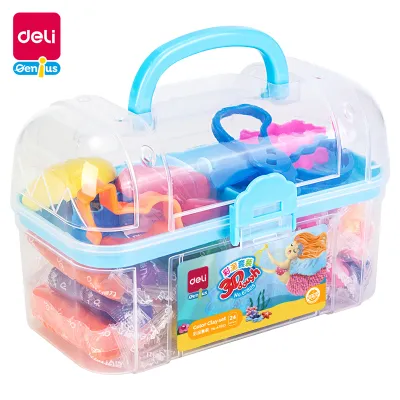
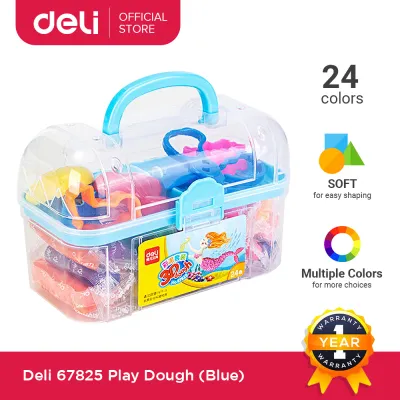
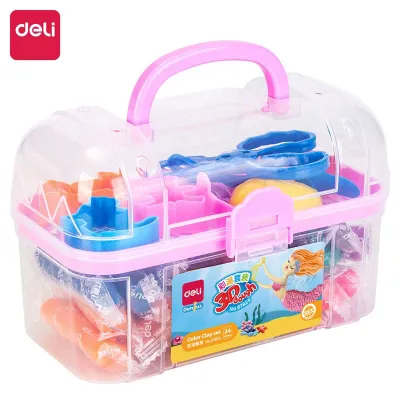
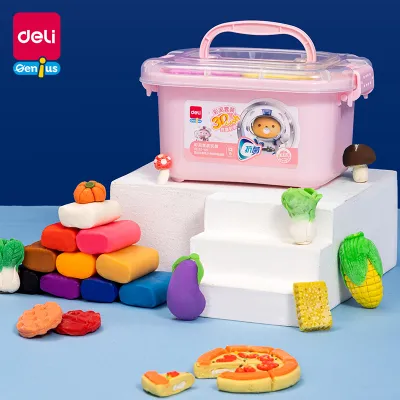
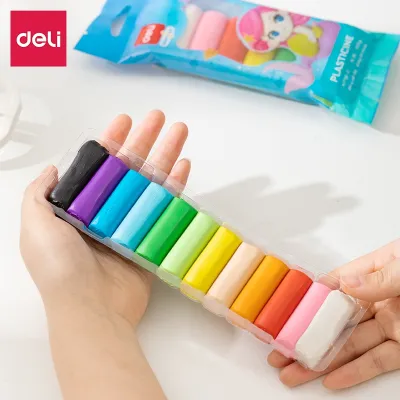
Prices are valid at publication and may change. Please refer to the product page for the latest price.
Finally, consider the scale of your sculpting work. Bulk sculpting projects, such as building up the base of a large model, require a cost-effective, high-volume clay that can be easily layered over armatures like crumpled aluminum foil or wire frames. Fine detail work, on the other hand, demands a clay with a fine grain and excellent cohesion, allowing you to carve, stamp, or texture the surface without the material crumbling or tearing. By analyzing these structural, safety, and detail requirements beforehand, you can avoid the frustration of a medium that fights against your creative goals.
Key Dimensions for Evaluating Deli Clay Sets
Evaluating a Deli clay set requires looking beyond the colorful illustrations on the front cover and examining the technical specifications printed on the manufacturer’s label. Because product titles on online marketplaces can sometimes be generic or misleading, verifying the exact material composition, curing instructions, and safety certifications is essential. Understanding these key dimensions allows you to predict how the clay will behave during the molding process, how it will react to the local climate, and how the finished piece will look once fully cured.

Clay Type and Drying Mechanism
The curing method is the most critical factor in determining your project’s timeline and final durability. Deli produces several clay types, including super-light air-dry clay, traditional oil-based modeling clay, and oven-bake polymer clay. Air-dry formulations cure through moisture evaporation, making them incredibly convenient since they require no specialized heating tools. However, in humid tropical environments like the Philippines, the evaporation process can be significantly slower, sometimes requiring up to forty-eight hours to cure completely depending on the thickness of the piece.
When reviewing the manufacturer’s label, pay close attention to the stated drying times and shrinkage rates. As water evaporates from air-dry clay, the material naturally contracts, which can lead to warping or cracking if the piece is dried too quickly under direct sunlight or unevenly in a drafty room. Oil-based modeling clays, by contrast, never dry out or harden, making them excellent for reusable practice, mold-making, or stop-motion animation, but entirely unsuitable for permanent keepsakes. Oven-bake formulations require precise temperature control to cure, yielding a highly durable, water-resistant, and rigid plastic-like finish that holds fine details exceptionally well.
Because drying speed and final water resistance depend heavily on the exact material combination and local humidity, it is highly recommended to perform an observable trial before committing to a large project. Sculpt a small, uniform test sphere or tile from your Deli clay set and allow it to dry in your typical workspace. By observing how long it takes to lose its cool, damp feel and checking for any surface cracking or shrinkage, you can establish a reliable baseline for your actual crafting timeline.
The final texture of the cured clay also varies dramatically between formulations. Super-light air-dry clays typically dry to a soft, slightly flexible, foam-like matte finish that feels velvety to the touch. Traditional air-dry clays often cure to a heavier, slightly porous, plaster-like texture that can be sanded, carved, or painted once dry. Understanding these tactile outcomes beforehand ensures that the finished texture aligns with your aesthetic goals, whether you desire a rustic, matte appearance or a smooth, rigid surface.
Color Variety and Mixing Potential
The color palette of your chosen clay set directly impacts your workflow, especially if you prefer to avoid the extra step of painting your finished models. Deli clay sets are available in configurations ranging from basic 12-color starter packs to expansive 24- or 36-color collections. If your project requires highly specific shades, such as realistic skin tones, earthy landscape hues, or vibrant pastels, selecting a larger set provides a broader foundation of base colors. This reduces the need for manual mixing and ensures color consistency across multiple pieces.
For custom shades, evaluate the clay’s blending properties as described in the product specifications. High-quality modeling clays should blend smoothly without streaking, allowing you to knead two distinct colors together to create a perfectly uniform third color. When mixing, the clay should maintain its original consistency; inferior clays may become overly sticky or crumbly when worked extensively. Checking user feedback regarding color mixing can reveal whether the pigments blend cleanly or result in muddy, dull tones.
Additionally, consider the long-term stability of the colors once the project is complete. Some pigments are sensitive to ultraviolet light and may fade or discolor when exposed to sunlight over time. If your finished crafts will be displayed near windows or in well-lit rooms, verify if the manufacturer notes any lightfastness or fade-resistant properties. For projects requiring maximum color longevity, applying a protective, UV-resistant clear coat after the clay has fully cured is a highly effective safeguard.
Included Tools and Accessories
Many Deli clay sets are packaged as complete kits, bundling various sculpting tools and accessories alongside the clay itself. For beginners or parents buying for children, these all-in-one kits offer excellent value, saving you the trouble of purchasing tools separately. Standard inclusions often feature double-sided plastic modeling spatulas, rollers, cutting wheels, and simple press-in molds. These tools are invaluable for shaping clean edges, adding surface textures, and cutting precise shapes without distorting the soft clay.
For advanced projects, check if the set includes specialized finishing accessories or structural aids. Some comprehensive kits provide small keychains, hair clips, or jewelry backings, allowing crafters to transform their creations into wearable accessories immediately. Other sets may include small bottles of clear varnish or sealant to protect the finished piece, or basic armature wires to support upright figures. If your project requires heavy structural support or a professional glossy finish, verify whether these accessories are included or if you need to source dedicated crafting wire and acrylic varnishes separately.
The quality and design of the packaging itself should not be overlooked, particularly for multi-session projects. Clay that is exposed to air will quickly dry out and become unusable, making proper storage critical. Look for sets that come in sturdy, resealable plastic tubs, or those that provide individual airtight containers for each color. If the set only includes simple plastic wrap packaging, you will need to prepare your own airtight storage solutions, such as heavy-duty zip-lock bags or small plastic food containers, to preserve the clay’s moisture between crafting sessions.
Matching Clay Characteristics to Project Types
To select the ideal clay set, you must map the physical characteristics of the material to the specific demands of your crafting scenario. Different projects require vastly different levels of hardness, flexibility, and curing speeds. For instance, a school diorama requires a lightweight material that will not collapse under its own weight or weigh down a cardboard base, making super-light air-dry clay the perfect fit. Conversely, creating functional items like decorative trinket dishes requires a denser, more rigid material that can withstand light handling without bending.
The following comparison table outlines how different project types align with key clay characteristics, helping you identify the most suitable formulation for your needs:
| Project Type | Ideal Clay Type | Key Characteristics Required | Curing Method | Recommended Finish / Aftercare |
|---|---|---|---|---|
| Children's Crafts & Play | Super-light air-dry clay | Non-toxic, ultra-soft, vibrant colors, lightweight | Air-dry (12–24 hours) | Keep dry; store in airtight containers if reusable |
| School Dioramas & Models | Standard air-dry clay | Easy to shape, paintable, adheres well to cardboard/wood | Air-dry (24–48 hours) | Paint with acrylics; seal with clear craft varnish |
| Delicate Jewelry & Charms | Oven-bake polymer clay | High detail retention, rigid, durable, minimal shrinkage | Oven-bake (per instructions) | Sand smooth; seal with specialized polymer glaze |
| Reusable Sculpting Practice | Oil-based modeling clay | Never dries out, highly pliable, holds shape temporarily | Non-curing | Store away from high heat to prevent softening |
When choosing between these options, you must often navigate trade-offs between working time and drying speed. Fast-drying air-dry clays are highly convenient for quick projects, but they limit your ability to make detailed adjustments, as the surface will begin to skin over within minutes of exposure to air. If your project involves intricate sculpting, an oven-bake or oil-based clay provides an infinite working window, allowing you to perfect your design over multiple sessions before committing to the final cure.
Furthermore, structural integrity is a vital consideration for any functional or load-bearing project. Standard air-dry clays are inherently porous and brittle when cured, meaning they cannot support significant weight and are highly susceptible to moisture damage. If you are crafting items like functional bowls, plant pots, or candle holders, you must verify the manufacturer’s guidelines regarding water resistance and weight limits. Such projects will invariably require multiple coats of a high-quality, water-resistant sealant to protect the cured clay from humidity and accidental spills, and they should never be used for direct food contact unless explicitly certified as food-safe.
What to Check Before Buying Online
Purchasing craft supplies from online marketplaces requires a careful, systematic approach to ensure you receive fresh, high-quality materials. Because clay is a perishable product that can dry out or degrade over time, ordering blindly can result in receiving stiff, unusable blocks. The first and most important step is to verify the manufacturing date or shelf-life indicators on the product listing or by messaging the seller directly. Fresh clay should feel soft and yielding; older stock that has sat in a warm warehouse for months may have already begun to cure or lose its essential moisture.
Next, thoroughly analyze the seller’s ratings and read recent buyer reviews, paying close attention to comments regarding the clay’s condition upon arrival. Look for reviews that specifically mention the moisture level of the clay, the integrity of the packaging, and whether the colors match the product images. If multiple buyers complain that the clay arrived dry, crumbly, or with broken seals, it is a strong indication of poor storage conditions or old stock, and you should look for an alternative seller. Additionally, check if buyers in high-humidity regions note any issues with mold or excessive stickiness, which can occasionally occur if the clay was stored in damp conditions.
Finally, always confirm the exact weight or volume of the clay included in the set. Product photos can be highly deceptive, often making small 10-gram packets look like substantial blocks. Check the product description for the net weight per color (usually specified in grams) and the total weight of the entire set. Deli clay sets are highly accessible, with basic starter kits starting around ₱150 and larger, accessory-packed sets reaching up to ₱600. Comparing the net weight across different Deli clay set variants ensures you are getting a fair price for the volume of material provided and that you will have a sufficient quantity of clay to complete your project without running out of key colors mid-way through your work.
Frequently Asked Questions (FAQ)
Is air-dry clay waterproof after drying?
Standard air-dry clay is not waterproof after drying; it remains highly water-soluble and porous. If exposed to water or high humidity, the cured clay will absorb moisture, soften, and eventually lose its shape or structural integrity. To achieve water resistance, you must apply a dedicated waterproof sealant, acrylic varnish, or polyurethane clear coat once the clay is completely dry. Always check the manufacturer’s instructions on the sealant packaging to ensure compatibility with your specific clay type, and remember that sealed air-dry clay is still not suitable for holding standing water or for food contact.
How should I store leftover clay to prevent it from drying out?
To prevent leftover air-dry clay from drying out, you must store it in a completely airtight environment with as little dead air space as possible. Wrap the remaining clay tightly in plastic cling wrap, then place it inside a heavy-duty, press-seal zipper bag or a small, airtight plastic container. For long-term storage in warm climates, placing a slightly damp paper towel inside the outer container—without letting it directly touch the clay for extended periods—can help maintain the necessary humidity. If the clay has only begun to stiffen slightly, you can often rehydrate it by kneading in a few drops of clean water, though heavily cured clay cannot be restored.

Community discussion
Share your experience or ask a question. Comments are reviewed before publication.