
Starting clay crafting can feel overwhelming with the variety of options available. Choosing the right Deli clay set depends primarily on what you want to create and how you plan to cure your finished pieces. For absolute beginners, a set featuring super light air-dry clay is often the most forgiving and accessible entry point, while those looking for durable, detailed miniatures may prefer polymer clay options. By matching the clay’s physical properties to your creative goals, you can avoid frustration and ensure a smooth crafting experience.
Understanding Deli Clay Types for Beginners
Deli offers several distinct clay formulations, each designed for different crafting styles and skill levels. Understanding these materials is the first step in selecting the perfect starter set. Choosing the wrong type can lead to cracked projects or unnecessary difficulty during the sculpting process.
Super light clay (often labeled as ultra-light clay) is incredibly popular for beginners and casual hobbyists. This material is soft, highly pliable, and does not stick to hands or work surfaces, making cleanup exceptionally easy. It air-dries to a lightweight, slightly flexible, foam-like texture. Because it requires no baking, it is highly safe for younger crafters and quick home projects.
Products mentioned in this guide
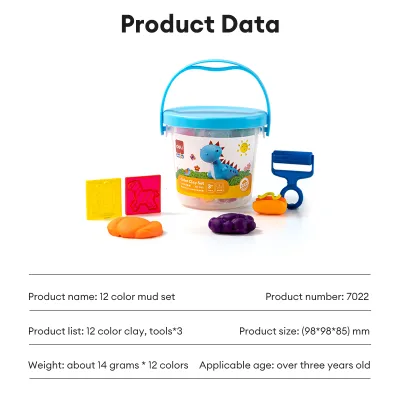
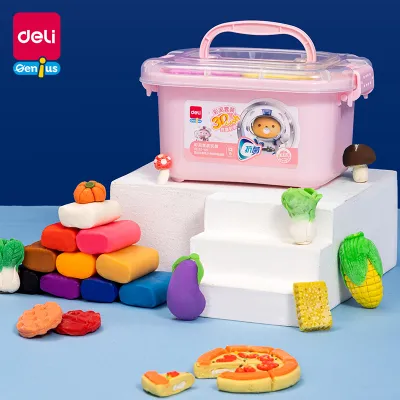
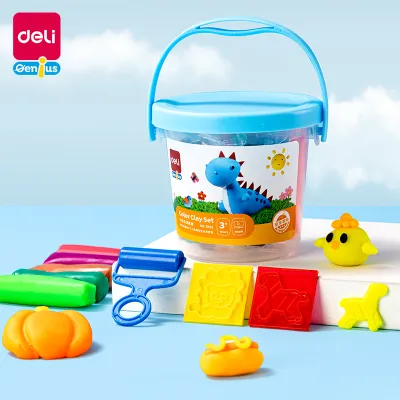
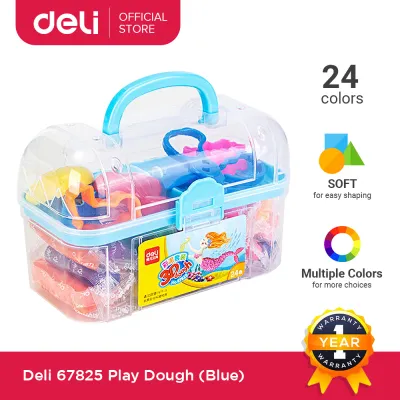
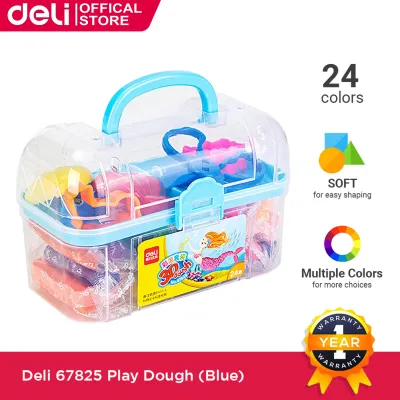
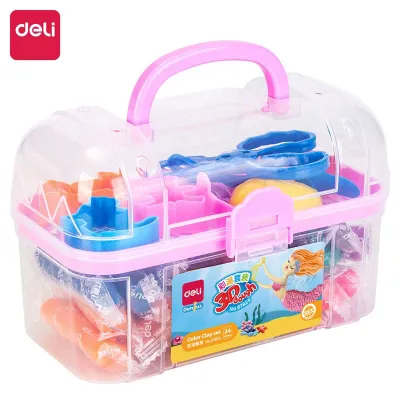
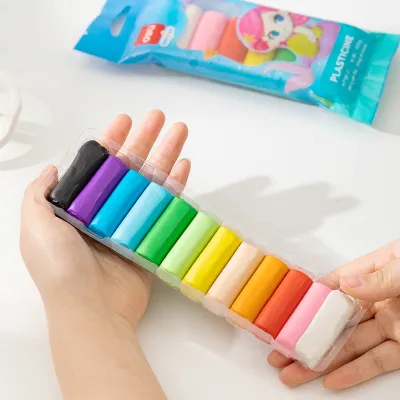
Prices are valid at publication and may change. Please refer to the product page for the latest price.
Traditional water-based air-dry clay is heavier and mimics classic pottery clay. It is excellent for sculpting larger, more substantial items like small dishes, pots, or heavy figurines. As it dries, it hardens into a solid, ceramic-like state that can be sanded, carved, and painted. However, it is more prone to cracking if dried too quickly, and it requires careful moisture management during the sculpting process.
Oven-bake polymer clay is a denser, oil-based material that remains workable indefinitely until it is cured in a home oven. This type is ideal for detailed miniatures, jewelry, and intricate charms. It holds fine details exceptionally well and cures to a very hard, durable plastic finish. Beginners should note that polymer clay requires a dedicated baking setup and careful temperature monitoring to prevent scorching.
In the tropical climate of the Philippines, ambient humidity plays a significant role in how these clays behave. High humidity can prolong the drying time of water-based air-dry clays, while super light clays may remain tacky slightly longer than expected. Conversely, dry air-conditioned rooms can speed up drying, requiring you to work faster or keep a damp cloth nearby. Always verify the exact clay type on the product packaging or online listing before finalizing your purchase.
Evaluating Starter Tools and Accessories
A great beginner clay set does not just provide the raw material; it also equips you with the tools needed to shape, cut, and detail your creations. Deli starter sets frequently bundle a variety of plastic or wooden accessories to help you get started immediately.

Basic shaping spatulas and double-ended modeling tools are essential for any beginner. These tools allow you to blend seams, carve fine lines, and create textures that are impossible to achieve with fingers alone. Look for sets that include at least three to five basic tool shapes, such as a pointed detailer, a curved smoothing tool, and a flat spatula.
Rolling pins and cutting wires or plastic blades are also highly useful for rolling out flat sheets and making clean, straight cuts. If you plan to make jewelry or flat ornaments, a set that includes a mini roller will save you significant effort. Specialized accessories like silicone molds, keychains, and jewelry findings add immense value if you want to create functional items right away.
Instructional guides and project booklets are incredibly valuable for first-time crafters. A well-illustrated guide can teach you basic hand-building techniques, such as making pinch pots, coils, and smooth spheres. When evaluating a set, check user reviews or product descriptions to see if the included guide is easy to follow and matches your language preference.
Finally, assess the durability of the included tools. While plastic tools are perfectly adequate for soft super light clay, they may bend or flex too much when working with denser polymer clays. If you choose a polymer clay set, look for sturdier, high-density plastic or wooden tools that can withstand the pressure of conditioning firmer clay.
Matching Color Counts and Clay Quantities to Your Projects
Deli clay sets come in various sizes, ranging from basic 12-color packs to expansive 36- or 48-color collections. Deciding on the right color count and volume is crucial to balance creative freedom with practical storage.
For absolute beginners, a 12- to 24-color set is usually the sweet spot. These sets typically feature primary colors along with essential neutrals like black and white. Because clay can be blended to create new shades, a smaller set encourages you to learn basic color theory and custom mixing. Expanded sets with pastel, neon, or metallic shades are excellent if you want to create specific themed projects without the hassle of mixing.
Estimating the volume of clay you need depends on the scale of your projects. Super light clay sets often package clay in small, individual cups or zip-top bags weighing around 10 to 20 grams per color. This is ample for small figurines, charms, and decorative accents. If you plan to sculpt larger items, such as a pencil holder or a small jewelry dish, you will need a set that offers larger bulk blocks of a single color, particularly white or terracotta.
Keep in mind that air-dry and super light clays begin to cure as soon as they are exposed to air. Opening multiple color packets simultaneously without a clear plan increases the risk of the clay drying out before you can use it. If you are working on small, slow-paced projects, smaller individual packets are much easier to manage and preserve than large, open tubs.
Pre-Purchase Checks for Safety and Freshness
Before purchasing your Deli clay set, performing a few quick quality and safety checks will ensure you receive a fresh, usable product that is safe for your household.
Safety is paramount, especially if the clay set is intended for children or will involve prolonged skin contact. Look for recognized non-toxic certifications on the packaging, such as the EN71 standard (European toy safety standard) or the AP non-toxic seal. These marks indicate that the materials have been tested and are free from harmful chemicals or heavy metals.
Freshness is critical for air-dry and super light clays. Because these materials rely on moisture to stay pliable, any compromise in the packaging seal can cause the clay to harden irreversibly inside the packet. Check the manufacturing date if visible, and read recent buyer reviews on your chosen ecommerce platform to ensure other customers have received soft, fresh clay rather than dried-out blocks.
To guarantee authenticity and proper storage conditions, always purchase from official Deli flagship stores or authorized stationery distributors. Clay stored in hot, unventilated warehouses for extended periods can degrade quickly, even if the seals remain intact. Buying from reputable sellers ensures better inventory turnover and fresher stock.
Frequently Asked Questions (FAQ)
How should I store leftover clay from my Deli set?
To keep your leftover air-dry or super light clay fresh, wrap it tightly in plastic cling wrap, ensuring there are no air pockets, and place it inside an airtight container or a heavy-duty resealable bag. Adding a slightly damp paper towel inside the outer container can help maintain humidity, but avoid letting the wet towel touch the clay directly to prevent it from becoming mushy. For polymer clay, which does not dry out in the air, store it in a cool, dust-free container away from direct sunlight, as heat can cause it to semi-cure and dust can easily ruin its clean surface.
Can I mix different colors from the same Deli clay set?
Yes, you can easily mix different colors within the same Deli set to create custom shades and gradients. When working with super light clay, kneading two colors together is quick and seamless, resulting in a perfectly uniform new color within a few minutes. If you are using traditional air-dry clay, mixing may require a bit more effort and a drop of water to keep the clay pliable during the blending process. Always ensure you are mixing clays of the exact same type, as blending air-dry clay with polymer clay will prevent proper curing and ruin the structural integrity of your piece.
What should I do if my air-dry clay feels too sticky or too dry?
If your air-dry clay feels slightly too dry or stiff, you can restore its pliability by kneading in a few drops of water at a time until it reaches the desired consistency. Be careful not to add too much water at once, as this can make the clay slimy and difficult to work with. If the clay is overly sticky or tacky, kneading it on a clean, dry surface or adding a tiny pinch of cornstarch can help absorb excess moisture. If the clay has completely hardened into a solid block, or if you notice any signs of mold or an unusual odor, it cannot be safely restored and should be discarded.

Community discussion
Share your experience or ask a question. Comments are reviewed before publication.